DISASTROUS LONG-TERM THINKING

The Myth of Human Progress

By Chris Hedges/ Truthdig/ January 6, 2013

climate-change

Clive Hamilton in his “Requiem for a Species: Why We Resist the Truth About Climate Change”describes a dark relief that comes from accepting that “catastrophic climate change is virtually certain.” This obliteration of “false hopes,” he says, requires an intellectual knowledge and an emotional knowledge. The first is attainable. The second, because it means that those we love, including our children, are almost certainly doomed to insecurity, misery and suffering within a few decades, if not a few years, is much harder to acquire. To emotionally accept impending disaster, to attain the gut-level understanding that the power elite will not respond rationally to the devastation of the ecosystem, is as difficult to accept as our own mortality. The most daunting existential struggle of our time is to ingest this awful truth—intellectually and emotionally—and continue to resist the forces that are destroying us.

The human species, led by white Europeans and Euro-Americans, has been on a 500-year-long planetwide rampage of conquering, plundering, looting, exploiting and polluting the Earth—as well as killing the indigenous communities that stood in the way. But the game is up. The technical and scientific forces that created a life of unparalleled luxury—as well as unrivaled military and economic power—for the industrial elites are the forces that now doom us. The mania for ceaseless economic expansion and exploitation has become a curse, a death sentence. But even as our economic and environmental systems unravel, after the hottest year in the contiguous 48 states since record keeping began 107 years ago, we lack the emotional and intellectual creativity to shut down the engine of global capitalism. We have bound ourselves to a doomsday machine that grinds forward, as the draft report of the National Climate Assessment and Development Advisory Committeeillustrates.

Complex civilizations have a bad habit of destroying themselves. Anthropologists including Joseph Tainter in “The Collapse of Complex Societies,”Charles L. Redman in “Human Impact on Ancient Environments”and Ronald Wright in “A Short History of Progress”have laid out the familiar patterns that lead to systems breakdown. The difference this time is that when we go down the whole planet will go with us. There will, with this final collapse, be no new lands left to exploit, no new civilizations to conquer, no new peoples to subjugate. The long struggle between the human species and the Earth will conclude with the remnants of the human species learning a painful lesson about unrestrained greed and self-worship.

“There is a pattern in the past of civilization after civilization wearing out its welcome from nature, overexploiting its environment, overexpanding, overpopulating,” Wrightsaid when I reached him by phone at his home in British Columbia, Canada. “They tend to collapse quite soon after they reach their period of greatest magnificence and prosperity. That pattern holds good for a lot of societies, among them the Romans, the ancient Maya and the Sumerians of what is now southern Iraq. There are many other examples, including smaller-scale societies such as Easter Island. The very things that cause societies to prosper in the short run, especially new ways to exploit the environment such as the invention of irrigation, lead to disaster in the long run because of unforeseen complications. This is what I called in ‘A Short History of Progress’ the ‘progress trap.’ We have set in motion an industrial machine of such complexity and such dependence on expansion that we do not know how to make do with less or move to a steady state in terms of our demands on nature. We have failed to control human numbers. They have tripled in my lifetime. And the problem is made much worse by the widening gap between rich and poor, the upward concentration of wealth, which ensures there can never be enough to go around. The number of people in dire poverty today—about 2 billion—is greater than the world’s entire population in the early 1900s. That’s not progress.”

Hot_Earth

“If we continue to refuse to deal with things in an orderly and rational way, we will head into some sort of major catastrophe, sooner or later,” he said. “If we are lucky it will be big enough to wake us up worldwide but not big enough to wipe us out. That is the best we can hope for. We must transcend our evolutionary history. We’re Ice Age hunters with a shave and a suit. We are not good long-term thinkers. We would much rather gorge ourselves on dead mammoths by driving a herd over a cliff than figure out how to conserve the herd so it can feed us and our children forever. That is the transition our civilization has to make. And we’re not doing that.”

Wright, who in his dystopian novel “A Scientific Romance”paints a picture of a future world devastated by human stupidity, cites “entrenched political and economic interests” and a failure of the human imagination as the two biggest impediments to radical change. And all of us who use fossil fuels, who sustain ourselves through the formal economy, he says, are at fault.  (Continued/ See Entire Article Here)
Boldface added by BPR Editor
Posted in environment, government, politics | Tagged , , , , , , , , , | Leave a comment

Should We Know Why the Government Can Decide to Kill Us?

By Arlen Grossman/ The Big Picture Report

President Obama’s choice for CIA Director, counterterrorism adviser John Brennan, will face a Senate confirmation hearing Thursday. Undoubtedly, he will have to answer questions about a 16-page leaked Justice Department memo obtained by NBC News  that outlines the legal theories the Obama administration is using to justify killing American citizens abroad.

The confidential 2011 memo states the administration view that the president or another “informed, high-level official” can order the extrajudicial killing of an American citizen overseas without violating the Constitution, acts of Congress or international law. The Obama administration apparently chooses to ignore the part in the U.S. Constitution that states no American can “be deprived of life, liberty, or property, without due process of law.”

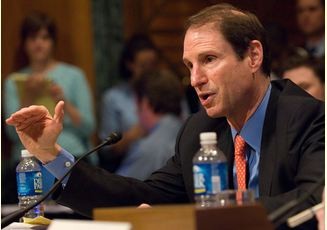
RonWyden_1Senator Ron Wyden

Among the senators Brennan will face will be Ron Wyden (D-OR), a member of the Senate intelligence committee, who sent a letter three weeks ago to the nominee asking for an outline of the legal and practical rules and rationale for the U.S. government’s targeted killing of American citizens suspected of working with al-Qaida. He wrote in that letter (which Brennan has not responded to):

For the executive branch to claim that intelligence agencies have the authority to knowingly kill American citizens but refuse to provide Congress with any and all legal opinions that explain the executive branch’s understanding of this authority represents an alarming and indefensible assertion of executive prerogative.”

The Oregon senator asked some very pointed questions that Mr. Brennan should be required to answer, but will likely try to wriggle out from. Among the questions posed to the nominee in that letter:

1. “How much evidence does the President need to determine that a particular American can be lawfully killed?”

2. “Does the President have to provide individual Americans with the opportunity to surrender before killing them?”

3. “Are there any geographic limitations on the intelligence community’s authority to use lethal force against Americans? Do any intelligence agencies have the authority to carry out lethal operations inside the United States?

Eleven senators (eight Democrats and three Republicans) wrote a letter to President Obama Monday demanding the administration hand over its legal justifications for drone strikes on U.S. citizens.  Despite expected tough questioning, Brennan is expected to be confirmed as the next CIA director.

A complete copy of Senator Wyden’s Questions (from his January 14 letter):

4-6a41ea34a9Published in Op-Ed News (headline status) February 6, 2013
Posted in Barack Obama, civil liberties, foreign policy, government, Justice, law, military, politics, Terrorism | Tagged , , , , , , , , , | 6 Comments

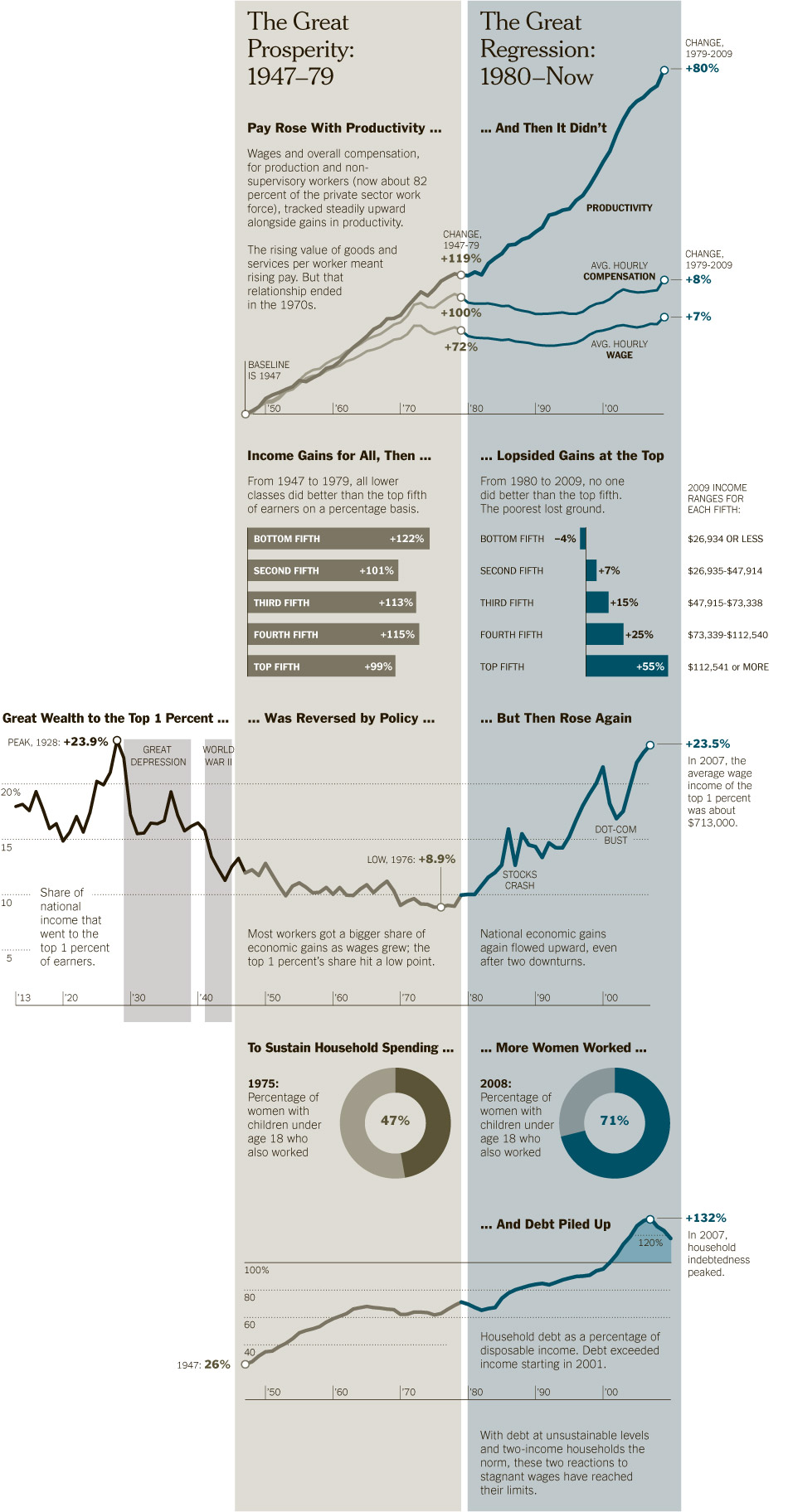
Heading in the Wrong Direction

04reich-graphic-popupClick to Enlarge.

Source: New York Times, 2011
Posted in Economics, economy, employment, government, inequality | Tagged , , | 1 Comment

New Radio Show: PoliTalk Sunday

Announcing the debut of a new radio show:

POLITALK SUNDAY (AKA Two Guys With Issues)

radio_show

Arlen Grossman and Paul Karrer will cover the news and issues of the day–local, national and global, and give you a chance to sound off with your opinion. All points of view are encouraged and welcome.

Listen every Sunday from 10 to 11am on KRXA 540AM in Monterey, and streamed around the globe from KRXA540am.com. Beginning Super Bowl Sunday, February 3.

Call-in number: 831-899-KRXA (831-899-5792).
E-mail: PoliTalkSunday@yahoo.com.
Posted in Announcements, media | Tagged , , , , | 5 Comments

THE PROGRESSIVE FUTURE?

Five Possibilities for the Next Great Progressive Push

By Gar Alperovitz and Steve Dubb/ Common Dreams/ February 1, 2013

localfirst-web_0

Obama’s second inaugural address opened some hope of a brighter progressive future, yet virtually all the critical economic and distributional issues were off the table—and the pain is likely to continue. Paradoxically, the failings of traditional politics—and the anger that is already building up—suggest strategic possibilities that focus on critical institutions, along with opportunities for the step by step “evolutionary reconstruction” of basic ownership of the economy at different levels.

1. People’s Banks

At the height of the financial crisis in early 2009, some kind of nationalization of the banks seemed possible. It was a moment, President Obama told banking CEOs, when his administration was “the only thing between you and the pitchforks.” When the next financial crisis occurs—as many experts think certain—a different resolution may well prove necessary. As Willem Buiter, the chief economist of Citigroup, argued: if the public underwrites the costs of bailouts, “banks should be in public ownership.”

The fact is America has had a large number of public banking institutions for some time, and more are likely. The federal government today operates 140 banks and quasi-banks that provide loans and loan guarantees for an extraordinary range of domestic and international economic activities. The Bank of North Dakota, a highly successful state-owned bank founded in 1919, returned $340 million in profits to the public purse between 1996 and 2008. Legislative proposals to establish banks patterned in whole or part on the North Dakota model have been already introduced in more than a dozen states in response to the growing economic pain.

2. State by State Moves to Universal Healthcare

Healthcare is projected to consume nearly 20% of GDP by 2019. It has long been clear that the only serious way to control costs is through some form of single-payer system.

A slow state-by-state build-up suggests that an evolutionary reconstruction of the healthcare system is already under way. In Vermont, Governor Peter Shumlin signed legislation in May 2011 creating “Green Mountain Care.” Universal coverage, dependent on a federal waiver, would begin in 2017 and possibly as early as 2014. In Connecticut, the legislature in 2011 authorized a “SustiNet” non-profit public health insurance program, which it aims to launch in 2014. In all, bills to create universal healthcare have been introduced in nearly 20 states.

aa-HCcosts-1024x467

3.  Building Community Wealth

There are now more than 10,000 businesses owned in whole or part by their employees; nearly 3 million more individuals are owners of these enterprises than are members of private sector unions. Another 130 million Americans are members of various urban, agricultural and credit union cooperatives. In many cities, “land trusts” are using an institutional form of nonprofit or municipal ownership that develops and maintains low- and moderate-income housing.

In Cleveland, Ohio, an integrated group of worker-owned companies has been developed, supported in part by the purchasing power of large hospitals and universities, and partly modeled on the 85,000-person Mondragón cooperative network, based in the Basque region of Spain. Linked by a community-serving non-profit corporation and a revolving fund, the companies return 10 percent of profits to finance additional firms. As traditional strategies falter, many other cities are now exploring efforts of this kind, including Atlanta; Pittsburgh; Amarillo, Texas; and Washington, DC.

4. Municipal Change

There is also municipal development. By maintaining ownership of areas surrounding transit station exits, public agencies in Washington, DC, Atlanta and elsewhere earn millions, capturing the increased land values their transit investments create. The town of Riverview, Michigan has been a national leader in trapping methane from its landfills and using it to generate electricity, thereby providing both revenue and jobs. There are roughly 500 similar projects nationwide. There are also nearly 2,000 publicly owned utilities that provide power (and often broadband) to more than 45 million Americans, generating $50 billion in annual revenue.

5:  Democratizing the Corporation

To deal with economic and ecological challenges, we must also come to terms with corporate power dynamics. Public corporations are subject to Wall Street’s first commandment: “Grow or die!” You can’t just wish or regulate that idea away.

We nationalized GM, AIG and implicitly Chrysler in the last big crisis. What will happen in the next? If some of the most important corporations have a massively disruptive and costly impact on the economy and environment—and if they are likely to subvert regulation and anti-trust laws—a public takeover becomes the only logical answer. This general argument was put forward most forcefully not by liberals, but by the founders of the Chicago School of economics! Henry C. Simons, Milton Friedman’s mentor, was quite clear that the state “should face the necessity of actually taking over, owning, and managing directly…industries in which it is impossible to maintain effectively competitive conditions.”

The Pre-History of the Next Progressive Direction

The slow buildup of democratizing strategies could well be laying groundwork for the pre-history of the next big progressive push—the critical developmental work needed to clarify new principles for larger scale application. As in the decades before the New Deal, state and local experiments suggest new larger scale approaches.

For decades, to many the only longer term choices have seemed to be state socialism or corporate capitalism. But new approaches may also begin to pose new systemic ideas for a longer term progressive structural change that is both quite American in content, and quite radical in its vision of a system beyond the traditional models.

Posted in Economics, government, health care, inequality, lifestyle | Tagged , , , , , , , , | Leave a comment

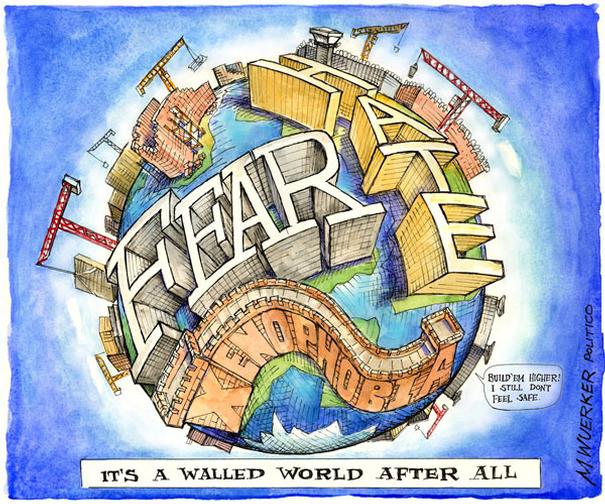
Watch Out For “Them”

130130_immigration1_wuerker_605

Posted in cartoon, immigration, political cartoon, political humor | Tagged , , , | Leave a comment

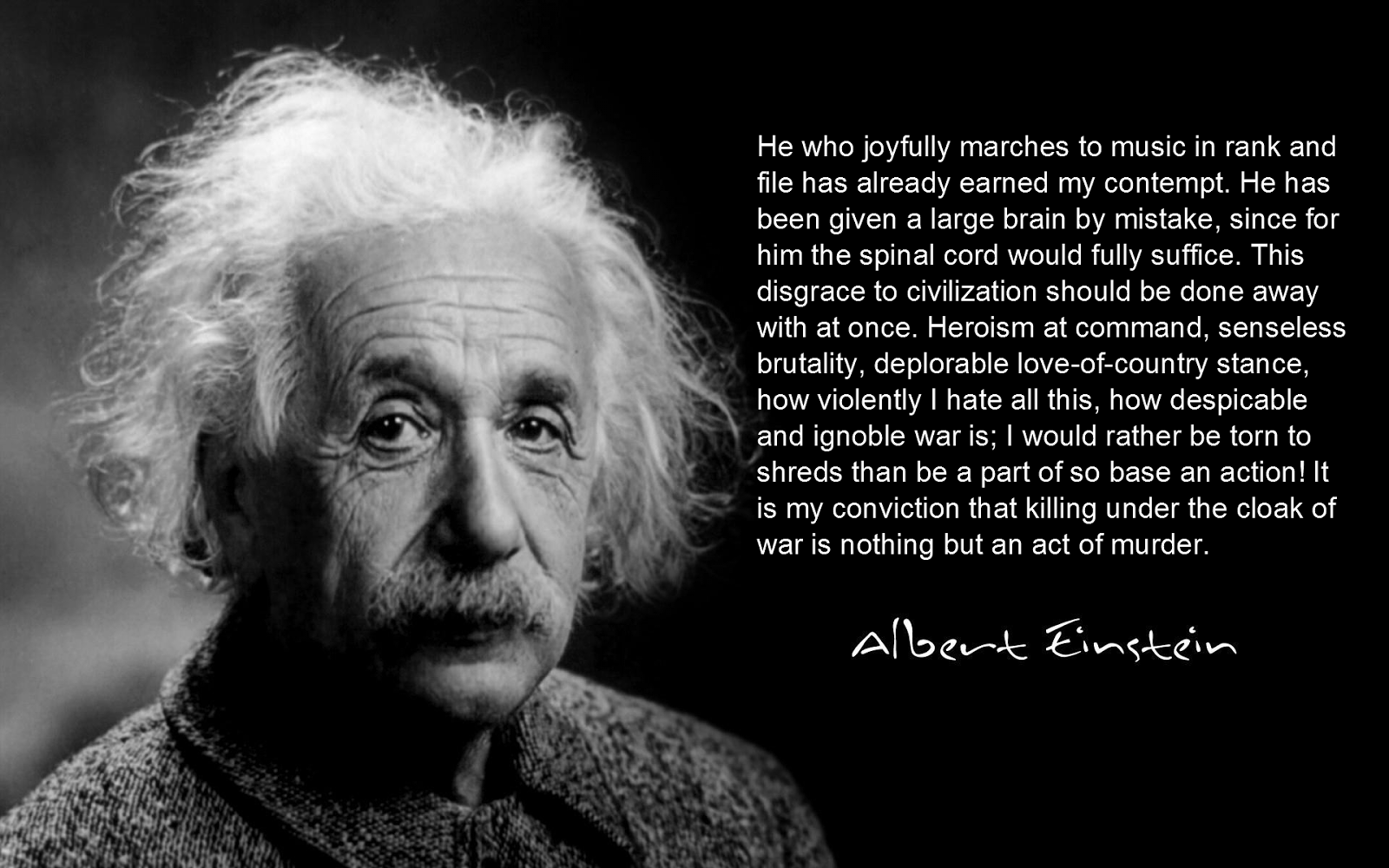
Conscientious & Intelligent Objector

BPR Quote of the Day:

Einstein anti-war quote

Posted in military, Quotations, war | Tagged , , | Leave a comment

List of X's avatarList of X

I’ve just learned that Fox News Channel did not renew the contract with former Vice-presidential candidate Sarah Palin.  Now would I stoop so low as to mock someone who has been a has-been for years and kick them while they’re down?  You betcha!  So, here are 10 reasons why Fox News fired Sarah Palin.

1)  Palin got fired by Fox to prove that she is not a quitter.

2)  Sarah was caught lip-syncing her rebuttal to Obama’s inauguration speech.

3)  Compared to the new crop of conservatives, Sarah Palin is starting to sound like a liberal.

4)  She wanted to spend time with her family, and find out which reality TV shows they could get her on.

5)  People started referring to Palin as “that Tina Fey look-alike”.

6)  Fox News may not care about Sarah Palin intellectual abilities, but they’ve certainly started to notice that she isn’t getting younger…

View original post 77 more words

Posted in Uncategorized | Leave a comment

Tale of Two Fantasies

BPR Quote of the Day:

556571_473257642740446_1503240244_n

Posted in Economics, philosophy, Quotations | Tagged , | Leave a comment

Very Tilted Playing Field

1-28-13-virtual-monopoly

Posted in cartoon, Economics, economy, government, inequality, political cartoon | Tagged , , | Leave a comment