Twenty years after the first substantive Earth Summit in Rio de Janeiro in 1992, representatives from more than 190 countries met again. Hopes were high, but unlike the first one, the 2012 Summit was mostly window dressing. President Obama, Prime Minister David Cameron of Britain, and Chancellor Angela Merkel of Germany and most other G20 leaders were notably absent, and little was accomplished. — BPR Editor
After Rio, we know. Governments have given up on the planet
The post-summit pledge was an admission of defeat against consumer capitalism. But we can still salvage the natural world
By George Monbiot/ The Guardian/ June 25, 2012

Our children must ‘experience something of the delight in the natural world and of the peaceful, unharried lives with which we have been blessed’. Photo: Alan Novelli/Alamy
It is, perhaps, the greatest failure of collective leadership since the first world war. The Earth’s living systems are collapsing, and the leaders of some of the most powerful nations – the United States, the UK, Germany, Russia – could not even be bothered to turn up and discuss it. Those who did attend the Earth summit in Rio last week solemnly agreed to keep stoking the destructive fires: sixteen times in their text they pledged to pursue “sustained growth“, the primary cause of the biosphere’s losses.
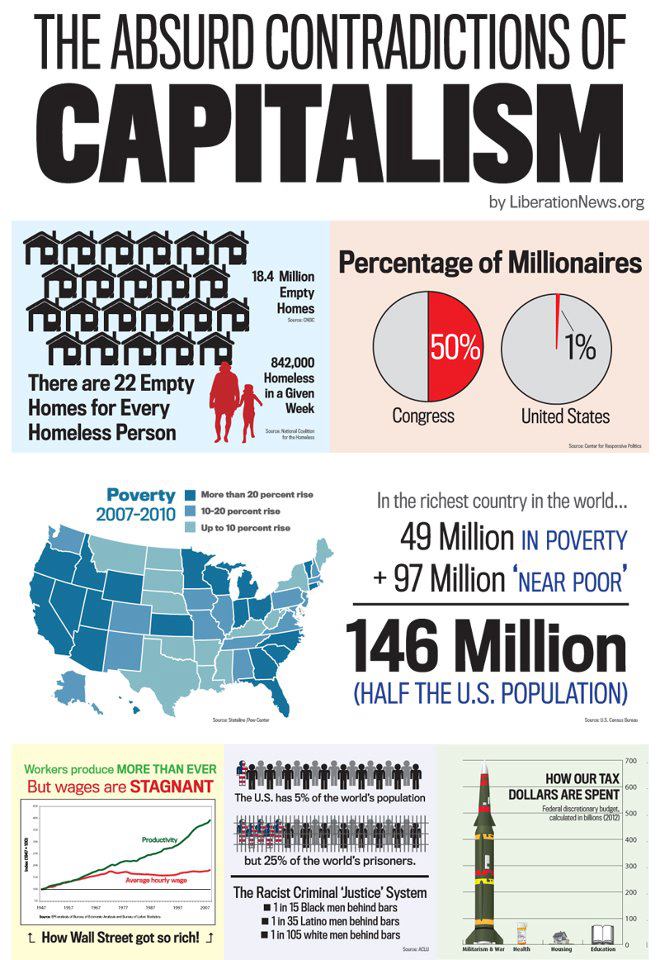
The efforts of governments are concentrated not on defending the living Earth from destruction, but on defending the machine that is destroying it. Whenever consumer capitalism becomes snarled up by its own contradictions, governments scramble to mend the machine, to ensure – though it consumes the conditions that sustain our lives – that it runs faster than ever before.
The thought that it might be the wrong machine, pursuing the wrong task, cannot even be voiced in mainstream politics. The machine greatly enriches the economic elite, while insulating the political elite from the mass movements it might otherwise confront. We have our bread; now we are wandering, in spellbound reverie, among the circuses.
We have used our unprecedented freedoms – secured at such cost by our forebears – not to agitate for justice, for redistribution, for the defence of our common interests, but to pursue the dopamine hits triggered by the purchase of products we do not need. The world’s most inventive minds are deployed not to improve the lot of humankind but to devise ever more effective means of stimulation, to counteract the diminishing satisfactions of consumption. The mutual dependencies of consumer capitalism ensure that we all unwittingly conspire in the trashing of what may be the only living planet. The failure at Rio de Janeiro belongs to us all.
It marks, more or less, the end of the multilateral effort to protect the biosphere. The only successful global instrument – the Montreal Protocol on substances that deplete the ozone layer – was agreed and implemented years before the first Earth Summit in 1992. It was one of the last fruits of a different political era, in which intervention in the market for the sake of the greater good was not considered anathema, even by the Thatcher and Reagan governments. Everything of value discussed since then has led to weak, unenforceable agreements, or to no agreements at all.

This is not to suggest that the global system and its increasingly pointless annual meetings will disappear, or even change. The governments which allowed the Earth Summit and all such meetings to fail evince no sense of responsibility for this outcome, and appear untroubled by the thought that if a system hasn’t worked for 20 years, there’s something wrong with the system. They walk away, aware that there are no political penalties; that the media is as absorbed with consumerist trivia as the rest of us; that, when future generations have to struggle with the mess they have left behind, their contribution will have been forgotten. (And then they lecture the rest of us on responsibility.)
Nor is it to suggest that multilateralism should be abandoned. Agreements on biodiversity, the oceans and the trade in endangered species may achieve some marginal mitigation of the full-spectrum assault on the biosphere that the consumption machine has unleashed. But that’s about it.
The action – if action there is – will mostly be elsewhere. Those governments which retain an interest in planet Earth will have to work alone, or in agreement with like-minded nations. There will be no means of restraining free riders, no means of persuading voters that their actions will be matched by those of other countries.
That we have missed the chance of preventing two degrees of global warming now seems obvious. That most of the other planetary boundaries will be crossed, equally so. So what do we do now?
Some people will respond by giving up, or at least withdrawing from political action. Why, they will ask, should we bother, if the inevitable destination is the loss of so much of what we hold dear: the forests, the brooks, the wetlands, the coral reefs, the sea ice, the glaciers, the birdsong and the night chorus, the soft and steady climate which has treated us kindly for so long? It seems to me that there are at least three reasons.
The first is to draw out the losses over as long a period as possible, in order to allow our children and grandchildren to experience something of the wonder and delight in the natural world and of the peaceful, unharried lives with which we have been blessed. Is that not a worthy aim, even if there were no other?
The second is to preserve what we can in the hope that conditions might change. I do not believe that the planet-eating machine, maintained by an army of mechanics, oiled by constant injections of public money, will collapse before the living systems on which it feeds. But I might be wrong. Would it not be a terrible waste to allow the tiger, the rhinoceros, the bluefin tuna, the queen’s executioner beetle and the scabious cuckoo bee, the hotlips fungus and the fountain anenome to disappear without a fight if this period of intense exploitation turns out to be a brief one?
The third is that, while we may have no influence over decisions made elsewhere, there is plenty that can be done within our own borders. Rewilding – the mass restoration of ecosystems – offers the best hope we have of creating refuges for the natural world, which is why I’ve decided to spend much of the next few years promoting it here and abroad.
Giving up on global agreements or, more accurately, on the prospect that they will substantially alter our relationship with the natural world, is almost a relief. It means walking away from decades of anger and frustration. It means turning away from a place in which we have no agency to one in which we have, at least, a chance of being heard. But it also invokes a great sadness, as it means giving up on so much else.
Was it too much to have asked of the world’s governments, which performed such miracles in developing stealth bombers and drone warfare, global markets and trillion-dollar bailouts, that they might spend a tenth of the energy and resources they devoted to these projects on defending our living planet? It seems, sadly, that it was.
George Joshua Richard Monbiot is an English writer, known for his environmental and political activism.