Higher Priority Than Deficits: Jobs, Programs, Investments

UNDERSTANDING THE FISCAL CLIFF (IN 2 MINUTES 30 SECONDS)

By Robert Reich/robertreich.org/ December 3, 2012

  • Democrats, here are eight principles to guide you in the coming showdown over the fiscal cliff:

ONE: HOLD YOUR GROUND. The wealthy have to pay their fair share of taxes. That’s what the election was all about, and we won. It’s only fair they pay more. They’re taking home record share of national income and wealth, and have lowest effective tax rate in living memory.

TWO: NO DEAL IS BETTER THAN A BAD DEAL. You’re in a strong bargaining position. If you do nothing, the Bush tax cuts automatically expire in January, and we go back to rates during Clinton administration. Which isn’t such a bad thing. As I recall we had a pretty good economy during the Clinton years.

THREE: MAKE REPUBLICANS VOTE ON EXTENDING THE TAX CUTS JUST FOR THE MIDDLE CLASS. After all the Bush tax cuts expire, have Republicans vote on an extending the Bush tax cut just for the middle-class. If they refuse and try to hold those tax cuts hostage to tax cuts for the wealthy, it will show whose side they’re on. They’ll pay the price in 2014.

FOUR: DEMAND HIGHER TAX RATES ON WEALTHY, NOT JUST LIMITS ON DEDUCTIONS. Don’t fall for Republican offers to limit some tax deductions on the wealthy. Demand we go back to higher tax rates on the wealthy and eliminate their unfair tax loopholes, so they truly start paying their fair share.

FIVE: DON’T CUT SAFETY NETS. Don’t sacrifice Medicare or Social Security, or programs for the poor. Americans depend on these safety nets and can’t afford any benefit cuts.

SIX: DON’T CUT INVESTMENTS IN OUR FUTURE PRODUCTIVITY. Education, basic R&D, and infrastructure aren’t spending; they’re investments in our future prosperity. If the return on these investments is greater than the cost, they ought to be made, period.

SEVEN: CUT SPENDING ON MILITARY AND CORPORATE WELFARE. You want to cut, cut spending on the military — which now exceeds the military spending of the next 13 largest military spenders in the world combined. And cut corporate welfare — support to agribusiness, oil and gas, Big Pharma, big insurance, and Wall Street.

EIGHT: PUT JOBS BEFORE DEFICIT REDUCTION. Finally, Don’t cut the budget deficit as long as unemployment remains high. Otherwise you’ll cause the economy to contract, making the deficit even larger in proportion. That’s the austerity trap Europe has fallen into. We need to create American prosperity, not European austerity.

Remember: Jobs come first.

Posted in Democratic Party, Economics, economy, employment, finance, government, inequality, politics, Republican Party, taxes | Tagged , | Leave a comment

Obama’s Secret Advisors Identified

BPR Quote of the Day:

“You look at the decisions it made especially in the last two years in going through the revolutions in Northern Africa and across the Middle East and to the Far East, and the only way you can explain the horrendous decisions that were so completely wrongheaded would be if this administration had a bunch of Muslim Brotherhood members giving them advice.”

Rep. Louie Gohmert (R-TX)

From a radio interview with Frank Gaffney, Nov. 27

crazypeoplelouiegohmert

Posted in Barack Obama, foreign policy, government, politics, Quotations | Tagged , | Leave a comment

Some Things Never Change #2

BPR Quote of the Day:

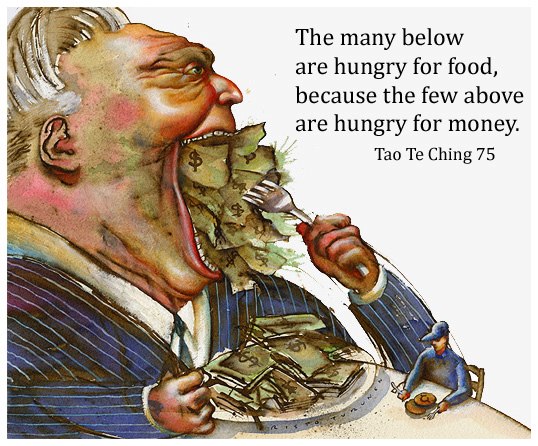
Tao

From Taoism Facebook page: “Amazing how this contemporary cartoon matches so well with a text from 500BCE.”

The Tao Te Ching is a classic Chinese text from the 6th Century BC.

Posted in cartoon, inequality, philosophy, political cartoon, Quotations | Tagged , | 1 Comment

Tax the Rich

An animated video, narrated by Ed Asner, from the California Federation of Teachers

Posted in economy, government, inequality, politics, taxes, Wall Street | Tagged , , | 1 Comment

Déja Vù

Posted in cartoon, humor, political cartoon, political humor | Tagged | 1 Comment

The War on WikiLeaks

EXCLUSIVE: Julian Assange on WikiLeaks, Bradley Manning, Cypherpunks, Surveillance State

Democracy Now/ November 29, 2012

In his most extended interview in months, Julian Assange speaks to Democracy Now! from inside the Ecuadorean embassy in London, where he has been holed up for nearly six months. Assange vowed WikiLeaks would persevere despite attacks against it. On Tuesday, the European Commission announced that the credit card company Visa did not break the European Union’s antitrust rules by blocking donations to WikiLeaks. “Since the blockade was erected in December 2010, WikiLeaks has lost 95 percent of the donations that were attempted to be transferred to us over that period. … Our rightful and natural growth, our ability to publish as much as we would like, our ability to defend ourselves and our sources, has been diminished by that blockade.” Assange also speaks about his new book, “Cypherpunks: Freedom and the Future of the Internet.” “The mass surveillance and mass interception that is occurring to all of us now who use the internet is also a mass transfer of power from individuals into extremely sophisticated state and private intelligence organizations and their cronies,” he says. Assange also discusses the United States’ targeting of WikiLeaks. “The Pentagon is maintaining a line that WikiLeaks inherently, as an institution that tells military and government whistleblowers to step forward with information, is a crime. They allege we are criminal, moving forward,” Assange says. “Now, the new interpretation of the Espionage Act that the Pentagon is trying to hammer in to the legal system, and which the Department of Justice is complicit in, would mean the end of national security journalism in the United States.” [includes rush transcript]

JUAN GONZÁLEZ: Bradley Manning, the U.S. Army private accused of leaking hundreds of thousands of classified documents to the whistleblowing website WikiLeaks, may testify today at a pretrial proceeding for the first time since he was arrested in May 2010. Manning could face life in prison if convicted of the most serious of 22 counts against him. His trial is expected to begin in February.

Meanwhile, the founder of WikiLeaks, Julian Assange, remains holed up in the Ecuadorean embassy in London, where he sought refuge nearly six months ago to avoid being extradited to Sweden to be questioned over sexual assault claims. Earlier this week, Assange vowed WikiLeaks would persevere despite attacks against it. On Tuesday, the European Commission announced that the credit card company Visa did not break the European Union’s antitrust rules by blocking donations to WikiLeaks. Shortly after the ruling, Assange addressed reporters in Brussels via video stream from inside the Ecuadorean embassy.

JULIAN ASSANGE: The strength of popular and private support means that we continue. There is no danger that WikiLeaks will cease to exist as an organization. Rather, its natural and rightful growth has been compromised, and that is wrong and must change. It would set a very bad precedent—it was not only wrong for WikiLeaks; it sets an extremely bad precedent for all other European organizations and all media organizations worldwide that monopolies can simply exercise financial death penalties over organizations and companies as a result of political controversy.

AMY GOODMAN: That was Julian Assange speaking on Tuesday. He now joins us in a rare interview from inside the Ecuadorean embassy in London. He has been granted political asylum in Ecuador but can’t leave the embassy because the British government promises to arrest him if he steps foot on British soil. He has just co-authored a new book called Cypherpunks: Freedom and the Future of the Internet. The book examines how the internet can be used as both an instrument of freedom and oppression.

JULIAN ASSANGE: Well, it’s good to be with you, Amy and Juan. The decision is disgraceful, but it is only a preliminary decision. We have another submission that the commission has asked for, so hopefully they will turn around before the end of the year or the beginning of next year. Commission had been investigating our complaint for 16 months. The normal turnaround time is four months. The European Parliament last week voted, through an Article 32 section, on how banks should be reformed and credit card companies should be reformed in order to stop arbitrary, extrajudicial financial blockades such as the one that is being applied to WikiLeaks. This year, we—the Council of Europe, all 47 foreign ministers last year passed a resolution saying that these sorts of arbitrary financial blockades on WikiLeaks should not continue, so that it’s interesting to see the playoff in the political wills in Europe between, on the one hand, the Council of Europe and the Parliament and, on the other hand, the commission. But it’s been known for a long time that the commission is closer to big business, and it is often successfully lobbied. Hopefully the commission will do the right thing and turn around in this case.

Click Here for Complete Transcript and Video 


Boldface Added By BPR Editor
Posted in civil liberties, law, Uncategorized | Tagged , , , , , , , | Leave a comment

Some Things Never Change #1

BPR Quote of the Day:

Enjoy Quotes? Check Out the BPR Editor’s QUOTATIONQUOTIENT.COM
Posted in Economics, inequality, Quotations | Tagged , | 3 Comments

Evil Empire

Posted in foreign policy, Iran, military, Terrorism, war | Tagged | 6 Comments

Single-Payer Health Care–Now Is The Time

By Arlen Grossman/ The Big Picture Report

Right now is an opportune time to push for single-payer nationalized health care in the United States. A number of American companies and franchisees, Papa John’s, Denny’s, and Applebee’s among them, have been quite open about their displeasure with the cost of Obama’s Affordable Care Act and their intentions to cut hours or fire employees when it fully goes into effect.

Sure, many of the complaining CEOs of these companies are greedy, right-wing Republicans, so we shouldn’t be surprised, but perhaps we can afford them the benefit of the doubt on this issue. After all, why should U.S. companies pay for the health insurance of their employees? It’s become expected that large and medium-size businesses provide health insurance to employees, and under the new law, they will be penalized if they don’t.

But is the old system or the new Affordable Care Act the best we can do? Right now, the majority of Americans under age 65 receive their coverage through their employer. But employee health insurance is a huge expense, puts companies at a competitive disadvantage with overseas businesses, and isn’t their obligation, according to the Constitution or any other official document.

To make matters worse, costs for employer-paid health insurance are rising rapidly. Annual premiums for family coverage have increased nearly 100 percent in the last decade. According to the Kaiser Family Foundation, average premiums have risen to $5,615 for single coverage and $15,745 for family coverage.

Employer-sponsored health insurance sprang up in this country primarily during and after World War II when companies figured they could attract employees by offering generous benefits. But now that potential employees are plentiful and health care costs have skyrocketed, the whole idea of employer-provided health insurance doesn’t make sense for anybody.

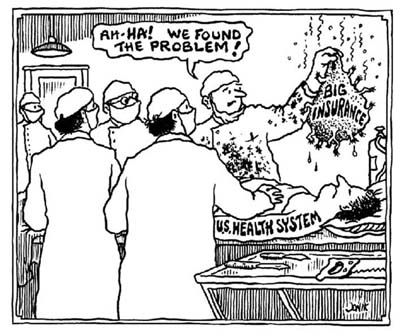
John Jonik

Of course, employer-sponsored health care is unheard of in the rest of the developed world. There is no need for it where government provides health care and/or health insurance, which is the case in every other industrialized nation. Single-payer government health care is in effect here too. It’s called Medicare, but, with a few exceptions, only Americans over age 65 can use it.

What we have for the rest of us is a failed health care system. In 2010, Kaiser reports, the U.S. spent more than $2.6 trillion on health care, more than ten times the amount in 1980.  We spend far more on health care than any other country and with much worse results in the most important health categories, e.g. life expectancy and infant mortality. And prior to the Affordable Care Act going into full effect, more than 48 million Americans are lacking health insurance, and according to a 2009 Harvard Medical School study, 45,000 a year die because they don’t have it.

If many corporations don’t like ObamaCare, they have a great opportunity now to join forces with  liberals and fight for single-payer, nationalized health insurance. They would make strange bedfellows indeed, but for the employers, single-payer would free them from the costly obligation to provide health insurance. It would push private insurance companies–who, because of their quest for ever-increasing profits have driven up the cost of health care–out of the equation. The time to make this happen is now, before the major portions of the Affordable Care Act go into effect, before millions more Americans are forced to go into battle with private health insurance companies.

So, Papa John’s and other companies, stop griping about ObamaCare. This is the time to join forces with liberal/progressive groups (and the majority of Americans, according to many polls) in pushing for single-payer, government-run health insurance. It’s unlikely, but if you did, we could all benefit.

ALSO PUBLISHED IN OPEDNEWS.COM  November 28, 2012


Posted in government, health care | Tagged , , , , , | 5 Comments

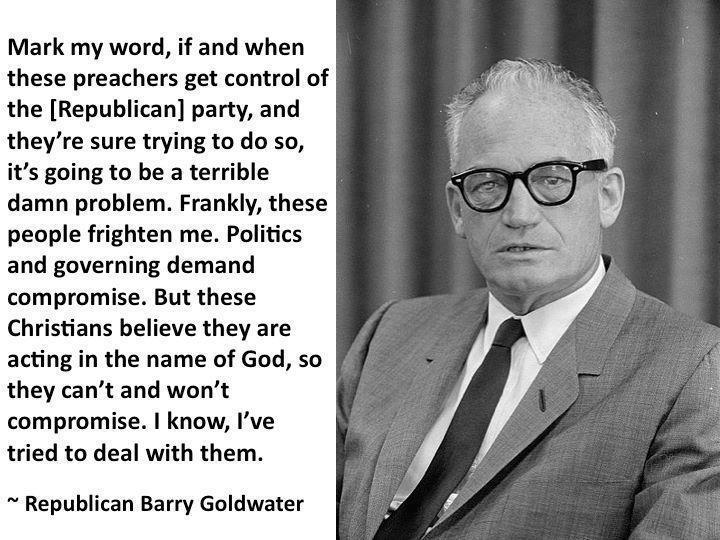
They Should Have Listened to You, Barry

Posted in philosophy, politics, Quotations, religion, Republican Party | Tagged | 2 Comments