WTF Are We Doing To Ourselves

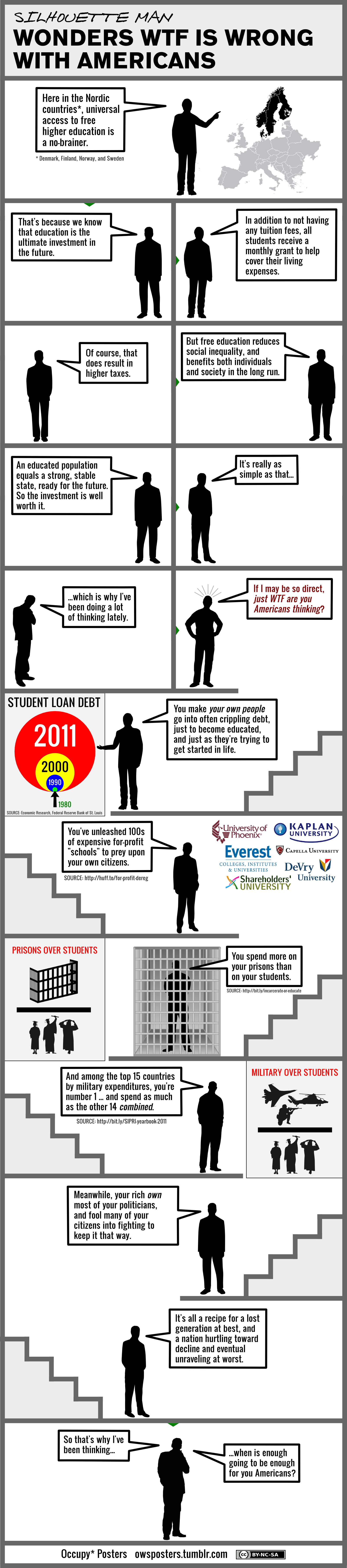
slihouettemanwonderswtf-1

Posted in cartoon, Economics, economy, Education, finance, government, health care, inequality, military, political cartoon, politics, poverty, prisons, taxes | Tagged , , , , , , , | Leave a comment

“CREATING AN ORWELLIAN STATE” – AMAZING VIDEO INTERVIEWS

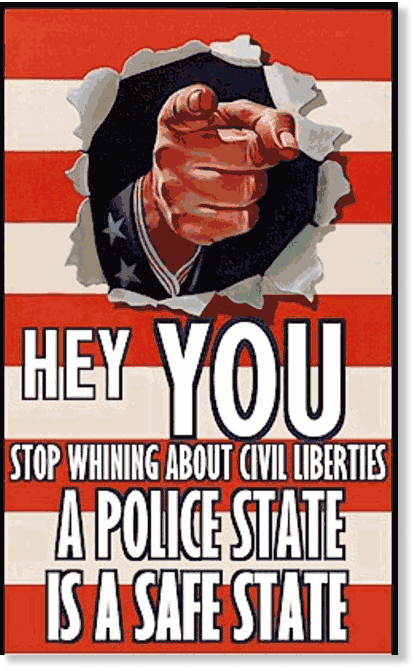
police_state_47520181985

original source unknown

If you had any doubts America has been transformed into an increasingly oppressive police state, this Democracy Now broadcast might just dispel those doubts. The video features three targeted American citizens–the interviews start at about 13:00……

Click Here: Democracy Now Video

(Sorry, I am unable to embed the video into my format)

Posted in Barack Obama, civil liberties, government, immigration, intelligence, Justice, law, media, military, politics | Tagged , , , , , , , , , , , , , | Leave a comment

60 Years After the Fact

CIA ADMITS IT WAS BEHIND IRAN’S COUP

The agency finally owns up to its role in the 1953 operation

By Malcolm Byrne/ Foreign Policy/ August 18, 2013

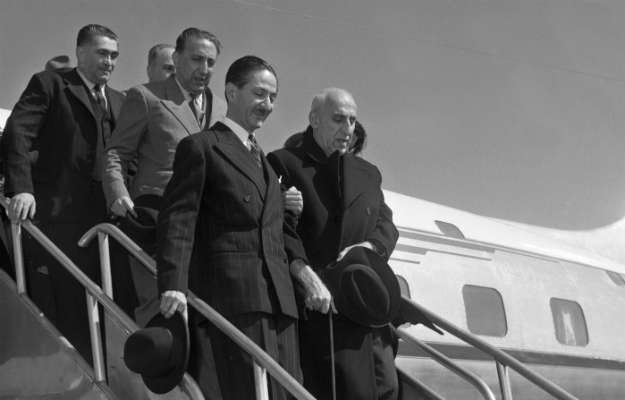
mossadegh

Sixty years ago this Monday, on August 19, 1953, modern Iranian history took a critical turn when a U.S.- and British-backed coup overthrew the country’s prime minister, Mohammed Mossadegh. The event’s reverberations have haunted its orchestrators over the years, contributing to the anti-Americanism that accompanied the Shah’s ouster in early 1979, and even influencing the Iranians who seized the U.S. Embassy in Tehran later that year.

But it has taken almost six decades for the U.S. intelligence community to acknowledge openly that it was behind the controversial overthrow. Published here today — and on the website of the National Security Archive, which obtained the document through the Freedom of Information Act — is a brief excerpt from The Battle for Iran, an internal report prepared in the mid-1970s by an in-house CIA historian.

The document was first released in 1981, but with most of it excised, including all of Section III, entitled “Covert Action” — the part that describes the coup itself. Most of that section remains under wraps, but this new version does formally make public, for the first time that we know of, the fact of the agency’s participation: “[T]he military coup that overthrew Mosadeq and his National Front cabinet was carried out under CIA direction as an act of U.S. foreign policy,” the history reads. The risk of leaving Iran “open to Soviet aggression,” it adds, “compelled the United States … in planning and executing TPAJAX.”

TPAJAX was the CIA’s codename for the overthrow plot, which relied on local collaborators at every stage. It consisted of several steps: using propaganda to undermine Mossadegh politically, inducing the Shah to cooperate, bribing members of parliament, organizing the security forces, and ginning up public demonstrations. The initial attempt actually failed, but after a mad scramble the coup forces pulled themselves together and came through on their second try, on August 19.

Why the CIA finally chose to own up to its role is as unclear as some of the reasons it has held onto this information for so long. CIA and British operatives have written books and articles on the operation — notably Kermit Roosevelt, the agency’s chief overseer of the coup. Scholars have produced many more books, including several just in the past few years. Moreover, two American presidents (Clinton and Obama) have publicly acknowledged the U.S. role in the coup.

But U.S. government classifiers, especially in the intelligence community, often have a different view on these matters. They worry that disclosing “sources and methods” — even for operations decades in the past and involving age-old methods like propaganda — might help an adversary. They insist there is a world of difference between what becomes publicly known unofficially (through leaks, for example) and what the government formally acknowledges. (Somehow those presidential admissions of American involvement seem not to have counted.)

Finally, there is the priority of maintaining good relations with allies, particularly in the intelligence arena. British records from several years ago (see the National Security Archive’sposting today) show that the Foreign Office (and presumably MI6, which helped plan and carry out the coup) has been anxious not to let slip any official word about its involvement. To outside observers, this subterfuge borders on the ludicrous given that Iranians have assumed London’s role for so long. Yet, by most indicators, the U.S. intelligence community has gone along, regardless of the consequences for Americans’ understanding of their own history.

The fact that the CIA has now chosen to shift direction, at least this far, is something to be welcomed. One can only hope it leads to similar decisions to open up the historical record on topics that still matter today.


Posted in foreign policy, government, intelligence, Iran, military, scandals | Tagged , , , , , , , | Leave a comment

What Injustice?

BPR Quote of the Day

1187134_713048252045172_434487263_n

Posted in Justice, philosophy, Quotations | Tagged , | Leave a comment

AUTHORITIES GO AFTER GREENWALD’S PARTNER

Detaining my partner: a failed attempt at intimidation

The detention of my partner, David Miranda, by UK authorities will have the opposite effect of the one intended

By Glenn Greenwald/ The Guardian/ August 18, 2013

At 6:30 am this morning my time – 5:30 am on the East Coast of the US – I received a telephone call from someone who identified himself as a “security official at Heathrow airport.” He told me that my partner, David Miranda, had been “detained” at the London airport “under Schedule 7 of the Terrorism Act of 2000.”

David had spent the last week in Berlin, where he stayed with Laura Poitras, the US filmmaker who has worked with me extensively on the NSA stories. A Brazilian citizen, he was returning to our home in Rio de Janeiro this morning on British Airways, flying first to London and then on to Rio. When he arrived in London this morning, he was detained.

At the time the “security official” called me, David had been detained for 3 hours. The security official told me that they had the right to detain him for up to 9 hours in order to question him, at which point they could either arrest and charge him or ask a court to extend the question time. The official – who refused to give his name but would only identify himself by his number: 203654 – said David was not allowed to have a lawyer present, nor would they allow me to talk to him.

Glenn_Greenwald_620x140

I immediately contacted the Guardian, which sent lawyers to the airport, as well various Brazilian officials I know. Within the hour, several senior Brazilian officials were engaged and expressing indignation over what was being done. The Guardian has the full story here.

Despite all that, five more hours went by and neither the Guardian’s lawyers nor Brazilian officials, including the Ambassador to the UK in London, were able to obtain any information about David. We spent most of that time contemplating the charges he would likely face once the 9-hour period elapsed.

According to a document published by the UK government about Schedule 7 of the Terrorism Act, “fewer than 3 people in every 10,000 are examined as they pass through UK borders” (David was not entering the UK but only transiting through to Rio). Moreover, “most examinations, over 97%, last under an hour.” An appendix to that document states that only .06% of all people detained are kept for more than 6 hours.

The stated purpose of this law, as the name suggests, is to question people aboutterrorism. The detention power, claims the UK government, is used “to determine whether that person is or has been involved in the commission, preparation or instigation of acts of terrorism.”

But they obviously had zero suspicion that David was associated with a terrorist organization or involved in any terrorist plot. Instead, they spent their time interrogating him about the NSA reporting which Laura Poitras, the Guardian and I are doing, as well the content of the electronic products he was carrying. They completely abused their own terrorism law for reasons having nothing whatsoever to do with terrorism: a potent reminder of how often governments lie when they claim that they need powers to stop “the terrorists”, and how dangerous it is to vest unchecked power with political officials in its name.

Worse, they kept David detained right up until the last minute: for the full 9 hours, something they very rarely do. Only at the last minute did they finally release him. We spent all day – as every hour passed – worried that he would be arrested and charged under a terrorism statute. This was obviously designed to send a message of intimidation to those of us working journalistically on reporting on the NSA and its British counterpart, the GCHQ.

Before letting him go, they seized numerous possessions of his, including his laptop, his cellphone, various video game consoles, DVDs, USB sticks, and other materials. They did not say when they would return any of it, or if they would.

This is obviously a rather profound escalation of their attacks on the news-gathering process and journalism. It’s bad enough to prosecute and imprison sources. It’s worse still to imprison journalists who report the truth. But to start detaining the family members and loved ones of journalists is simply despotic. Even the Mafia had ethical rules against targeting the family members of people they felt threatened by. But the UK puppets and their owners in the US national security state obviously are unconstrained by even those minimal scruples.

If the UK and US governments believe that tactics like this are going to deter or intimidate us in any way from continuing to report aggressively on what these documents reveal, they are beyond deluded. If anything, it will have only the opposite effect: to embolden us even further. Beyond that, every time the US and UK governments show their true character to the world – when they prevent the Bolivian President’s plane from flying safely home, when they threaten journalists with prosecution, when they engage in behavior like what they did today – all they do is helpfully underscore why it’s so dangerous to allow them to exercise vast, unchecked spying power in the dark.

David was unable to call me because his phone and laptop are now with UK authorities. So I don’t yet know what they told him. But the Guardian’s lawyer was able to speak with him immediately upon his release, and told me that, while a bit distressed from the ordeal, he was in very good spirits and quite defiant, and he asked the lawyer to convey that defiance to me. I already share it, as I’m certain US and UK authorities will soon see.

 
Posted in civil liberties, crime, government, law, law enforcement, media, politics, Terrorism | Tagged , , , , , | Leave a comment

Plenty of Those Around

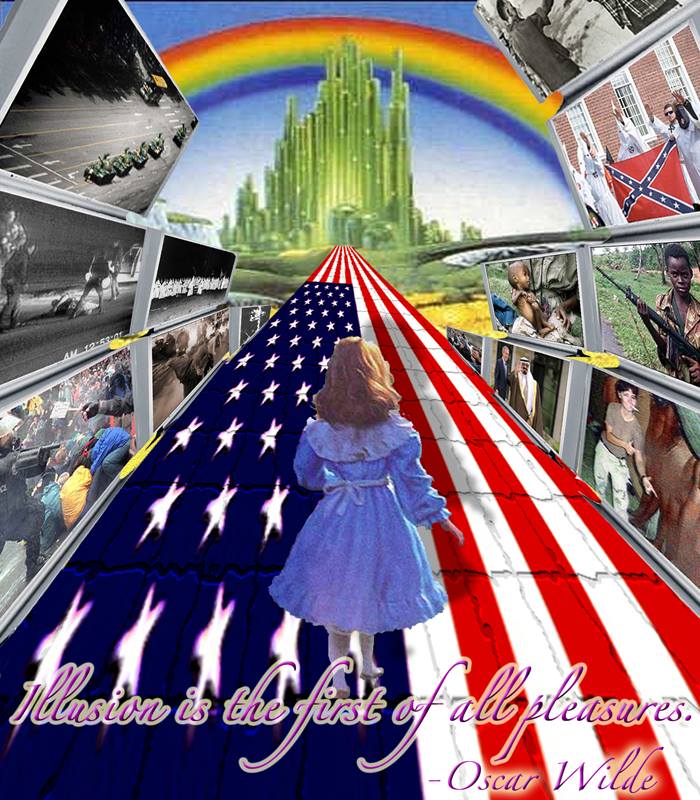
BPR Quote of the Day:1185354_1403423283209479_1686785885_n

BPR Editor’s Note: I love this poster, but the quote is actually from Voltaire, not Oscar Wilde.

Posted in Quotations | Tagged , , , | 2 Comments

Putting Everything In Perspective

Posted in science | Tagged , , , , | Leave a comment

How Does Your Favorite State Do?

Enviro_Good_Map

Enviro_Bad_Map

Mother Nature Network
Posted in environment, health, health care, political poster, poster, science | Tagged , | Leave a comment

THE SURPRISING CAUSE OF THE RISE & FALL OF OUR CRIME RATE?

America’s Real Criminal Element: Lead

New research finds Pb is the hidden villain behind violent crime, lower IQs, and even the ADHD epidemic. And fixing the problem is a lot cheaper than doing nothing.

By Kevin Drum/ Mother Jones/ January/February, 2013

i-afda50b71251a87eb0a32e084bc37324-contains_lead

When Rudy Giuliani ran for mayor of New York City in 1993, he campaigned on a platform of bringing down crime and making the city safe again. It was a comfortable position for a former federal prosecutor with a tough-guy image, but it was more than mere posturing. Since 1960, rape rates had nearly quadrupled, murder had quintupled, and robbery had grown fourteenfold. New Yorkers felt like they lived in a city under siege.

 Throughout the campaign, Giuliani embraced a theory of crime fighting called “broken windows,” popularized a decade earlier by James Q. Wilson and George L. Kelling in an influential article in The Atlantic. [8] “If a window in a building is broken and is left unrepaired,” they observed, “all the rest of the windows will soon be broken.” So too, tolerance of small crimes would create a vicious cycle ending with entire neighborhoods turning into war zones. But if you cracked down on small crimes, bigger crimes would drop as well.

Giuliani won the election, and he made good on his crime-fighting promises by selecting Boston police chief Bill Bratton as the NYPD’s new commissioner. Bratton had made his reputation as head of the New York City Transit Police, where he aggressively applied broken-windows policing to turnstile jumpers and vagrants in subway stations. With Giuliani’s eager support, he began applying the same lessons to the entire city, going after panhandlers, drunks, drug pushers, and the city’s hated squeegee men. And more: He decentralized police operations and gave precinct commanders more control, keeping them accountable with a pioneering system called CompStat that tracked crime hot spots in real time.

The results were dramatic. In 1996, the New York Times reported [9] that crime had plunged for the third straight year, the sharpest drop since the end of Prohibition. Since 1993, rape rates had dropped 17 percent, assault 27 percent, robbery 42 percent, and murder an astonishing 49 percent. Giuliani was on his way to becoming America’s Mayor and Bratton was on the cover of Time. It was a remarkable public policy victory.

But even more remarkable is what happened next. Shortly after Bratton’s star turn, political scientist John DiIulio warned that the echo of the baby boom would soon produce a demographic bulge of millions of young males that he famously dubbed “juvenile super-predators [10].” Other criminologists nodded along. But even though the demographic bulge came right on schedule, crime continued to drop. And drop. And drop. By 2010, violent crime rates in New York City had plunged 75 percent from their peak in the early ’90s.

All in all, it seemed to be a story with a happy ending, a triumph for Wilson and Kelling’s theory and Giuliani and Bratton’s practice. And yet, doubts remained. For one thing, violent crime actually peaked in New York City in 1990, four years before the Giuliani-Bratton era. By the time they took office, it had already dropped 12 percent.

The PB Effect

What happens when you expose a generation of kids to high lead levels? Crime and teen pregnancy data two decades later tell a startling story.

Second, and far more puzzling, it’s not just New York that has seen a big drop in crime. In city after city, violent crime peaked in the early ’90s and then began a steady and spectacular decline. Washington, DC, didn’t have either Giuliani or Bratton, but its violent crime rate has dropped 58 percent since its peak. Dallas’ has fallen 70 percent. Newark: 74 percent. Los Angeles: 78 percent.

There must be more going on here than just a change in policing tactics in one city. But what?
There are, it turns out, plenty of theories. When I started research for this story, I worked my way through a pair of thick [11] criminology tomes [12]. One chapter regaled me with the “exciting possibility” that it’s mostly a matter of economics: Crime goes down when the economy is booming and goes up when it’s in a slump. Unfortunately, the theory doesn’t seem to hold water—for example, crime rates have continued to drop recently despite our prolonged downturn.

Another chapter suggested that crime drops in big cities were mostly a reflection of the crack epidemic of the ’80s finally burning itself out. A trio of authors identified three major “drug eras” in New York City, the first dominated by heroin, which produced limited violence, and the second by crack, which generated spectacular levels of it. In the early ’90s, these researchers proposed, the children of CrackGen switched to marijuana, choosing a less violent and more law-abiding lifestyle. As they did, crime rates in New York and other cities went down.

Another chapter told a story of demographics: As the number of young men increases, so does crime. Unfortunately for this theory, the number of young men increased during the ’90s, but crime dropped anyway.

There were chapters in my tomes on the effect of prison expansion. On guns and gun control. On family. On race. On parole and probation. On the raw number of police officers. It seemed as if everyone had a pet theory. In 1999, economist Steven Levitt, later famous as the coauthor of Freakonomics, teamed up with John Donohue to suggest that crime dropped because of Roe v. Wade [13]; legalized abortion, they argued, led to fewer unwanted babies, which meant fewer maladjusted and violent young men two decades later.

But there’s a problem common to all of these theories: It’s hard to tease out actual proof. Maybe the end of the crack epidemic contributed to a decline in inner-city crime, but then again, maybe it was really the effect of increased incarceration, more cops on the beat, broken-windows policing, and a rise in abortion rates 20 years earlier. After all, they all happened at the same time.

To address this problem, the field of econometrics gives researchers an enormous toolbox of sophisticated statistical techniques. But, notes statistician and conservative commentator Jim Manzi in his recent book Uncontrolled [14], econometrics consistently fails to explain most of the variation in crime rates. After reviewing 122 known field tests, Manzi found that only 20 percent demonstrated positive results for specific crime-fighting strategies, and none of those positive results were replicated in follow-up studies.

 (Continued-Read Entire Article Here)


Posted in crime, Energy, environment, health, law enforcement, medicine, politics, science | Tagged , , , , , , , , , , , | Leave a comment

THE REAL ENEMY: GLOBAL CAPITALISM

Murdering the Wretched of the Earth

By Chris Hedges/ Truthout/ August 14, 2013

Global Ruling Class

focusonsocialism.ca

Radical Islam is the last refuge of the Muslim poor. The mandated five prayers a day give the only real structure to the lives of impoverished believers. The careful rituals of washing before prayers in the mosque, the strict moral code, along with the understanding that life has an ultimate purpose and meaning, keep hundreds of millions of destitute Muslims from despair. The fundamentalist ideology that rises from oppression is rigid and unforgiving. It radically splits the world into black and white, good and evil, apostates and believers. It is bigoted and cruel to women, Jews, Christians and secularists, along with gays and lesbians. But at the same time it offers to those on the very bottom of society a final refuge and hope. The massacres of hundreds of believers in the streets of Cairo signal not only an assault against a religious ideology, not only a return to the brutal police state of Hosni Mubarak, but the start of a holy war that will turn Egypt and other poor regions of the globe into a caldron of blood and suffering. 

The only way to break the hold of radical Islam is to give its followers a stake in the wider economy, the possibility of a life where the future is not dominated by grinding poverty, repression and hopelessness. If you live in the sprawling slums of Cairo or the refugee camps in Gaza or the concrete hovels in New Delhi, every avenue of escape is closed. You cannot get an education. You cannot get a job. You do not have the resources to marry. You cannot challenge the domination of the economy by the oligarchs and the generals. The only way left for you to affirm yourself is to become a martyr, or shahid. Then you will get what you cannot get in life—a brief moment of fame and glory. And while what will take place in Egypt will be defined as a religious war, and the acts of violence by the insurgents who will rise from the bloodied squares of Cairo will be defined as terrorism, the engine for this chaos is not religion but the collapsing economy of a world where the wretched of the earth are to be subjugated and starved or shot. The lines of battle are being drawn in Egypt and across the globe. Adli Mansour, the titular president appointed by the military dictator of Egypt, Gen. Abdul-Fattah el-Sisi, has imposed a military-led government, a curfew and a state of emergency. They will not be lifted soon. 

The lifeblood of radical movements is martyrdom. The Egyptian military has provided an ample supply. The faces and the names of the sanctified dead will be used by enraged clerics to call for holy vengeance. And as violence grows and the lists of martyrs expand, a war will be ignited that will tear Egypt apart. Police, Coptic Christians, secularists, Westerners, businesses, banks, the tourism industry and the military will become targets. Those radical Islamists who were persuaded by the Muslim Brotherhood that electoral politics could work and brought into the system will go back underground, and many of the rank and file of the Muslim Brotherhood will join them. Crude bombs will be set off. Random attacks and assassinations by gunmen will puncture daily life in Egypt as they did in the 1990s when I was in Cairo for The New York Times, although this time the attacks will be wider and more fierce, far harder to control or ultimately crush.

What is happening in Egypt is a precursor to a wider global war between the world’s elites and the world’s poor, a war caused by diminishing resources, chronic unemployment and underemployment, overpopulation, declining crop yields caused by climate change, and rising food prices. Thirty-three percent of Egypt’s 80 million people are 14 or younger, and millions live under or just above the poverty line, which the World Bank sets at a daily income of $2 in that nation. The poor in Egypt spend more than half their income on food—often food that has little nutritional value. An estimated 13.7 million Egyptians, or 17 percent of the population, suffered from food insecurity in 2011, compared with 14 percent in 2009, according to a report by the U.N. World Food Program and the Egyptian Central Agency for Public Mobilization and Statistics (CAPMAS). Malnutrition is endemic among poor children, with 31 percent under 5 years old stunted in growth. Illiteracy runs at more than 70 percent.

In “Les Misérables” Victor Hugo described war with the poor as one between the “egoists” and the “outcasts.” The egoists, Hugo wrote, had “the bemusement of prosperity, which blunts the sense, the fear of suffering which is some cases goes so far as to hate all sufferers, and unshakable complacency, the ego so inflated that is stifles the soul.” The outcasts, who were ignored until their persecution and deprivation morphed into violence, had “greed and envy, resentment at the happiness of others, the turmoil of the human element in search of personal fulfillment, hearts filled with fog, misery, needs, and fatalism, and simple, impure ignorance.”

The belief systems the oppressed embrace can be intolerant, but these belief systems are a response to the injustice, state violence and cruelty inflicted on them by the global elites. Our enemy is not radical Islam. It is global capitalism. It is a world where the wretched of the earth are forced to bow before the dictates of the marketplace, where children go hungry as global corporate elites siphon away the world’s wealth and natural resources and where our troops and U.S.-backed militaries carry out massacres on city streets. Egypt offers a window into the coming dystopia. The wars of survival will mark the final stage of human habitation of the planet. And if you want to know what they will look like, visit any city morgue in Cairo.

AP/Ahmed Gomaa
(Boldface added by BPR Editor)
Posted in Economics, Egypt, finance, foreign policy, government, military, politics, poverty, protests, war | Tagged , , , , , , , , , , , | 6 Comments