Truth: A Casualty of War

Top 45 Lies in Obama’s Speech at the U.N.

By David Swanson/ davidswanson.org/ September 25, 2013

1. President Obama’s opening lines at the U.N. on Tuesday looked down on people who would think to settle disputes with war. Obama was disingenuously avoiding the fact that earlier this month he sought to drop missiles into a country to “send a message” but was blocked by the U.S. Congress, the U.N., the nations of the world, and popular opposition — after which Obama arrived at diplomacy as a last resort.

2. “It took the awful carnage of two world wars to shift our thinking.” Actually, it took one. The second resulted in a half-step backwards in “our thinking.” The Kellogg-Briand Pact banned all war. The U.N. Charter re-legalized wars purporting to be either defensive or U.N.-authorized.

3. “[P]eople are being lifted out of poverty,” Obama said, crediting actions by himself and others in response to the economic crash of five years ago. But downward global trends in poverty are steady and long pre-date Obama’s entry into politics. And such a trend does not exist in the U.S. [1]

4. “Together, we have also worked to end a decade of war,” Obama said. In reality, Obama pushed Iraq hard to allow that occupation to continue, and was rejected just as Congress rejected his missiles-for-Syria proposal. Obama expanded the war on Afghanistan. Obama expanded, after essentially creating, drone wars. Obama has increased global U.S. troop presence, global U.S. weapons sales, and the size of the world’s largest military. He’s put “special” forces into many countries, waged a war on Libya, and pushed for an attack on Syria. How does all of this “end a decade of war”? And how did his predecessor get a decade in office anyway?

5. “Next year, an international coalition will end its war in Afghanistan, having achieved its mission of dismantling the core of al Qaeda that attacked us on 9/11.” In reality, Bruce Riedel, who coordinated a review of Afghanistan policy for President Obama said, “The pressure we’ve put on [jihadist forces] in the past year has also drawn them together, meaning that the network of alliances is growing stronger not weaker.” (New York Times, May 9, 2010.)

6. “We have limited the use of drones.” Bush drone strikes in Pakistan: 51. Obama drone strikes in Pakistan: 323 [2].

7. “… so they target only those who pose a continuing, imminent threat to the United States where capture is not feasible.” On June 7, 2013, Yemeni tribal leader Saleh Bin Fareed toldDemocracy Now that Anwar al Awlaki could have been turned over and put on trial, but “they never asked us.” In numerous other cases it is evident that drone strike victims could have been arrested if that avenue had ever been attempted. A memorable example was the November 2011 drone killing in Pakistan of 16-year-old Tariq Aziz, days after he’d attended an anti-drone meeting in the capital, where he might easily have been arrested — had he been charged with some crime. This weeks drone victims, like all the others, had never been indicted or their arrest sought.

8. “… and there is a near certainty of no civilian casualties.” There are hundreds of confirmed [2] civilian dead from U.S. drones, something the Obama administration seems inclined to [3] keep as quiet as possible.

9. “And the potential spread of weapons of mass destruction casts a shadow over the pursuit of peace.” In reality, President Obama is not pursuing peace or the control of such weapons or their reduction and elimination in all countries, only particular countries. And the United States remains the top possessor of weapons of mass destruction and the top supplier of weapons to the world.

10. “[In Syria, P]eaceful protests against an authoritarian regime were met with repression and slaughter. … America and others have worked to bolster the moderate opposition.” In fact, the United States has armed a violent opposition intent on waging war and heavily influenced if not dominated by foreign fighters and fanatics.

14-640x360

11. “[T]he regime used chemical weapons in an attack that killed more than 1,000 people, including hundreds of children.” Maybe, but where’s the evidence? Even Colin Powell brought (faked) evidence.

12. “How should we respond to conflicts in the Middle East?” This suggests that the United States isn’t causing conflicts in the Middle East or aggravating them prior to altering its position and “responding.” In fact, arming and supporting brutal governments in Bahrain, Egypt, Yemen, Jordan, Israel, etc., is behavior that could do a great deal of good simply by ceasing.

13. “How do we address the choice of standing callously by while children are subjected to nerve gas, or embroiling ourselves in someone else’s civil war?” That isn’t a complete list of choices, as Obama discovered when Russia called Kerry’s bluff and diplomacy became a choice, just as disarmament and de-escalation and pressure for a ceasefire are choices. Telling Saudi Arabia “Stop arming the war in Syria or no more cluster bombs for you,” is a choice.

14. “What is the role of force in resolving disputes that threaten the stability of the region and undermine all basic standards of civilized conduct?” Force doesn’t have a role in civilized conduct, the most basic standard of which is relations without the use of force.

15. “[T]he international community must enforce the ban on chemical weapons.” Except against Israel or the United States.

16. “… and Iranians poisoned in the many tens of thousands.” This was good of Obama to recognize Iran’s suffering, but it would have been better of him to recall where Iraq acquired some of its weapons of mass destruction.

17. “It is an insult to human reason — and to the legitimacy of this institution — to suggest that anyone other than the regime carried out this attack.” Really? In the absence of evidence, skepticism isn’t reasonable for this Colin-Powelled institution, the same U.N. that was told Libya would be a rescue and watched it become a war aimed at illegally overthrowing a government? Trust us?

18. “Now, there must be a strong Security Council Resolution to verify that the Assad regime is keeping its commitments, and there must be consequences if they fail to do so.” Meaning war? What about the U.N.’s commitment to oppose war? What about the United States’ violation of its commitments to destroy the chemical weapons sitting in Kentucky and Colorado? “Consequences” for the U.S. too?

19. “I do not believe that military action — by those within Syria, or by external powers — can achieve a lasting peace.” Yet, the U.S. government is shipping weapons into that action.

20. “Nor do I believe that America or any nation should determine who will lead Syria … Nevertheless, a leader who slaughtered his citizens and gassed children to death cannot regain the legitimacy to lead a badly fractured country.” The Syrians should decide their own fate as long as they decide it the way I tell them to.

21. “[N]or does America have any interest in Syria beyond the well-being of its people, the stability of its neighbors, the elimination of chemical weapons, and ensuring it does not become a safe-haven for terrorists.” That’s funny. Elsewhere, you’ve said [4] that weakening Syria would weaken Iran.

22. “[W]e will be providing an additional $340 million [for aid].” And vastly more for weapons.

23. “We will ensure the free flow of energy from the region to the world. Although America is steadily reducing our own dependence on imported oil…” That first remarkably honest sentence is only honest if you don’t think about what “free flow” means. The second sentence points to a real, if slow, trend but obscures the fact that only 40% [5] of the oil the U.S. uses comes from the U.S., which doesn’t count much of the oil the U.S. military uses while “ensuring the free flow.” Nor is switching to small domestic supplies a long-term solution as switching to sustainable energy would be.

(Continued – Read Entire Article Here)

Posted in Afghanistan, Barack Obama, foreign policy, Libya, military, Pakistan, Syria, war | Tagged , , , , | Leave a comment

Keeping Score

cd3da60f168040b49c1ea72d61fb4d81

Posted in gun control | Tagged , , | 1 Comment

40 Years of Economic Stagnation

FOUR LOST DECADES: WHY AMERICAN POLITICS IS ALL MESSED UP

By John Cassidy/ The New Yorker/ September 17, 2012

cassidy-four-decadesPolitical update: the annual showdown over the federal budget and associated topics is about to begin. Over the weekend, President Obama warned that he wouldn’t negotiate with Congressional Republicans about raising the debt ceiling, which is due to be breached sometime next month. But there’s widespread speculation that the G.O.P. will play hardball and shut down the federal government.If your eyes are already glazing over, don’t feel guilty. I get paid to track this stuff, and I, too, find it a struggle to keep up. If, as Marx said, history repeats itself, first as tragedy and then as farce, how do you describe a four-peat? In 2010, Congress failed to pass a budget. In 2011, we had a debt-ceiling crisis that resulted in the sequester and Standard & Poor’s downgrading treasuries. Last year, it was the fiscal-cliff crisis. And this year, we have a debt-ceiling crisis and a budget crisis—without a new spending resolution, the federal government will run out of money at the end of the month—with the added complication that some Republicans want to defund Obamacare. In short, it’s business as usual on the Potomac.

Why is Washington so screwed up? Some people blame the Tea Party, others blame the lobbyists; my culprit is the economy. Countries with healthy economic systems tend to have polities that function pretty well. (The United States of the postwar era is a good example.) Countries with dysfunctional economies tend to have dysfunctional political systems, in which radical groups look for someone to blame and rival interest groups fight over the spoils. And that, sadly, is where we are now.

On Monday, I wrote about the lopsided nature of the economic recovery that began in 2009. On Tuesday, the Census Bureau released its annual update on income, poverty, and health-insurance coverage, which showed that in 2012 the income of the typical American household held steady, at about fifty-one thousand dollars. The poverty rate also remained pretty much the same, at fifteen per cent. And the percentage of people who don’t have health coverage dipped a little bit, to 15.4 per cent.

Those were the headlines. But the really interesting stuff was in the body of report, which contains data on incomes going back half a century. What these numbers show, or rather confirm, is that in economic terms much of middle America has experienced four lost decades. Since its founding, the United States has been a country based on enterprise, hard work, and material progress. But for forty years now, the engine that generates across-the-board rises in living standards has been stalled, with incomes stagnating at the bottom and in the middle while growing rapidly at the top.

It’s not a new story, of course. Still, for anybody seeking to comprehend modern American politics, its importance can’t be overstated. Here are some of the Census Department’s figures:

    • In 1973, a typical American household—one squarely in the middle of the income distribution—earned $48,557 in inflation-adjusted dollars. In 2012, the typical household earned $51,017. Over forty years, that’s an overall gain of roughly five per cent. To put it another way, it’s a difference of about $47 a week, which equates to an annual rise of about $1.18 a week.
    • Men have borne the brunt of wage and income stagnation. The comparable earnings of many male workers have fallen. In 1973, a typical American man who worked full-time and year-round took home $51,670. In 2012, the median full-time, year-round male worker earned $49,398. That’s a difference of $2,272, or about $44 a week.
    • Within the pattern of overall stagnation, white Americans have done better than some other racial groups, but not by very much. In 1973, the median income of non-Hispanic white households was $51,338; in 2012, it was $57,009. That’s an increase of about eleven per cent over forty years.
    • Since the Clinton years, whites (like other racial groups) have seen their incomes fall, and quite substantially. In 1999, the typical non-Hispanic white household earned $60,849, which is $3,840 more than the typical non-Hispanic white household earned in 2012.
  • At the top of the income distribution, things look very different. Forty years ago, a household in the ninety-fifth percentile of the income distribution—i.e., a family with nineteen families below it for every one above it—earned $133,725. In 2012, a household at the same spot in the income distribution earned $191,156. That’s an increase of forty-three per cent.

(Continued–Read Entire Article Here)
 

Posted in Economics, economy, employment, government, inequality, politics, Republican Party, Uncategorized | Tagged , , , , | Leave a comment

Historically and Currently

BPR Quote of the Day

james-madison-president-the-means-of-defense-against-foreign-danger

Posted in civil liberties, government, intelligence, law, Quotations, Terrorism | Tagged , , | Leave a comment

Zbigniew Nailed It

BPR Quote of the Day

“The technotronic era involves the gradual appearance of a more controlled society. Such a society would be dominated by an elite, unrestrained by traditional values. Soon it will be possible to assert almost continuous surveillance over every citizen and maintain up-to-date complete files containing even the most personal information about the citizen. These files will be subject to instantaneous retrieval by the authorities. ” 

         Zbigniew Brzezinski (1970)

 from   Between Two Ages: America’s Role in the Technetronic Era 

1984-was-not-supposed-to-be-an-instruction-manual

Posted in civil liberties, government, intelligence | Tagged , , , | Leave a comment

Patriotism & Propaganda Falling Short

THE DEAD RHETORIC OF WAR

By Chris Hedges/ Truthdig/ September 16, 2013

prop4

The intoxication of war, fueled by the euphoric nationalism that swept through the country like a plague following the attacks of 9/11, is a spent force in the United States. The high-blown rhetoric of patriotism and national destiny, of the sacred duty to reshape the world through violence, to liberate the enslaved and implant democracy in the Middle East, has finally been exposed as empty and meaningless. The war machine has tried all the old tricks. It trotted out the requisite footage of atrocities. It issued the histrionic warnings that the evil dictator will turn his weapons of mass destruction against us if we do not bomb and “degrade” his military. It appealed to the nation’s noble sacrifice in World War II, with the Secretary of State John Kerry calling the present situation a “Munich moment.”But none of it worked. It was only anoffhand remarkby Kerry that opened the door to a Russian initiative, providing the Obama administration a swift exit from its mindless bellicosity and what would have been a humiliating domestic defeat. Twelve long years of fruitless war in Afghanistan and another 10 in Iraq have left the public wary of the lies of politicians, sick of the endless violence of empire and unwilling to continue to pump trillions of dollars into a war machine that has made a small cabal of defense contractors and arms manufacturers such as Raytheon and Halliburton huge profits while we are economically and politically hollowed out from the inside. The party is over.

The myth of war, as each generation discovers over the corpses of its young and the looting of its national treasury by war profiteers, is a lie. War is no longer able to divert Americans from the economic and political decay that is rapidly turning the nation into a corporate oligarchy, a nation where “the consent of the governed” is a cruel joke. War cannot hide what we have become. War has made us a nation that openly tortures and holds people indefinitely in our archipelago of offshore penal colonies. War has unleashed death squads—known as special operations forces—to assassinate our enemies around the globe, even American citizens. War has seen us terrorize whole populations, including populations with which we are not officially at war, with armed drones that circle night and day above mud-walled villages in Pakistan, Yemen and Somalia as well as Iraq and Afghanistan. War has shredded, in the name of national security, our most basic civil liberties. War has turned us into the most spied-upon, monitored, eavesdropped and photographed population in human history. War has seen our most courageous dissidents and whistle-blowers—those who warned us of the crimes of war and empire, from Chelsea (formerly Bradley) Manning to Edward Snowden—become persecuted political prisoners or the hunted. War has made a few very rich, as it always does, as our schools, libraries and firehouses are closed in the name of fiscal austerity, basic social service programs for children and the elderly are shut down, cities such as Detroit declare bankruptcy, and chronic underemployment and unemployment hover at 15 percent, perhaps 20. No one knows the truth anymore about America. The vast Potemkin village we have become, the monstrous lie that is America, includes the willful manipulation of financial and official statistics from Wall Street and Washington.

We are slowly awakening, after years on a drunken bender, to the awful pain of sobriety and the unpleasant glare of daylight. We are being forced to face grim truths about ourselves and the war machine. We have understood that we cannot impart our “virtues” through violence, that all talk of human rights, once you employ the industrial weapons of the modern battlefield, is absurd. We see through the Orwellian assertions made by Barack Obama and John Kerry, who have assured the world that the United States is considering only an “unbelievably small, limited” strikeon Syria that is not a war. We know that the Pentagon’s plan to obliterate the command bunkers, airfields or the artillery batteries and rocket launchers used to fire chemical projectiles is indeed what the politicians insist it is not—a war. We know that the launching of several hundred Tomahawk missiles from destroyers and submarines in the Mediterranean Sea on Syrian military and command installations would be perceived by the Syrians—as we would should such missiles be launched against us—as an act of war. A Tomahawk carries a 1,000-pound bomb or 166 cluster bombs. One Tomahawk has appalling destructive power. Hundreds mean indiscriminate death from the sky. We have heard the careful parsing that does not preclude, should the Pandora’s box of war be opened and chaos envelope Syria, the possible deployment of troops on the ground. We have listened to Gen. Martin Dempsey, chairman of the Joint Chiefs of Staff, concede that “there is a probability for collateral damage.” We know this means civilians will be killed to prevent the regime of Bashar Assad from killing civilians. Only the circular logic of war makes such a proposition rational. And this circular logic, no longer obscured by the waving of flags, the bombast of “glory and honor,” the cant of politicians, the self-exaltation that comes with the disease of nationalism, means that Barack Obama and the war machine he serves are going to face a wave of popular revulsion if he starts another war.

 Boldface by BPR Editor
Posted in Afghanistan, Barack Obama, foreign policy, Iraq, military, Syria, war | Tagged , , , , , , , , | Leave a comment

DECISION TIME

BPR Quote of the Day

quote-more-than-any-other-time-in-history-mankind-faces-a-crossroads-one-path-leads-to-despair-and-woody-allen-206648

Posted in humor, Quotations | Tagged , | Leave a comment

THE MANIPULATED MARKET

The Myth of the ‘Free Market’ and How to Make the Economy Work for Us

By Robert Reich/ robertreich.org/ September 16,2013

One of the most deceptive ideas continuously sounded by the Right (and its fathomless think tanks and media outlets) is that the “free market” is natural and inevitable, existing outside and beyond government. So whatever inequality or insecurity it generates is beyond our control. And whatever ways we might seek to reduce inequality or insecurity — to make the economy work for us — are unwarranted constraints on the market’s freedom, and will inevitably go wrong.

By this view, if some people aren’t paid enough to live on, the market has determined they aren’t worth enough. If others rake in billions, they must be worth it. If millions of Americans remain unemployed or their paychecks are shrinking or they work two or three part-time jobs with no idea what they’ll earn next month or next week, that’s too bad; it’s just the outcome of the market.

According to this logic, government shouldn’t intrude through minimum wages, high taxes on top earners, public spending to get people back to work, regulations on business, or anything else, because the “free market” knows best.

cs_freemarket_fishpondIn reality, the “free market” is a bunch of rules about (1) what can be owned and traded (the genome? slaves? nuclear materials? babies? votes?); (2) on what terms (equal access to the internet? the right to organize unions? corporate monopolies? the length of patent protections? ); (3) under what conditions (poisonous drugs? unsafe foods? deceptive Ponzi schemes? uninsured derivatives? dangerous workplaces?) (4) what’s private and what’s public (police? roads? clean air and clean water? healthcare? good schools? parks and playgrounds?); (5) how to pay for what (taxes, user fees, individual pricing?). And so on.

These rules don’t exist in nature; they are human creations. Governments don’t “intrude” on free markets; governments organize and maintain them. Markets aren’t “free” of rules; the rules define them.

The interesting question is what the rules should seek to achieve. They can be designed to maximize efficiency (given the current distribution of resources), or growth (depending on what we’re willing to sacrifice to obtain that growth), or fairness (depending on our ideas about a decent society). Or some combination of all three — which aren’t necessarily in competition with one another. Evidence suggests, for example, that if prosperity were more widely shared, we’d have faster growth.

The rules can even be designed to entrench and enhance the wealth of a few at the top, and keep almost everyone else comparatively poor and economically insecure.

Which brings us to the central political question: Who should decide on the rules, and their major purpose? If our democracy was working as it should, presumably our elected representatives, agency heads, and courts would be making the rules roughly according to what most of us want the rules to be. The economy would be working for us; we wouldn’t be working for the economy.

Instead, the rules are being made mainly by those with the power and resources to buy the politicians, regulatory heads, and even the courts (and the lawyers who appear before them). As income and wealth have concentrated at the top, so has political clout. And the most important clout is determining the rules of the game.

Not incidentally, these are the same people who want you and most others to believe in the fiction of an immutable “free market.”

If we want to reduce the savage inequalities and insecurities that are now undermining our economy and democracy, we shouldn’t be deterred by the myth of the “free market.” We can make the economy work for us, rather than the other way around. But in order to change the rules, we must exert the power that is supposed to be ours.


Posted in Economics, economy, government, inequality, philosophy, politics | Tagged , , | Leave a comment

Center Left to Radical Right

BPR Quote of the Day

555057_620538864635594_1260208017_n

Posted in media, Quotations | Tagged , , | Leave a comment

FALLING INTO LINE

Rewarding “Group Think” on Syria

By Robert Parry/ Consortium News/ September 13, 2013

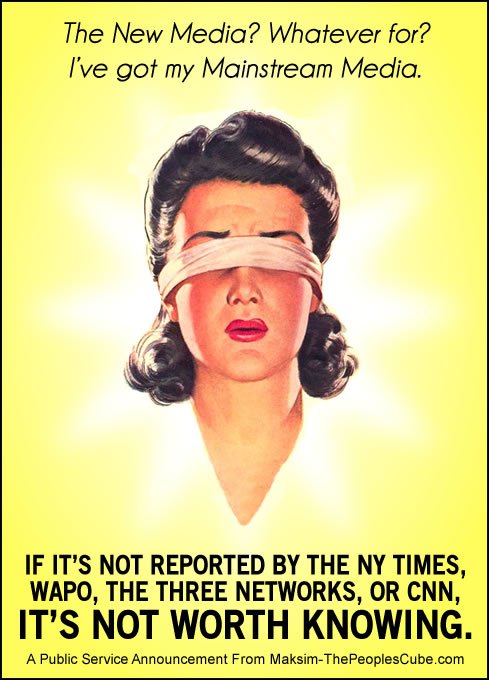
“Group think” is alive and well in Official Washington, with virtually all the important pundits marching in lock-step with the Obama administration’s accusations against the Syrian government and everyone fuming over an Op-Ed by Russian President Vladimir Putin.

U.S. Secretary of State John Kerry at a joint press conference regarding the Syrian crisis with Russian Foreign Minister Sergey Lavrov. (State Department photo)

There is something troubling — even a bit scary — to watch the mainstream U.S. media in a full stampede as we’re now seeing over the issue of the Syrian civil war and against Russian attempts to find a diplomatic way to steer the American pack from rushing over the cliff into another U.S. military intervention.

Nearly every U.S. pundit and politician — from neocon to liberal — is charging off in the same direction, accepting undocumented U.S. government claims about Syria’s alleged chemical attack on Aug. 21 as undeniably true and deriding Russian President Vladimir Putin for a New York Times Op-Ed that had the audacity to defend the Nuremberg principles against aggressive war.

“Under current international law, force is permitted only in self-defense or by the decision of the Security Council,” Putin wrote, making an obvious and incontrovertible point. “Anything else is unacceptable under the United Nations Charter and would constitute an act of aggression.”

Putin then added: “It is alarming that military intervention in internal conflicts in foreign countries has become commonplace for the United States. Is it in America’s long-term interest? I doubt it. Millions around the world increasingly see America not as a model of democracy but as relying solely on brute force, cobbling coalitions together under the slogan ‘you’re either with us or against us.'”

Again, what Putin is saying here is clearly true, really not even debatable. U.S. presidents and pundits love to talk about America as the “indispensable nation,” a reference to its recurring role as a military interventionist around the world, supposedly to protect the interests of the “Free World” and “Civilization.”

But Putin really got under the skin of the U.S. establishment when he disagreed with President Barack Obama’s defense of “American exceptionalism.” Putin wrote, “It is extremely dangerous to encourage people to see themselves as exceptional, whatever the motivation. There are big countries and small countries, rich and poor, those with long democratic traditions and those still finding their way to democracy. Their policies differ, too. We are all different, but when we ask for the Lord’s blessings, we must not forget that God created us equal.”

Yet, for making these rather banal points, Putin was inundated with insults across Official Washington. Politicians said they were sickened by his affront, one even to the point of vomiting. Liberal Washington Post columnist Eugene Robinson, usually a thoughtful writer, mocked the Russian president in highly personal terms.

“As I read Vladimir Putin’s sanctimonious op-ed about U.S. policy in Syria, I imagined the Russian president sitting at the keyboard in a lovely pink negligee,” Robinson wrote in a column entitled “Exceptional? You bet.”

Buying the Official Story

Beyond reflecting the conventional wisdom’s contempt for Putin, Robinson, like nearly every major U.S. opinion-leader, has accepted the U.S. government’s version of events regarding the alleged chemical attack on a Damascus suburb on Aug. 21.

Though the Obama administration has not released a single piece of verifiable evidence to support its “Government Assessment” fingering the regime of Bashar al-Assad, Robinson and his colleagues now report those assertions as flat fact, including the strange calculation that precisely “1,429” people died from poison gas. Other estimates have cited several hundred deaths, and the U.S. government has not explained the provenance of its number.

Yet, the U.S. tally of the dead and other claims are good enough for the American pundit class, evidence not required.

“When we see more than 1,400 men, women and children killed with poison gas, it is not our nature to look the other way,” Robinson wrote. “The moral case for a strike against the Assad regime is predicated on the fact that if the United States doesn’t do something, nobody will.”

But Robinson was far from alone in his contempt for Putin and acceptance of the U.S. rendition of the murky events of Aug. 21 half a world away. Up and down the opinion pages of American newspapers, there was mouth-open-wide credulity. Beyond the opinion pages and TV chat shows, I’ve heard the same conformity of opinion from usually thoughtful think-tank “experts.” It’s clear that any skepticism now, even just calling for public release of the U.S. evidence, is a threat to one’s career.

You might have hoped that one thing the U.S. mainstream press and pundits would have learned from the Iraq War — not to mention other misguided “group think” going back to the Tonkin Gulf resolution and beyond — is that the U.S. government is not always right in its assessments. Skepticism should not be equated with conspiracism.

Yet, over the last couple of weeks, I’ve been hearing a derisive and condescending tone slip into the words of the “respectable” opinion shapers toward any suggestion that the Obama administration should release recordings of intercepts, satellite photos of troop movements and other supposed proof to back up its accusations.

(CONTINUED-READ ENTIRE ARTICLE HERE)


Posted in Barack Obama, foreign policy, media, military, Syria | Tagged , , , , , , , , , | 1 Comment