Should we be wearing masks?
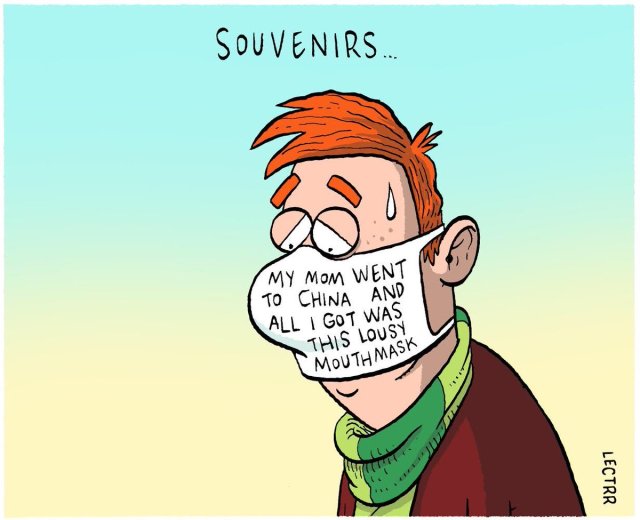
The N95 mask itself is extremely wonderful. The pores in the mask are three microns wide. The virus is one micron wide. [Editor’s note: The mask pores are 0.3 microns wide; the virus is 0.12 microns.] So you get people who say, well, it’s not going to work. But you try having three big, huge football players who are rushing for lunch through a door at lunchtime—they’re not going to get through. In the latest data I saw, the mask provided 5x protection. That’s really good. But we have to keep the hospitals going and we have to keep the health professionals able to come to work and be safe. So masks should go where they’re needed the most: in taking care of patients.
The world is not going to begin to look normal until three things have happened. One, we figure out whether the distribution of this virus looks like an iceberg, which is one-seventh above the water, or a pyramid, where we see everything. If we’re only seeing right now one-seventh of the actual disease because we’re not testing enough, and we’re just blind to it, then we’re in a world of hurt. Two, we have a treatment that works, a vaccine or antiviral. And three, maybe most important, we begin to see large numbers of people—in particular nurses, home health care providers, doctors, policemen, firemen, and teachers who have had the disease—are immune, and we have tested them to know that they are not infectious any longer. And we have a system that identifies them, either a concert wristband or a card with their photograph and some kind of a stamp on it. Then we can be comfortable sending our children back to school, because we know the teacher is not infectious.
And instead of saying “No, you can’t visit anybody in nursing home,” we have a group of people who are certified that they work with elderly and vulnerable people, and nurses who can go back into the hospitals and dentists who can open your mouth and look in your mouth and not be giving you the virus. When those three things happen, that’s when normalcy will return.
Is there in any way a brighter side to this?
Well, I’m a scientist, but I’m also a person of faith. And I can’t ever look at something without asking the question of isn’t there a higher power that in some way will help us to be the best version of ourselves that we could be? I thought we would see the equivalent of empty streets in the civic arena, but the amount of civic engagement is greater than I’ve ever seen. But I’m seeing young kids, millennials, who are volunteering to go take groceries to people who are homebound, elderly. I’m seeing an incredible influx of nurses, heroic nurses, who are coming and working many more hours than they worked before, doctors who fearlessly go into the hospital to work. I’ve never seen the kind of volunteerism I’m seeing.
I don’t want to pretend that this is an exercise worth going through in order to get to that state. This is a really unprecedented and difficult time that will test us. When we do get through it, maybe like the Second World War, it will cause us to reexamine what has caused the fractional division we have in this country. The virus is an equal opportunity infector. And it’s probably the way we would be better if we saw ourselves that way, which is much more alike than different.
Update 3-24-20 10:45 PM: This story was updated to correct the size of the virus and the width of the pores in an N95 respirator mask.
WIRED is providing free access to stories about public health and how to protect yourself during the coronavirus pandemic. Sign up for our Coronavirus Updatenewsletter for the latest updates, and subscribe to support our journalism.