
-
Recent Posts
- Trump Continues To Ruin GOP Chances And Help Dems
- The biggest problem facing the U.S. economy
- Are We On the Verge of a Progressive Revolution Like the New Deal?
- Why are progressives winning across the United States? It’s not complicated
- Republicans Rigged America’s Debt: Now We’re Paying the Billionaires Forever
-
Join 441 other subscribers
Categories
Archives
- September 2026
- August 2026
- July 2026
- June 2026
- May 2026
- April 2026
- March 2026
- February 2026
- January 2026
- December 2025
- November 2025
- October 2025
- September 2025
- August 2025
- July 2025
- June 2025
- May 2025
- April 2025
- March 2025
- February 2025
- January 2025
- December 2024
- November 2024
- October 2024
- September 2024
- August 2024
- July 2024
- June 2024
- May 2024
- April 2024
- March 2024
- February 2024
- January 2024
- December 2023
- November 2023
- October 2023
- September 2023
- August 2023
- July 2023
- June 2023
- May 2023
- April 2023
- March 2023
- February 2023
- January 2023
- December 2022
- November 2022
- October 2022
- September 2022
- August 2022
- July 2022
- June 2022
- May 2022
- April 2022
- March 2022
- February 2022
- January 2022
- December 2021
- November 2021
- October 2021
- September 2021
- August 2021
- August 2020
- July 2020
- June 2020
- May 2020
- April 2020
- March 2020
- February 2020
- January 2020
- December 2019
- November 2019
- October 2019
- September 2019
- August 2019
- July 2019
- June 2019
- May 2019
- April 2019
- March 2019
- February 2019
- January 2019
- December 2018
- November 2018
- October 2018
- September 2018
- August 2018
- July 2018
- June 2018
- May 2018
- April 2018
- March 2018
- February 2018
- January 2018
- December 2017
- November 2017
- October 2017
- September 2017
- August 2017
- July 2017
- June 2017
- May 2017
- April 2017
- March 2017
- February 2017
- January 2017
- December 2016
- November 2016
- October 2016
- September 2016
- August 2016
- July 2016
- June 2016
- May 2016
- April 2016
- March 2016
- February 2016
- January 2016
- December 2015
- November 2015
- October 2015
- September 2015
- August 2015
- July 2015
- May 2015
- April 2015
- March 2015
- February 2015
- January 2015
- November 2014
- October 2014
- September 2014
- August 2014
- July 2014
- June 2014
- February 2014
- January 2014
- December 2013
- November 2013
- October 2013
- September 2013
- August 2013
- March 2013
- February 2013
- January 2013
- December 2012
- November 2012
- October 2012
- September 2012
- August 2012
- July 2012
- June 2012
- May 2012
- April 2012
- March 2012
- February 2012
- January 2012
- December 2011
- November 2011
- October 2011
- September 2011
- August 2011
- July 2011
- June 2011
- May 2011
- April 2011
- March 2011
- January 2011
- December 2010
Blogroll
Meta
Life of the Potty –Newly Revised and Republished
Posted in children's book, humor
Tagged Arlen Grossman, Life of the Potty, Peter Potty
Leave a comment
Why have Americans Embraced So Many Toxic GOP Scams?
When will America — and, particularly, American media — wake up to these scams and start calling them out for what they are?
By Thom Hartmann/ The Hartmann Report/ December 22, 2023
The GOP — to keep the support of “average” American voters while they work entirely for the benefit of giant corporations, the weapons and fossil fuel industries, and the morbidly rich — have run a whole series of scams on voters ever since the original Reagan grift of trickle-down economics.
Oddly, there’s nothing comparable on the Democratic side. No lies or BS to justify unjustifiable policies: Democrats just say up-front what they’re all about:
Healthcare and quality education for all. Treat all people and religions with respect and fairness. Trust women to make their own decisions. Raise the pay of working people and support unionization. Get assault weapons off the streets. Do something about climate change. Clean up toxic waste sites and outlaw pesticides that damage children. Replace fossil fuels with renewable energy.
Nonetheless, the media persists in treating the two parties as if they were equally honest and equally interested in the needs of all Americans. In part, that’s because one of the GOP’s most effective scams — the “liberal media bias” scam — has been so successful ever since Lee Atwater invented it back in the early years of the Reagan Revolution.
For example, right now there’s a lot of huffing and puffing in the media about how the Supreme Court might rule in the case of Trump being thrown off the ballot in Colorado. They almost always mention “originalism” and “textualism” as if they’re honest, good-faith methods for interpreting the Constitution when, in fact, they’re cynical scams invented to justify unjustifiable rulings.
Thus, the question: how much longer will Americans (and the American media) continue to fall for the GOP’s scams?
They include:
— Originalism: Robert Bork came up with this scam back in the 1980s when Reagan appointed him to the Supreme Court and he couldn’t come up with honest or reasonable answers for his jurisprudential positions, particularly those justifying white supremacy. By saying that he could read the minds of the Founders and Framers of the Constitution, Bork gave himself and future generations of Republicans on the Court the fig leaf they needed.
The simple fact is that there was rarely a consensus among the Framers and among the politicians of the founding generation about pretty much anything. And to say that we should govern America by the standards of a white-men-only era before even the industrial revolution much less today’s modern medicine, communications, and understanding of economics is absurd on its face.
— Voter Fraud: This scam, used by white supremacists across the South in the years after the failure of Reconstruction to prevent Black people from voting, was reinvented in 1993, when Bill Clinton and Democrats in Congress succeeded in passing what’s today called the “Motor Voter” law that lets states automatically register people to vote when they renew their driver’s licenses. Republicans freaked out at the idea that more people might be voting, and claimed the new law would cause voter fraud (it didn’t).
By 1997, following Democratic victories in the 1996 election, it had become a major meme to justify purging voting rolls of Black and Hispanic people. Today it’s the justification for over 300 voter suppression laws passed in Red states in just in the past 2 years, all intended to make it harder for working class people, minorities, women, the elderly dependent on Social Security, and students (all Democratic constituencies) to vote.
The most recent iteration of it is Donald Trump‘s claim that the 2020 election, which he lost by fully 7 million votes, was stolen from him by voter fraud committed by Black people in major cities.
As a massive exposé in yesterday’s Washington Post titled “GOP Voter-Fraud Crackdown Overwhelmingly Targets Minorities, Democrats” points out, the simple reality is that voter fraud in the US is so rare as to be meaningless, and has never, ever, anywhere been documented to swing a single election.
But Republicans have been using it as a very effective excuse to make it harder for Democratic voters to cast a ballot, and to excuse their purging almost 40,000,000 Americans off the voting rolls in the last five years.
Right To Work (For Less): back in the 1940s, Republicans came up with this scam. Over the veto of President Harry Truman, they pushed through what he referred to as “the vicious Taft-Hartley Act,” which lets states make it almost impossible for unions to survive. Virtually every Red state has now adopted “right to work,” which has left their working class people impoverished and, because it guts the political power of working people, their minimum wage unchanged.
— Bush v Gore: The simple reality is that Al Gore won Florida in 2000, won the national popular vote by a half-million, and five Republicans on the Supreme Court denied him the presidency. Florida Governor and George W. Bush’s brother Jeb had his Secretary of State, Kathryn Harris, throw around 90,000 African Americans off the voting rolls just before the election and then, when the votes had come in and it was clear former Vice President Al Gore had still won, she invented a new category of ballots for the 2000 election: “Spoiled.”
As The New York Times reported a year after the 2000 election when the consortium of newspapers they were part of finally recounted all the ballots:
“While 35,176 voters wrote in Bush’s name after punching the hole for him, 80,775 wrote in Gore’s name while punching the hole for Gore. [Florida Secretary of State] Katherine Harris decided that these were ‘spoiled’ ballots because they were both punched and written upon and ordered that none of them should be counted.
“Many were from African American districts, where older and often broken machines were distributed, causing voters to write onto their ballots so their intent would be unambiguous.”
George W. Bush “won” the election by 537 votes in Florida, because the statewide recount — which would have revealed Harris’s crime and counted the “spoiled” ballots, handing the election to Gore (who’d won the popular vote by over a half-million) — was stopped when George HW Bush appointee Clarence Thomas became the deciding vote on the Supreme Court to block the recount order from the Florida Supreme Court.
Harris’ decision to not count the 45,599 more votes for Gore than Bush was completely arbitrary; there is no legal category and no legal precedent, outside of the old Confederate states simply refusing to count the votes of Black people, to justify it. The intent of the voters was unambiguous. And the 5 Republicans on the Supreme Court jumped in to block the recount ordered by the Florida Supreme Court (in violation of the 10th Amendment) just in time to prevent those “spoiled” votes from being counted, cementing Bush’s illegitimate presidency.
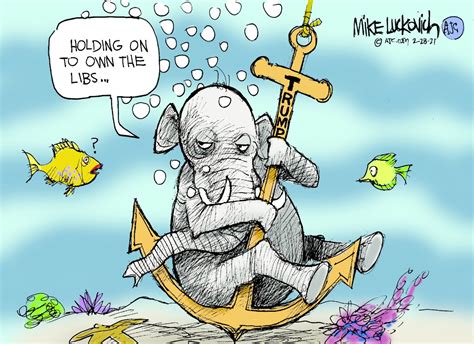
— Money is “Free Speech” and corporations are “persons”: This scam was invented entirely by Republicans on the Supreme Court, although billionaire GOP donors — infuriated by campaign contribution and dark money limits put into law in the 1970s after the Nixon bribery scandals — had been funding legal efforts to get it before the Court for years.
In a decision that twists logic beyond rationality, the five Republicans on the Court — over the strong, emphatic objections of all the Democrats on the Court — ruled that our individual right to free speech guaranteed in the First Amendment also includes the “right to listen,” as I lay out in detail in The Hidden History of the Supreme Court and the Betrayal of America and they wrote in Citizens United:
“The right of citizens to inquire, to hear, to speak, and to use information to reach consensus is a precondition to enlightened self-government and a necessary means to protect it.”
Without being able to hear from the most knowledgeable entities, they argued, Americans couldn’t be well-informed about the issues of the day.
And who was in the best position to inform us? As Lewis Powell himself wrote in the Bellotti decision, echoed in Citizens United, it’s those corporate “persons”:
“Corporations and other associations, like individuals, contribute to the ‘discussion, debate, and the dissemination of information and ideas’ that the First Amendment seeks to foster…”
“Political speech is ‘indispensable to decision-making in a democracy, and this is no less true because the speech comes from a corporation rather than an individual.’ … The inherent worth of the speech in terms of its capacity for informing the public does not depend upon the identity of its source, whether corporation, association, union, or individual.”
They doubled down, arguing that corporations and billionaires should be allowed to dump unlimited amounts of money into the political campaigns of those politicians they want to own so long as they go into dark money operations instead of formal campaigns. What was called “bribery” for over 200 years is now “free speech”:
“For the reasons explained above, we [five Republicans on the Supreme Court] now conclude that independent expenditures, including those made by corporations, do not give rise to corruption or the appearance of corruption.”
— Cutting taxes raises revenue: As Nobel Prize-winning economist Paul Krugman notes, the idea promoted by Reagan, Bush, and Trump to justify almost $30 trillion in cumulative tax cuts for billionaires and giant corporations is “The Biggest Tax Scam in History.”
Reagan first pitched this to justify cutting the top income tax rate on the morbidly rich from 74% down to 25% in the 1980s, and it was reprised by both George W. Bush and Donald Trump for their own massive tax breaks for their well-off donors and peers.
The simple fact is that America went from a national debt of over 124% of GDP following World War II to a national debt of a mere $800 billion when Reagan came into office. We’d been paying down our debt steadily, and had enough money to build the interstate highway system, brand new schools and hospitals from coast to coast, and even to put men on the moon.
Since Reagan rolled out his tax scam, however, our national debt has gone from less than a trillion in 1980 to over 30 trillion today: we’re back, in terms of debt, to where we were during WWII when FDR raised the tippy-top bracket income tax rate to 90% to deal with the cost of the war. We should be back to that tax rate for the morbidly rich today, as well.
— Destroying unions helps workers: In their eagerness to help their corporate donors, Reagan rolled out a novel idea in 1981, arguing that instead of helping working people, corrupt “union bosses” were actually ripping them off.
Union leaders work on a salary and are elected by their members: the very idea that they, like CEOs who are compensated with stock options and performance bonuses and appointed by their boards, could somehow put their own interests first is ludicrous. Their only interest, if they want to retain their jobs, is to do what the workers want.
But Reagan was a hell of a salesman, and he was so successful with this pitch he cut union membership in America during his and his VP’s presidency by more than 50 percent.
— Corporations can provide better Medicare than the government: For a corporation to exist over the long term, particularly a publicly-traded corporation, it must produce a profit. That’s why when George W. Bush and friends invented the Medicare Advantage scam in 2003 they allowed Advantage providers to make as much as 20 percent in pure profit.
Government overhead for real Medicare is around 2% — the cost of administration — and corporations could probably run their Advantage programs with a similar overhead, but they have to make that 20% profit nut, so they hire larger staffs to examine every single request to pay for procedures, surgeries, tests, imaging, and even doctors’ appointments. And reject, according to The New York Times, around 18% of them.
“Advantage plans also refused to pay legitimate claims, according to the report. About 18 percent of payments were denied despite meeting Medicare coverage rules, an estimated 1.5 million payments for all of 2019.”
When they deny you care, they make money. If they ran like real Medicare and paid every bill (except the fraudulent ones), they’d merely break even, and no company can do that. Nonetheless, Republicans continue to claim that “choice” in the marketplace is more important than fixing Medicare.
With the $140 billion that for-profit insurance companies overcharge us and steal from our government every year, if Medicare Advantage vanished there would be enough money left over to cut Medicare premiums to almost nothing and add dental, vision, and hearing. But don’t expect Republicans to ever go along with that: they take too much money from the insurance industry (thanks to five corrupt Republicans on the Supreme Court).
— More guns means more safety: Remember the NRA’s old “The only way to stop a bad guy with a gun is a good guy with a gun”? They’re still at it, and there’s hardly a single Republican in America who will step up and do anything about the gun violence crisis that is uniquely experienced by our nation.
Bullets are now the leading cause of death among children in the US, and we’re literally the only country in the entire world for which that is true. And a child living in Red state Mississippi is ten times more likely to die from a gun than a child in Blue state Massachusetts. But as long as the NRA owns them, Republicans will never do anything about it.
— The media has a liberal bias: This canard was started by Lee Atwater in an attempt to “work the refs” of the media, demanding that they stop pointing out the scams Republicans were engaging in (at the time it was trickle-down). The simple reality is that America’s media, from TV and radio networks to newspapers to websites, are overwhelmingly owned by billionaires and corporations with an openly conservative bent.
There are over 1500 rightwing radio stations (and 1000 religious broadcasters, who are increasingly political), three rightwing TV networks, and an army of tens of thousands of paid conservative activists turning out news releases and policy papers in every state, every day of the year. There are even well-funded social media operations.
There is nothing comparable on the left. Even MSNBC is owned by Comcast and so never touches issues of corporate governance, media bias (they fired Brian Stelter!), or the corruption of Congress by its big pharma and Medicare Advantage advertisers.
— Republicans are the party of faith: Republicans claim to be the pious ones, from Mike Johnson’s creepy “chastity ball” with his daughter, to their hate of queer people, to their embrace of multimillionaire TV and megachurch preachers. But Democrats, who are more accepting of people of all faiths and tend not to wear their religion on their sleeves, are the ones following Jesus’ teachings.
Jesus, arguably the founder of Christianity, was emphatic that you should never pray in public, do your good deeds in private as well, and that the only way to get to heaven is to feed the hungry, house the homeless, heal the sick, and love every other human as much as you love yourself.
Republicans, on the other hand, wave their piety like a bloody shirt, issue press releases about their private charities, and fight every effort to have our government feed the hungry, house the homeless, heal the sick, or even respect, much less love, people who look or live or pray differently from them.
— Crime is exploding and you’re safer living in an area Republicans control: In fact, crime of almost all sorts is at a low not seen since 1969. Only car thefts are up, and some of that appears to have to do with social media “how to” videos and a few very vulnerable makes of autos.
New FBI statistics find that violent crime nationwide is down 8 percent; in big cities it’s down nearly 15 percent, robbery and burglary are down 10 and 12 percent respectively.
But what crime there is is overwhelmingly happening in Red states. Over the past 21 years, all types of crime in Red states are 23 percent higher than in Blue states: in 2020, murder rates were a mind-boggling 40 percent higher in states that voted for Trump than those Biden carried.
— Global warming is a hoax: Ever since fossil fuel billionaires and the fossil fuel industry started using the legal bribery rights five corrupt Republicans on the Supreme Court created for them, virtually every Republican politician in the nation is either directly on the take or benefits indirectly from the massive infrastructure created by the Koch brothers and other fossil fuel barons. As a result, it’s almost impossible to find even one brave, truthful Republican who’s willing to do anything about the climate crisis that is most likely to crash not just the US but civilization itself.
— Hispanic immigrants are “murderers and rapists”: Donald Trump threw this out when he first announced his candidacy for president in 2015, saying, “They are bringing drugs. They are bringing crime. They’re rapists.” In fact, Hispanic immigrants (legal or without documentation) are far less likely, per capita and by any other measure, to commit crime of any sort than white citizens.
— Helping people makes them lazy. The old Limbaugh joke about “kicking people when they’re down is the only way to get them up” reveals the mindset behind this Republican scam, which argues that when people get money or things they didn’t work for it actually injures them and society by making them lazy. The GOP has used this rationalization to oppose everything from unemployment insurance in the 1930s to food stamps, Medicaid, and housing supports today.
In fact, not only is there no evidence for it, but studies of Universal Basic Income (UBI), where people are given a few hundred dollars a month with no strings attached, finds that the vast majority use the extra funds to improve themselves. They upgrade their housing, look for better jobs, and go back to school.
If the morbidly rich people behind the GOP who promote this scam really believed it, they’d be arguing for a 100% estate tax, to prevent their own children from ending up “lazy.” Good luck finding any who are leaving their trust-fund kids destitute.
— Tobacco doesn’t cause cancer: Back in 2000, soon-to-be Indiana Governor and then-Congressman Mike Pence wrote a column that was published statewide saying, “Despite the hysteria from the political class and the media, smoking doesn’t kill.” Pence’s family had made money off tobacco for years with a small chain of now-bankrupt convenience stores called “Tobacco Road,” but he was also being spiffed by the industry.
Similarly, George W. Bush pushed the “Healthy Forests Initiative” as president after big contributions from the timber industry: “healthy” meant “clear cut.” Bush also had his “Clear Skies Initiative” that let polluters dump more poison into our air. And the Trump administration, after big bucks and heavy lobbying from the chemical and Big Ag industries, refused to ban a very profitable pesticide used on human food crops that was found to definitely cause brain damage and cancer in children.
— For-profit utilities produce cheaper and more reliable electricity than government-owned and -run ones: This one goes back to the Reagan era, with Republicans arguing that the “free market” will always outperform government, including when it comes to generating and distributing electricity. In fact, each of us has only one wire coming into our homes or offices, so there is no possible competition to drive either improved performance or lower prices among for-profit utilities.
In fact, non-profit community-owned or government run utilities consistently produce more reliable electricity, serve their customers better, and charge lower prices. And the differences have become starker every year since, in 1992, President GHW Bush endedfederal regulation of electric utilities. It’s why Texas, which has almost completely privatized its power grid, suffers some of the least reliable and most expensive electricity in the nation when severe weather hits.
— The electoral college protects our democracy: There was a time when both Democrats and Republicans wanted to get rid of the Electoral College; a constitutional amendment to do that failed in Congress by a single vote back in 1970. But after both George W. Bush and Donald Trump lost the White house by a half-million and three million votes respectively but ended up as president anyway, Republicans fell newly in love with the College and are fully planning to use it again in 2024 to seize power even if ten million more people vote for Biden this time (Biden won by 7 million votes in 2020).
This is just the tip of the iceberg.
Republicans are now defending billionaires buying off Supreme Court justices and most recently Lever News found that they’ve been spiffing over 100 other federal judges — who regularly vote in favor of the interests of corporations and the morbidly rich — in addition to Alito, Thomas, Roberts, et al.
Republicans are also claiming that:
— Trump isn’t a threat to our democracy and his promises to be a dictator are “mere hyperbole.”
— Letting Putin take Ukraine won’t put Taiwan and other democracies at risk.
— Ignoring churches routinely breaking the law by preaching politics while enjoying immunity from taxes is no big deal.
— Massive consolidation to monopoly levels across virtually every industry in America since Reagan stopped enforcement of our anti-trust laws (causing Americans to pay an average of $5,000 a year more for everything from broadband to drugs than any other country in the world) is just the way business should be run.
— Teaching white children the racial history of America will make them feel bad, rather than feel less racist and more empathetic.
— Queer people are groomers and pedophiles (the majority in these categories are actually straight white men).
— Banning and burning books is good for society and our kids.
— Ending public schools with statewide voucher programs will improve education (every credible study shows the opposite).
I could go on, but you get the point. When will America — and, particularly, American media — wake up to these scams and start calling them out for what they are?
I’m not holding my breath, although you could help get the ball rolling by sharing this admittedly incomplete list as far and wide as possible.
Shining Light on Dark Money is Good for Democracy
By Senator Sheldon Whitehouse (D-R.I.)/ Public Citizen/ September 18, 2023
I have concluded, based on considerable observation and evaluation, that a band of right-wing billionaires has its hooks deep into our government. It uses these hooks to thwart climate action, putting American and global safety at risk. The good news? We can fix the climate threats if we can get their hooks out.
When I got to the Senate in 2007, climate change was a bipartisan issue. There were serious bipartisan climate bills in the Senate. Republican John McCain was running for President on a significant climate platform. All that progress and bipartisanship was also noticed by fossil fuel companies. Industry groups then prevailed on the Supreme Court to overthrow decades of precedent and allow unlimited corporate political spending. The 5-4 Citizens United decision, in January of 2010, gave the industry the weaponry to kill climate bipartisanship. Republicans quickly caved on climate — and were rewarded with massive, secret money from oil and gas behemoths.
Citizens United’s upheaval of politics and elections remains profound. 501(c)(4) organizations became fountains of dark political money. Armadas of dark-money front groups were created or co-opted to obscure the hand of the fossil fuel industry. New political creatures like Super PACs proliferated. A Public Citizen study found that “just 25 ultra wealthy donors made up nearly half (47%) of all individual contributions to Super PACs between 2010 and 2018.” Negative advertising surged — a “tsunami of slime.” And behind the billions in secret political spending came the hidden threats and promises that big special interests can make when they have the power to secretly spend billions. Their reward: from January of 2010 to now, no Senate Republican has supported a serious climate bill.

The fossil fuel industry climate blockade operation ran in parallel with a longstanding dark-money plan to capture the Supreme Court. The waypoints of this Court-capture effort were the infamous Lewis Powell memo laying out the Court-capture strategy (written for the U.S. Chamber of Commerce immediately before Powell’s appointment to the Court); the bipartisan Senate rejection of nominee Robert Bork (engendering burning far-right fury); the subsequent revenge of the right, blocking Bush nominee Harriet Miers to open the door for billionaire-friendly Justice Sam Alito; Mitch McConnell’s Senate stiff-arm to Obama nominee Judge Merrick Garland; and then whatever deal Trump cut with the Koch political organization around his so-called “Federalist Society list” of proposed Court appointees. Citizens United was the crowning achievement of this Court-capture effort: fossil fuel billionaires could now protect in Congress fossil fuel’s $660 billion annual U.S. subsidy.
With that big a prize at stake, there was no restraint. Existing far-right front groups were repurposed and repowered. Stables of fossil-fuel stooges were funded to parrot phony science. Pop-up front groups appeared in election after election to give a fake local “feel” to the fossil fuel campaign. The U.S. Chamber of Commerce took undisclosed masses of dark money and became a “worst climate obstructor.” The climate denial campaign is the biggest and best-hidden in American history, and it has been fiendishly effective. I could make a case that its malice has added 70 parts per million to our atmospheric CO2 count, dramatically accelerating climate catastrophe, just to enlarge massive industry profits.
The climate denial schemers continue their dirty work. Like a retreating army, they abandoned the most indefensible falsehoods (“climate is a hoax”) for less flagrant ones (“climate is real but it will break the economy to fix it”). But the game is the same. They still oppose serious climate legislation like the Inflation Reduction Act climate measures. They still oppose climate control regulations, filing hostile comments and lawsuits. And they still use commanding influence over the Supreme Court to degrade the Clean Air Act and Clean Water Act and to weaken regulatory oversight. Justice Alito has even asserted that carbon dioxide is not a pollutant.
The worst actors, obviously, are fossil fuel companies and their front groups. But virtually all of corporate America is useless or lined up against climate protection legislation. Corporate political clout works through political intermediaries like industry trade associations. Corporate CEOs issue frothy climate statements and pledges; chief sustainability officers work on lowering carbon footprints; green programs get featured in glossy shareholder brochures; and then the trade associations come to Congress with the real message. The U.S. Chamber of Commerce and the National Association of Manufacturers are the two “worst climate obstructors” in America; others at best offer deafening silence. The effect is lethal.
To fix this, we need to peel back the secrecy. This will not be easy, because a Supreme Court built by dark money is busily constructing a constitutional right to dark money, so any effort at disclosure would be tangled in years of litigation. But voluntary gatherings like the United Nations Conference of the Parties, or the elite corporate gathering at Davos, can require disclosure by corporations seeking to participate. So could environmental groups and universities that work with corporations. So could the White House, for high-level meetings sought by corporate interests.
Audited corporate climate political disclosure statements should be required. Here’s what they should have to report: one, campaign contributions, which are already disclosed, so you’d weight them to a ranking of the recipient on climate issues; two, lobbying, also already disclosed by topic, so you’d assess whether climate-related lobbying is pro or con; three, all funding of trade associations, ranked by climate opposition (hint: Chamber = toxic); and most important, dark-money “outside” spending into 501(c)(4)s, Super PACs and other political weaponry — all the way through, piercing shell corporations, Cypriot bank accounts, Cayman Islands law firms, or Dakota trusts.
No trickery, honest full reporting, signed by the CEO and CSO. These revelations will cause massive embarrassment in C-suites and boardrooms across the country as shareholders and customers learn about companies’ real climate posture. But we’d get the climate disaster solved far more quickly as a result.
Is it un-American to require this? Precisely the opposite. We are a democracy. The essential foundation of a democracy is a well-informed citizenry. Providing citizens the basic understanding of who’s doing what in the political arena may be bad for the bad actors, but it’s good for citizens and good for democracy, and that’s good for America.
Senator Whitehouse serves as Chairman of the Senate Budget Committee and as a member of the Senate Judiciary Committee, the Senate Finance Committee, and the Senate Environment and Public Works Committee. A graduate of Yale University and the University of Virginia School of Law, Whitehouse served as Rhode Island’s U.S. Attorney and state attorney general before being elected to the Senate. His most recent book, The Scheme, explores the secretive right-wing operation to capture the United States Supreme Court.
The Mess In The Middle East
The final Halitics videocast for me in 2023 as I join Hal Ginsberg on my regular Monday appearance. We talk about America’s role in the Israel/Hamas war where civilians are being killed in great numbers, and other issues of the day
Posted in America, Democratic Party, foreign policy, government, Israel, Joe Biden, Middle East, politics, Republican Party, war
Tagged Arlen Grossman, Benjamin Netanyahu, Gaza, Hal Ginsberg, Halitics, Hamas
Leave a comment
14th Amendment: Trump Disqualified!
By Arlen Grossman
Keith Olbermann explains (in the first 21minutes) how the 14th Amendment automatically disqualifies Donald Trump from running for President. The case is strong. Here is that section of the amendment:
Section 3. No person shall be a Senator or Representative in Congress, or elector of President and Vice President, or hold any office, civil or military, under the United States, or under any State, who, having previously taken an oath, as a member of Congress, or as an officer of the United States, or as a member of any State legislature, or as an executive or judicial officer of any State, to support the Constitution of the United States, shall have engaged in insurrection or rebellion against the same, or given aid or comfort to the enemies thereof. But Congress may, by a vote of two-thirds of each House, remove such disability.
The growing evidence has proven that President Trump led an insurrection on January 6, 2021 to stop the electoral count that would officially declare Joe Biden as the rightfully elected president, in order that Trump would claim victory and remain in office. The writers of the Fourteenth Amendment clearly would not want to allow the former president to become president again. He “engaged in insurrection or rebellion against (the Constitution).” The Justice Department and Special Counsel Jack Smith are laying out the planning and execution of this plan, with fake electors, false claims of voter fraud, and asking Vice-President Pence to not certify the counting of the official electoral vote count.
We all saw (in real time) what happened on January 6. After a fiery speech by President Trump, several thousand attendees marched towards the U.S. Capitol, and broke through the police barricades. The mob then entered the Capitol building, with some rioters smashing through windows and doors. Some members of Congress were escorted to an underground bunker while others barricaded themselves in offices or sheltered in place in the House chamber. For about six hours, rioters looted and ransacked congressional offices.
However, their efforts to stop the certification of Joe Biden’s election failed when the vice-president refused to go along with the plan to stop the electoral count. But by now, more than one thousand rioters have been arrested by the Justice Department for their roles in the riot.
Special Counsel Jack Smith recently declared:”this evidence shows that the rioters’ disruption of the certification proceeding is exactly what the defendant intended on January 6.” Prosecutors intend to introduce evidence that will speak to Trump’s “motive, intent, preparation, knowledge … and common plan,”
From CNN Politics:
“Prominent conservative legal scholars are increasingly raising a constitutional argument that 2024 Republican candidate Donald Trump should be barred from the presidency because of his actions to overturn the previous presidential election result.
“The latest salvo came Saturday in The Atlantic magazine, from liberal law professor Laurence Tribe and J. Michael Luttig, the former federal appellate judge and prominent conservative, who argue the 14th Amendment disqualifies the former president from returning to the Oval Office.
“The people who wrote the 14th Amendment were not fools. They realized that if those people who tried to overturn the country, who tried to get rid of our peaceful transitions of power are again put in power, that would be the end of the nation, the end of democracy,” Tribe told CNN’s Kasie Hunt on “State of the Union” on Sunday.
Luttig, who’s become a strong critic of Trump’s actions after the election, called for officials to look carefully at his qualifications for being on the ballot.
“All officials, federal and state, who have a responsibility to put on the ballot candidates for the presidency of the United States are obligated under the Constitution to determine whether Donald Trump qualifies to be put on the ballot,” Luttig said.”
According to the 14th Amendment, “Congress may, by a vote of two-thirds of each House, remove such disability.” So Trump would have a way to re-qualify to run for office, but with a ⅔ vote from the House and Senate, his odds of success would be virtually impossible. And that is how it should be.
Posted in America, Congress, Donald Trump, elections, government, politics
Tagged 14th Amendment, insurrection, J. Michael Luttig, Jack Smith, January 6, Keith Olbermann, Lawrence Tribe, Mike Pence
1 Comment
Yes, Flying Does Suck. Here’s why…….
Posted in America, anti-trust, Economics, economy, government, inequality, politics, Travel
Tagged airlines, anti-trust, consolidation, Robert Reich
Leave a comment
How to Stay Sane in Brutalizing Times
By David Brooks/ NY Times/ November 2, 2023
We’re living in a brutalizing time: Scenes of mass savagery pervade the media. Americans have become vicious toward one another amid our disagreements. Everywhere I go, people are coping with an avalanche of negative emotions: shock, pain, contempt, anger, anxiety, fear.
The first thing to say is that we in America are the lucky ones. We’re not crouching in a cellar waiting for the next bomb to drop. We’re not currently the targets of terrorists who massacre families in their homes. We should still start every day with gratitude for the blessings we enjoy.
But we’re faced with a subtler set of challenges. How do you stay mentally healthy and spiritually whole in brutalizing times? How do you prevent yourself from becoming embittered, hate-filled, calloused over, suspicious and desensitized?
Ancient wisdom has a formula to help us, which you might call skepticism of the head and audacity of the heart.
The ancient Greeks knew about violent times. They lived with frequent wars between city-states, with massacres and mass rape. In response, they adopted a tragic sensibility. This sensibility begins with the awareness that the crust of civilization is thin. Breakdowns into barbarism are the historical norm. Don’t fool yourself into believing that you’re living in some modern age, too enlightened for hatred to take over.
In these circumstances, everybody has a choice. You can try to avoid thinking about the dark realities of life and naïvely wish that bad things won’t happen. Or you can confront these realities and develop a tragic mentality to help you thrive among them. As Ralph Waldo Emerson would write centuries later, “Great men, great nations have not been boasters and buffoons, but perceivers of the terror of life, and have manned themselves to face it.” And that goes for great women, too.
This tragic sensibility prepares you for the rigors of life in concrete ways. First, it teaches a sense of humility. The tragedies that populated Greek stages sent the message that our accomplishments were tenuous. They remind us that it’s easy to become proud and conceited in moments of peace. We begin to exaggerate our ability to control our own destinies. We begin to assume that the so-called justice of our cause guarantees our success. Humility is not thinking lowly of yourself; it’s an accurate perception of yourself. It is the ability to cast aside illusions and vanities and see life as it really is.
Second, the tragic sensibility nurtures a prudent approach to life. It encourages people to focus on the downsides of their actions and work to head them off. As Hal Brands and Charles Edel write in “The Lessons of Tragedy,” Greek tragedies were part of a wide culture that forced the Greeks to confront their own “frailty and fallibility.” By “shocking, unsettling and disturbing the audience, the tragedies also forced discussions of what was needed to circumvent such a fate.” In this way, people are taught resilience and anti-fragility — to be prepared for the pain that will inevitably come.
Third, this tragic mentality encourages caution. As Thucydides would argue, in politics, the lows are lower than the highs are high. The price we pay for our errors is higher than the benefits we gain from our successes. So be careful of rushing headlong into maximalist action, convinced of your own righteousness. Be incremental and patient and steady. This is advice I wish the Israelis would heed as they wage war on Hamas. This is advice that Matt Gaetz and the burn-it-all-down caucus among the House Republicans will never understand.
Fourth, the tragic mentality teaches people to be suspicious of their own rage. “Rage” is in the first line of “The Iliad.” We immediately see Agamemnon (whom we detest) and Achilles (whom we admire) behaving stupidly because they are filled with anger. The lesson is that rage might feel luxurious because it makes you convinced of your own rightness, but ultimately, it blinds you and turns you into a hate-filled monster. This is advice I wish the hard left would heed, the people who are so consumed by their self-righteous fury that they become cruel — desensitized to the suffering of Israelis, because Israelis are the bad guys in their simple ideological fables.
Over time, I’d add, rage hardens and corrodes the mind of its bearer. It hardens into the sort of cold, amoral, nihilistic attitude that we see in Donald Trump and in many others who inhabit what the political sociologist Larry Diamond has called the “authoritarian zeitgeist.” This attitude says: The enemy is out to destroy us. The ends justify the means. Savagery is necessary. The only thing we worship is power.
Fifth, tragedies thrust the harsh realities of individual suffering in our faces, and in them we find our common humanity. I’ve always been amazed by Aeschylus’ play “The Persians.” It was performed only eight years after the major battle that would eventually secure Athenian victory over the Persians, and it was written by a man who fought in that battle. And yet it is written from the Persian vantage point and elicits sympathy for the Persians, in all their hubris and suffering. It teaches us to be empathetic to all those who suffer, not just those on our own side.
From this sort of work, we learn to have a contempt for sadism, for anything that dehumanizes, and to have compassion for the everyday people who pay the price for the designs of proud and evil men. That compassion is the noble flame that keeps humanity alive, even in times of war and barbarism. That compassion recognizes the infinite dignity of each human soul.
So far, I’ve been describing the cool, prudent and humble mentality we learn from the Athenians. Now I turn to a different mentality, a mentality that emerged among the great Abrahamic faiths, and in their sacred city, Jerusalem. This mentality celebrates an audacious act: the act of leading with love in harsh times.As much as we need bread and sleep, human beings need recognition. The essence of dehumanization is not to see someone, to render him inconsequential and invisible. For example, over the last few decades, we in the college-educated media and cultural circles have increasingly shut out working-class voices. Many people look at the national conversation and don’t see themselves represented there, and hence grow bitter and alienated. Members of the working class are far from the only people who feel invisible these days.
The core counterattack against this kind of dehumanization is to offer others the gift of being seen. What sunlight is to the vampire, recognition is to the dehumanizers. We fight back by opening our hearts and casting a just and loving attention on others, by being curious about strangers, being a little vulnerable with them in the hopes that they might be vulnerable, too. This is the kind of social repair that can happen in our daily encounters, in the way we show up for others.
I recently published a book on the concrete skills you need to do this, called “How to Know a Person.” During a recent Zoom call, someone asked me: Isn’t it dangerous to be vulnerable toward others when there is so much bitterness, betrayal and pain all around? My answer to that good question is: Yes, it is dangerous. But it is also dangerous to be hardened and calloused over by hard times. It is also dangerous, as C.S. Lewis put it, to guard your heart so thoroughly that you make it “unbreakable, impenetrable, irredeemable.”
The great Black theologian Howard Thurman faced a lot of bigotry in his life, but as he put it in his 1949 book, “Jesus and the Disinherited,” “Jesus rejected hatred because he saw that hatred meant death to the mind, death to the spirit, death to communion with his Father.”
This is not a call to naïveté. Of course there are toxic people in the world. Donald Trump is not going to change just because his opponents start feeling warm and fuzzy toward him. Genocidal fanatics like the leaders of Hamas just need to be defeated by force of arms.
But most people — maybe more than you think — are peace- and love-seeking creatures who are sometimes caught in bad situations. The most practical thing you can do, even in hard times, is to lead with curiosity, lead with respect, work hard to understand the people you might be taught to detest.
That means seeing people with generous eyes, offering trust to others before they trust you. That means adopting a certain posture toward the world. If you look at others with the eyes of fear and judgment, you will find flaws and menace; but if you look out with a respectful attitude, you’ll often find imperfect people enmeshed in uncertainty, doing the best they can.
Will casting this kind of attention change the people you are encountering? Maybe; maybe not. But this is about who you are becoming in corrosive times. Are you becoming more humane or less? Are you a person who obsesses over how unfairly you are treated, or are you a person who is primarily concerned by how you see and treat others? “Virtue is the attempt to pierce the veil of selfish consciousness and join the world as it really is,” Iris Murdoch wrote.
One of my heroes is a woman named Etty Hillesum, a young Jewish woman who lived in Amsterdam in the 1930s and ’40s. Her early diaries reveal her to be immature and self-centered. But as the Nazi occupation lasted and the horrors of the Holocaust mounted, she became more generous, kind, warm and ultimately heroic toward those who were being sent off to the death camps. She volunteered to work at a labor camp called Westerbork, where Dutch Jews were held before being transferred to the death camps in the east. There she cared for the ill, tended to those confined to the punishment barracks and became known in the camp for her sparkling compassion, her selfless love. Her biographer wrote that “it was her practice of paying deep attention which transformed her.” It was her ability to really observe others — their anxieties, their cares and their attachments — that enabled her to enter into their lives and serve them.
It did not save her. In 1943, she herself was sent to Auschwitz and was murdered. But she left a legacy: what it looks like to shine and grow and be a beacon of humanity, even in the worst imaginable circumstances.
I’m trying to describe a dual sensibility — becoming a person who learns humility and prudence from the Athenian tradition, but also audacity, emotional openness and care from the Jerusalem tradition. Can a single person possess both traits? This was the question Max Weber asked in his classic essay “Politics as a Vocation”: “How can warm passion and a cool sense of proportion be forged together in one and the same soul?”
It’s a hard challenge that most of us will fail at most of the time. But I think it’s the only practical and effective way to proceed in times like these.
Halitics: Issues in the News
Last Halitics for me until mid-December (Vermont to Monterey, CA). Hal and I discuss the current news, from the Middle East and here at home. Live 9:00am PT, Noon ET. Available any time after that.
Posted in America, Democratic Party, foreign policy, government, Middle East, military, politics
Tagged Arlen Grossman, Gaza, Hal Ginsberg, Halitics, Hamas, Israel, Joe Biden
Leave a comment
The Senate Is Getting Less Democratic by the Minute
It seems as if the Democratic Party always starts its election campaigns far behind the starting line. The Republican Party is able to benefit from all the electoral college laws and court decisions that give an advantage to smaller states. And GOP-dominated states are actively making it difficult to cast votes in their state. https://www.cnn.com/2023/02/22/politics/restrict-voting-bills-introduced-us/index.html.
In addition “The parties have reorganized themselves along urban-rural lines, and there is now a clear and pronounced partisan small-state bias in the Senate thanks to mostly rural, less populated states voting increasingly Republican. In fact, it’s reached the point that Republicans can win a majority of Senate seats while only representing a minority of Americans.”https://fivethirtyeight.com/features/the-senate-has-always-favored-smaller-states-it-just-didnt-help-republicans-until-now/–BPR Editor
Details
It seems as if the Democratic Party always starts its election campaigns far behind the starting line. The Republican Party is able to benefit from all the electoral college laws and court decisions that give an advantage to smaller states. And GOP-dominated states are actively making it difficult to cast votes in their state. https://www.cnn.com/2023/02/22/politics/restrict-voting-bills-introduced-us/index.html. In addition “The parties have reorganized themselves along urban-rural lines, and there is now a clear and pronounced partisan small-state bias in the Senate thanks to mostly rural, less populated states voting increasingly Republican. In fact, it’s reached the point that Republicans can win a majority of Senate seats while only representing a minority of Americans.”https://fivethirtyeight.com/features/the-senate-has-always-favored-smaller-states-it-just-didnt-help-republicans-until-now/–BPR Editor
By Jamelle Bouie/ New York Times/ November 21, 2023
Democrats and the independents who caucus with them will be playing defense in 23 of the 34 Senate seats on the ballot in the 2024 congressional elections. Four of the 23 are in swing states that Joe Biden won narrowly in 2020. Three are in states that Donald Trump won in both 2016 and 2020.
If Democrats were to lose all seven of those, a catastrophic defeat, they would start the next session in Congress with a weak minority of senators — its fewest since the days of President Herbert Hoover — who would nonetheless represent nearly half the population of the United States.
Depending on where you stand in relation to partisan politics in this country, you may not find this disparity all that compelling. But consider the numbers when you take political affiliation out of the picture: Roughly half of Americans, some 169 million people, live in the nine most populous states. Together, those states get 18 of the 100 seats in the United States Senate.
To pass anything under simple majority rules, assuming support from the sitting vice president, those 18 senators would have to attract an additional 32 votes: the equivalent, in electoral terms, of a supermajority. On the flip side, it is possible to pass an item out of the Senate with a coalition of members who represent a small fraction of the total population — around 18 percent — but hold an absolute majority of the seats. And this is before we get to the filibuster, which imposes a more explicit supermajority requirement on top of this implicit one.
Last week, The Washington Post published a detailed look at the vast disparities of power that mark the Senate, which was structured on the principle of equal state representation: Regardless of population, every state gets two members. A carry-over from the Articles of Confederation, the principle of equal state representation was so controversial that it nearly derailed the Philadelphia Convention, where James Madison and others were trying to build a national government with near total independence from the states.
It is not for nothing that in the Federalist Papers, neither Madison nor John Jay nor Alexander Hamilton attempts to defend the structure of the Senate from first principles. Instead, Madison wrote in Federalist No. 62, you should consider it a concession to the political realities of the moment:
A government founded on principles more consonant to the wishes of the larger states, is not likely to be obtained from the smaller states. The only option, then, for the former, lies between the proposed government and a government still more objectionable. Under this alternative, the advice of prudence must be to embrace the lesser evil; and, instead of indulging a fruitless anticipation of the possible mischiefs which may ensue, to contemplate rather the advantageous consequences which may qualify the sacrifice.
Today, the Senate is a distinctly undemocratic institution that has worked, over the past decade, to block policies favored by a large majority of Americans and even a solid majority of senators. And while there’s no immediate hope of changing it, a cleareyed analysis of the chamber’s structural faults can help answer one of the key questions of American democracy: Who, or what, is this system supposed to represent?
As the Post piece notes, equal state representation has never been equitable: “In 1790, Virginia, the most populous state, had roughly 13 times the population of Delaware, the least populous, with a difference of about 700,000 people.” But as the country has grown larger and more diverse, the disparities have grown greater and more perverse. The population difference between the states is so large now that a resident of the least populous state, Wyoming, as many observers have pointed out, has 68 times the representation in the Senate as does a resident of California, the largest state by population. In fact, a state gets less actual representation in the chamber the more it attracts new residents.
There is not just a disparity of representation; there is a disparity in who is represented as well. The most populous states — including not only California but also New York, Illinois, Florida and Texas — tend to be the most diverse states, with a large proportion of nonwhite residents. The smallest states by population — like Maine, Vermont and New Hampshire — tend to be the least diverse. And the structure of the Senate tends to amplify the power of residents in smaller states and weaken the power of those in larger states. When coupled with the potential for — and what is in truth the reality of — minority rule in the chamber, you have a system that gives an almost absolute veto on most federal legislation to a pretty narrow slice of white Americans.
One response to these disparities of power and influence is to say that they represent the intent of the framers. There are at least two problems with this view. The first is that the modern Senate reproduces some of the key problems — among them the possibility of a minority veto that grinds governance to a halt — that the framers were trying to overcome when they scrapped the Articles of Confederation. The second and more important problem is that the modern Senate isn’t the one the framers designed in 1787.
In 1913 the United States adopted the 17th Amendment to the Constitution, providing for the direct election of senators at the ballot box rather than their selection by state legislatures. This change disrupted the logic of the Senate. Before, each senator was a kind of ambassador from his state government. After the amendment went into effect, each senator was a direct representative of the people of that state.
If each member was a kind of ambassador, then you could justify unequal voting power by pointing to the equal sovereignty of each state under the Constitution. But if each member is a direct representative, then it becomes all the more difficult to say that some Americans deserve more representation than others on account of arbitrary state borders.
This brings us back to our question: Who, or what, is the American system supposed to represent? If it is supposed to represent the states — if the states are the primary unit of American democracy — then there’s nothing about the structure of the Senate to object to.
It’s plain as day that the states are not the primary unit of American democracy. As James Wilson of Pennsylvania observed during the Philadelphia Convention, the new national government was being formed for the sake of individuals rather than “the imaginary beings called states.” And as we’ve expanded the scope of democratic participation, we have affirmed — again and again — that it is the people who deserve representation on an equal basis, not the states.
There is no realistic way, at this moment, to make the Senate more democratic. But if we can identify the Senate as one of the key sources of an unacceptable democratic deficit, then we can look for other ways to enhance democracy in the American system.
I know that, given the scale and scope of the problem, that does not sound very inspiring. But we have to start somewhere.

