Political news of the day–Arlen’s regular Monday show on Hal Ginsberg’s Halitics YouTube videocast. How much free speech should there be allowed over social media? And who decides. Some heated discussion today.
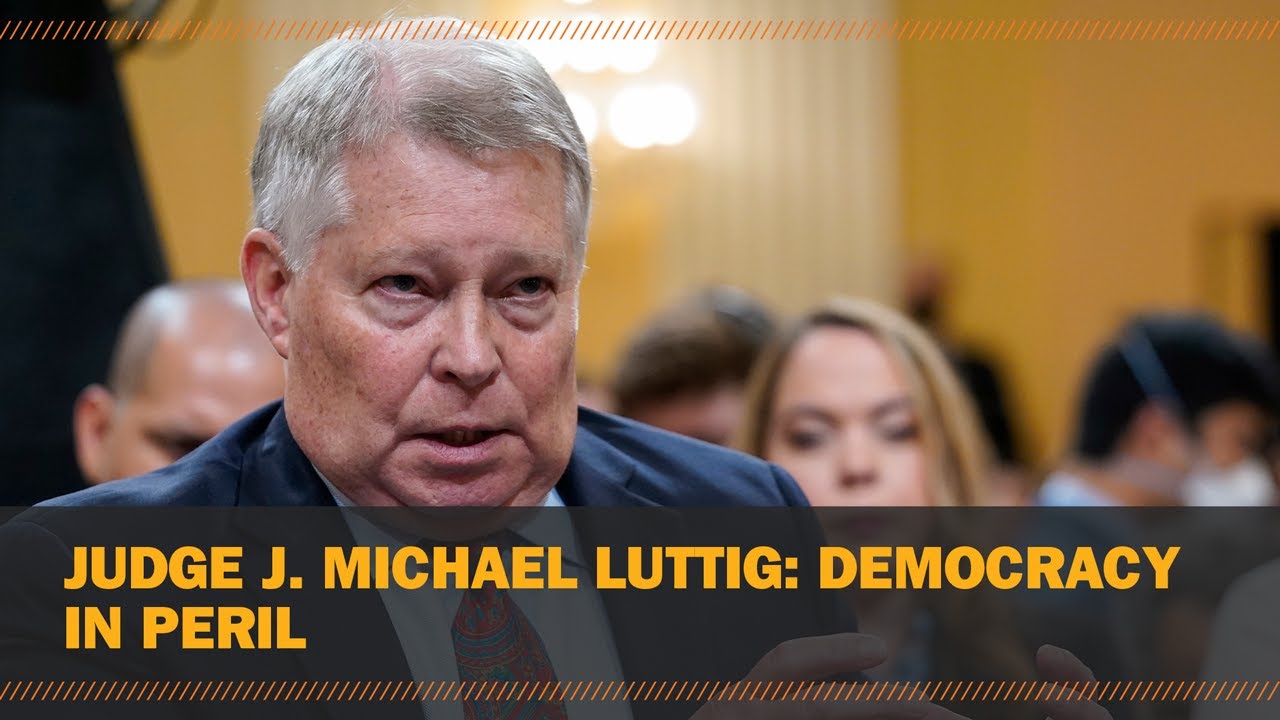
Retired federal judge J. Michael Luttig issued a searing rebuke of the Supreme Court’s unanimous decision that Colorado could not disqualify former President Trump from the ballot under the 14th Amendment’s insurrection ban, preserving his ability to seek a second term.
In a piece published in The Atlantic on Thursday, Luttig, a longtime conservative jurist on the 4th U.S. Circuit Court of Appeals, said all nine justices “dangerously betrayed” democracy in making their decision.
Voters and advocacy groups had filed dozens of challenges to Trump’s ballot eligibility in states across the country, claiming his actions surrounding the Jan. 6, 2021, Capitol attack triggered his disqualification.
The high court sided with Trump by ruling Congress has exclusive authority to enforce the 14th Amendment to disqualify federal candidates.
Luttig, who had been vocal in support of the Colorado Supreme Court’s decision to bar Trump from the ballot, described Section 3 of the 14th Amendment as the Constitution’s “safety net for America’s democracy, promising to automatically disqualify from public office all oath-breaking insurrectionists against the Constitution, deeming them too dangerous to entrust with power unless supermajorities of both houses of Congress formally remove their disability.”
“Our highest court dramatically and dangerously betrayed its obligation to enforce what once was the Constitution’s safety net for America’s democracy. The Supreme Court has now rendered that safety net a dead letter, effectively rescinding it as if it had never been enacted,” Luttig wrote.
Luttig pushed back on the argument that barring Trump from the ballot would be undemocratic, writing, “Disqualification is not what is antidemocratic; rather, it is the insurrection that is antidemocratic, as the Constitution emphatically tells us.”
He continued, “That the disqualification clause has not previously been invoked to keep traitors against the Constitution from having a second opportunity to fracture the framework of our republic reflects not its declining relevance but its success at deterring the most dangerous assaults on our government until now.”
Luttig, who previously submitted an amicus brief in the case, reiterated his core arguments in favor of upholding the Colorado decision.
“What ought to have been, as a matter of the Constitution’s design and purpose, the climax of the struggle for the survival of America’s democracy and the rule of law instead turned out to be its nadir, delivered by a Court unwilling to perform its duty to interpret the Constitution as written,” Luttig wrote.
“Desperate to assuage the growing sense that it is but a political instrument, the Court instead cemented that image into history. It did so at what could be the most perilous constitutional and political moment in our country’s history, when the nation and the Constitution needed the Court most—to adjudicate not the politics of law, but the law of the politics that is poisoning the lifeblood of America.”
Donald Trump’s brain is clearly deteriorating and he makes no sense with much of what he says. The news media tries to ignore the obvious…Trump is slipping into dementia! The evidence is there!
As I do every Monday, I join Hal Ginsberg on his Halitics videocast on YouTube. We discuss, but don’t always see eye to eye on the political situation, both here and abroad. But I believe it to lively and fun. My commentary about Biden’s State of the Union address is a major topic today.
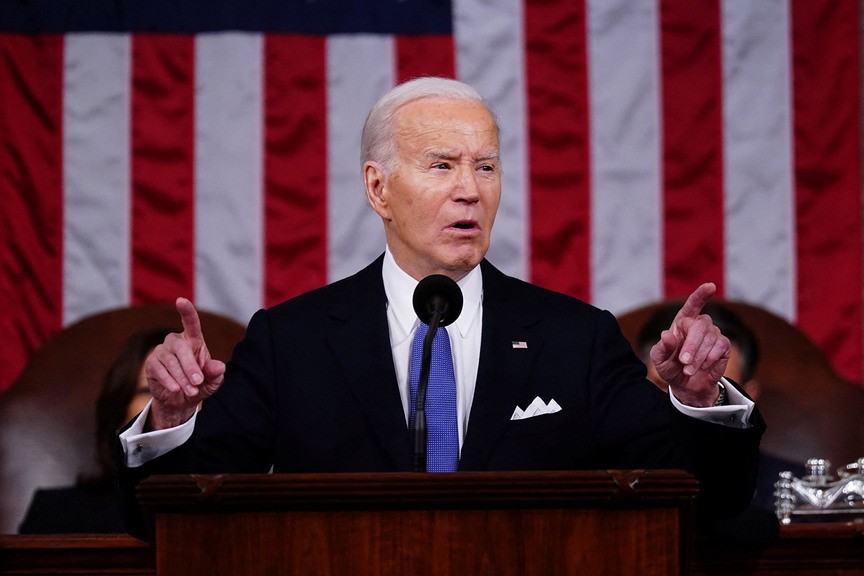
After three years, President Joe Biden seemed to awake from a virtual coma on the evening of his recent State of the Union Address. And not a moment too soon.
Like his former boss, Barack Obama, it took a while for Biden to realize the Republican Party had no intention of cooperating with him to help fix America’s problems. Senate Republican Leader Mitch McConnell foretold their strategy in 2010: “The single most important thing we want to achieve is for President Obama to be a one-term president.” That objective “trumped” everything else from that time on.
Sadly, it took many in the Democratic Party a long time to understand that Republicans had no interest or intention of helping make our country a better place. They were only interested in regaining power, and at any cost.
President Biden, like his former boss, Obama, tried to work with Republicans to get things done. It took him some time to realize the futility of his efforts. But he forged ahead and moved to pass legislation to help the American people. He had some successes, even as the opposition party transitioned into a compliant personality cult totally under the powerful thumb of the charismatic reality TV star, Donald Trump.
After struggling for three years and watching his poll numbers stagnate below those of the greatest narcissist and con man of all time, and watching serious problems fester and worsen both here and abroad, Joe Biden and his team awoke to the fact that evil forces were gaining power in this country and democracy here and abroad was in existential danger.
His best hope was to step up his game and directly challenge the opposition in a way that would gain the attention of the American people. And his best opportunity was the constitutionally mandated State of the Union Address on March 8, 2024, during the last year of his term. With all the major television networks airing it in prime time, this was Biden’s best shot to speak out and reassure the nation.
Biden came out swinging, to the surprise of most people, who weren’t expecting a lot from this mild-mannered 81-year-old veteran politician. He went right after his opposition, calling them out for their efforts to push the country back several decades and take away hard-won progress and established human rights.
President Biden went right into shaming Trump and the GOP for letting Russia’s dictator Vladimir Putin get his way. Biden started defending our defense of Ukraine with historical parallels from WWII and the appeasement that allowed Hitler and Germany to move to take over Europe. And he pointedly referenced President Reagan and a Republican Party with a long history of standing up against Russian aggression.
Biden was very clear what was at stake in the November election: democracy vs autocracy. He also proved to the American people that he was not the doddering, senile invalid that Fox News and that ilk portray him to be. Biden clearly showed he is up to his job and motivated to stop the evil forces (Trump and his MAGA cult) that have taken control of what was once the Republican Party.
He predicted that the anger that fueled special election Democratic victories the last couple of years, after the Supreme Court overruled Roe vs Wade, was still alive and had more butt to kick.
“Clearly, those bragging about overturning Roe v. Wade have no clue about the power of women,” Biden said. “They found out when reproductive freedom was on the ballot, we won in 2022 and 2023, and we’ll win again in 2024.”
He helped neutralize the Republican’s favorite issue by pointing out that he agreed to the tougher border laws worked out by a bipartisan group of senators, only to see it yanked away by Trump’s instructions to Republicans to vote against it to keep alive the issue for election exploitation. A lot could be inferred when TV shots of the audience showed conservative Senator James Lankford of Oklahoma, who spent months negotiating that immigration agreement, reluctantly nodding his head in agreement with Biden.
Despite immature catcalls from Republicans like Marjorie Taylor Greene, the president was able to point to his success in adding more jobs, cutting inflation, keeping taxes down and the stock market up. “I inherited an economy that was on the brink, now our economy is the envy of the world,” he pointed out.
Unfortunately, Biden continued to disappoint progressives by not fully challenging Israeli President Netanyahu to change Israel’s over-the-top attacks against Hamas. Israel’s retaliation, justified up to a point that has now been exceeded, has led to tens of thousands of deaths of innocent civilians in Gaza, women and children a large part of them.
Biden can force Israel’s hand by the using the power of the purse string, as it is U.S. money that is funding the weapons that are killing the civilians. Yet Biden has been so far unwilling to use our financial leverage to rein in Netanyahu’s excesses. Some of Biden’s remarks, however, indicated his growing discontent with Israel’s current policies.
In his State of the Union speech, Joe Biden stepped up and showed he was still on top of his game. Nobody can say the same about Trump, who increasingly mangles his speeches and displays crazier, more extreme and hateful rhetoric as the pressures on him, legal and otherwise, mount.
The election ahead will be tough for all, and polling has been showing how close the election might be, but in the end it is likely and necessary that Joe Biden will, once again, defeat his rival and save America from the horrendous nightmare of another Trump presidency.
At least now we can more clearly see the opposition to the MAGA forces has a leader who will willingly step up to the plate and give it his best effort. Of course, Biden will need millions of motivated American citizens and voters to join with him if we are to save our faltering democracy from the evil and powerful forces intent on destroying it.
We only have a few months to get our country back, but we absolutely have to. If we don’t, the consequences are too horrific and unbearable to think about. Decent and aware fellow Americans, it is past time to get to work.
As we do every Monday on the YouTube videocast, Halitics, Hal Ginsberg and I discuss–and often vigorously debate–the latest news from the world of politics. Today we talk about the upcoming race for U.S. senator from California, as well as the upcoming Super Tuesday primary elections. Also, did Trump collude with Russians in the 2016 election? What should the U.S. be doing about the excessive loss of life in Gaza and Ukraine? And many other topics,,,,
There is the one challenge question that is guaranteed to baffle Trump cult members. Look them in the eye and ask: Tell me one nice thing Donald Trump has ever done for another person in his entire life. There is only one true answer: he has never ever in his life helped or done anything nice for anyone other than himself.
I did ask this question to some Trumpies and they referenced a couple of nice things Trump is reported to have done: allowing a black, homeless woman to live rent-free for years in one of his hotels, and a former Miss Wisconsin who praised Trump publicly on TV for helping her and her son when they were in terrible shape. They do sound like nice gestures, but the evidence behind them is questionable. https://www.snopes.com/fact-check/black-homeless-woman-says-trump-allowed-live-trump-tower-rent-free
Snopes: MIXTURE: Donald Trump paid to ensure a Mexican-American boy statement about Trump and a Mexican-American boy refers to Melissa Young, a former beauty pageant contestant and Miss Wisconsin USA in 2005, who told Trump during a campaign stop on 30 March 2016 that she was suffering from a terminal illness. Although Young later thanked Trump for his support and said that he had enabled her young Mexican-American son to go to college, she was referring to donations made through Fundanything.com, a Kickstarter-like crowdfunding site launched by Trump, and not a personal contribution from the candidate:
“As my body is getting weaker, I am unsettled by the fact that I have never been able to directly thank you. Because of you and your efforts, my son Jack who is Mexican-American, has a chance at a better future and a solid education. You and the Miss USA pageant played a tremendous role in my life.
“About 3 years ago, Chelsea was in NYC and attended one of your many functions at Trump Tower, where you debuted FundAnything.com. This turned out to be a life changing event for my son and I. I am forever indebted to you.”
During the site’s launch Trump reportedly promised he would fully fund some FundAnything projects himself, but we found nothing indicating he had personally funded Young’s endeavor.