As we do every Monday on the YouTube videocast, Halitics, Hal Ginsberg and I discuss–and often vigorously debate–the latest news from the world of politics. Today we talk about the upcoming race for U.S. senator from California, as well as the upcoming Super Tuesday primary elections. Also, did Trump collude with Russians in the 2016 election? What should the U.S. be doing about the excessive loss of life in Gaza and Ukraine? And many other topics,,,,
There is the one challenge question that is guaranteed to baffle Trump cult members. Look them in the eye and ask: Tell me one nice thing Donald Trump has ever done for another person in his entire life. There is only one true answer: he has never ever in his life helped or done anything nice for anyone other than himself.
I did ask this question to some Trumpies and they referenced a couple of nice things Trump is reported to have done: allowing a black, homeless woman to live rent-free for years in one of his hotels, and a former Miss Wisconsin who praised Trump publicly on TV for helping her and her son when they were in terrible shape. They do sound like nice gestures, but the evidence behind them is questionable. https://www.snopes.com/fact-check/black-homeless-woman-says-trump-allowed-live-trump-tower-rent-free
Snopes: MIXTURE: Donald Trump paid to ensure a Mexican-American boy statement about Trump and a Mexican-American boy refers to Melissa Young, a former beauty pageant contestant and Miss Wisconsin USA in 2005, who told Trump during a campaign stop on 30 March 2016 that she was suffering from a terminal illness. Although Young later thanked Trump for his support and said that he had enabled her young Mexican-American son to go to college, she was referring to donations made through Fundanything.com, a Kickstarter-like crowdfunding site launched by Trump, and not a personal contribution from the candidate:
“As my body is getting weaker, I am unsettled by the fact that I have never been able to directly thank you. Because of you and your efforts, my son Jack who is Mexican-American, has a chance at a better future and a solid education. You and the Miss USA pageant played a tremendous role in my life.
“About 3 years ago, Chelsea was in NYC and attended one of your many functions at Trump Tower, where you debuted FundAnything.com. This turned out to be a life changing event for my son and I. I am forever indebted to you.”
During the site’s launch Trump reportedly promised he would fully fund some FundAnything projects himself, but we found nothing indicating he had personally funded Young’s endeavor.
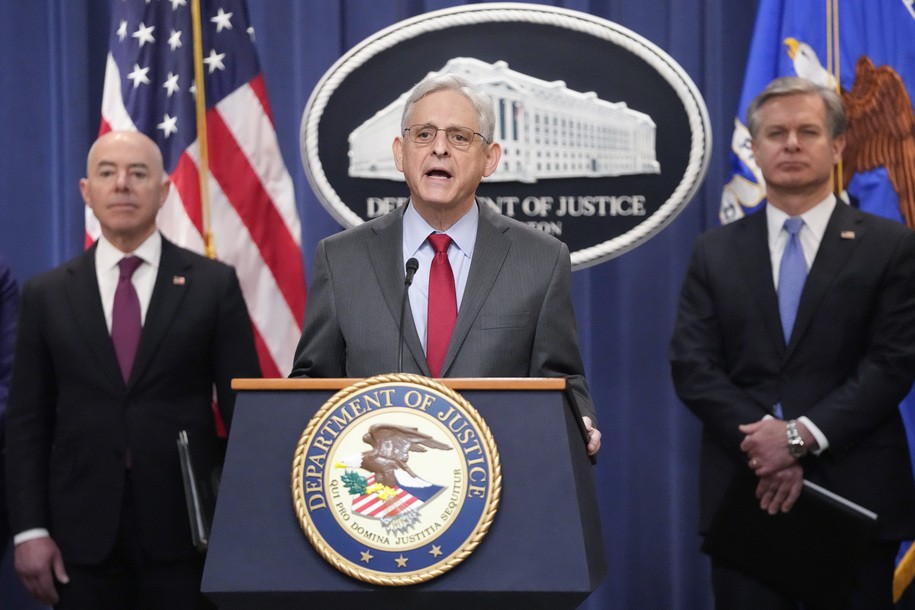
President Joe Biden made a consequential and significant mistake when he appointed Merrick Garland to be Attorney General of the United States. Garland has turned out to be weak, clueless, and ineffective, to the point that his actions are currently endangering our very democracy.
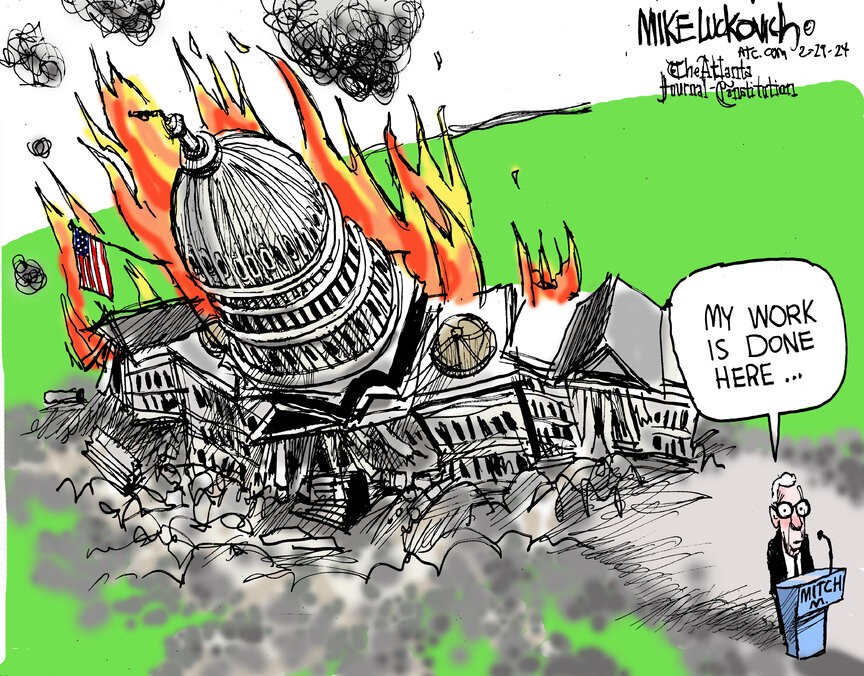
At first Biden’s appointment of Garland seemed sensible. Most of us remember when Senate Leader Mitch McConnell blocked President Obama’s plans to put the moderate jurist on the Supreme Court, the seat eventually going to right-wing religious fanatic Amy Comey Barrett.
When Biden took office in 2021, he likely figured Merrick Garland would be acceptable to both parties, and would be objective, serious about the law, and could be counted on to do the right thing.
Merrick Garland turned out to be a major disappointment in so many ways. President Biden, reportedly, and most Democrats now are not happy with the A.G.’s decisions, and most people deem it unlikely he will return to head the Justice Department if Biden wins a second term.
Merrick Garland Must Go
But so much damage by Garland’s inept performance as Attorney General has already been done. The worst was his foot-dragging in holding Donald Trump accountable for his many crimes and abuses of power while president.
By the time Garland appointed special prosecutor Jack Smith in November of 2021 to look into Trump’s transgressions,, almost two years after the January 6 insurrection, too much time was wasted. And everyone knows Trump is a master at delaying justice and avoiding accountability.
Trump has a full docket of court cases from now to the election, and 91 felony counts to attend to. But if he can appeal, distract, and delay his accountability for his numerous crimes, he could conceivably win the presidential election, and make all the legal charges against him and his cronies disappear. Were he to win the presidency, this country would quickly transform from a democracy (albeit imperfect) to a fascist-style autocracy that would be virtually impossible to overcome.
Some Biden aides say that in his decisions to select Trump-appointed prosecutors as special counsels in both the classified documents investigation and the probe into Hunter Biden, Garland ‘s attempts to go out of his way to not appear biased often led to over-correcting toward Trump-friendly prosecutors.
When Biden announced he would be nominating Garland as Attorney General at the beginning of his term, he told him “Your loyalty is not to me. You won’t work for me. You are not the president or the vice president’s lawyer.” Democrats close to Biden fear Garland has become too consumed by that instruction to appear impartial.
“I had refused to criticize [Garland] but appointing Hur, who is obviously a Republican tool and who issued what I think is an irresponsible report which violates DOJ standards, was a mistake,” Democratic consultant Robert Shrum said. “I think Garland will be criticized by historians.”
Garland’s selection of Robert Hur, a Republican-leaning, Trump-appointed federal prosecutor, to look into President Biden’s mishandling of official documents was a major mistake. Hur glossed over the potential crime and zeroed in on Biden’s mental state, which was beyond the scope of his duties, and changed the narrative of the election to whether Biden is capable of performing his presidential duties. That he has performed his job so far quite capably has taken a back seat to concerns about his age.
“Garland is far and away Biden’s worst appointee by an order of magnitude,” Robert Kuttner, co-founder of the liberal American Prospect. “And we all pay the price. If Biden goes down the drain because Garland has mishandled the investigation of Trump and gave Republicans a weapon … then the country pays the price. It’s not just that Biden gets punished for the stupidity of appointing Garland.”
Laurence Tribe, professor emeritus of constitutional law at Harvard University, wrote this on X: “I’ve long respected my friend and former student Merrick Garland, but he has bent too far backwards in order to avoid seeming pro-Biden.”
President Biden made a regretable blunder appointing Garland as the United States Attorney General. He needs to find a way to correct his poor judgement before further damage results from it.
My weekly (Mondays) appearance on Hal Ginsberg’s Halitics Videocast. Lots to talk about, of course: Ukraine, Putin, Navalny, Merrick Garland, and Robert Hur’s over-the-top report on Biden’s case re: official documents (By the way, when will we hear about Trump’s stolen documents?)
Keith Olbermann explains how Biden should respond: Putin must pay a price for killing Alexei Navalny. “Start with the transfer of the $300 billion in Russian assets seized after the attack on Ukraine, to the Ukrainian government. We must spend Putin’s money to destroy him.”
As we all know, the laws in this country are based on the United States Constitution. Legal experts have always talked about the intent and meaning of the words therein. They should be followed as written and intended.
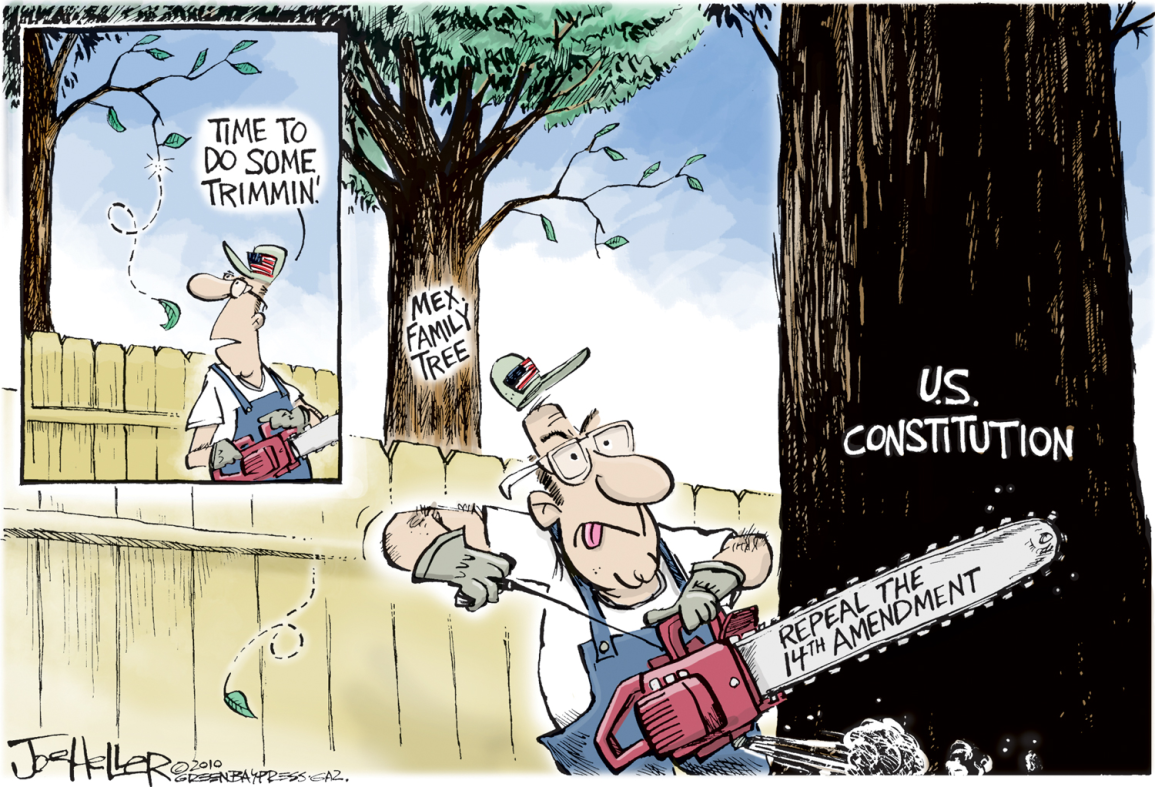
It certainly seems simple enough. The 14th Amendment to the Constitution directs us not to allow certain officials to hold office in this country. It is written this way:
Section 3. No person shall be a Senator or Representative in Congress, or elector of President and Vice President, or hold any office, civil or military, under the United States, or under any State, who, having previously taken an oath, as a member of Congress, or as an officer of the United States, or as a member of any State legislature, or as an executive or judicial officer of any State, to support the Constitution of the United States, shall have engaged in insurrection or rebellion against the same, or given aid or comfort to the enemies thereof. But Congress may, by a vote of two-thirds of each House, remove such disability.
In our case under consideration, we know that Donald Trump, “as an officer of the United States,” took “an oath to support the Constitution of the United States,” engaged in insurrection or rebellion against the same, or given aid or comfort to the enemies thereof.”
It couldn’t be more clear. Donald Trump forfeited his rights to “hold any office, civil or military, under the United States.” It’s time for him to stop campaigning for president, and to move on to defending himself against the 91 felony counts he is charged with. A number of conservative legal scholars see it that way, among them the respected J. Michael Luttig, a member of the Federalist Society.
Many experts think this clause in the 14th Amendment should be “self-executing,” meaning domestic courts can enforce them directly. There is dispute about whether this law is self-executing. So our politically oriented, conservative Supreme Court will take it up. The Court is which Merrick Garland should be a member, and not Amy Coney Barrett, were it not for Donald Trump and Mitch McConnell’s sleazy moves to slant the court in the GOP’s favor.
We can surely expect the Roberts Court to ignore the relevant words in the 14th Amendment and find a way to make sure Trump continues to run. That will make it clear that it is not the words in the Constitution that matter, but rather how the Supreme Court decides to interpret those words.
Two doctrines favored by the conservative supermajority — textualism and originalism — could play a crucial role in any decision by the justices on whether to keep Donald Trump on the ballot
The ruling by Colorado’s Supreme Court that former President Donald J. Trump is ineligible to be president again because he engaged in an insurrection has cast a spotlight on the basis for the decision: the Constitution’s 14th Amendment, which includes a clause disqualifying people who violated their oaths of office from holding government positions in the future.
Mr. Trump has vowed to appeal to the Supreme Court. It is dominated by a supermajority of six justices who emerged from the conservative legal movement, which values methods of interpretation known as textualism and originalism. Under those precepts, judges should interpret the Constitution based on its text and publicly understood meaning when adopted, over factors like evolving social values, political consequences or an assessment of the intended purpose of the provision.
Some of the major questions raised by the ruling — like whether it would need an act of Congress to take effect as well as the power of a state court to decide whether a federal candidate is qualified — do not turn on interpreting the clause’s text. But here is where textualism and originalism may come into play.
What is the disqualification clause?
The 14th Amendment was adopted in 1868 as part of the post-Civil War Reconstruction Era. To deal with the problem of former Confederates holding positions of government power, its third section disqualifies former government officials who have betrayed their oaths from holding office.
Specifically, the clause says that people are ineligible to hold any federal or state office they took an oath to uphold the Constitution in one of various government roles, including as an “officer of the United States,” and then engaged in insurrection or rebellion against the United States or aided its enemies. The clause also says a supermajority vote in Congress could waive such a penalty.
According to a Congressional Research Service report, a criminal conviction was not seen as necessary: federal prosecutors brought civil actions to oust officials who were former Confederates, and Congress refused to seat certain members under the clause. Congress passed amnesty laws in 1872 and 1898, lifting the penalties on former Confederates.
Is the president an ‘officer of the United States’?
Mr. Trump is unique among American presidents: He has never held any other public office and only swore an oath to the Constitution as president. That raises the question of whether the disqualification clause covers the oath he took. While as a matter of ordinary speech, a president is clearly an “officer of the United States,” there is a dispute over whether it excludes presidents as a constitutional term of art.
In 2021, two conservative legal scholars, Josh Blackman of the South Texas College of Law Houston and Seth Barrett Tillman of the National University of Ireland, Maynooth, published a law review article about the clause arguing on textualist and originalist grounds that a president does not count as an officer of the United States. Among other issues, they focused on language about “officers” in the original Constitution as ratified in 1788 — including language about oaths that can be read as distinguishing appointed executive branch officers from presidents, who are elected.
Last summer, two other conservative legal scholars — William Baude of the University of Chicago and Michael Stokes Paulsen of the University of St. Thomas — posted a law review article that invoked similar methodology but concluded that Mr. Trump is ineligible for the presidency. “Essentially all the evidence concerning the original textual meaning” of the clause pointed in that direction, the scholars argued. Among other things, they wrote that phrases like “officer of the United States” must be read “sensibly, naturally and in context, without artifice” that would render it a “‘secret code’ loaded with hidden meanings.”
In an earlier phase of the Colorado case, a lower court judge had ruled that the clause does not cover presidents and so rejected removing Mr. Trump from the ballot. In finding the opposite, the Colorado Supreme Court also cited evidence of people in the immediate post-Civil War era discussing the president as an officer of the government, while focusing on ordinary use of the term rather than treating it as a term of art.
Were the events of Jan. 6 an insurrection?
The question of whether “insurrection” aptly describes the events of Jan. 6 is another topic of debate, although it was not a major disagreement among judges in Colorado.
Some critics of Mr. Trump use that word to describe how a pro-Trump mob overran the Capitol in an attempt to block Congress from certifying President Biden’s Electoral College victory. Mr. Trump’s allies — as well as some people who are otherwise his critics — argue that “insurrection” is hyperbole.
The Constitution does not define the word. While it was written after the South’s armed rebellion against the Union, its text does not limit its scope to participation in events of a comparable scale. A federal statute allowing presidents to use troops to suppress insurrections discusses “unlawful obstructions, combinations, or assemblages, or rebellion against the authority of the United States” that “make it impracticable to enforce the laws of the United States in any state by the ordinary course of judicial proceedings.”
The Colorado Supreme Court’s four-justice majority found that the events were an insurrection, and that issue was not the basis of any of the three dissents. The lower-court judge who had rejected the lawsuit on the grounds that the president is not an “officer of the United States” had nevertheless found that the events of Jan. 6 constituted an insurrection.
Has Trump ‘engaged’ in an insurrection?
Even assuming the events of Jan. 6 were an insurrection, there remains the question of whether the actions of Mr. Trump — who did not himself storm Congress — amounted to engaging in an insurrection against the government or giving aid and comfort to its enemies.
The House committee that investigated Mr. Trump’s attempt to subvert the 2020 election concluded that the events met the standard of an insurrection, and asked the Justice Department to consider charging him under a law that makes it a crime to incite, assist, or give “aid or comfort” to an insurrection.
The panel cited his summoning of supporters to Washington on Jan. 6, the fiery speech he delivered to them as they morphed into a mob, how he refused for hours to take steps to call off the rioters despite being implored by aides to do so, and an inflammatory tweet he sent about Vice President Mike Pence during the violence.
Still, the special counsel, Jack Smith, did not include inciting an insurrection in the charges he brought against Mr. Trump, and to date Mr. Trump has not been convicted of any crime in connection with his attempts to stay in office for a second term despite losing the election. Mr. Trump has argued that all his actions were protected by the Constitution, including the First Amendment.
What else have courts said about the clause and Jan. 6?
There has never before been a presidential candidate who is accused in court of being an oath-breaking insurrectionist, so there is no Supreme Court precedent solidly on point. But other politicians have faced similar legal challenges in connection with the events of Jan. 6, 2021.
In early 2022, opponents of Representative Madison Cawthorn, a Trump-aligned Republican of North Carolina, filed a lawsuit to keep him from running for re-election based on what they described as his role in encouraging what became the Jan. 6 riot. A Federal District Court judge dismissed the case, ruling that the clause no longer had force after the 1872 amnesty law. But an appeals court overturned that ruling, holding that the amnesty law was only retrospective and the prohibition still applied in general. Mr. Cawthorn lost his primary election, so the case was rendered moot without resolving other issues.
Opponents of Representative Marjorie Taylor Greene, a Trump-aligned Republican of Georgia, similarly tried to keep her from running for re-election in 2022. A state judge rejected that challenge, finding no persuasive evidence that she “took any action — direct physical efforts, contribution of personal services or capital, issuance of directives or marching orders, transmissions of intelligence, or even statements of encouragement — in furtherance” of what turned into the Jan. 6 riot after she first took the oath on Jan. 3, 2021.
And in September 2022, a state judge in New Mexico ordered Couy Griffin, a commissioner in New Mexico’s Otero County, removed from office under the clause. Mr. Griffin had been convicted of trespassing for breaching the Capitol as part of the mob. The judge ruled that the events surrounding the Jan. 6 riot counted as an insurrection and that Mr. Griffin’s role in the matter rendered him “constitutionally disqualified from serving.”




 thebigpicturereport ™