BPR Quote of the Day: The End Result of Decades of Craziness

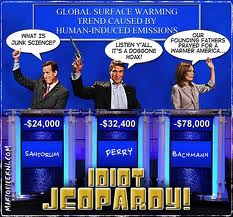
“The GOP isn’t just spectacularly unlucky in its menu of candidates; this is what the party has been for decades. Rick Santorum isn’t someone out of left field; he’s always been what you see now, and he was a central figure in his Senate days. All that has happened now is that the mannerisms have finally gotten to the point that the pretense of a reasonable party is no longer sustainable.”

Paul Krugman

“Looking Back With Shrillness,” Feb. 29, 2012

Posted in elections, politics, Quotations, Republican Party | Tagged , | 1 Comment

Robert Reich: The High Cost of Educating Snobs

Stop Starving Public Universities and Shrinking the Middle Class

by Robert Reich/ Feb. 29, 2012

Last week Rick Santorum called the President “a snob” for wanting everyone to get a college education (in fact, Obama never actually called for universal college education but only for a year or more of training after high school).

Santorum needn’t worry. America is already making it harder for young people of modest means to attend college. Public higher education is being starved, and the middle class will shrink even more as a result.

Over just the last year 41 states have cut spending for public higher education. That’s on top of deep cuts in 2009 and 2010. Some public universities, such as the University of New Hampshire, have lost over 40 percent of their state funding; the University of Washington, 26 percent; Florida’s public university system, 25 percent.

Rising tuition and fees are making up the shortfall. This year, the average hike is 8.3 percent. New York’s state university system is increasing tuition 14 percent; Arizona, 17 percent; Washington state, 16 percent. Students in California’s public universities and colleges are facing an average increase of 21 percent, the highest in the nation.
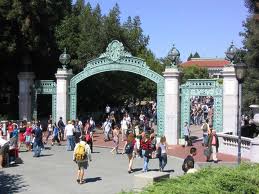
Sather Gate/ UC Berkley

The children of middle and lower-income families are hardest hit. Remember: The median wage has been dropping since 2000, adjusted for inflation.

Pell Grants for students from poor families are falling further behind; they now cover only about a third of tuition and fees. (In the 1980s, they covered about half; in the 1970s, more than 70 percent.)

Student debt is skyrocketing – the New York Federal Reserve Bank estimates it at $550 billion. Punitive laws enforce repayment, and it’s almost impossible to shed student loans in bankruptcy. There is no statue of limitations for non-repayment.

And yet, Santorum’s rant notwithstanding, good-paying jobs in America are coming to require a college degree. Globalization and rapid technological change are putting a premium on the ability to identify and solve new problems. A college degree is also a signal to prospective employers that a young person has what it takes to succeed.

That’s why the median annual pay of people with a bachelor’s degree was 70 percent higher than those with a high school diploma in 2009 (the latest Census data available).

But public higher education isn’t just a private investment. It’s a public good. Our young people — their capacities to think, understand, investigate, and innovate — are America’s future.

We used to understand this. During the great expansion of public higher education from the 1950s to the 1970s, tuition at public universities averaged about 4 percent of median family income (compared to around 20 percent at private universities).

Young Americans received college degrees in record numbers – creating a cohort of scientists, engineers, managers, and professionals that propelled the economy forward and dramatically expanded the middle class.

But starting in the 1980s, as in so many other areas of American life, we took a U-turn. Tuition at public universities began climbing. By 2005, it was more than 10 percent of median annual family income. Now it’s approaching 25 percent – still a good deal relative to private universities (where it’s nearly 70 percent), but high enough to discourage many qualified young people from attending.

Public higher education has been the gateway to the middle class but that gate is shutting – just when income and wealth are more concentrated at the top than they’ve been since the 1920s, and when America needs the brainpower of its young people more than ever.

This is nuts.

What’s the answer? Partly to make public universities more efficient. Every bureaucracy I’ve ever been associated with (and I’ve been in some very big ones) has some fat to be trimmed. Yet universities are necessarily labor-intensive enterprises; research and teaching can’t be outsourced abroad or turned over to computerized machine tools.

Another part of the answer is to raise tuition and fees for students from higher-income families and use the extra money to subsidize medium and lower-income kids. Even now relatively few pay the official sticker price; many receive some discount proportional to family income. But this won’t solve the underlying problem, either.

A big part of the answer has to be more government support for public education at all levels. This requires more tax revenues – especially from Americans who are best able to pay.

Most Americans still believe in the ideal of equal opportunity. And most harbor the patriotic notion that we have responsibilities to one another as members of the same society.

The two principles lead to an obvious conclusion: America’s richest citizens have a duty to pay more taxes so kids from middle and lower-income families have chance to make it in America.

A pending initiative in California would raise taxes on millionaires and use the proceeds to fund public education at all levels. It’s a good idea, and it comes at the right time. Other states should follow.

Robert Reich is Chancellor’s Professor of Public Policy at the University of California at Berkeley. He has served in three national administrations, most recently as secretary of labor under President Bill Clinton.

from RobertReich.org

Boldface added by BPR Editor
Posted in economy, Education, inequality, Uncategorized | Tagged , , , , , , , | Leave a comment

BPR Quote of the Day: T. Roosevelt: “Drive the Special Interests Out of Politics”

I think it fair to say Teddy Roosevelt would not be a fan of the Roberts Supreme Court, nor would he be a Republican today.

“…our government, National and State, must be freed from the sinister influence or control of special interests… the great special business interests too often control and corrupt the men and methods of government for their own profit. We must drive the special interests out of politics… For every special interest is entitled to justice, but not one is entitled to a vote in Congress, to a voice on the bench, or to representation in any public office. The Constitution guarantees protection to property, and we must make that promise good. But it does not give the right of suffrage to any corporation.”

President Theodore Roosevelt

“New Nationalism” speech, 1910

Posted in Economics, elections, government, politics, Quotations, Republican Party, Supreme Court | Tagged , , , , , | Leave a comment

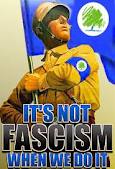
BPR Quote of the Day: None Dare Call It Fascism (Except Ron Paul)

“We’ve slipped away from a true Republic. Now we’re slipping into a fascist system where it’s a combination of government and big business and authoritarian rule and the suppression of the individual rights of each and every American citizen.”

Ron Paul

Feb. 19, 2012 Campaign Speech

Posted in civil liberties, government, law, Quotations | Tagged , | Leave a comment

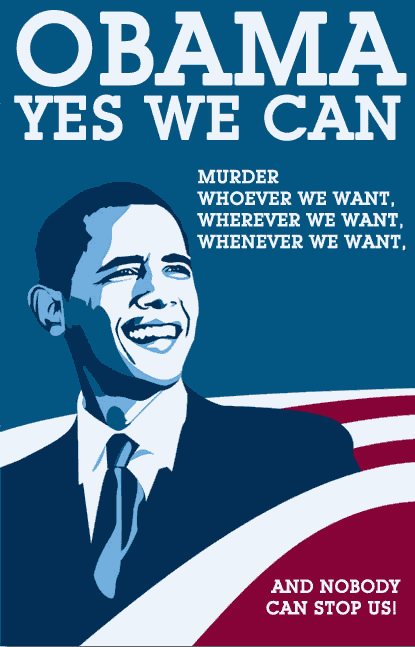
I’d Rather You Didn’t, Mr. President

Posted in Barack Obama, civil liberties, foreign policy, law, military, Uncategorized | 3 Comments

{BPR Special Report} Familiar Names Responsible For Skyrocketing Gas Prices

by Arlen Grossman

As you max out your credit cards at the gas pumps, you should know that the major players to blame for the spike in gas prices are the same people who tanked the world economy four years ago–our friends, the Wall Street speculators.

That’s right, many of the same banksters–Goldman Sachs, Morgan Stanley, J.P. Morgan, et al., who manipulated the mortgage market with unsecured derivatives, created a bubble that burst in 2007 and 2008, causing a worldwide financial meltdown–are in large part responsible for the skyrocketing price of gas at the pump. Another familiar name, Enron, even has a role in this story.

There are multiple reasons for fluctuations in the price of gas, among them oil supply and demand, and geopolitical developments. But according to Bart Chilton, a commissioner at the Commodity Futures Trading Commission,  the federal agency that regulates commodity futures and option trading in the United States, much of the spike in gas prices is due to “excess speculation” by Wall Street traders.

How much? Chilton told ABC News that Honda Civic owners are paying about $7.30 to Wall Street speculators each time they fill up their gas tank.  Ford Explorer owners pay even more, an extra $10.41.  For a Ford F150,  it  jumps to $14.56 per fill-up, or about $750 a year.  How Wall Street is Raising the Price of Gas.

Chilton said the CFTC  is trying to put new rules in place to limit speculation. Wall Street predictably does not approve and is suing the CFTC in order to get an injunction to keep the status quo.There have been investigations, by Congress, by the Justice Department and other federal agencies, but they all seem to fade away under the weight of Wall Street clout. Amazing how that works.

The Consumer Federation of America estimated the average household, which spent almost $2.900 in 2011 on gasoline, will spend almost $600 more this year due to “excessive speculation.”  They figured deregulation added about $30 per barrel to the cost of oil in 2011, draining more than $200 billion from the economy.  “It was weak regulation that landed us in our current economic mess,” CFA Director of Investor Protection Barb Roper said, “and it will take a strong policy response to restore the economy to health.” CNN Money

And who was responsible for the deregulation that enabled the excess speculation in the oil futures market?  Steve Kroft asked  Michael Greenberger, a former director of trading for the CFTC, that question on a CBS 60 Minutes segment in 2009.

“You’d have to say Enron,” he replied. “This was something they desperately wanted, and they got…This was when Enron was riding high. And what Enron wanted, Enron got.”

ExxonMobil Chairman Rex Tillerson, testified before the Senate Finance Committee on May 12, 2011, suggesting that excessive speculation may have increased oil prices by as much as 40 percent. What Wall Street Doesn’t Want Us to Know About Oil Prices

At that hearing, Senator Maria Cantwell (D-WA) pointed out that the oil futures market was set up to moderate the price and risk of petroleum for those who use it. Prior to deregulation, for most of the 20th Century, non-oil-using speculators accounted for 30 percent or less of the oil commodities market. Now that number is closer to 70 percent.  Senator Cantwell Press Release

Independent Senator Bernie Sanders of Vermont leaked CFTC data last August showing that at the time of oil’s record high near $150 a barrel in July 2008, the market was dominated by big speculative players such as Goldman Sachs, Morgan Stanley, J.P. Morgan and the secretive Swiss oil-trading firm Vitol. You would be correct if you remember hearing many of those names during the 2008 financial meltdown and its aftermath.

According to Senator Sanders, in a Washington Post op-ed last September:

 “The CFTC report proved that when oil prices climbed in 2008 to more than $140 a barrel, Wall Street speculators dominated the oil futures market. Goldman Sachs alone bought and sold more than 860 million barrels of oil in the summer of 2008 with no intention of using a drop for any purpose other than to make a quick buck.”

The Vermont senator understands what is at stake:

“One of the great questions of our time, is whether the American people, through Congress, will control the greed, recklessness and illegal behavior on Wall Street, or whether Wall Street will continue to wreak havoc on our economy and the lives of working families…”


PUBLISHED IN OPEDNEWS.COM  (Headline Status)  02/26/2012
Posted in Economics, economy, government, politics, Uncategorized | Tagged , , , , , , , , , , , , , , , , , , , , , , , | Leave a comment

BPR Quote of the Day: Ignorance Is Bliss

“President Obama wants everybody in America to go to college. What a snob!”

Rick Santorum


Posted in Education, elections, politics, Quotations, Republican Party | Tagged , , , | 1 Comment

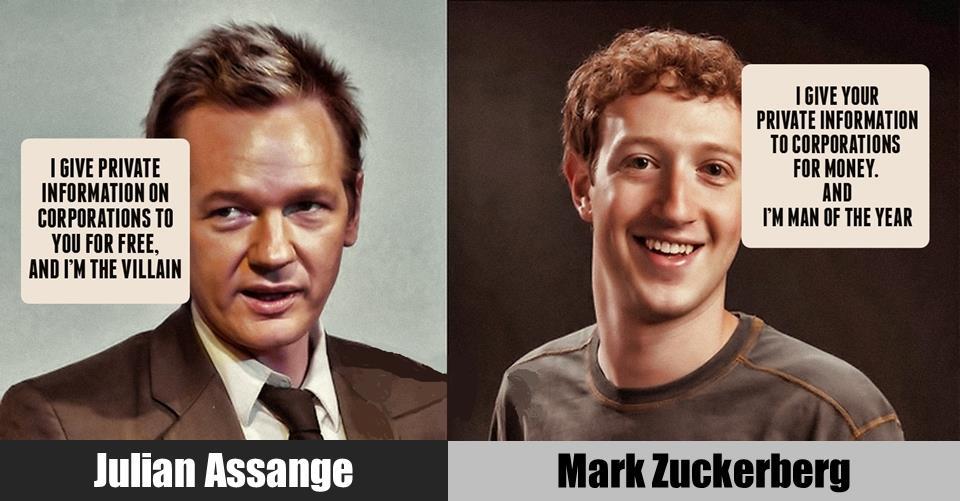
Double Standard?

Posted in civil liberties, Economics, humor, law | Tagged , , , , | 15 Comments

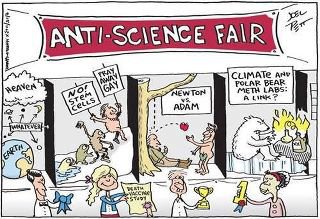
Coming to a School Near You?

Posted in humor, science | Tagged | Leave a comment

BPR Quote of the Day: If All Else Fails…..

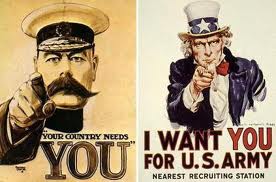
“War is made or planned now by individual men, demagogues and dictators who play on the patriotism of their people to mislead them into a belief in the great fallacy of war when all their vaunted reforms have failed to satisfy the people they misrule.”

Ernest Hemingway

from “Notes on the Next War: A Serious Topical Letter” Esquire (September 1935)

Image: http://www.the33rdfloor.com
Posted in military, Quotations, war | Tagged , , | Leave a comment