Either Way, People Die

BPR Quote of the Day

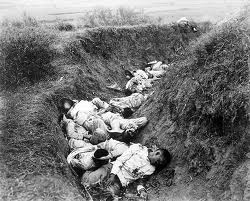
“‘Terrorism’ is what we call the violence of the weak, and we condemn it;  ‘war’ is what we call the violence of the strong, and we glorify it.”  

Sydney J. Harris (1917-1986, American journalist and columnist for the Chicago Sun-Times and Chicago Daily News

Posted in military, Terrorism, war | Tagged , , | 2 Comments

Overrated?

Posted in humor | Leave a comment

Stating the Obvious


Let’s Just Say It: The Republicans Are the Problem

By Thomas E. Mann and Norman J. Ornstein/ Washington Post/ April 27, 2012

Rep. Allen West, a Florida Republican, was recently captured on video asserting that there are “78 to 81” Democrats in Congress who are members of the Communist Party. Of course, it’s not unusual for some renegade lawmaker from either side of the aisle to say something outrageous. What made West’s comment — right out of the McCarthyite playbook of the 1950s — so striking was the almost complete lack of condemnation from Republican congressional leaders or other major party figures, including the remaining presidential candidates.

It’s not that the GOP leadership agrees with West; it is that such extreme remarks and views are now taken for granted.

We have been studying Washington politics and Congress for more than 40 years, and never have we seen them this dysfunctional. In our past writings, we have criticized both parties when we believed it was warranted. Today, however, we have no choice but to acknowledge that the core of the problem lies with the Republican Party.
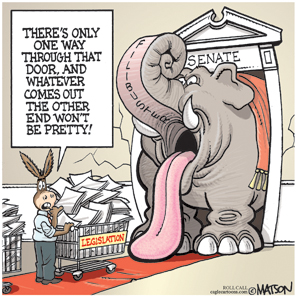
The GOP has become an insurgent outlier in American politics. It is ideologically extreme; scornful of compromise; unmoved by conventional understanding of facts, evidence and science; and dismissive of the legitimacy of its political opposition.

When one party moves this far from the mainstream, it makes it nearly impossible for the political system to deal constructively with the country’s challenges.

“Both sides do it” or “There is plenty of blame to go around” are the traditional refuges for an American news media intent on proving its lack of bias, while political scientists prefer generality and neutrality when discussing partisan polarization. Many self-styled bipartisan groups, in their search for common ground, propose solutions that move both sides to the center, a strategy that is simply untenable when one side is so far out of reach.

It is clear that the center of gravity in the Republican Party has shifted sharply to the right. Its once-legendary moderate and center-right legislators in the House and the Senate — think Bob Michel, Mickey Edwards, John Danforth, Chuck Hagel — are virtually extinct.

The post-McGovern Democratic Party, by contrast, while losing the bulk of its conservative Dixiecrat contingent in the decades after the civil rights revolution, has retained a more diverse base. Since the Clinton presidency, it has hewed to the center-left on issues from welfare reform to fiscal policy. While the Democrats may have moved from their 40-yard line to their 25, the Republicans have gone from their 40 to somewhere behind their goal post.

What happened? Of course, there were larger forces at work beyond the realignment of the South. They included the mobilization of social conservatives after the 1973 Roe v. Wade decision, the anti-tax movement launched in 1978 by California’s Proposition 13, the rise of conservative talk radio after a congressional pay raise in 1989, and the emergence of Fox News and right-wing blogs. But the real move to the bedrock right starts with two names: Newt Gingrich and Grover Norquist.

From the day he entered Congress in 1979, Gingrich had a strategy to create a Republican majority in the House: convincing voters that the institution was so corrupt that anyone would be better than the incumbents, especially those in the Democratic majority. It took him 16 years, but by bringing ethics charges against Democratic leaders; provoking them into overreactions that enraged Republicans and united them to vote against Democratic initiatives; exploiting scandals to create even more public disgust with politicians; and then recruiting GOP candidates around the country to run against Washington, Democrats and Congress, Gingrich accomplished his goal.

Ironically, after becoming speaker, Gingrich wanted to enhance Congress’s reputation and was content to compromise with President Bill Clinton when it served his interests. But the forces Gingrich unleashed destroyed whatever comity existed across party lines, activated an extreme and virulently anti-Washington base — most recently represented by tea party activists — and helped drive moderate Republicans out of Congress. (Some of his progeny, elected in the early 1990s, moved to the Senate and polarized its culture in the same way.)

Norquist, meanwhile, founded Americans for Tax Reform in 1985 and rolled out his Taxpayer Protection Pledge the following year. The pledge, which binds its signers to never support a tax increase (that includes closing tax loopholes), had been signed as of last year by 238 of the 242 House Republicans and 41 of the 47 GOP senators, according to ATR. The Norquist tax pledge has led to other pledges, on issues such as climate change, that create additional litmus tests that box in moderates and make cross-party coalitions nearly impossible. For Republicans concerned about a primary challenge from the right, the failure to sign such pledges is simply too risky.

Today, thanks to the GOP, compromise has gone out the window in Washington. In the first two years of the Obama administration, nearly every presidential initiative met with vehement, rancorous and unanimous Republican opposition in the House and the Senate, followed by efforts to delegitimize the results and repeal the policies. The filibuster, once relegated to a handful of major national issues in a given Congress, became a routine weapon of obstruction, applied even to widely supported bills or presidential nominations. And Republicans in the Senate have abused the confirmation process to block any and every nominee to posts such as the head of the Consumer Financial Protection Bureau, solely to keep laws that were legitimately enacted from being implemented. (Continued Here)

Thomas E. Mann is a senior fellow at the Brookings Institution, and Norman J. Ornstein is a resident scholar at the American Enterprise Institute. This essay is adapted from their book “It’s Even Worse Than It Looks: How the American Constitutional System Collided With the New Politics of Extremism,” which will be available Tuesday.
Boldface added by BPR Editor
Posted in Democratic Party, government, media, politics, Republican Party | Tagged , , , , , , | Leave a comment

Don’t Look Behind the Curtain

Posted in government, law, politics | Tagged , | Leave a comment

Two Multi-National Corporations and a Voter

BPR Quote of the Day

“Democracy must be something more than two wolves and a sheep voting on what to have for dinner.”

James Bovard

(Bovard is a libertarian writer and lecturer.)

Posted in Democratic Party, elections, government, Quotations, Republican Party | Tagged , , | Leave a comment

From Womb to Tomb Without Any Help

BPR Quote of the Day

“America: A country in which it has gotten too expensive to go to college, which is the only way to qualify for a decent job, which you need to get health care, which you need to stay alive.”

Arlen Grossman

Posted in economy, Education, employment, health care, inequality, labor, poverty, Quotations | Tagged , | Leave a comment

Millions of Americans Suffering From OLS

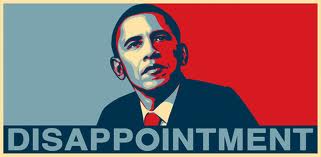
OBAMA LETDOWN SYNDROME (OLS): NO CURE ON THE HORIZON 

by Arlen Grossman/ The Big Picture Report

Do you feel Angry? Frustrated?  Cynical? Hopeless?  If your politics lean liberal/progressive, you are not alone with these nagging symptoms. You may be suffering from Obama Letdown Syndrome (OLS).

Obama Letdown Syndrome emerged soon after the inauguration of President Barack Obama on January 20, 2009.  From the November election until then, progressive Democrats appeared excited, hopeful, even giddy at times. If you fell into that political category, you likely noticed a spring in your step, a smile on your face, a warm feeling that hope and change were imminent.

For eight long years you endured BSS (Bush Shock Syndrome),  an acute discomfort fueled by pre-emptive overseas wars and uncompromising class warfare against America’s working class and poor.

But the clouds parted and the sun shone through on the November morning when President Barack Obama won the 2008 election. An Obama presidency was positively exhilarating to Democrats: a young likable minority president promising peace and justice, and a fundamental change in the way Washington does business.  Your fantasies turned to visions of daily perp walks by Bush Administration officials and Wall Street banksters, of rich people paying higher taxes, the opportunity for overdue peace dividends, and all kinds of  exciting liberal and progressive scenarios.

image: capitalismisover.com

And then something unexpected happened.  Obama Letdown Syndrome broke out within days after the president moved into the White House. The first symptoms flared up when President Obama picked many questionable appointees for key economic and defense posts. It turned out that many of the same people from the Bush Adminstration who played important roles in the collapse of the world economy and the failed wars and foreign occupations were hired back. Familiar names like Summers, Geithner, Gates and Petraeus jumped aboard the Obama train, causing great worry to supporters expecting real change in government.

Progressives began to suffer intense abdominal pain when it became apparent President Obama not only wasn’t going to suggest single-payer health care reform, he wasn’t even going to fight for a public option. He seemed more interested in keeping the insurance and pharmaceutical companies happy than in meaningful reform.

Like many progressive Democrats, you slept fitfully when Bush Administration torturers were let off the hook, when the Patriot Act was extended, when Wall Street criminals enjoyed their usual obscene bonuses, and when Bush’s tax cuts for the rich were extended. You no doubt developed throbbing OLS headaches when the President began caving in to Republican leaders in Congress, often before negotiations even started. He expanded the Afghanistan War, failed to close Guantanamo Bay, increased drone strikes in more countries, ignored constitutionally mandated civil liberties, and supported offshore oil drilling and nuclear power plants, giving only lip service to concerns about climate change.

Sometimes you have OLS briefly go into remission whenever the President gives one of his stirring speeches, and you tell yourself, now he’s starting to get it.  But invariably the symptoms return with a vengeance when his actions once again fail to live up to his rhetoric.

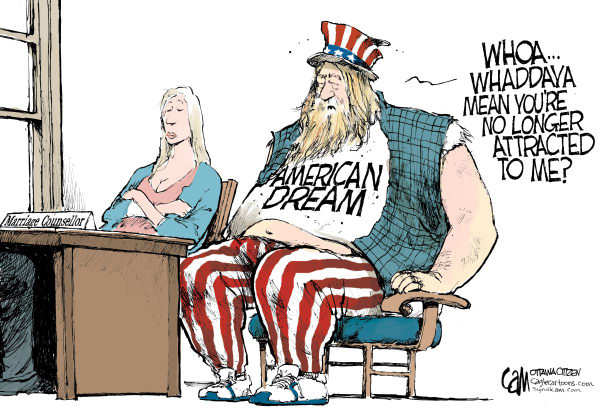
OLS turns chronic when the realization strikes your brain: Barack Obama is not a courageous fighter for progressive causes. It worsens when you figure out he is just one more in a line of Democratic Party presidents and politicians whose paramount goal is to get elected and stay in power.  If you were expecting him to wage war against wealthy corporate interests and heartless Republicans, and fight to restore the American Dream….well, you should know by now it isn’t going to happen.

What is the prognosis for Obama Letdown Syndrome? Sadly, no cure is on the horizon. His populist rhetoric will gin up as the next election draws nearer, but the results, win or lose, will undoubtably disappoint you. When the dust settles after November, 2012, the real power in America will still reside in the boardrooms of giant multi-national corporations and in the offshore accounts of multi-millionaires and billionaires. A cure could conceivably come in the form of an uprising among the 99 Percent, an Occupy America movement that can’t be ignored by the owners of America, but that is a long shot.

It is more likely OLS will continue (perhaps under a different name). If radical change does not come, American liberals/progressives will have to learn to live with this debilitating infliction–and hope it will be covered under what’s left of ObamaCare.

ALSO PUBLISHED IN OPEDNEWS.COM April 29, 2012
Posted in Afghanistan, Barack Obama, civil liberties, Democratic Party, Economics, economy, elections, foreign policy, government, inequality, Occupy, politics, protests, Republican Party, taxes, Wall Street, war | Tagged , , , , , , , , , , , | 2 Comments

BPR Quote of the Day

“Never think that war, no matter how necessary, nor how justified, is not a crime.”

Ernest Hemingway  

Posted on by Arlen Grossman | Leave a comment

How Mitt and His Partners Get Rich–And How We Pay For It

In less than three minutes, Robert Reich explains how capital equity partnerships, like Bain Capital, game the system–and how the rest of us end up holding the bag.

Posted in Economics, finance, inequality, Mitt Romney, taxes, Wall Street | Tagged , , , | Leave a comment

How Lehman Brothers Cheated While U.S. Regulators Looked the Other Way

60 Minutes: The Case Against Lehman Brothers

Steve Kroft, on CBS’s 60 Minutes last Sunday, examines (1) how the Lehman Brothers fudged numbers, evaded detection and slipped into bankruptcy, helping trigger a worldwide financial collapse, (2) how their accounting firm Ernst & Young assisted them, and (3) how government regulators (the SEC), working inside the Lehman Brothers’ offices as this was going on, ignored the company’s malfeasance, and to this day has allowed them to get away with their monumental crimes.

Posted in economy, finance, government, Justice, law, media, Wall Street | Tagged , , , , , , , , | Leave a comment