
BPR Quote of the Day

BPR Quote of the Day
In 2002, it was reported that British Prime Minister Tony Blair had told a friend an amusing tale about our man George W. Bush. It seems that the two of them and French President Jacques Chirac had gotten into an economics discussion, after which George supposedly confided to Tony that he was decidedly unimpressed with Jacques’ views: “The problem with the French,” Bush scoffed, “is that they don’t have a word for ‘entrepreneur.'”
W’s head has always been a no-fly-zone for factual reality. However, what would boggle his mind even more than the fact that we Americans filched that word from the French, is the reality that government is not quite the entrepreneur-devouring ogre (Mon dieu! George, another French word!) that Bush’s cartoonish dogma paints it to be. Actually, government-at-its-best can be an entrepreneur’s buddy. One surprising place to see this buddyship at work is in one of the most mundane of government offices: Procurement (i.e., the Department of Buying Stuff).
Where does your mayor, school board, governor, or any other “public shopper” go to purchase fixtures, food, furniture, ferns, and whatnot? Where I live, various agencies have Buy Austin, Buy Texas, Buy American, Buy Green, Buy Sweatshop-Free, and other targeted policies that apply our tax dollars to our values. This sensible idea has swept across the country, most likely including where you live, and these agency purchases add up to a big financial boost for start-ups, independents, women-owned, and other homegrown enterprises. Rather than buying everything from Walmart or China (excuse the redundancy there)–thus shipping truckloads and boatloads of cash out of our communities–plow that public money back into the home turf for grassroots economic growth and the flowering of local jobs.

My administration is committed to creating an unprecedented level of openness in Government. We will work together to ensure the public trust and establish a system of transparency, public participation, and collaboration. —-President Obama, January 26, 2009 Memo to Executive branch officials
Imagine the uproar if President Obama and Congress tried to pass a bill to outlaw such “preferential procurement” policies, summarily cancelling our democratic right to decide where to make public purchases. I’d get pretty PO’d, wouldn’t you? And what if they also proposed that foreign corporations in Brunei, New Zealand, Vietnam, and other nations must be given the right to make the sale on any and all products purchased with our tax dollars? That’d set my hair on fire!
The American people would never stand for this brazen affront to our sovereignty, so I can assure you that Obama and Congress will definitely NOT be proposing any such thing. Not directly, that is.
Instead, their hope is to tiptoe it around us. The nullification of our people’s right to direct expenditures of our own tax dollars is but one of the horror stories being quietly packed into a political-and-economic bombshell benignly labeled TPP –the Trans-Pacific Partnership.
This thing is a supersized and nuclearized NAFTA, the 1994 trade scam rammed through Congress by Bill Clinton, Wall Street’s Robert Rubin, and the entire corporate establishment. They promised that the “glories of globalization” would shower prosperity across our land. They lied. Corporations got the gold. We got the shaft–thousands of factories closed, millions of middle-class jobs went south, and the economies of hundreds of towns and cities (including Detroit) were hollowed out. (Most Mexicans got the NAFTA shafta, too. US grain traders like ADM dumped corn into Mexico, wiping out millions of peasant farmers’ livelihoods, and thousands of local businesses were crushed when Walmart invaded with its Chinese-made wares.)
Twenty years later, the corporate gang that stuck us with NAFTA is back, hoping to fool us with an even more destructive multinational deal. (This calls for another immortal quote from George W: “Fool me once, shame on–shame on you. Fool me–you can’t get fooled again.” Well, you know what he meant).
This time we really must pay attention, because TPP is not just another trade deal. First, it is massive and open-ended. It would hitch us immediately to 11 Pacific Rim nations (Australia, Brunei, Canada, Chile, Japan, Malaysia, Mexico, New Zealand, Peru, Singapore, and Vietnam), and its door would remain wide open to lure China, Indonesia, Russia, and other nations to come in. Second, note that many of those countries already have trade agreements with the US. Hence, THIS AMAZING FACT: TPP is a “trade deal” that mostly does not deal with trade. In fact, of the 29 chapters in this document, only five cover traditional trade matters!
The other two dozen chapters amount to a devilish “partnership” for corporate protectionism. They create sweeping new “rights” and escape hatches to protect multinational corporations from accountability to our governments… and to us. Here are a few of TPP’s provisos that would make our daily lives riskier, poorer, and less free:

Food safety. Any of our government’s food safety regulations (on pesticide levels, bacterial contamination, fecal exposure, toxic additives, GMOs, non-edible fillers, etc.) that are stricter than “international standards,” as most are, could be ruled as “illegal trade barriers.” Then our government would have to revise our consumer protections to comply with the weaker global standards. Also, our government could no longer ban meat imports that don’t meet our safe-to-eat laws, as long as the exporting nation simply claims that its inspection system is “equivalent” to ours. In addition, food labeling laws we rely on (organic, country-of-origin, animal-welfare approved, GMO-free, etc.) would also be subject to challenge as trade barriers.
Fracking. Our Department of Energy would lose its authority to regulate exports of natural gas to any TPP nation. This would create an explosion of the destructive fracking process across our land, for both foreign and US corporations could export fracked gas from America to member nations without any DOE review of the environmental and economic impacts on local communities–or on our national interests. It also means that most of the gas produced by this violently polluting process will not go to us, but to foreign users, which will raise our consumer prices and cut manufacturing growth.
Jobs. US corporations would get special foreign-investor protections to limit the cost and risk of relocating their factories to low-wage nations that sign onto this agreement. For example, an American corporation thinking about moving a factory would know it is guaranteed a sweetheart deal if it exports to a TPP nation like Vietnam. The corporation could skirt Vietnam’s laws and demand compensation at an international tribunal for any government policy or action (such as a hike in the minimum wage) that undermined its “expected” profits. These guarantees would be strong incentives for corporate chieftains to export even more of our middle-class jobs.
Drug prices. Big Pharma would be given more years of monopoly pricing on each of their patents and be empowered to block distribution of cheaper generic drugs. Besides artificially keeping everyone’s prices high, this would be a death sentence to many people suffering from cancer, HIV/AIDS, tuberculosis, and other treatable diseases in impoverished lands. The deal would also restrict the rights of our government to negotiate with drug giants to get lower consumer prices with bulk purchases, as Medicare and Medicaid do in the US.
Banksters. Wall Street and the financial giants in other TPP countries would make out like bandits: The deal explicitly prohibits transaction taxes (such as the proposed Robin Hood Tax here) that would shut down super-rich speculators who have repeatedly triggered financial crises and economic crashes around the world; it restricts “firewall” reforms that separate consumer banking from risky investment banking (thus prohibiting Congress from reinstating the much needed Glass-Steagall firewall in our country); it could roll back reforms that governments adopted to fix the extreme bank-deregulation regimen that caused Wall Street’s 2007 crash; and it provides a backdoor escape from national rules that would limit the size of “too-big-to-fail” behemoths. These extreme provisions would be enforceable by the banks themselves–TPP empowers them to force governments either to repeal reform laws or to compensate banks with taxpayer money for “losses” they say are caused by reforms.

FORT MEADE, Md.—The swift and brutal verdict read out by Army Col. Judge Denise Lind in sentencing Pfc. Bradley Manning to 35 years in prison means we have become a nation run by gangsters. It signals the inversion of our moral and legal order, the death of an independent media, and the open and flagrant misuse of the law to prevent any oversight or investigation of official abuses of power, including war crimes. The passivity of most of the nation’s citizens—the most spied upon, monitored and controlled population in human history—to the judicial lynching of Manning means they will be next. There are no institutional mechanisms left to halt the shredding of our most fundamental civil liberties, including habeas corpus and due process, or to prevent pre-emptive war, the assassination of U.S. citizens by the government and the complete obliteration of privacy.
Wednesday’s sentencing marks one of the most important watersheds in U.S. history. It marks the day when the state formally declared that all who name and expose its crimes will become political prisoners or be forced, like Edward Snowden, and perhaps Glenn Greenwald, to spend the rest of their lives in exile. It marks the day when the country dropped all pretense of democracy, obliterated checks and balances under the separation of powers and rejected the rule of law. It marks the removal of the mask of democracy, already a fiction, and its replacement with the ugly, naked visage of corporate totalitarianism. State power is to be, from now on, unchecked, unfettered and unregulated. And those who do not accept unlimited state power, always the road to tyranny, will be ruthlessly persecuted. On Wednesday we became vassals. As I watched the burly guards hustle Manning out of a military courtroom at Fort Meade after the two-minute sentencing, as I listened to half a dozen of his supporters shout to him, “We’ll keep fighting for you, Bradley! You’re our hero!” I realized that our nation has become a vast penal colony.
If we actually had a functioning judicial system and an independent press, Manning would have been a witness for the prosecution against the war criminals he helped expose. He would not have been headed, bound and shackled, to the military prison at Fort Leavenworth, Kan. His testimony would have ensured that those who waged illegal war, tortured, lied to the public, monitored our electronic communications and ordered the gunning down of unarmed civilians in Iraq, Afghanistan, Pakistan and Yemen were sent to Fort Leavenworth’s cells. If we had a functioning judiciary the hundreds of rapes and murders Manning made public would be investigated. The officials and generals who lied to us when they said they did not keep a record of civilian dead would be held to account for the 109,032 “violent deaths” in Iraq, including those of 66,081 civilians. The pilots in the “Collateral Murder”video, which showed the helicopter attack on unarmed civilians in Baghdad that left nine dead, including two Reuters journalists, would be court-martialed.
The message that Manning’s sentence, the longest in U.S. history for the leaking of classified information to the press, sends to the rest of the world is disturbing. It says to the mothers and fathers who have lost children in drone strikes and air attacks, to the families grieving over innocent relatives killed by U.S. forces, that their suffering means nothing to us. It says we will continue to murder and to wage imperial wars that consume hundreds of thousands of civilian lives with no accountability. And it says that as a country we despise those within our midst who have the moral courage to make such crimes public.
There are strict rules now in our American penal colony. If we remain supine, if we permit ourselves to be passively stripped of all political power and voice, if we refuse to resist as we are incrementally reduced to poverty and the natural world is senselessly exploited and destroyed by corporate oligarchs, we will have the dubious freedom to wander among the ruins of the empire, to be diverted by tawdry spectacles and to consume the crass products marketed to us. But if we speak up, if we name what is being done to us and done in our name to others, we will become, like Manning, Julian Assange and Snowden, prey for the vast security and surveillance apparatus. And we will, if we effectively resist, go to prison or be forced to flee.
Manning from the start was subjected to a kangaroo trial. His lawyers were never permitted to mount a credible defense. They were left only to beg for mercy. Under the military code of conduct and international law, the soldier had a moral and legal obligation to report the war crimes he witnessed. But this argument was ruled off-limits. The troves of documents that Manning transmitted to WikiLeaks in February 2010—known as the Iraq and Afghanistan “War Logs”—which exposed numerous war crimes and instances of government dishonesty, were barred from being presented. And it was accepted in the courtroom, without any evidence, that Manning’s release of the documents had harmed U.S. security and endangered U.S. citizens. A realistic defense was not possible. It never is in any state show trial.
Manning’s lawyer, David Coombs, read a brief statement from the 25-year-old after the sentencing:
The decisions that I made in 2010 were made out of a concern for my country and the world that we live in. Since the tragic events of 9/11, our country has been at war. We’ve been at war with an enemy that chooses not to meet us on any traditional battlefield, and due to this fact we’ve had to alter our methods of combating the risks posed to us and our way of life.
I initially agreed with these methods and chose to volunteer to help defend my country. It was not until I was in Iraq and reading secret military reports on a daily basis that I started to question the morality of what we were doing. It was at this time I realized that (in) our efforts to meet the risk posed to us by the enemy, we have forgotten our humanity. We consciously elected to devalue human life both in Iraq and Afghanistan.
When we engaged those that we perceived were the enemy, we sometimes killed innocent civilians. Whenever we killed innocent civilians, instead of accepting responsibility for our conduct, we elected to hide behind the veil of national security and classified information in order to avoid any public accountability.
In our zeal to kill the enemy, we internally debated the definition of torture. We held individuals at Guantanamo for years without due process. We inexplicably turned a blind eye to torture and executions by the Iraqi government. And we stomached countless other acts in the name of our war on terror.
Patriotism is often the cry extolled when morally questionable acts are advocated by those in power. When these cries of patriotism drown out any logically based dissension, it is usually the American soldier that is given the order to carry out some ill-conceived mission.
Our nation has had similar dark moments for the virtues of democracy — the Trail of Tears, the Dred Scottdecision, McCarthyism, and the Japanese-American internmentcamps — to mention a few. I am confident that many of the actions since 9/11 will one day be viewed in a similar light.
As the late Howard Zinnonce said, “There is not a flag large enough to cover the shame of killing innocent people.”
I understand that my actions violated the law; I regret if my actions hurt anyone or harmed the United States. It was never my intent to hurt anyone. I only wanted to help people. When I chose to disclose classified information, I did so out of a love for my country and a sense of duty to others.
If you deny my request for a pardon, I will serve my time knowing that sometimes you have to pay a heavy price to live in a free society. I will gladly pay that price if it means we could have a country that is truly conceived in liberty and dedicated to the proposition that all women and men are created equal.
We will pay for our criminality. We will pay for our callousness and brutality. The world, especially the Muslim world, knows who we are, even if we remain oblivious. It is not Manning who was condemned Wednesday, but us. “Under a government which imprisons any unjustly,” Henry David Thoreau wrote, “the true place for a just man is also a prison.” And that is the real reason Bradley Manning is being locked away. He is a just man.
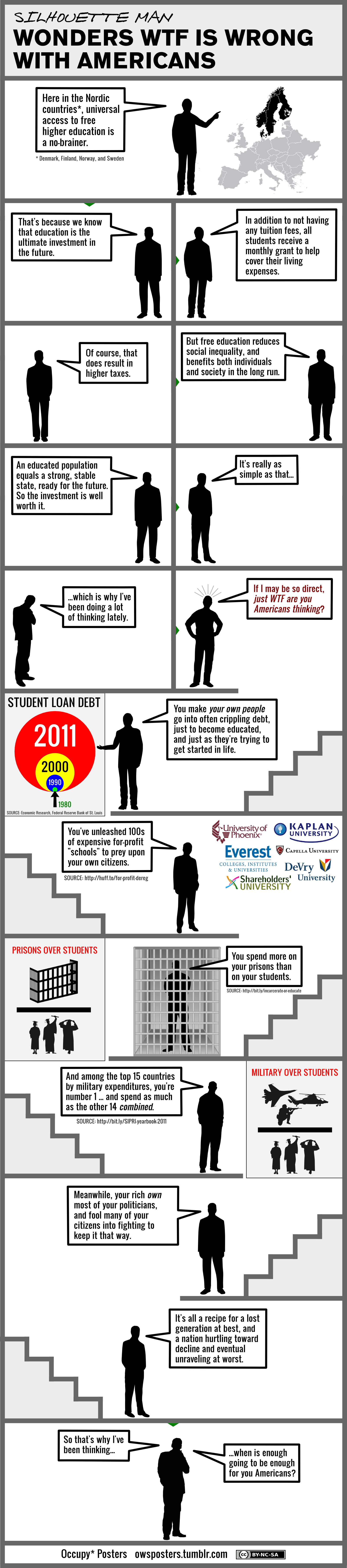
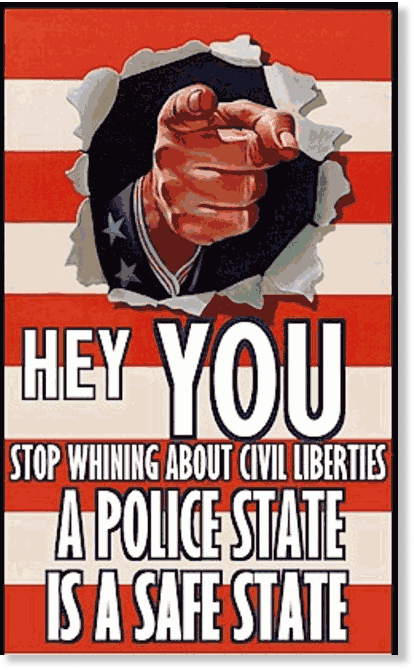
(Sorry, I am unable to embed the video into my format)
By Malcolm Byrne/ Foreign Policy/ August 18, 2013
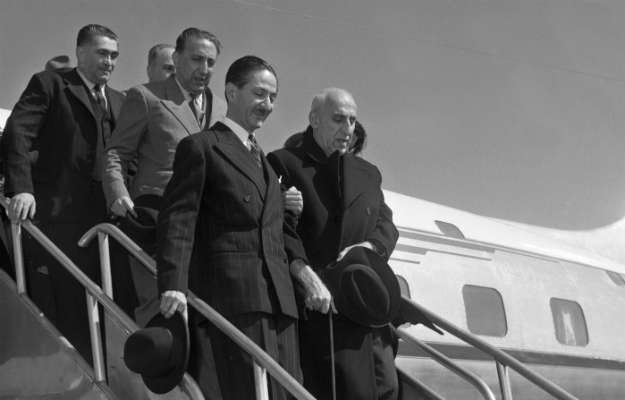
Sixty years ago this Monday, on August 19, 1953, modern Iranian history took a critical turn when a U.S.- and British-backed coup overthrew the country’s prime minister, Mohammed Mossadegh. The event’s reverberations have haunted its orchestrators over the years, contributing to the anti-Americanism that accompanied the Shah’s ouster in early 1979, and even influencing the Iranians who seized the U.S. Embassy in Tehran later that year.
But it has taken almost six decades for the U.S. intelligence community to acknowledge openly that it was behind the controversial overthrow. Published here today — and on the website of the National Security Archive, which obtained the document through the Freedom of Information Act — is a brief excerpt from The Battle for Iran, an internal report prepared in the mid-1970s by an in-house CIA historian.
The document was first released in 1981, but with most of it excised, including all of Section III, entitled “Covert Action” — the part that describes the coup itself. Most of that section remains under wraps, but this new version does formally make public, for the first time that we know of, the fact of the agency’s participation: “[T]he military coup that overthrew Mosadeq and his National Front cabinet was carried out under CIA direction as an act of U.S. foreign policy,” the history reads. The risk of leaving Iran “open to Soviet aggression,” it adds, “compelled the United States … in planning and executing TPAJAX.”
TPAJAX was the CIA’s codename for the overthrow plot, which relied on local collaborators at every stage. It consisted of several steps: using propaganda to undermine Mossadegh politically, inducing the Shah to cooperate, bribing members of parliament, organizing the security forces, and ginning up public demonstrations. The initial attempt actually failed, but after a mad scramble the coup forces pulled themselves together and came through on their second try, on August 19.
Why the CIA finally chose to own up to its role is as unclear as some of the reasons it has held onto this information for so long. CIA and British operatives have written books and articles on the operation — notably Kermit Roosevelt, the agency’s chief overseer of the coup. Scholars have produced many more books, including several just in the past few years. Moreover, two American presidents (Clinton and Obama) have publicly acknowledged the U.S. role in the coup.
But U.S. government classifiers, especially in the intelligence community, often have a different view on these matters. They worry that disclosing “sources and methods” — even for operations decades in the past and involving age-old methods like propaganda — might help an adversary. They insist there is a world of difference between what becomes publicly known unofficially (through leaks, for example) and what the government formally acknowledges. (Somehow those presidential admissions of American involvement seem not to have counted.)
Finally, there is the priority of maintaining good relations with allies, particularly in the intelligence arena. British records from several years ago (see the National Security Archive’sposting today) show that the Foreign Office (and presumably MI6, which helped plan and carry out the coup) has been anxious not to let slip any official word about its involvement. To outside observers, this subterfuge borders on the ludicrous given that Iranians have assumed London’s role for so long. Yet, by most indicators, the U.S. intelligence community has gone along, regardless of the consequences for Americans’ understanding of their own history.
The fact that the CIA has now chosen to shift direction, at least this far, is something to be welcomed. One can only hope it leads to similar decisions to open up the historical record on topics that still matter today.
BPR Quote of the Day

At 6:30 am this morning my time – 5:30 am on the East Coast of the US – I received a telephone call from someone who identified himself as a “security official at Heathrow airport.” He told me that my partner, David Miranda, had been “detained” at the London airport “under Schedule 7 of the Terrorism Act of 2000.”
David had spent the last week in Berlin, where he stayed with Laura Poitras, the US filmmaker who has worked with me extensively on the NSA stories. A Brazilian citizen, he was returning to our home in Rio de Janeiro this morning on British Airways, flying first to London and then on to Rio. When he arrived in London this morning, he was detained.
At the time the “security official” called me, David had been detained for 3 hours. The security official told me that they had the right to detain him for up to 9 hours in order to question him, at which point they could either arrest and charge him or ask a court to extend the question time. The official – who refused to give his name but would only identify himself by his number: 203654 – said David was not allowed to have a lawyer present, nor would they allow me to talk to him.
I immediately contacted the Guardian, which sent lawyers to the airport, as well various Brazilian officials I know. Within the hour, several senior Brazilian officials were engaged and expressing indignation over what was being done. The Guardian has the full story here.
Despite all that, five more hours went by and neither the Guardian’s lawyers nor Brazilian officials, including the Ambassador to the UK in London, were able to obtain any information about David. We spent most of that time contemplating the charges he would likely face once the 9-hour period elapsed.
According to a document published by the UK government about Schedule 7 of the Terrorism Act, “fewer than 3 people in every 10,000 are examined as they pass through UK borders” (David was not entering the UK but only transiting through to Rio). Moreover, “most examinations, over 97%, last under an hour.” An appendix to that document states that only .06% of all people detained are kept for more than 6 hours.
The stated purpose of this law, as the name suggests, is to question people aboutterrorism. The detention power, claims the UK government, is used “to determine whether that person is or has been involved in the commission, preparation or instigation of acts of terrorism.”
But they obviously had zero suspicion that David was associated with a terrorist organization or involved in any terrorist plot. Instead, they spent their time interrogating him about the NSA reporting which Laura Poitras, the Guardian and I are doing, as well the content of the electronic products he was carrying. They completely abused their own terrorism law for reasons having nothing whatsoever to do with terrorism: a potent reminder of how often governments lie when they claim that they need powers to stop “the terrorists”, and how dangerous it is to vest unchecked power with political officials in its name.
Worse, they kept David detained right up until the last minute: for the full 9 hours, something they very rarely do. Only at the last minute did they finally release him. We spent all day – as every hour passed – worried that he would be arrested and charged under a terrorism statute. This was obviously designed to send a message of intimidation to those of us working journalistically on reporting on the NSA and its British counterpart, the GCHQ.
Before letting him go, they seized numerous possessions of his, including his laptop, his cellphone, various video game consoles, DVDs, USB sticks, and other materials. They did not say when they would return any of it, or if they would.
This is obviously a rather profound escalation of their attacks on the news-gathering process and journalism. It’s bad enough to prosecute and imprison sources. It’s worse still to imprison journalists who report the truth. But to start detaining the family members and loved ones of journalists is simply despotic. Even the Mafia had ethical rules against targeting the family members of people they felt threatened by. But the UK puppets and their owners in the US national security state obviously are unconstrained by even those minimal scruples.
If the UK and US governments believe that tactics like this are going to deter or intimidate us in any way from continuing to report aggressively on what these documents reveal, they are beyond deluded. If anything, it will have only the opposite effect: to embolden us even further. Beyond that, every time the US and UK governments show their true character to the world – when they prevent the Bolivian President’s plane from flying safely home, when they threaten journalists with prosecution, when they engage in behavior like what they did today – all they do is helpfully underscore why it’s so dangerous to allow them to exercise vast, unchecked spying power in the dark.
David was unable to call me because his phone and laptop are now with UK authorities. So I don’t yet know what they told him. But the Guardian’s lawyer was able to speak with him immediately upon his release, and told me that, while a bit distressed from the ordeal, he was in very good spirits and quite defiant, and he asked the lawyer to convey that defiance to me. I already share it, as I’m certain US and UK authorities will soon see.
BPR Quote of the Day: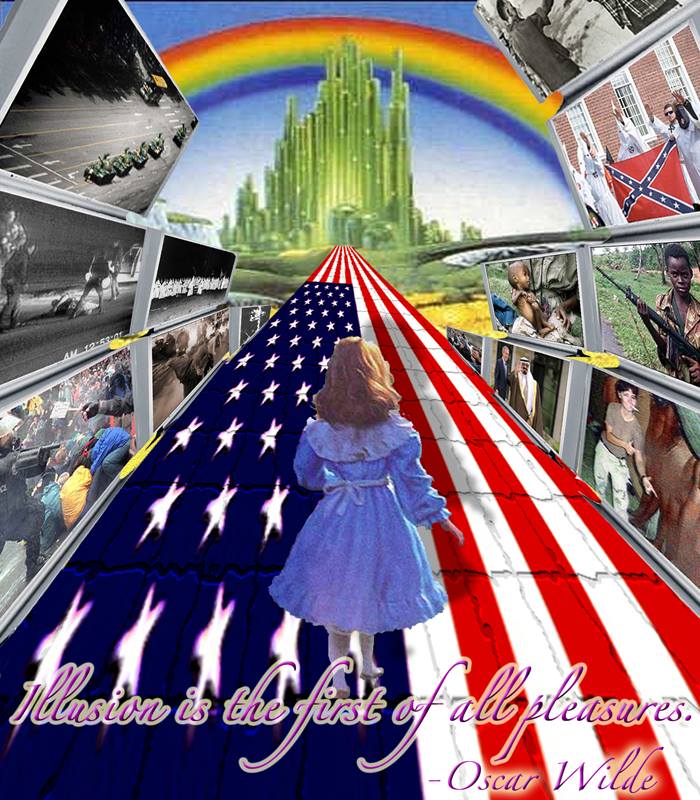
BPR Editor’s Note: I love this poster, but the quote is actually from Voltaire, not Oscar Wilde.

