YET IT DID HAPPEN

Absolutely Unimaginable This Could Happen in America

By Jen Hayden/ Daily Kos/ November 5, 2013

This news report out of New Mexico is so disturbing, it’s hard to imagine this could happen in America. Talk about an unreasonable search:

The incident began January 2, 2013 after David Eckert finished shopping at the Wal-Mart in Deming.  According to a federal lawsuit, Eckert didn’t make a complete stop at a stop sign coming out of the parking lot and was immediately stopped by law enforcement.Eckert’s attorney, Shannon Kennedy, said in an interview with KOB that after law enforcement asked him to step out of the vehicle, he appeared to be clenching his buttocks.  Law enforcement thought that was probable cause to suspect that Eckert was hiding narcotics in his anal cavity.  While officers detained Eckert, they secured a search warrant from a judge that allowed for an anal cavity search.

Initially the doctor on duty refused the search, citing it as “unethical.” Unfortunately, after several hours, hospital personnel relented and did the search.Here’s what happened to David Eckert at that hospital:

While there, Eckert was subjected to repeated and humiliating forced medical procedures.  A review of Eckert’s medical records, which he released to KOB, and details in the lawsuit show the following happened:1. Eckert’s abdominal area was x-rayed; no narcotics were found.

2. Doctors then performed an exam of Eckert’s anus with their fingers; no narcotics were found.

3. Doctors performed a second exam of Eckert’s anus with their fingers; no narcotics were found.

4. Doctors penetrated Eckert’s anus to insert an enema.  Eckert was forced to defecate in front of doctors and police officers.  Eckert watched as doctors searched his stool.  No narcotics were found.

5. Doctors penetrated Eckert’s anus to insert an enema a second time.  Eckert was forced to defecate in front of doctors and police officers.  Eckert watched as doctors searched his stool.  No narcotics were found.

6. Doctors penetrated Eckert’s anus to insert an enema a third time.  Eckert was forced to defecate in front of doctors and police officers.  Eckert watched as doctors searched his stool.  No narcotics were found.

7. Doctors then x-rayed Eckert again; no narcotics were found.

8. Doctors prepared Eckert for surgery, sedated him, and then performed a colonoscopy where a scope with a camera was inserted into Eckert’s anus, rectum, colon, and large intestines. No narcotics were found.

Throughout this ordeal, Eckert protested and never gave doctors at the Gila Regional Medical Center consent to perform any of these medical procedures.

images

Think that’s outrageous? David Eckert has since been billed by the hospital for all the procedures and they are threatening to take him to collections.Must-watch news report on the case from KOB 4 in New Mexico:

Posted in civil liberties, drugs, Justice, law | Tagged , , , , , , | 4 Comments

The Good News

screen_shot_2013-10-29_at_4.05.32_pm

Posted in civil liberties, intelligence, political cartoon | Tagged , , , | 1 Comment

HOW SOON IS IT COMING?

Our Invisible Revolution

By Chris Hedges/ Truthdig/ October 28, 2013

shutterstock_117501220-invisible-revolution-300

Shuttershock

“Did you ever ask yourself how it happens that government and capitalism continue to exist in spite of all the evil and trouble they are causing in the world?” the anarchist Alexander Berkman wrote in his essay “The Idea Is the Thing.” “If you did, then your answer must have been that it is because the people support those institutions, and that they support them because they believe in them.”

Berkman was right. As long as most citizens believe in the ideas that justify global capitalism, the private and state institutions that serve our corporate masters are unassailable. When these ideas are shattered, the institutions that buttress the ruling class deflate and collapse. The battle of ideas is percolating below the surface. It is a battle the corporate state is steadily losing. An increasing number of Americans are getting it. They know that we have been stripped of political power. They recognize that we have been shorn of our most basic and cherished civil liberties, and live under the gaze of the most intrusive security and surveillance apparatus in human history. Half the country lives in poverty. Many of the rest of us, if the corporate state is not overthrown, will join them. These truths are no longer hidden.

It appears that political ferment is dormant in the United States. This is incorrect. The ideas that sustain the corporate state are swiftly losing their efficacy across the political spectrum. The ideas that are rising to take their place, however, are inchoate. The right has retreated into Christian fascism and a celebration of the gun culture. The left, knocked off balance by decades of fierce state repression in the name of anti-communism, is struggling to rebuild and define itself. Popular revulsion for the ruling elite, however, is nearly universal. It is a question of which ideas will capture the public’s imagination.

Revolution usually erupts over events that would, in normal circumstances, be considered meaningless or minor acts of injustice by the state. But once the tinder of revolt has piled up, as it has in the United States, an insignificant spark easily ignites popular rebellion. No person or movement can ignite this tinder. No one knows where or when the eruption will take place. No one knows the form it will take. But it is certain now that a popular revolt is coming. The refusal by the corporate state to address even the minimal grievances of the citizenry, along with the abject failure to remedy the mounting state repression, the chronic unemployment and underemployment, the massive debt peonage that is crippling more than half of Americans, and the loss of hope and widespread despair, means that blowback is inevitable.

“Because revolution is evolution at its boiling point you cannot ‘make’ a real revolution any more than you can hasten the boiling of a tea kettle,” Berkman wrote. “It is the fire underneath that makes it boil: how quickly it will come to the boiling point will depend on how strong the fire is.”

Revolutions, when they erupt, appear to the elites and the establishment to be sudden and unexpected. This is because the real work of revolutionary ferment and consciousness is unseen by the mainstream society, noticed only after it has largely been completed. Throughout history, those who have sought radical change have always had to first discredit the ideas used to prop up ruling elites and construct alternative ideas for society, ideas often embodied in a utopian revolutionary myth. The articulation of a viable socialism as an alternative to corporate tyranny—as attempted by the book “Imagine: Living in a Socialist USA”and the website Popular Resistance—is, for me, paramount. Once ideas shift for a large portion of a population, once the vision of a new society grips the popular imagination, the old regime is finished.

An uprising that is devoid of ideas and vision is never a threat to ruling elites. Social upheaval without clear definition and direction, without ideas behind it, descends into nihilism, random violence and chaos. It consumes itself. This, at its core, is why I disagree with some elements of the Black Bloc anarchists. I believe in strategy. And so did many anarchists, including Berkman, Emma Goldman, Pyotr Kropotkin and Mikhail Bakunin.

By the time ruling elites are openly defied, there has already been a nearly total loss of faith in the ideas—in our case free market capitalism and globalization—that sustain the structures of the ruling elites. And once enough people get it, a process that can take years, “the slow, quiet, and peaceful social evolution becomes quick, militant, and violent,” as Berkman wrote.“Evolution becomes revolution.”

(Continued – Read Entire Article Here)

Boldface added by BPR Editor
Posted in Democratic Party, government, politics, protests | Tagged , , , , , , , , , | 2 Comments

AT LAST: GOOD NEWS FOR PROGRESSIVES

Wellstone’s Revenge: How Minnesota Democrats Took Their State Back

Minnesota’s once-woebegone progressives have quietly crafted a road map for turning state capitols blue.

By Andy Kroll/ Mother Jones/ September/October 2013

minnesota_630

Illustration: Owen Smith

It was the Friday before Memorial Day, and nearly 50 of Minnesota’s most powerful businessmen and Republican operatives met for lunch at the Town and Country Club, overlooking the Mississippi River in western St. Paul. They had gathered at the invitation of Tom Rosen, who runs the nation’s fifth-largest beef-processing company, and Stan Hubbard, the billionaire media magnate who pioneered satellite television. Over Caesar salad and tomato-basil soup, Rosen, Hubbard, and their friends bemoaned the direction of their state. As one after another rose to speak, the tone was one of outrage and incredulity: “It’s time we coordinate.” “It’s time we stand up and do something.” “We’re getting chewed up!”

How far has the GOP fallen from the days when Minnesota was Karl Rove’s prime example for the cascade of blue states poised to turn red and create a permanent Republican majority? A decade ago, Tim Pawlenty was governor, Norm Coleman had replaced the late Paul Wellstone in the US Senate, and Rove was touting Minnesota—which hadn’t voted for a Republican president in 37 years—as a battleground state. Today, Democrats control the state Legislature. They hold both US Senate seats, five of the state’s eight congressional seats, and every constitutional office—governor, lieutenant governor, attorney general, secretary of state, and state auditor. In November, they defeated ballot measures to ban same-sex marriage and enact restrictive voter ID rules. And to top it all off, Rep. Michele Bachmann, the tea party torchbearer under investigation for ethics violations, announced in May that she would not seek reelection. “If you look at the history of our party since 1944, we’re at the apex of our political power,” gushes Ken Martin, the chairman of what in Minnesota is known as the Democratic-Farmer-Labor (DFL) Party.

“[Wisconsin’s] talking about transvaginal ultra-sounds and all that shit,” says one Minnesota activist. “We’re talking about raising taxes on the rich.”

They’ve not been shy about using that power. Last spring, Gov. Mark Dayton signed bills legalizing gay marriage, creating Minnesota’s Obamacare health insurance exchange, allowing public colleges to freeze tuition, and investing $174 million into pre-K and all-day kindergarten. Dayton and his Democratic colleagues erased a $627 million budget deficit by hiking taxes on smokers, car rentals, and the wealthiest 2 percent of Minnesotans. At the same time, they cut property taxes for middle-class families. It was the most liberal legislative session anyone could remember—and a nightmare for the guests at Rosen and Hubbard’s luncheon. “It was a big wake-up call,” Hubbard told me in June at his St. Paul office, where a framed letter from Ronald Reagan hangs next to a replica of the Declaration of Independence.

Minnesota’s liberal revival may seem like an outlier considering the conservative resurgence in state capitols. Two decades ago, Republicans had one-party control in just three states, while Democrats ran the show in 18. But today 31 states have GOP governors, and in 24 of those, Republicans control both branches of government, compared to 13 for the Democrats. Right next door to Minnesota, Wisconsin is a particularly vivid example: In a onetime bastion of progressivism, Gov. Scott Walker and the Republican Legislature have targeted unions andpublic servantsshuttered abortion clinics, and passed a rigid voter ID law. “They’re talking about transvaginal ultrasounds and all that shit,” says Denise Cardinal, a Minnesota operative who runs the ProgressNow network of liberal advocacy groups. “We’re talking about raising taxes on the rich and paying back our school debt.” For that Minnesotans can thank—or blame—a small, press-shy circle of operatives, activists, donors, and party leaders who have built a political machine that chugs year-round to elect Democratic candidates and pass progressive policies. It is fueled by big unions and wealthy donors, the best data in the business, and an unusual level of collaboration among organizations that have very different priorities. Their strategy has created a road map for Democrats from Concord to Santa Fe. “The next phase for the progressive movement has to be taking our states back,” says Jeff Blodgett, a 30-year veteran of Minnesota politics who was the Obama campaign’s state director in 2008 and 2012.

This is the story of how that happened—for now—in Minnesota. And it begins in the worst imaginable way.
 

2002-04: It Can’t End Like This

Blodgett began the longest day of his life feeling like a winner. The date was Octo­ber 25, 2002. In 12 days, Minnesotans were poised to send Blodgett’s boss, Paul Wellstone, to Washington for a third term. No one, save maybe the senator himself, wanted a Wellstone win like Blodgett did.

The two men met at Carleton College in 1979 when Blodgett was a student in Wellstone’s Poli Sci 10 course. More than a decade later, after Wellstone had traded the campus for the campaign trail, he hired Blodgett to manage his quixotic, shoestring bid for the US Senate. Against the odds, and thanks in part to an early version of the data-centric, get-out-the-vote-focused campaigning that later took Barack Obama to the White House, Wellstone won. The organizer-turned-senator became a liberal icon; Blodgett was his flinty, soft-spoken protégé, a wunderkind later nicknamed the “Yoda of Minnesota politics.”

Blodgett steered Wellstone to victory again in 1996, and almost six years later, as the senator, his wife, Sheila, his daughter Marcia, and three campaign staffers boarded a Beechcraft King Air A100 to attend a funeral, Blodgett set his mind to the day ahead—a debate in Duluth, a rally with actor Josh Hartnett in St. Paul. But the Beechcraft never arrived, crashing south of Eveleth and killing everyone on board.

Blodgett was shattered. He pulled himself together enough to recruit former Vice President Walter Mondale to run in Wellstone’s place, but Norm Coleman, a onetime campus radical turned Republican rising star and Rove acolyte, eked out a 2-point win. After the election Blodgett was unemployed and adrift. He turned over the same thought in his head: It can’t end like this. “If we didn’t have Paul and Sheila around,” he recalled some years later, “we had to figure out the next best thing.”

The next best thing became Wellstone Action, an organization conceived by Blodgett to train candidates, campaign managers, and activists to win elections the “Wellstone way”—promising bold policy ideas, investing heavily in grassroots organizing, and forging diverse coalitions. In May 2003, Wellstone Action held its first Camp Wellstone, a two-and-a-half-day crash course in campaigns and elections, and in the ensuing years 55,000 people would graduate from these trainings. Of the 112 DFL lawmakers elected to the Legislature last year, 40 were Camp Wellstone alumsUS Rep. Tim Walz and Secretary of State Mark Ritchie graduated from the same Camp Wellstone class in 2005.

In a way, Blodgett had kept Wellstone’s spirit alive, bottling up his teachings and tactics and spreading them far and wide. He didn’t know it then, but the groundwork for Minnesota’s progressive comeback was being laid.
 

WELLSTONE’S WEB

Breaking down the cadre of organizers, operatives, and politicians nurtured by the late senator’s grassroots machine. —Zaineb Mohammed

Wellstone's Web

(Continued- Read Entire Article Here)

Posted in Democratic Party, elections, politics | Tagged , , , , , , , , | Leave a comment

Another Benghazi

485517_749991435018237_604428483_n

Posted in Iraq war, politics, Republican Party | Tagged , , | Leave a comment

Stacked Deck

BPR Quote of the Day

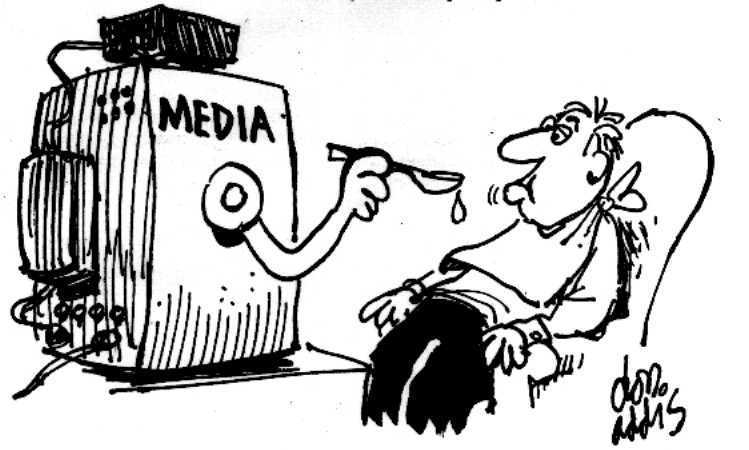
“When it comes to the news, force-fed to us through the media, corporately-owned, we know the cards are stacked. The corporate view is `objective,’ all else is `propaganda.'”

Studs Terkel

media-spoonfeeding-cartoon


Posted in media, Quotations | Tagged , , , , | Leave a comment

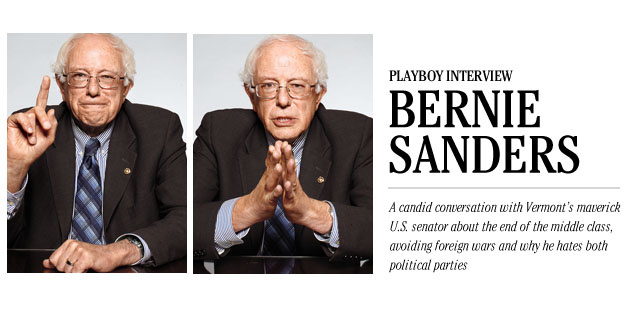
Bernie Sanders: The Cost of Hypercapitalism

standard_poster

by Jonathan Tasini/ Playboy/ October 17, 2013

At a time when politicians—particularly members of Congress—are almost universally reviled and blind partisanship seems to dictate the fate of every piece of legislation, one U.S. senator stands out as a unique voice.

Bernie Sanders has been a senator from Vermont since 2006. It’s hard for him to be caught up in partisanship: He’s one of only two U.S. senators who identify as independent. Although he caucuses with the Democrats, Sanders refuses to run as one and regularly chides them for abandoning the working class. He has never been much of a party man. When he was first elected to the House of Representatives, in 1990, he refused any party affiliation, making him the longest-serving independent member of Congress in American history.

His views are clear and differ radically from those of his Republican colleagues and often sharply from those of his closest allies, the Democrats. He describes himself as a democratic socialist and often praises Scandinavian-style social democracy. Fox News thinks he’s crazy, and he makes MSNBC look timid.

The 72-year-old Brooklyn-born Sanders moved to Vermont in 1968 after graduating from the University of Chicago and spending time on a kibbutz in Israel. Always a leftist activist, he became a vocal opponent of the Vietnam War. That led him to politics, though he failed to win early races for the Senate and the governorship.

It wasn’t until 1981 that he won his first office, mayor of Burlington, Vermont’s largest city, by a total of 10 votes. His four terms were full of his trademark liberal ideas—low-cost housing, reining in the excesses of the local cable-TV operation and forming the Vermont Progressive Party. He has also taught at Harvard and at Hamilton College in New York.

Of course Vermont is one of the bluest states in the country (it gave us onetime presidential candidate Howard Dean), and Sanders is a hero to locals. He won reelection last year with 71 percent of the vote, and his approval ratings make him one of the most popular senators in the country. Nationally, he gained notoriety for his views on gun control (pro), foreign intervention (anti) and, most vocally, his passion for the plight of the middle class and the sorry state of the American economy.

We sent noted economics writer Jonathan Tasini, who previously interviewed Nobel Prize winner Paul Krugman for Playboy, to sit down with Sanders for a series of discussions in Vermont and Washington. Tasini reports: “I was warned ahead of time: Bernie doesn’t do personal revelations. No question about it; he is the anti–Bill Clinton. The most extensive anecdote about Sanders the person came from a ticket agent at the Vermont airport. When I mentioned what I was doing in the area, she smiled and said, ‘Oh, we love Bernie,’ and proceeded to tell me how Sanders had helped her boyfriend, a veteran with a back injury who was having a hellish time getting the Department of Veterans Affairs to approve his medical costs. ‘By the time they were done, they were on a first-name basis,’ she said.

“After spending numerous hours with Senator Sanders, I came to understand why he resists suggestions from his followers that 2016 might be the right time for him to make a run for the White House. It’s not that he worries about losing. Although he wants to influence the debate, his hunger for power isn’t so insatiable that he would debase himself in the arena of what poses as serious political debate in America.”

PLAYBOY: You have said, “There are people working three jobs and four jobs, trying to cobble together an income in order to support their families.” Has the middle class died forever?

SANDERS: Well, I certainly hope it’s not forever, but one of the untold stories of our time is the collapse of the American middle class. From the end of World War II until 1973, we saw an expanding middle class, with people’s incomes going up. Since that point, and especially since the Wall Street–driven financial crisis, you’ve seen a real collapse. Since 1999 median family income has gone down $5,000. Real unemployment, counting people who have given up looking for work or who are working part-time when they want to work full-time, is more than 14 percent. More than 14 percent! You’re seeing millions of people working longer hours for lower wages. When I was growing up in a lower-middle-class family, the gold standard for blue-collar workers was union manufacturing in the automobile industry. As the big three have been rehiring, they’re hiring people at something like $14 an hour, half the wages. The U.S. has 46 million people living in poverty today. We have the highest rate of childhood poverty in the industrialized world.

PLAYBOY: How do you explain that?

SANDERS: We live in a hypercapitalist society, which means the function of every institution is not to perform a public service but to make as much money as possible. There’s an effort to privatize water, for God’s sake. I suppose somebody will figure out how to charge you for the oxygen you breathe. The function of health care, in a rational world, is to make sure every person, as a right, has access to the health care they need in the most cost-effective way possible. That is not the nature of our health care system at all. The function of this health care system is for people in the system—whether it’s insurance companies, drug companies, medical specialists—to make as much money out of it as possible. In five minutes one could come up with ways to make the system simpler and more cost effective.

PLAYBOY: Has this hypercapitalism accelerated lately?

SANDERS: People have lost sight of America as a society where everyone has at least a minimal standard of living and is entitled to certain basic rights, a nation in which every child has a good-quality education, has access to health care and lives in an environmentally clean community, not as an opportunity for billionaires to make even more money and avoid taxes by stashing their money in the Cayman Islands. Can you argue that the era of unfettered capitalism should be over? Absolutely. Does this system of hypercapitalism, this incredibly unequal distribution of wealth and income, need fundamental reform? Absolutely it does. You have the entire scientific community saying we have to be very aggressive in cutting greenhouse gas emissions. Yet you’re seeing the heads of coal companies and oil companies willing to sacrifice the well-being of the entire planet for their short-term profits. And these folks are funding phony organizations to try to create doubt about the reality of global warming.

(Continued–Click Here For Complete Interview)

Posted in Economics, government, inequality, politics, poverty | Tagged , , , , , , , , , , , , , , | Leave a comment

THE END DAYS?

The Folly of Empire

By Chris Hedges/ Truthdig/ October 15, 2013

american_empire_going_going

The final days of empire give ample employment and power to the feckless, the insane and the idiotic. These politicians and court propagandists, hired to be the public faces on the sinking ship, mask the real work of the crew, which is systematically robbing the passengers as the vessel goes down. The mandarins of power stand in the wheelhouse barking ridiculous orders and seeing how fast they can gun the engines. They fight like children over the ship’s wheel as the vessel heads full speed into a giant ice field. They wander the decks giving pompous speeches. They shout that the SS America is the greatest ship ever built. They insist that it has the most advanced technology and embodies the highest virtues. And then, with abrupt and unexpected fury, down we will go into the frigid waters.

The last days of empire are carnivals of folly. We are in the midst of our own, plunging forward as our leaders court willful economic and environmental self-destruction. Sumer and Rome went down like this. So did the Ottoman and Austro-Hungarian empires. Men and women of stunning mediocrity and depravity led the monarchies of Europe and Russia on the eve of World War I. And America has, in its own decline, offered up its share of weaklings, dolts and morons to steer it to destruction. A nation that was still rooted in reality would never glorify charlatans such as Sen. Ted Cruz, House Speaker John Boehner and former Speaker Newt Gingrich as they pollute the airwaves. If we had any idea what was really happening to us we would have turned in fury against Barack Obama, whose signature legacy will be utter capitulation to the demands of Wall Street, the fossil fuel industry, the military-industrial complex and the security and surveillance state. We would have rallied behind those few, such as Ralph Nader, who denounced a monetary system based on gambling and the endless printing of money and condemned the willful wrecking of the ecosystem. We would have mutinied. We would have turned the ship back.

2635

The populations of dying empires are passive because they are lotus-eaters. There is a narcotic-like reverie among those barreling toward oblivion. They retreat into the sexual, the tawdry and the inane, retreats that are momentarily pleasurable but ensure self-destruction. They naively trust it will all work out. As a species, Margaret Atwood observes in her dystopian novel “Oryx and Crake,” “we’re doomed by hope.” And absurd promises of hope and glory are endlessly served up by the entertainment industry, the political and economic elite, the class of courtiers who pose as journalists, self-help gurus like Oprah and religious belief systems that assure followers that God will always protect them. It is collective self-delusion, a retreat into magical thinking.

“The American citizen thus lives in a world where fantasy is more real than reality, where the image has more dignity than the original,” Daniel J. Boorstin wrote in his book “The Image: A Guide to Pseudo-Events in America.” “We hardly dare face our bewilderment, because our ambiguous experience is so pleasantly iridescent, and the solace of belief in contrived reality is so thoroughly real. We have become eager accessories in the great hoaxes of the age. These are the hoaxes we play on ourselves.”

Culture and literacy, in the final stage of decline, are replaced with noisy diversions and empty clichés. The Roman statesman Cicero inveighed against their ancient equivalent—the arena. Cicero, for his honesty, was hunted down and murdered and his hands and head were cut off. His severed head and his right hand, which had written the Philippics, were nailed onto the speaker’s platform in the Forum. The roaring crowds, while the Roman elite spat on the head, were gleefully told he would never speak or write again. In the modern age this toxic, mindless cacophony, our own version of spectacle and gladiator fights, of bread and circus, is pumped into the airwaves in 24-hour cycles. Political life has fused into celebrity worship. Education is primarily vocational. Intellectuals are cast out and despised. Artists cannot make a living. Few people read books. Thought has been banished, especially at universities and colleges, where timid pedants and careerists churn out academic drivel. “Although tyranny, because it needs no consent, may successfully rule over foreign peoples,” Hannah Arendt wrote in “The Origins of Totalitarianism,” “it can stay in power only if it destroys first of all the national institutions of its own people.” And ours have been destroyed.

Sensual pleasure and eternal youth are our overriding obsessions. The Roman emperor Tiberius, at the end, fled to the island of Capri and turned his seaside palace into a house of unbridled lust and violence. “Bevies of girls and young men, whom he had collected from all over the Empire as adepts in unnatural practices, and known as spintriae, would copulate before him in groups of three, to excite his waning passions,” Suetonius wrote in “The Twelve Caesars.” Tiberius trained small boys, whom he called his minnows, to frolic with him in the water and perform oral sex. And after watching prolonged torture, he would have captives thrown into the sea from a cliff near his palace. Tiberius would be followed by Caligula and Nero.

“At times when the page is turning,” Louis-Ferdinand Céline wrote in “Castle to Castle,” “when History brings all the nuts together, opens its Epic Dance Halls! hats and heads in the whirlwind! Panties overboard!”

(Continued– Read Entire Article Here)

Boldface added by BPR Editor
Posted in economy, government, politics | Tagged , , , , , , , , , | Leave a comment

What the Media Misses

Mainstream Media Fail: The Issues the MSM Should Be Covering Daily

By Rob Kall/ OpEd News/ October 13, 2013

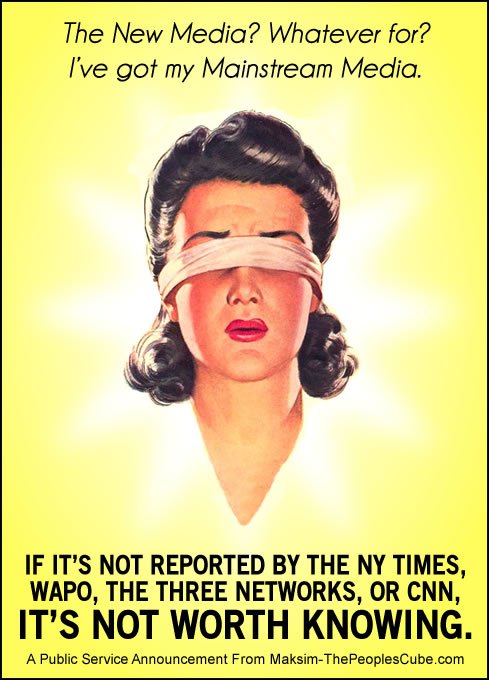
blindfolded-mainstream-media-poster

I’m watching Bill Maher. It’s a great example of how the media ignores the big problems and wastes its attention on details. Yes, we need to spend some time on current events, like the shutdown, but it is ESSENTIAL that we keep the important issues in the foreground. 

 The big problems are: 

–an intentionally broken election system that is not designed to maximize democracy. And the five corporate whores in the supreme court are going to make it worse, very soon. Those five will end up going down in history as turncoat traitors to democracy. 

 –laws that give corporations powers and influence they should not have, which should be erased. Start with corporate personhood, corporate welfare and attacks on reasonable regulations, like Glass-Steagall– which Democrat Bill Clinton helped to kill. 

 –a system that creates dynasties and individuals who are dangerously, destructively rich and powerful. We need to pass laws that make it illegal to accumulate such wealth, in excess of half a billion dollars. No person needs to privately own a work of art or a home or a yacht  that costs over $100 million. 

 –an economy that worships big, top-down powers, creating a system that is destructive, parasitic and unsustainable. We need a science of small, that develops business models that prevent companies from getting too big, while exploiting the power of shared use of resources. 

 –Fixing and protecting government. Government is a necessary part of any large, civilized “state.”  It creates and maintains regulations that protects the people from predators– corporations and sociopaths– though they often overlap. Government also protects and maintains the health of the commons. But some aspects of government are broken and out of control, particularly the military, intelligence/security, the FDA, the food safety and regulation systems.

 –Shifting from a Top-down system of operating this country, including massively destructive programs like globalization enabling trade agreements (NAFTA, CAFTA, TPP,) centralized economic approaches, even centrallized, top-down charitable approaches like Microsoft founder, Bill Gates has implemented. There are bottom-up approaches which  support local communities and get the money spread in a fare smarter, fairer, more effective way. 

 –Strengthening and protecting the fourth estate– the media– and threats also come from people like Diane Feinstein, who would only treat mainstream media employees as legitimate journalists. We need to come  up with new financial models that provide pay for investigative journalists. I think crowd funding could help AND government funding with crowd designation of use of funds could work. 

 These issues may not have the sexy sizzle that Miley Cyrus and the Ted Cruz sponsored shutdown have, but THEY are the battlelines where the future of American justice and democracy are being fought. 

Posted in media | Tagged , , , , , , , | Leave a comment

A Plea From an Orangutan

Posted in environment, Uncategorized | Tagged , , , , | Leave a comment