
Worth a click….




American Society Would Collapse If It Weren’t for These 8 Myths
By Lee Camp/ Truthdig/ July 25, 2018
Our society should’ve collapsed by now. You know that, right?
No society should function with this level of inequality (with the possible exception of one of those prison planets in a “Star Wars” movie). Sixty-three percent of Americans can’t afford a $500 emergency. Yet Amazon head Jeff Bezos is now worth a record $141 billion. He could literally end world hunger for multiple years and still have more money left over than he could ever spend on himself.
Worldwide, one in 10 people only make $2 a day. Do you know how long it would take one of those people to make the same amount as Jeff Bezos has? 193 million years. (If they only buy single-ply toilet paper.) Put simply, you cannot comprehend the level of inequality in our current world or even just our nation.
So … shouldn’t there be riots in the streets every day? Shouldn’t it all be collapsing? Look outside. The streets aren’t on fire. No one is running naked and screaming (usually). Does it look like everyone’s going to work at gunpoint? No. We’re all choosing to continue on like this.
Why?
Well, it comes down to the myths we’ve been sold. Myths that are ingrained in our social programming from birth, deeply entrenched, like an impacted wisdom tooth. These myths are accepted and basically never questioned.
I’m going to cover eight of them. There are more than eight. There are probably hundreds. But I’m going to cover eight because (A) no one reads a column titled “Hundreds of Myths of American Society,” (B) these are the most important ones and (C) we all have other shit to do.
Myth No. 8—We have a democracy.
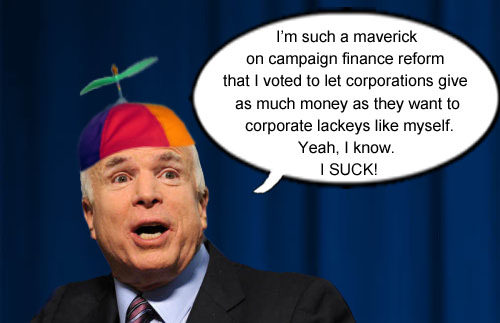
If you think we still have a democracy or a democratic republic, ask yourself this: When was the last time Congress did something that the people of America supported that did not align with corporate interests? … You probably can’t do it. It’s like trying to think of something that rhymes with “orange.” You feel like an answer exists but then slowly realize it doesn’t. Even the Carter Center and former President Jimmy Carter believe that America has been transformed into an oligarchy: A small, corrupt elite control the country with almost no input from the people. The rulers need the myth that we’re a democracy to give us the illusion of control.
Myth No. 7—We have an accountable and legitimate voting system.
Gerrymandering, voter purging, data mining, broken exit polling, push polling, superdelegates, electoral votes, black-box machines, voter ID suppression, provisional ballots, super PACs, dark money, third parties banished from the debates and two corporate parties that stand for the same goddamn pile of fetid crap!
What part of this sounds like a legitimate election system?
No, we have what a large Harvard study called the worst election system in the Western world. Have you ever seen where a parent has a toddler in a car seat, and the toddler has a tiny, brightly colored toy steering wheel so he can feel like he’s driving the car? That’s what our election system is—a toy steering wheel. Not connected to anything. We all sit here like infants, excitedly shouting, “I’m steeeeering!”
And I know it’s counterintuitive, but that’s why you have to vote. We have to vote in such numbers that we beat out what’s stolen through our ridiculous rigged system.
Myth No. 6—We have an independent media that keeps the rulers accountable.
Our media outlets are funded by weapons contractors, big pharma, big banks, big oil and big, fat hard-on pills. (Sorry to go hard on hard-on pills, but we can’t get anything resembling hard news because it’s funded by dicks.) The corporate media’s jobs are to rally for war, cheer for Wall Street and froth at the mouth for consumerism. It’s their mission to actually fortify belief in the myths I’m telling you about right now. Anybody who steps outside that paradigm is treated like they’re standing on a playground wearing nothing but a trench coat.
Myth No. 5—We have an independent judiciary.
The criminal justice system has become a weapon wielded by the corporate state. This is how bankers can foreclose on millions of homes illegally and see no jail time, but activists often serve jail time for nonviolent civil disobedience. Chris Hedges recently noted, “The most basic constitutional rights … have been erased for many. … Our judicial system, as Ralph Nader has pointed out, has legalized secret law, secret courts, secret evidence, secret budgets and secret prisons in the name of national security.”
If you’re not part of the monied class, you’re pressured into releasing what few rights you have left. According to The New York Times, “97 percent of federal cases and 94 percent of state cases end in plea bargains, with defendants pleading guilty in exchange for a lesser sentence.”
That’s the name of the game. Pressure people of color and poor people to just take the plea deal because they don’t have a million dollars to spend on a lawyer. (At least not one who doesn’t advertise on beer coasters.)
Myth No. 4—The police are here to protect you. They’re your friends.
That’s funny. I don’t recall my friend pressuring me into sex to get out of a speeding ticket. (Which is essentially still legal in 32 states.)
The police in our country are primarily designed to do two things: protect the property of the rich and perpetrate the completely immoral war on drugs—which by definition is a war on our own people.
We lock up more people than any other country on earth. Meaning the land of the free is the largest prison state in the world. So all these droopy-faced politicians and rabid-talking heads telling you how awful China is on human rights or Iran or North Korea—none of them match the numbers of people locked up right here under Lady Liberty’s skirt.
Myth No. 3—Buying will make you happy.
This myth is put forward mainly by the floods of advertising we take in but also by our social engineering. Most of us feel a tenacious emptiness, an alienation deep down behind our surface emotions (for a while I thought it was gas). That uneasiness is because most of us are flushing away our lives at jobs we hate before going home to seclusion boxes called houses or apartments. We then flip on the TV to watch reality shows about people who have it worse than we do (which we all find hilarious).
If we’re lucky, we’ll make enough money during the week to afford enough beer on the weekend to help it all make sense. (I find it takes at least four beers for everything to add up.) But that doesn’t truly bring us fulfillment. So what now? Well, the ads say buying will do it. Try to smother the depression and desperation under a blanket of flat-screen TVs, purses and Jet Skis. Nowdoes your life have meaning? No? Well, maybe you have to drive that Jet Ski a little faster! Crank it up until your bathing suit flies off and you’ll feel alive!
The dark truth is that we have to believe the myth that consuming is the answer or else we won’t keep running around the wheel. And if we aren’t running around the wheel, then we start thinking, start asking questions. Those questions are not good for the ruling elite, who enjoy a society based on the daily exploitation of 99 percent of us.
Myth No. 2—If you work hard, things will get better.
According to Deloitte’s Shift Index survey: “80% of people are dissatisfied with their jobs” and “[t]he average person spends 90,000 hours at work over their lifetime.” That’s about one-seventh of your life—and most of it is during your most productive years.
Ask yourself what we’re working for. To make money? For what? Almost none of us are doing jobs for survival anymore. Once upon a time, jobs boiled down to:
I plant the food—>I eat the food—>If I don’t plant food = I die.
But nowadays, if you work at a café—will someone die if they don’t get their super-caf-mocha-frap-almond-piss-latte? I kinda doubt they’ll keel over from a blueberry scone deficiency.
If you work at Macy’s, will customers perish if they don’t get those boxer briefs with the sweat-absorbent-ass fabric? I doubt it. And if they do die from that, then their problems were far greater than you could’ve known. So that means we’re all working to make other people rich because we have a society in which we have to work. Technological advancements can do most everything that truly must get done.
So if we wanted to, we could get rid of most work and have tens of thousands of more hours to enjoy our lives. But we’re not doing that at all. And no one’s allowed to ask these questions—not on your mainstream airwaves at least. Even a half-step like universal basic income is barely discussed because it doesn’t compute with our cultural programming.
Scientists say it’s quite possible artificial intelligence will take away all human jobs in 120 years. I think they know that will happen because bots will take the jobs and then realize that 80 percent of them don’t need to be done! The bots will take over and then say, “Stop it. … Stop spending a seventh of your life folding shirts at Banana Republic.”
One day, we will build monuments to the bot that told us to enjoy our lives and … leave the shirts wrinkly.
And this leads me to the largest myth of our American society.
Myth No. 1—You are free.
And I’m not talking about the millions locked up in our prisons. I’m talking about you and me. If you think you’re free, try running around with your nipples out, ladies. Guys, take a dump on the street and see how free you are.
I understand there are certain restrictions on freedom we actually desire to have in our society—maybe you’re not crazy about everyone leaving a Stanley Steamer in the middle of your walk to work. But a lot of our lack of freedom is not something you would vote for if given the chance.
Try building a fire in a parking lot to keep warm in the winter.
Try sleeping in your car for more than a few hours without being harassed by police.
Try maintaining your privacy for a week without a single email, web search or location data set collected by the NSA and the telecoms.
Try signing up for the military because you need college money and then one day just walking off the base, going, “Yeah, I was bored. Thought I would just not do this anymore.”
Try explaining to Kentucky Fried Chicken that while you don’t have the green pieces of paper they want in exchange for the mashed potatoes, you do have some pictures you’ve drawn on a napkin to give them instead.
Try running for president as a third-party candidate. (Jill Stein was shackled and chained to a chair by police during one of the debates.)
Try using the restroom at Starbucks without buying something … while black.
We are less free than a dog on a leash. We live in one of the hardest-working, most unequal societies on the planet with more billionaires than ever.
Meanwhile, Americans supply 94 percent of the paid blood used worldwide. And it’s almost exclusively coming from very poor people. This abusive vampire system is literally sucking the blood from the poor. Does that sound like a free decision they made? Or does that sound like something people do after immense economic force crushes down around them? (One could argue that sperm donation takes a little less convincing.)
Point is, in order to enforce this illogical, immoral system, the corrupt rulers—most of the time—don’t need guns and tear gas to keep the exploitation mechanisms humming along. All they need are some good, solid bullshit myths for us all to buy into, hook, line and sinker. Some fairy tales for adults.
It’s time to wake up.
Lee Camp is an American stand-up comedian, writer, actor and activist. Camp is the host of the weekly comedy news TV show “Redacted Tonight With Lee Camp” on RT America.

