
I’m no fan of President Obama. He has been a major disappointment for me and most progressives. That said, I want him to win, if for no other reason than the Supreme Court hangs in the balance. And that is HUGE.
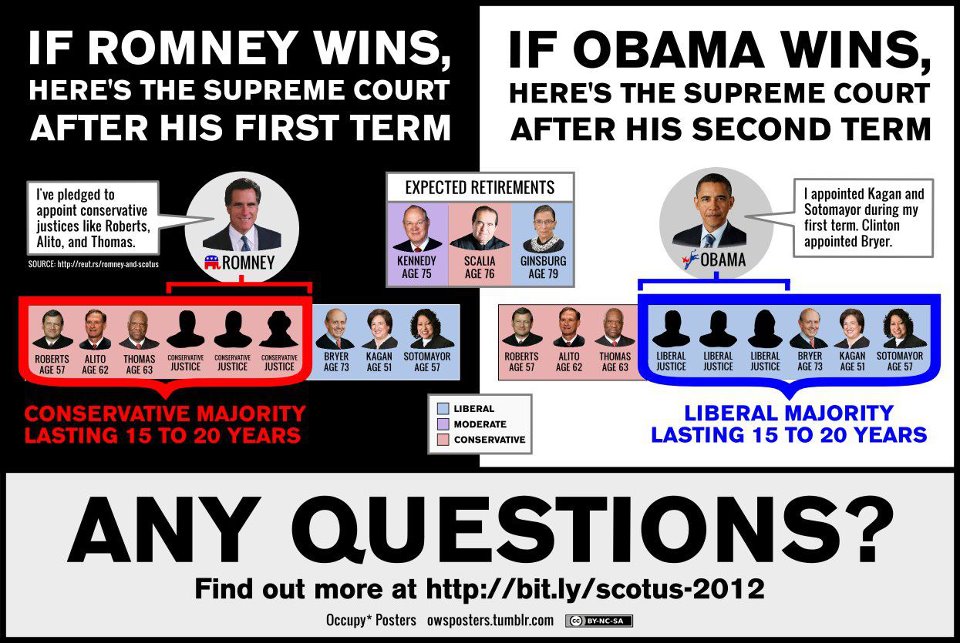
I’m no fan of President Obama. He has been a major disappointment for me and most progressives. That said, I want him to win, if for no other reason than the Supreme Court hangs in the balance. And that is HUGE.
By Matt Taibbi/ Rolling Stone/ May 10, 2012
Two years ago, when he signed the Dodd-Frank Wall Street Reform and Consumer Protection Act, President Barack Obama bragged that he’d dealt a crushing blow to the extravagant financial corruption that had caused the global economic crash in 2008. “These reforms represent the strongest consumer financial protections in history,” the president told an adoring crowd in downtown D.C. on July 21st, 2010. “In history.”
This was supposed to be the big one. At 2,300 pages, the new law ostensibly rewrote the rules for Wall Street. It was going to put an end to predatory lending in the mortgage markets, crack down on hidden fees and penalties in credit contracts, and create a powerful new Consumer Financial Protection Bureau to safeguard ordinary consumers. Big banks would be banned from gambling with taxpayer money, and a new set of rules would limit speculators from making the kind of crazy-ass bets that cause wild spikes in the price of food and energy. There would be no more AIGs, and the world would never again face a financial apocalypse when a bank like Lehman Brothers went bankrupt.
Most importantly, even if any of that fiendish crap ever did happen again, Dodd-Frank guaranteed we wouldn’t be expected to pay for it. “The American people will never again be asked to foot the bill for Wall Street’s mistakes,” Obama promised. “There will be no more taxpayer-funded bailouts. Period.”

Two years later, Dodd-Frank is groaning on its deathbed. The giant reform bill turned out to be like the fish reeled in by Hemingway’s Old Man – no sooner caught than set upon by sharks that strip it to nothing long before it ever reaches the shore. In a furious below-the-radar effort at gutting the law – roundly despised by Washington’s Wall Street paymasters – a troop of water-carrying Eric Cantor Republicans are speeding nine separate bills through the House, all designed to roll back the few genuinely toothy portions left in Dodd-Frank. With the Quislingian covert assistance of Democrats, both in Congress and in the White House, those bills could pass through the House and the Senate with little or no debate, with simple floor votes – by a process usually reserved for things like the renaming of post offices or a nonbinding resolution celebrating Amelia Earhart’s birthday.
The fate of Dodd-Frank over the past two years is an object lesson in the government’s inability to institute even the simplest and most obvious reforms, especially if those reforms happen to clash with powerful financial interests. From the moment it was signed into law, lobbyists and lawyers have fought regulators over every line in the rulemaking process. Congressmen and presidents may be able to get a law passed once in a while – but they can no longer make sure it stays passed. You win the modern financial-regulation game by filing the most motions, attending the most hearings, giving the most money to the most politicians and, above all, by keeping at it, day after day, year after fiscal year, until stealing is legal again. “It’s like a scorched-earth policy,” says Michael Greenberger, a former regulator who was heavily involved with the drafting of Dodd-Frank. “It requires constant combat. And it never, ever ends.”
That the banks have just about succeeded in strangling Dodd-Frank is probably not news to most Americans – it’s how they succeeded that’s the scary part. The banks followed a five-point strategy that offers a dependable blueprint for defeating any regulation – and for guaranteeing that when it comes to the economy, might will always equal right.

STEP 1: STRANGLE IT IN THE WOMB
The first advantage the banks had lay in the fact that for all Obama’s bluster, Dodd-Frank was never such a badass law to begin with. In fact, Obama’s initial response to the devastating financial events of 2008 represented a major departure from the historical precedent his own party had set during the 1930s, when President Franklin D. Roosevelt launched an audacious rewrite of the rules governing the American economy following the Great Crash of 1929.
Upon entering office, FDR was in exactly the same position Obama found himself in after his inauguration in 2009. Then, as now, the American economy was in tatters after the bursting of a massive financial bubble, brought on when speculators borrowed huge sums and gambled on unregistered securities in largely unregulated exchanges. This mania for instant riches led to an explosion of Wall Street fraud and manipulation, creating a mountain of illusory growth divorced from the real-world economy: Of the $50 billion in securities sold in America in the 1920s, half turned out to be worthless.
Roosevelt’s response to all of this was to pass a number of sweeping new laws that focused on a single theme: protecting consumers by forcing the business of Wall Street into the light. The Securities Act of 1933 required all publicly traded companies to register themselves and offer prospectuses to investors; the Securities Exchange Act of 1934 forced publicly traded companies to make regular financial disclosures; and the Commodity Exchange Act of 1936 required all commodities and futures to be traded on organized exchanges. FDR also created the FDIC to protect bank depositors (through an insurance fund paid for by the banks themselves) and passed the Glass-Steagall Act to separate insurance companies, investment banks and commercial banks. Post-New Deal, if you put money in a bank, you knew it was safe, and if you bought stock, you knew what you were buying.
This reform strategy worked for more than half a century – and it offered Obama a clear outline of how to respond to the crash he faced. What made 2008 possible was that Wall Street had moved its speculative frenzy away from the regulated exchange system created by FDR, and into darker, less-regulated markets that had coalesced around brand-new financial innovations like credit default swaps and collateralized-debt obligations. It wasn’t that the old system had broken down; Wall Street had just moved the playground.
All Obama needed to do to rescue the economy and protect consumers was to make sure that the new playground had some rules. That meant moving swaps and other derivatives onto open exchanges, making sure that federally insured banks that dabbled in those dangerous markets retained more capital, and coming up with some kind of plan to prevent the next AIG or Lehman Brothers disaster – i.e., a plan for unwinding failing companies that wouldn’t require federal bailouts.
The initial proposal for Dodd-Frank addressed most of those concerns. As drafted, it would have created a system for shutting down failing megafirms, required swaps to be traded and cleared on regulated exchanges, and restored the spirit of Glass-Steagall through the so-called Volcker Rule, which would have prevented federally insured banks from engaging in dangerous speculation. It envisioned a powerful new Consumer Financial Protection Bureau to represent the interests of consumers against Wall Street, a bureau headed not by some banker stooge but by an actual consumer advocate and financial expert like Elizabeth Warren, the Harvard professor who came up with the idea. And it would have cleaned up the mortgage markets by ending predatory home-lending and forcing everyone in the market, from homeowners to banks to investors buying mortgage securities, to post real cash and keep “skin in the game” when buying or selling a mortgage.
Then, behind the closed doors of Congress, Wall Street lobbyists and their allies got to work. Though many of the new regulatory concepts survived in the final bill, most of them wound up whittled down to such an extreme degree that they were barely recognizable in the end. Over the course of a ferocious year of negotiations in the House and the Senate, the rules on swaps were riddled with loopholes: One initially promising rule preventing federally insured banks from trading in risky derivatives ultimately ended up exempting a huge chunk of the swaps market from the new law. The Volcker Rule banning proprietary gambling survived, but not before getting its brains beaten out in last-minute conference negotiations; Wall Street first won broad exemptions for mutual funds, insurers and trusts, and then, with the aid of both Treasury Secretary Tim Geithner and Sen. Chuck Schumer of New York, managed to secure a lunatic and arbitrary numerical exemption that allows banks to gamble up to three percent of their “Tier 1” capital, a number that for big banks stretches to the billions.
Then there was the Consumer Financial Protection Bureau, which went from being a powerful, independent agency run by Elizabeth Warren to a smaller bureau within the Federal Reserve System run by – well, anyone but Elizabeth Warren. With Geithner and Republicans in Congress blocking her once-inevitable appointment, we no longer had Warren playing watchdog to Federal Reserve chief Ben Bernanke – instead we had new CFPB head Richard Cordray, a former Ohio attorney general who enjoys far less of a popular mandate than Warren, forced to operate within the bureaucracy of Bernanke’s Fed.
But the best example of how the watering-down process helped make Dodd-Frank ripe for a later killing was the question of Too Big to Fail. Obama, Geithner and the Democratic leadership in Congress never seriously entertained enacting the most obvious and necessary reform at all – breaking up the so-called “systemically important financial institutions” (the congressional term for “banks so huge we’ll have to bail them out if they collapse”). Rather than simply stopping these firms from getting so big that they’d blow up the universe in a collapse, the Democrats opted for a half-clever semantic trick, claiming they had solved the future bailout question with Title II of the Dodd-Frank Act, known as the “Orderly Liquidation Authority” or “OLA” section of the bill.
In a nod to FDR, Title II would have forced major financial companies to pay $19 billion into an FDIC-style fund that would cover the cost of any future bailouts. But then the balance of power in the Senate was upset by the election of Republican Scott Brown to Ted Kennedy’s seat in Massachusetts. As the clock wound down toward the bill’s passage, Brown insisted on a change: Instead of making ginormous companies pay $19 billion in advance, the FDIC would first use taxpayer money to pay for any bailouts, and then spend years trying to recover that money from Wall Street by means of an assessment process so convoluted that you could grow a four-foot beard in the time it would take to understand it. Republicans managed to wrangle support, in conference, for the “bailout now, pay later” idea, and it made its way into the final bill.
Fast-forward to 2012. Rep. Paul Ryan, the self-styled Edward Scissorhands of Republican budget slashing, gathers the GOP leadership together and tells the chairman of each committee that he wants them, collectively, to come up with $261 billion in cuts. Ryan demands $35 billion of the cuts come from the Financial Services Committee, which oversees much of the regulatory apparatus that would enforce Dodd-Frank. The committee is now chaired not by the reform bill’s namesake, Rep. Barney Frank, but by median-intellected Spencer Bachus of Alabama, who last year voted to delay Dodd-Frank reforms designed to prevent swaps disasters like the one that drove his home turf of Jefferson County into bankruptcy. (READ ENTIRE ARTICLE HERE)

Thank you, Citizens United, for sabotaging “one person, one vote” elections in the U.S.A.

Excerpt from Greenwald blog:
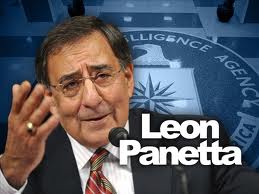
ABC News‘ Jake Tapper this morning interviewed Defense Secretary Leon Panetta and asked him about civilian deaths caused by U.S. drones: specifically, whether the U.S.’s relentless air strikes in multiple Muslim countries are exacerbating rather than containing the problem of anti-American Terrorism:
TAPPER: President Obama recently said that — recently told John Brennan, his counterterrorism adviser at the White House that he wanted a little bit more transparency when it comes to drones, which are the – is one of the approaches that you’re alluding to in Yemen.
And “The Times of London” reported last week that the civilian casualties in Yemen as a result of drone strikes have, quote, “emboldened Al Qaeda.”
Is there not a serious risk that this approach to counterterrorism, because of its imprecision, because of its civilian casualties, is creating more enemy than it is killing?
PANETTA: First and foremost, I think this is one of the most precise weapons that we have in our arsenal. Number two, what is our responsibility here? Our responsibility is to defend and protect the United States of America.
And using the operations that we have, using the systems that we have, using the weapons that we have, is absolutely essential to our ability to defend Americans. That’s what counts, and that’s what we’re doing.
Note that Panetta studiously ignored, rather than addressed, the question of whether the U.S. — by continuously killing Muslim civilians and thus intensifying anti-American animus — is creating more Terrorists than it is killing and thus making the U.S. less safe. That’s because there is no answer. Continuously bombing Muslim countries and killing civilians ostensibly as a means of combating anti-American Terrorism is exactly like smoking six packs of cigarettes a day to treat emphysema: one would do it only if one wanted to make the problem worse, or, at best, was recklessly indifferent to the outcome.
It’s been said many times that the war is a self-sustaining industry that requires a constant threat overseas to keep the machine thriving at home. Looking at the millions if not billions of dollars spent on securing “national special security events” against its own citizens, it’s clear that protesters have become the threat that has allowed, in part, the warfare state to flourish on American soil.
Sound dramatic? One need only to look at the lockdown of our cities during these “events” — whether it be the NATO Summit in Chicago today, or preparations to militarize the cities of Tampa and Charlotte for the Democratic and Republican conventions this summer — to see that the constitutionally protected, American tradition of protest has become a reason for law enforcement to spend their quickly evaporating budgets each year on new toys and overtime — including the latest in surveillance, crowd control gear and communications equipment, not to mention the helicopters overhead and armed vehicles on the ground.
Just as important, this threat allows the federal government to extend its own powers under the Patriot Act onto Main Street, all in the order of counterterrorism and national security.
No one would dispute that the gathering of representatives from 50 member states of the North Atlantic Treaty Organization (NATO), including 28 members of the military alliance in Afghanistan, warrants extra security. Indeed, we live in a world today where gunmen walk right up to U.S. members of Congress and shoot them in the head, or pack cars full of explosives on the city street. But it becomes increasingly clear, after 10 years of conventions and “special events” with little or no incident, that the specter of terrorism is being used to generate intimidating and repressive conditions, particularly against peaceful protesters, and proliferating an industry that thrives on domestic conflict and chaos.
What is this industry? Look no further than the advertisements for this year’s GovSec 2012, the annual security exposition held in Washington, D.C. In April, it promised to help “arm homeland security professionals and law enforcement professionals alike with the training and tools they need to detect, prevent and respond to terrorist attacks — from large-scale international threats to the dangers posed by homegrown extremists and lone wolves.”
According to this report, funding for the U.S. homeland security and homeland defense sector (including federal, state and local governments, and the private sector) will grow from $184 billion in 2011 to $205 billion by 2014. The market will grow from $73 billion in 2011 to $86 billion by 2014.
“The face of terrorism is constantly changing,” insisted GovSec Director Don Berey in a GovSec press release. “As a result, it is critical that those on the front lines of homeland security understand where new threats may arise and how their strategies must be adjusted to remain ever vigilant.” Adjusted, and paid for.
Thus, the endless war over there, becomes the endless war at home. Chicago is just the latest example of putting these new “strategies” to use. Talking about Chicago last week on Democracy Now!, Bill Ayers, University of Illinois professor and right-wing nemesis, explained:
There’s a mass campaign. They’re shutting Lakeshore Drive. They’re shutting the trains. They’re closing exits off the freeways. And they’re creating a kind of culture of fear. We have police officers we—who are friends of ours, we run into in coffee shops. They’ve told us that the training is focused a lot on the danger of the protesters and how you should be careful when you grab one of them, because they might have some kind of poison spike in their sleeve or something. I mean, it really is quite nuts.
At the same time, they’ve denied permits, taken permits away, given them back, been very vague about making any agreement with the protesters…we insist that this is a family-friendly, nonviolent, permitted march. And all the kind of hysteria about what’s about to happen is really brought on by the police. I don’t think anything is going to happen, except that they are creating the conditions for a police riot, once again.
Reports on Monday morning indicated that 45 people were arrested and four officers injured, including a police officer who was reportedly stabbed during a dramatic clash with protesters on Sunday night. In his remarks to reporters Sunday, Chicago Police Chief Garry McCarthy blamed the “black bloc” for rushing the police and precipitating the violence.
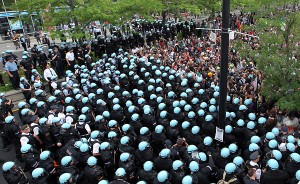
Meanwhile, according to Firedoglake.com writer Kevin Gosztola, a number of independent journalists who were videotaping and/or livestreaming the event were pulled over and interrogated at gunpoint and “under the cover of night.”
There appears to have been a conscious targeting of bloggers and livestreamers. The Chicago police, possibly with help from the Department of Homeland Security, FBI or other federal agencies, appear to be working off a list of “suspected” people or spaces where they must go “check in” on what is happening simply to ensure all is safe…
In each of these instances, the police did not inform those detained why they were being detained.
Peace activist David Swanson, who was on hand for Sunday’s events and publishes the WarIsACrime.org weblog, admitted that a “segment of the activist world plays into these police tactics, wearing bandanas, shouting curses, antagonizing police, and eroding credibility for claims that violence is all police-initiated,” but that the buildup of tension and intimidation — including Friday’s pre-dawn raid and arrest of the so-called NATO 3 on terror charges (two additional arrests make it the NATO 5) — contributed to lower than expected turnout. All five of those arrested have been tied to the “Black Bloc.”
And who knows how much these dynamics fueled the anxiety and hostility in the air between police and protesters before exploding late Sunday afternoon? They don’t call it a tinderbox for nothing.
No one can have been disappointed with the turnout, but it might have been bigger if not for the fear that was spread prior to Sunday …
The fear was the result of a massive militarized police build up, rumors of evacuations, the boarding up of windows, brutal police assaults on activists, preemptive arrests, disappearances, and charges of terrorism.
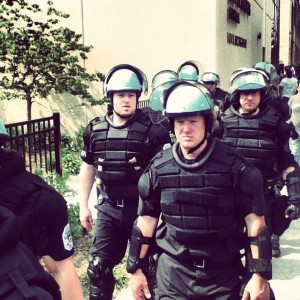
A massive crowd of activists was significantly outnumbered on Sunday by armed police, many in riot gear. They lined the march route. They swarmed off buses. They looked a little ridiculous as we marched nonviolently, just as we’d intended to do. The marching didn’t harm anyone or destroy any accumulated riches or smash any of the windows that were not boarded up.
Police did not allow the day to end without any use of their training and weapons. Not long after I left, according to numerous reports, all hell broke loose. If it hadn’t, think of how many of those people fearfully watching Sunday’s march from their high balconies would have joined in the next one and invited their friends!
The militarization aspect is uncanny and has been captured in numerous photos now circulating in places like Twitter. All we need to know is on Thursday, Chief McCarthy took to the airways to talk about his 12,000 officers doing “12-hour tours” instead of 12-hour shifts, as though policing parades and protests and keeping vigilant outside of this international gathering was indeed, going to war
This is not surprising, given how much law enforcement now emulates the military and the military feeds on this, handing down a record $500 million in surplus equipment to local departments in 2011 alone.
This is a decade-old phenomenon, in which “the military surplus program and (police) paramilitary units feed off one another in a cyclical loop that has caused an explosive growth in militarized crime control techniques.” Federal grants help the process along, leading “to a booming law enforcement industry that specifically markets military-style weaponry to local police departments,” wrote Rania Khalek in an explosive 2011 report for Alternet, which begins with the story of a 7-year-old girl who was shot in the neck by police during a SWAT raid in Detroit.
Today, Mayberrys all across the country have tanks and M-16s, and according to one estimate, SWAT teams outfitted for convoy onRoute Michigan to Ramadi are conducting some 40,000 raids a year across America. Sadly, though SWAT teams were once only used in emergency situations like a hostage crises, these paramilitary units are more inclined to use their fancy new gear to perform normal police work, like executing warrants, often resulting in botched raids and the death of innocent citizens. (CONTINUED HERE)
by Arlen Grossman/ The Big Picture Report
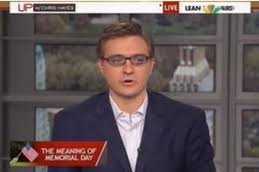
MSNBC’s Chris Hayes took a lot of flack for saying something that needed to be said: soldiers should not be called “heroes.” Here is what got him in trouble on his Sunday show, “Up With Chris Hayes”:
“I think it’s interesting because I think it is very difficult to talk about the war dead and the fallen without invoking valor, without invoking the words “heroes.” Why do I feel so [uncomfortable] about the word “hero”? I feel comfortable — uncomfortable — about the word because it seems to me that it is so rhetorically proximate to justifications for more war. Um, and, I don’t want to obviously desecrate or disrespect memory of anyone that’s fallen, and obviously there are individual circumstances in which there is genuine, tremendous heroism: hail of gunfire, rescuing fellow soldiers and things like that. But it seems to me that we marshal this word in a way that is problematic. But maybe I’m wrong about that.”
From the sound of his last sentence, I suspect he suddenly realized that he would surely face attack for this politically incorrect point of view. Hayes even issued an apology the next day, which is why he went from my hero to “almost hero” in my eyes.
As I wrote in a blog post “Our Soldiers: Heroes or Victims?” last July:
“In my mind, our soldiers (even if they are nice people) should never be called “heroes.” Whenever we glorify military service and killing, it only makes it easier for our government and the Military-Industrial-Media Complex to sell our perpetual military incursions, the current one, the next ones, and the ones after that.”
There is nothing glorious, wonderful, or heroic about war. Gruesome, insane, horrible, hell, and evil are more accurate ways to describe armed conflict between nations or groups of people. As Benjamin Franklin told us, “There was never a good war, or a bad peace.”

I have no problem with defending this country, and we need a strong military for that. However, there is such a thing as overkill, literally and figuratively. It’s been decades since the Defense Department actually did any “defending.” America has moved its focus from defense to preemptive war. Over the last decades in Vietnam, Iraq, Afghanistan and smaller conflicts in-between, the U.S. military has inflicted death, injury and trauma on hundreds of thousands of American soldiers and millions of innocent civilians in other countries.
I’m not against our soldiers, many of whom are individually brave and good people, but I reject even the tiniest glorification of their job. Truth be told, American soldiers are more often victims than heroes, following the orders of rich old men who never served in combat, risking their lives to assist oil and other multinational corporations in the exploitation of natural resources overseas.
Chris Hayes has learned the lesson all advocates for peace learn: you are not allowed to question war without paying a price. Nazi leader Hermann Goering understood the process well:
“it is the leaders of the country who determine policy, and it is always a simple matter to drag the people along…the people can always be brought to the bidding of the leaders. That is easy. All you have to do is to tell them they are being attacked, and denounce the pacifists for lack of patriotism and exposing the country to danger. It works the same in any country.”
It’s sad but understandable Chris Hayes had to backtrack–he does have a prestigious network job he’d like to keep. But he was right the first time: “hero… is so rhetorically proximate to justifications for more war.”
So let’s steer away from soldier “heroes,” false patriotism, displays of exciting aircraft and high-tech weapons, and the “fighting for our country” and “defending our freedom” rhetoric. For whenever we extol military service and government-sanctioned killing, we make it easier for the Military/Industrial/Congressional/Media complex to sell and perpetuate our never-ending military incursions.
It’s better that we stick to reality. War always results in killing, mayhem, destruction, and harm to all but those who financially profit from it. If we are ever to reduce or rid ourselves of this time-honored but deadly scourge, we have to tell the truth and resist the urge to praise or glorify war.
BPR Quote of the Day

 thebigpicturereport ™