THE VALUE OF WIKILEAKS

Why WikiLeaks Is Worth Defending, Despite All of Its Flaws

By Mathew Ingram/ Gigaom/ August 24, 2012

Most of the recent attention around WikiLeaks has been focused on the legal issues surrounding its controversial founder, Julian Assange. But we shouldn’t let that blind us to what the organization has accomplished and the critical role it plays as a “stateless news organization.”
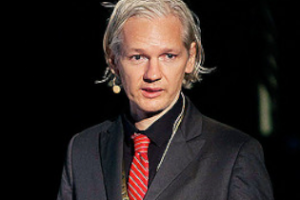
By now, anyone with even a passing interest in the WikiLeaks phenomenon is familiar with most of the elements of its fall from grace: the rift between founder Julian Assange and early supporters over his autocratic and/or erratic behavior, the Swedish rape allegations that led to his seeking sanctuary in Ecuador, a recent childish hoax the organization perpetrated, and so on. Critics paint a picture of an organization that exists only in name, with a leadership vacuum and an increasingly fractured group of adherents. Despite its many flaws, however, there is still something worthwhile in what WikiLeaks has done, and theoretically continues to do. The bottom line is that we need something like a “stateless news organization,” and so far it is the best candidate we have.

To some extent, WikiLeaks has always been as much myth as substance, and possibly even more so. The idea of a secretive group of information outlaws with servers located in Iceland or deep inside a Swedish mountain, especially a group headed by a white-haired fellow right out of a spy novel, always seemed almost too good to be true. And anyone who has gotten close to the organization, from Icelandic MP Birgitta Jonsdottir — who helped edit the infamous Collateral Murder video showing a U.S. military attack on civilians in Iraq — to former New York Times executive editor Bill Keller, has found that the reality lacks a certain something when compared to the myth.

The spotlight on Assange blinds us to the real issues

As Glenn Greenwald noted in a post at The Guardian this week, much of what has been written about WikiLeaks over the past year has focused exclusively on Assange and the rape charges that Sweden is expected to level against him if and when he is ever handed over to that country. There has been little or no coverage — at least from the mainstream media — about the effects of the ongoing financial blockade of WikiLeaks that was instituted last year by PayPal and Visa and MasterCard (which the organization is trying to get around by using the peer-to-peer money system known as Bitcoin) or who might be behind the recent denial-of-service attacks on WikiLeaks that seem to have been orchestrated by U.S.-based sources. Why? Greenwald has a theory:

“There are several obvious reasons why Assange provokes such unhinged media contempt. The most obvious among them is competition: the resentment generated by watching someone outside their profession generate more critical scoops in a year than all other media outlets combined.”

Whatever the reason, with Assange and his legal and personal problems hogging the spotlight, it’s easy to lose sight of what WikiLeaks has accomplished, whether because of or in spite of Assange’s leadership (or possibly both). Whatever you think of the U.S. government or the U.S. military, the Collateral Murder video was a groundbreaking moment in coverage of the country’s activities in Iraq and by extension the rest of the Middle East, and the release of hundreds of thousands of U.S. diplomatic cables was also a watershed event, even if the tangible effects of that document dump are difficult to quantify in political terms.

Would any of that information have come to light without WikiLeaks? Perhaps. And it’s important to remember that WikiLeaks didn’t come up with all of those documents on its own — they were delivered to it by the original leaker, who may or may not be former U.S. Army intelligence analyst Bradley Manning, the man the government has been holding in a military prison for more than two years without a trial on accusations of espionage.

A former colleague of mine, the Globe and Mail’s European correspondent Doug Saunders, has argued that WikiLeaks was no more than a virtual “brown envelope” for the data that Manning (or whoever it was) came up with, a simple mechanism for distributing the leaks, in the same way that Deep Throat handed over documents to the Washington Post‘s Watergate team in a parking garage. In other words, there shouldn’t be any more attention paid to WikiLeaks than there was to the U.S. postal system or to parking garages. But is that true, or does WikiLeaks represent a significant shift in the global flow of information?
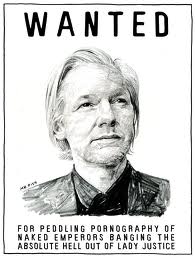
trippedmedia.com

We need a stateless news organization, however flawed

I think it’s the latter. It’s true that WikiLeaks has used publications like the New York Times and The Guardian and Die Zeit to help it sift through and publicize the information that has come out of the leaks it acquired — but that was as much about marketing as anything else. The reality is that WikiLeaks is a publisher, and a radically new variation on the species: one that has no state affiliation, either express or implied, as journalism professor Jay Rosen suggested when he called it the world’s first “stateless news organization.” In a world where even the New York Times fails to discharge its duty properly during events like the coverage of the Iraq war, such an entity is more important than ever.

WikiLeaks has also spawned a kind of mini-explosion of imitators, including leak dumps that are devoted to environmental data, or information about the corrupt political system in the Balkans, or about dozens of other topics. As a recent piece at Radio Free Europe pointed out, many of these have either failed or are in a state of disrepair for a variety of reasons (not least of which is the fact that running an anonymous document archive that can’t be traced or hacked into is exceedingly difficult), and the most famous of all — OpenLeaks, which was set up by former WikiLeaks insider Daniel Domscheit-Berg — is still mostly nonfunctional.
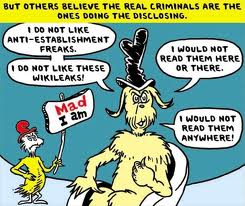
laughingsquid.com

As flawed as they might be, however, they continue to exist. And the example set by WikiLeaks can be seen even in smaller incidents, like the recent “document dump” that Gawker provided of presidential hopeful Mitt Romney’s financial records. While there may be no smoking gun in those files, just the fact that they have been made public has changed the game to some extent, and will likely encourage more of the same.

It’s worth noting that even those who have had a falling out with Julian Assange or WikiLeaks, including both Jonsdottir and the NYT’s Keller, have repeatedly said that the organization and its mercurial founder need to be supported, in the interests of freedom of speech. Keller said in an email to me recently that whatever we may think of Assange or his organization, it is a journalistic outlet or entity just as the New York Times or any other newspaper is — and we should be just as protective of its right to free speech and a free press.

That is the true legacy of WikiLeaks: flawed or not, mythical or substantive, it is an engine of free speech and free information, and as such it is worth defending, whatever we might think of its leader.
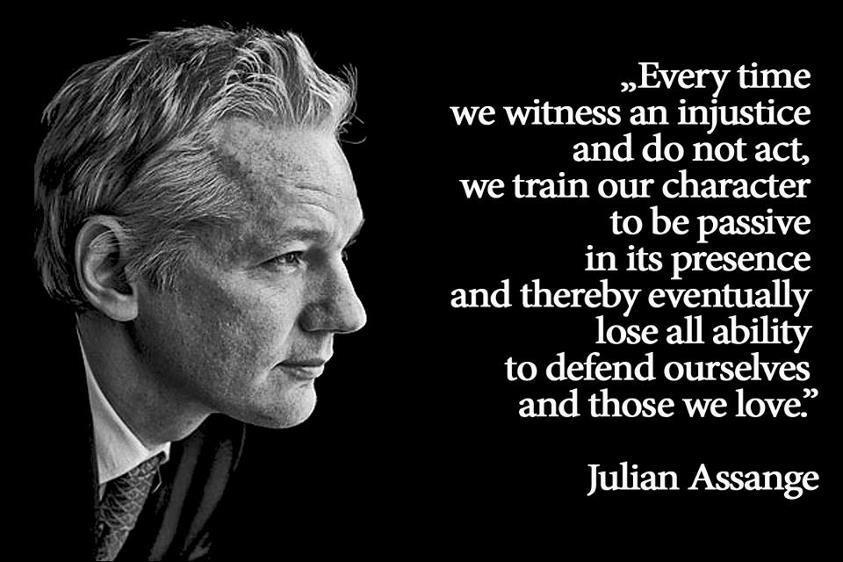
Boldface added by BPR Editor
Posted in civil liberties, government, Justice, law, media, politics | Tagged , , , , , | Leave a comment

Use It Or Lose It

BPR Quote of the Day

Posted in philosophy, poster, protest, protests, Quotations | Tagged | Leave a comment

Best of the B.S.*

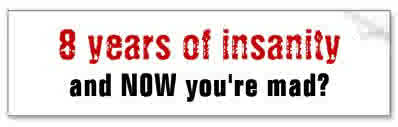
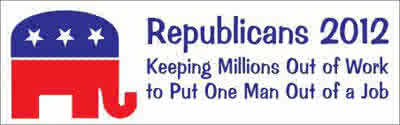
*Best of the Bumper Stickers………

Posted in Bumper Sticker, Democratic Party, humor, Republican Party | 1 Comment

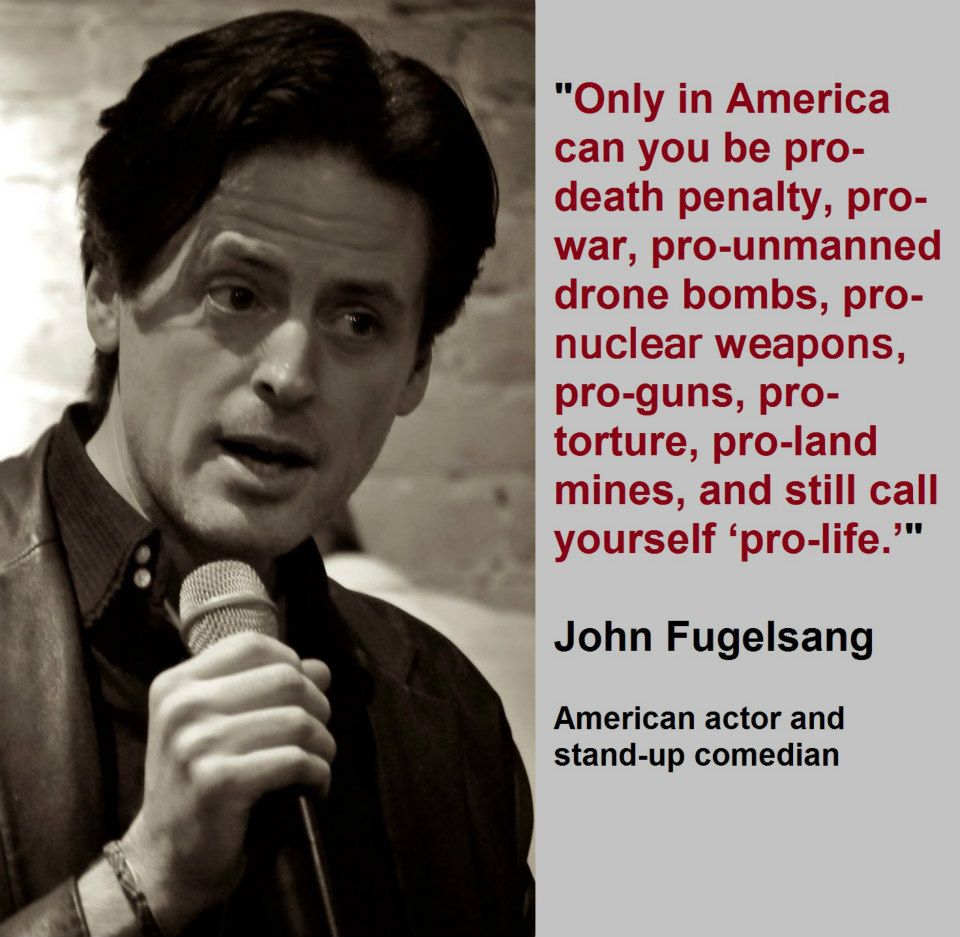
“Pro-Death”?

BPR Quote of the Day

Posted in philosophy, politics, Quotations | Tagged , , , | 2 Comments

BETTER THAN EVEN BUSH

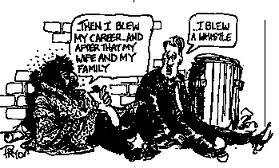
Obama Campaign Brags About Its Whistleblower Persecutions

Excuse me if I don’t join in Democrats’ sycophantic cheerleading for an Obama presidency that has shredded laws and liberties

By Glenn Greenwald/ The Guardian/ September 5, 2012

A US drone strike in eastern Yemen on Sunday was claimed by a security official to have killed six suspected Islamist militants. The Yemeni government has contradicted this, saying the intended target was ‘completely missed’, and 13 civilians were killed instead. Photograph: Reuters (updated below)

For several decades, protection of whistleblowers has been a core political value for Democrats, at least for progressives. Daniel Ellsberg has long been viewed by liberals as an American hero for his disclosure of the top secret Pentagon Papers. In 2008, candidate Obama hailed whistleblowing as “acts of courage and patriotism”, which “should be encouraged rather than stifled as they have been during the Bush administration”.

President Obama, however, has waged the most aggressive and vindictive assault on whistleblowers of any president in American history, as even political magazines generally supportive of him have recognized and condemned. One might think that, as the party’s faithful gather to celebrate the greatness of this leader, this fact would be a minor problem, a source of some tension between Obama and his hardest-core supporters, perhaps even some embarrassment. One would be wrong.

Far from shying away from this record of persecuting whistleblowers, the Obama campaign is proudly boasting of it. A so-called “Truth Team” of the Obama/Biden 2012 campaign issued a document responding to allegations that the Obama White House has leaked classified information in order to glorify the president:

Here is what they said:

Obama truth squad leaks

Leave aside that this is a total nonsequitur: the fact that Obama has persecuted whistleblowers hardly negates, or even pertains to, the charge that he has leaked classified information when doing so benefits him politically. Indeed, that’s precisely what makes his behavior so pernicious: that his administration exploits secrecy laws to punish those who expose high-level wrongdoing while leaking at will for political gain.

More remarkable is that a Democratic presidential candidate is sticking his chest out and proudly touting that he has tried to imprison more whistleblowers on espionage charges than all previous presidents in history combined: more than the secrecy-loving Bush/Cheney White House, more than the paranoid, leak-hating Nixon administration, more than anyone in American history. Just contrast the script Democrats now read from to the one they pretended to believe in, in 2008; from the Obama/Biden campaign’s official Document for Change:

2008 obama whistleblowers

This tracks perfectly with what Mother Jones’ Adam Serwer adeptly documented Tuesday is the radical transformation in the Democratic party platform from 2008, when they feigned concern with civil liberties, to the 2012 platform, when Obama’s record makes it impossible (and politically unhelpful) to pretend any longer. Rather than object to what Obama is doing with the power he has been vested is the exact opposite of what they claimed they believed four years ago, Democratic loyalists simply shift like the wind as their leader does, without even seeming to recognize that they are doing so.

This is the same mentality that causes Democrats to cheer wildly for their leader the day after things like this happen, as just did on Sunday:

yemen drones

There will be no mention of any of that during the Democratic National Convention this week – unless it is to cheer for it wildly. Indeed, here’s how the Washington Post Wednesday morning characterized the ceremonies taking place right now in North Carolina:

Democrats will spend the week raucously applauding the violence and killing continuously unleashed by their strong, tough, resolute Democratic president – whom they’ll hail as their “commander-in-chief” whom we’re so blessed to be led by, even though most of them are not in the military and therefore, by definition, have no “commander”, chief or otherwise. And they will keep cheering for such acts even as the bodies of his latest innocent victims go unburied. And if any of this bothers any of us, we’ll be drowned out by stirring and deeply emotional tributes to the kindness and goodness of this great man, which will make all these unpleasant thoughts about the reality of his actions blissfully disappear.

As the Nation’s Jeremy Scahill, who has spent considerable time in Yemen with the families of Obama’s drone victims, wrote last night on Twitter, as he watched all of this unfold:

scahill tweets dnc

Persecuting and abusing whistleblowers. Indefinitely imprisoning people with no charges. Due process-free assassinations of citizens, even teenagers. Continuous killings of innocent people in multiple Muslim countries. This isn’t just what Democrats do. It’s what they now boast about, what they campaign on, what they celebrate. That, as much as anything, is the Obama legacy.

Read Greenwald’s Update Here

Posted in Afghanistan, Barack Obama, civil liberties, elections, foreign policy, government, law, media, military, Pakistan, politics, war | Tagged , , , , , , | Leave a comment

The Lesser of Two Romneys

BPR Quote of the Day

 “This is the first election ever where both men are running as ‘I’m not Mitt Romney.'”

Thomas Friedman

Posted in Barack Obama, elections, Mitt Romney, politics, Quotations | Tagged | Leave a comment

The Unspoken Reason For the Rise and Fall 0f America

A BPR Special Report

By Arlen Grossman/ The Big Picture Report

“At any given moment there is an orthodoxy, a body of ideas of which it is assumed that all right-thinking people will accept without question. It is not exactly forbidden to say this, that or the other, but it is “not done” to say it…”  —George Orwell

There is a reason why America is failing. The bewilderment, frustration, anger, hate and fear seen in the eyes of so many of our fellow citizens is palpable. Our once promising experiment in freedom, democracy, and economic mobility veered off its promising path forty-some years ago, and has been floundering since.

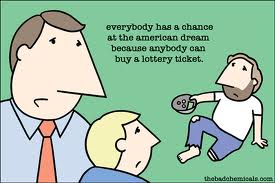
How could we have allowed The Great American Dream to thrive and then expire in front of our eyes? I believe this tragedy happened because we went all in on an economic ideology that blew up in our faces. The story of this distressing turn of events will not be explained to the American people by the corporate news media because they are complicit in it. Besides, America’s defining economic religion has gone virtually unchallenged for generations and has nearly infinite money behind it.  This national economic religion, invulnerable to challenge, goes by the name of capitalism.

thebadchemicals.com

Sometimes referred to as the “free market” system or private enterprise, capitalism has a powerful core of fanatical true believers behind it. They are often rich and powerful, and dominate our political system and the media. For generations, America has been defined by its capitalist system, which for the most part helped build a great country, until all of it began to unravel in the mid-1970s. Even today, the American economic system works well for the country’s elite, the One Percent. But inequality has gotten so extreme that .000001% (400 people) of our population have accumulated more wealth than the bottom 50% (311 million). Left unspoken, until relatively recently, is that capitalism in its present form no longer works for the other 99 percent.

It is not said out loud, but capitalism–like communism in 1990– failed, and not for the first time. Our economy teetered on the verge of total collapse in 2008 until the banks were bailed out by the government. In other words, capitalism was rescued and resuscitated by socialism, just as in the 1930s.

A “free market” economy, if properly restrained, can be extraordinarily effective.  No other economic system has proven to be more innovative, creative, and productive. But it can be dangerous without checks and balances. Unregulated capitalism unleashes the kind of greed that ultimately devours everything in its path. Over time, we have allowed capitalism to spin out of control and for that mistake we are paying a heavy price today.

If you have any doubt, I offer a challenge. Tell me which problems in America are not caused or greatly aggravated by the greed that flourishes under an unfettered free market system. Other than problems caused by religious fundamentalism, you will have difficulty coming up with answers. For decades we have worshipped at the alter of the free market, where the individual is supreme and accumulation is regarded as virtue. It has gone way  too far.

Health care, war, crime, drugs, obesity, poverty, climate change–all these problems and more–result from or are exascerbated by the greed that is a natural byproduct of capitalism. The ultimate example is global climate change. Despite overwhelming evidence that man-made activity is gravely harming the planet and threatening our very existence, the response of powerful corporate and political leaders has been denial, inaction, and resistance, because tackling this problem would stand in the way of the endless pursuit of profit. Valuing short-term financial gain over the ruination of the planet is a shockingly cynical misplacement of priorities.

At one time, in reaction to early 20th century capitalist abuses, we had monopoly and antitrust laws, labor unions, banking controls, campaign finance rules, and other restrictions on  an unbridled free market.  As those at the top consolidated their power and convinced us of the “magic of the market,” those controls grew lax. Multinational corporations took advantage and now virtually rule this country and the world.

Even worse is the damage to our moral values. Where not long ago most of us were genuinely concerned about such evils as war, poverty, inequality, and social injustice, we now have large segments of self-indulgent Americans whose major concerns focus on lowering taxes, flaunting guns and military strength, and drastically reducing the role of government (except for their pet projects). Because of the influence of decades of free market propaganda and the drumbeat of consumerism, caring about the common good of our society has been buried underneath the preeminent right of each individual to accumulate financial wealth, no matter the cost to society as a whole. Capitalist greed has sucked the very soul, the quintessential decent instincts and values that used to be a part of our way of life, and has become an end in itself. Gordon Gekko’s mantra, “Greed is Good,” seems to be our national motto.

For America to get back on track, a fairer, more efficient mix of socialism and capitalism is necessary. It doesn’t come down as an either/or. There is no nation today, and never was, that succeeded as totally capitalistic or totally socialistic. All countries have a mix of both. Conservatives are comfortable with the government regulating child labor and in charge of national defense. Liberals have no problem with entrepreneurship and small businesses. Finding the proper balance should be the goal.  In America, we have tipped dangerously far over to the laissez-faire “free market” side.

Identifying the problem–rampant, unrestrained capitalism–is much harder than implementing a solution. The American economic system is so entrenched, and its major advocates so rich and powerful, an easy fix isn’t going to happen. Our current political system functions on the fuel of corporate money and the politicians it buys, so we can’t  look there for help reining in capitalist greed.

truecapitalist.wikia.com

Conditions will have to get bad enough that people will take to the streets in huge numbers and demand radical change. The Occupy Wall Street movement made an attempt to mobilize the 99% but did not have the support of enough Americans to sustain it. The Tea Party movement attracted many frustrated citizens, but was coopted and corrupted by the One Percent.

When enough Americans from all segments of our society are ready to join a dedicated and radical movement to transform the hold of laissez-faire capitalist greed over our political and economic system, change will be possible and America can have a chance to return to what it once was. It won’t happen overnight, and the work of educating and convincing the 99% must be a priority for those who care about democracy, equal justice, and economic opportunity, the principles this great, but now struggling, nation was founded upon. The rise of that movement cannot wait much longer.

ALSO PUBLISHED IN OPEDNEWS.COM (headline status) September 8, 2012
Posted in Economics, economy, government, inequality, labor, media, philosophy, politics, Wall Street | Tagged , , , , , , , , | 1 Comment

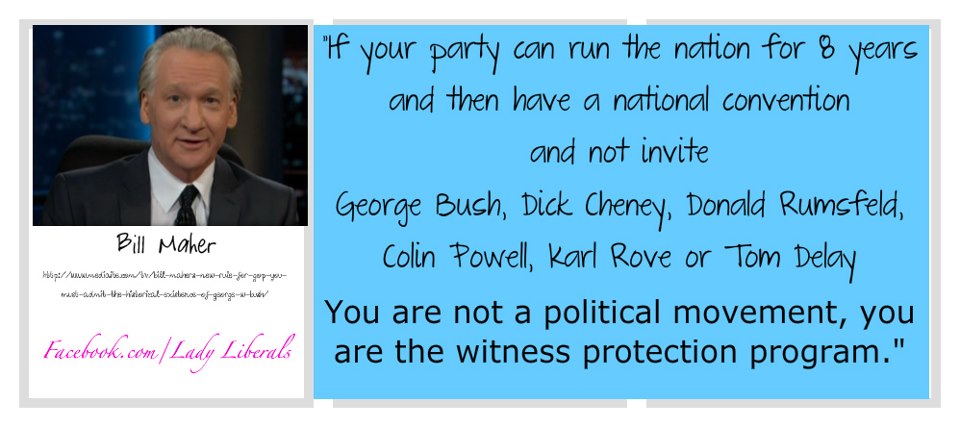
Witness Protection Program

Posted in humor, Republican Party | Tagged , , , , , | Leave a comment

Through Closed Eyes

BPR Quote of the Day

“I cannot see how a man of any large degree of humorous perception can ever be religious — unless he purposely shut the eyes of his mind & keep them shut by force.”

Mark Twain

Posted in Quotations, religion | Tagged , | Leave a comment

The Big Lie–History Repeating Itself

By Arlen Grossman/ The Big Picture Report

The avalanche of lies and misrepresentations flowing from the propaganda outlets of the Republican Party, while disturbing in content and quantity, is hardly a new phenomenon. Going back nearly seventy years, the Republicans were doing the same thing to the Democratic Party they are doing now: blaming the incumbents for the economic disaster precipitated by the last GOP administration. President Franklin Roosevelt described how they managed this spin during his time in office. Here are excerpts from an FDR  campaign speech (the “Fala” speech) in 1944:

The whole purpose of Republican oratory these days seems to be to switch labels. The object is to persuade the American people that the Democratic Party was responsible for the 1929 crash and the depression, and that the Republican Party was responsible for all social progress under the New Deal….

The opposition in this year has already imported into this campaign a very interesting thing, because it is foreign. They have imported the propaganda technique invented by the dictators abroad. Remember, a number of years ago, there was a book, Mein Kampf, written by Hitler himself. The technique was all set out in Hitler’s book – and it was copied by the aggressors of Italy and Japan. According to that technique, you should never use a small falsehood; always a big one, for its very fantastic nature would make it more credible – if only you keep repeating it over and over and over again.

Well, let us take some simple illustrations that come to mind. For example, although I rubbed my eyes when I read it, we have been told that it was not a Republican depression, but a Democratic depression from which this Nation was saved in 1933 – that this Administration this one today – is responsible for all the suffering and misery that the history books and the American people have always thought had been brought about during the twelve ill-fated years when the Republican party was in power.

Change a few words, and 68 years, and it sounds all too familiar…

ALSO PUBLISHED IN OPEDNEWS.COM September 1, 2012
Posted in Democratic Party, economy, elections, government, media, Republican Party | Tagged , , , , , | Leave a comment