
-
Recent Posts
-
Join 441 other subscribers
Categories
Archives
- October 2026
- September 2026
- August 2026
- July 2026
- June 2026
- May 2026
- April 2026
- March 2026
- February 2026
- January 2026
- December 2025
- November 2025
- October 2025
- September 2025
- August 2025
- July 2025
- June 2025
- May 2025
- April 2025
- March 2025
- February 2025
- January 2025
- December 2024
- November 2024
- October 2024
- September 2024
- August 2024
- July 2024
- June 2024
- May 2024
- April 2024
- March 2024
- February 2024
- January 2024
- December 2023
- November 2023
- October 2023
- September 2023
- August 2023
- July 2023
- June 2023
- May 2023
- April 2023
- March 2023
- February 2023
- January 2023
- December 2022
- November 2022
- October 2022
- September 2022
- August 2022
- July 2022
- June 2022
- May 2022
- April 2022
- March 2022
- February 2022
- January 2022
- December 2021
- November 2021
- October 2021
- September 2021
- August 2021
- August 2020
- July 2020
- June 2020
- May 2020
- April 2020
- March 2020
- February 2020
- January 2020
- December 2019
- November 2019
- October 2019
- September 2019
- August 2019
- July 2019
- June 2019
- May 2019
- April 2019
- March 2019
- February 2019
- January 2019
- December 2018
- November 2018
- October 2018
- September 2018
- August 2018
- July 2018
- June 2018
- May 2018
- April 2018
- March 2018
- February 2018
- January 2018
- December 2017
- November 2017
- October 2017
- September 2017
- August 2017
- July 2017
- June 2017
- May 2017
- April 2017
- March 2017
- February 2017
- January 2017
- December 2016
- November 2016
- October 2016
- September 2016
- August 2016
- July 2016
- June 2016
- May 2016
- April 2016
- March 2016
- February 2016
- January 2016
- December 2015
- November 2015
- October 2015
- September 2015
- August 2015
- July 2015
- May 2015
- April 2015
- March 2015
- February 2015
- January 2015
- November 2014
- October 2014
- September 2014
- August 2014
- July 2014
- June 2014
- February 2014
- January 2014
- December 2013
- November 2013
- October 2013
- September 2013
- August 2013
- March 2013
- February 2013
- January 2013
- December 2012
- November 2012
- October 2012
- September 2012
- August 2012
- July 2012
- June 2012
- May 2012
- April 2012
- March 2012
- February 2012
- January 2012
- December 2011
- November 2011
- October 2011
- September 2011
- August 2011
- July 2011
- June 2011
- May 2011
- April 2011
- March 2011
- January 2011
- December 2010
Blogroll
Meta
The Real Way to Measure Our Economy
Posted in Economics, economy, government, inequality, politics
Tagged Robert Reich, stock market
Leave a comment
Test Run–New Youtube Political Video Series
New Political Broadcast Show: Hal Ginsberg started a progressive radio station (KRXA-540AM) in Monterey from 2005 to 2013. It went off the air after Hal moved back to his family’s home in Maryland. Hal is starting a YouTube Video show, and asked me, along with our friend, Fred Steudler, to join him on his premier show. (Fred, Paul Karrer, and I were among the regulars on KRXA for awhile). This video here was experimental and has some kinks to be worked out, but Hal wants his “Halitics” show to appear on a regular basis. I expect to be appearing on the show periodically.
OUR TIMID CONGRESSMAN
Letter to the Editor, Monterey Herald, February 19, 2023
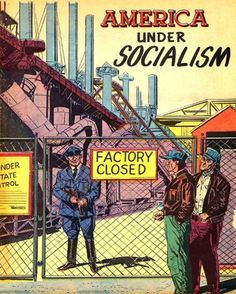
Republicans, lacking plans to help ordinary people, recently pushed an idiotic bill that called for members of Congress to denounce “The Horrors of Socialism.” There was no reason for it, other than to embarrass Democrats into taking a stand on “socialism.” Of course, to Republicans, all “socialism” is evil, and they threw in Fidel Castro, Vladimir Lenin, Joseph Stalin, Kim Jong Un and Mao Zedong as examples of socialism, and for good measure, insisted “the collectivistic system of socialism in all of its forms is fundamentally and necessarily opposed.” Not surprisingly, they didn’t include as examples, Senator Bernie Sanders or any of the leaders of thriving democratic socialist governments in Europe and many other countries. Sadly, 109 Congressional Democrats including our representative, the timid Jimmy Panetta, took the bait and voted for the sham bill. Eighty-six House Democrats had enough sense to oppose the bill. I just hope Jimmy Panetta won’t go soft on socialist programs like Social Security, Medicare, the Affordable Care Act, the Interstate Highway System, and public schools.
Posted in Uncategorized
2 Comments
Creeping Authoritarianism
Creeping authoritarianism….Russia, Hungary, Poland and other authoritarian-type governments are taking control of media, the judiciary, and other institutions that threaten their autocracy.
Could it happen here? Think of Gov. DeSantis of Florida trying to take over the educational system in Florida. A few other Republican states are attempting something similar….Very scary And who will stop it?!
Posted in America, civil liberties, democracy, Donald Trump, government, judiciary, law, media, politics, Russia
Tagged authoritarianism, autocracy, Hungary, journalism, MSNBC, Rachel Maddow, Republican Party, Ron DeSantis, Viktor Orban
Leave a comment
Should you trust media bias charts?
These controversial charts claim to show the political lean and credibility of news organizations. Here’s what you need to know about them.
By Jake Sheridan/ Pointer.org/ November 2,2021
Impartial journalism is an impossible ideal. That is, at least, according to Julie Mastrine.
“Unbiased news doesn’t exist. Everyone has a bias: everyday people and journalists. And that’s OK,” Mastrine said. But it’s not OK for news organizations to hide those biases, she said.
“We can be manipulated into (a biased outlet’s) point of view and not able to evaluate it critically and objectively and understand where it’s coming from,” said Mastrine, marketing director for AllSides, a media literacy company focused on “freeing people from filter bubbles.”
That’s why she created a media bias chart.
As readers hurl claims of hidden bias towards outlets on all parts of the political spectrum, bias charts have emerged as a tool to reveal pernicious partiality.
Charts that use transparent methodologies to score political bias — particularly the AllSides chart and another from news literacy company Ad Fontes Media — are increasing in popularity and spreading across the internet. According to CrowdTangle, a social media monitoring platform, the homepages for these two sites and the pages for their charts have been shared tens of thousands of times.
But just because something is widely shared doesn’t mean it’s accurate. Are media bias charts reliable?
Why do media bias charts exist?
Traditional journalism values a focus on news reporting that is fair and impartial, guided by principles like truth, verification and accuracy. But those standards are not observed across the board in the “news” content that people consume.
Tim Groeling, a communications professor at the University of California Los Angeles, said some consumers take too much of the “news” they encounter as impartial.
When people are influenced by undisclosed political bias in the news they consume, “that’s pretty bad for democratic politics, pretty bad for our country to have people be consistently misinformed and think they’re informed,” Groeling said.
If undisclosed bias threatens to mislead some news consumers, it also pushes others away, he said.
“When you have bias that’s not acknowledged, but is present, that’s really damaging to trust,” he said.
Kelly McBride, an expert on journalism ethics and standards, NPR’s public editor and the chair of the Craig Newmark Center for Ethics and Leadership at Poynter, agrees.
“If a news consumer doesn’t see their particular bias in a story accounted for — not necessarily validated, but at least accounted for in a story — they are going to assume that the reporter or the publication is biased,” McBride said.
The growing public confusion about whether or not news outlets harbor a political bias, disclosed or not, is fueling demand for resources to sort fact from otherwise — resources like these media bias charts.
Bias and social media
Mastrine said the threat of undisclosed biases grows as social media algorithms create filter bubbles to feed users ideologically consistent content.
Could rating bias help? Mastrine and Vanessa Otero, founder of the Ad Fontes media bias chart, think so.
“It’ll actually make it easier for people to identify different perspectives and make sure they’re reading across the spectrum so that they get a balanced understanding of current events,” Mastrine said.
Otero said bias ratings could also be helpful to advertisers.
“There’s this whole ecosystem of online junk news, of polarizing misinformation, these clickbaity sites that are sucking up a lot of ad revenue. And that’s not to the benefit of anybody,” Otero said. “It’s not to the benefit of the advertisers. It’s not to the benefit of society. It’s just to the benefit of some folks who want to take advantage of people’s worst inclinations online.”
Reliable media bias ratings could allow advertisers to disinvest in fringe sites.
Groeling, the UCLA professor, said he could see major social media and search platforms using bias ratings to alter the algorithms that determine what content users see. Changes could elevate neutral content or foster broader news consumption.
But he fears the platforms’ sweeping power, especially after Facebook and Twitter censored a New York Post article purporting to show data from a laptop belonging to Hunter Biden, the son of President-elect Joe Biden. Groeling said social media platforms failed to clearly communicate how and why they stopped and slowed the spread of the article.
“(Social media platforms are) searching for some sort of arbiter of truth and news … but it’s actually really difficult to do that and not be a frightening totalitarian,” he said.
Is less more?
The Ad Fontes chart and the AllSides chart are each easy to understand: progressive publishers on one side, conservative ones on the other.
“It’s just more visible, more shareable. We think more people can see the ratings this way and kind of begin to understand them and really start to think, ‘Oh, you know, journalism is supposed to be objective and balanced,’” Mastrine said. AllSides has rated media bias since 2012. Mastrine first put them into chart form in early 2019.
Otero recognizes that accessibility comes at a price.
“Some nuance has to go away when it’s a graphic,” she said. “If you always keep it to, ‘people can only understand if they have a very deep conversation,’ then some people are just never going to get there. So it is a tool to help people have a shortcut.”
But perceiving the chart as distilled truth could give consumers an undue trust in outlets, McBride said.
“Overreliance on a chart like this is going to probably give some consumers a false level of faith,” she said. “I can think of a massive journalistic failure for just about every organization on this chart. And they didn’t all come clean about it.”
The necessity of getting people to look at the chart poses another challenge. Groeling thinks disinterest among consumers could hurt the charts’ usefulness.
“Asking people to go to this chart, asking them to take effort to understand and do that comparison, I worry would not actually be something people would do. Because most people don’t care enough about news,” he said. He would rather see a plugin that detects bias in users’ overall news consumption and offers them differing viewpoints.
McBride questioned whether bias should be the focus of the charts at all. Other factors — accountability, reliability and resources — would offer better insight into what sources of news are best, she said.
“Bias is only one thing that you need to pay attention to when you consume news. What you also want to pay attention to is the quality of the actual reporting and writing and the editing,” she said. It wouldn’t make sense to rate local news sources for bias, she added, because they are responsive to individual communities with different political ideologies.
The charts are only as good as their methodologies. Both McBride and Groeling shared praise for the stated methods for rating bias of AllSides and Ad Fontes, which can be found on their websites. Neither Ad Fontes nor AllSides explicitly rates editorial standards.
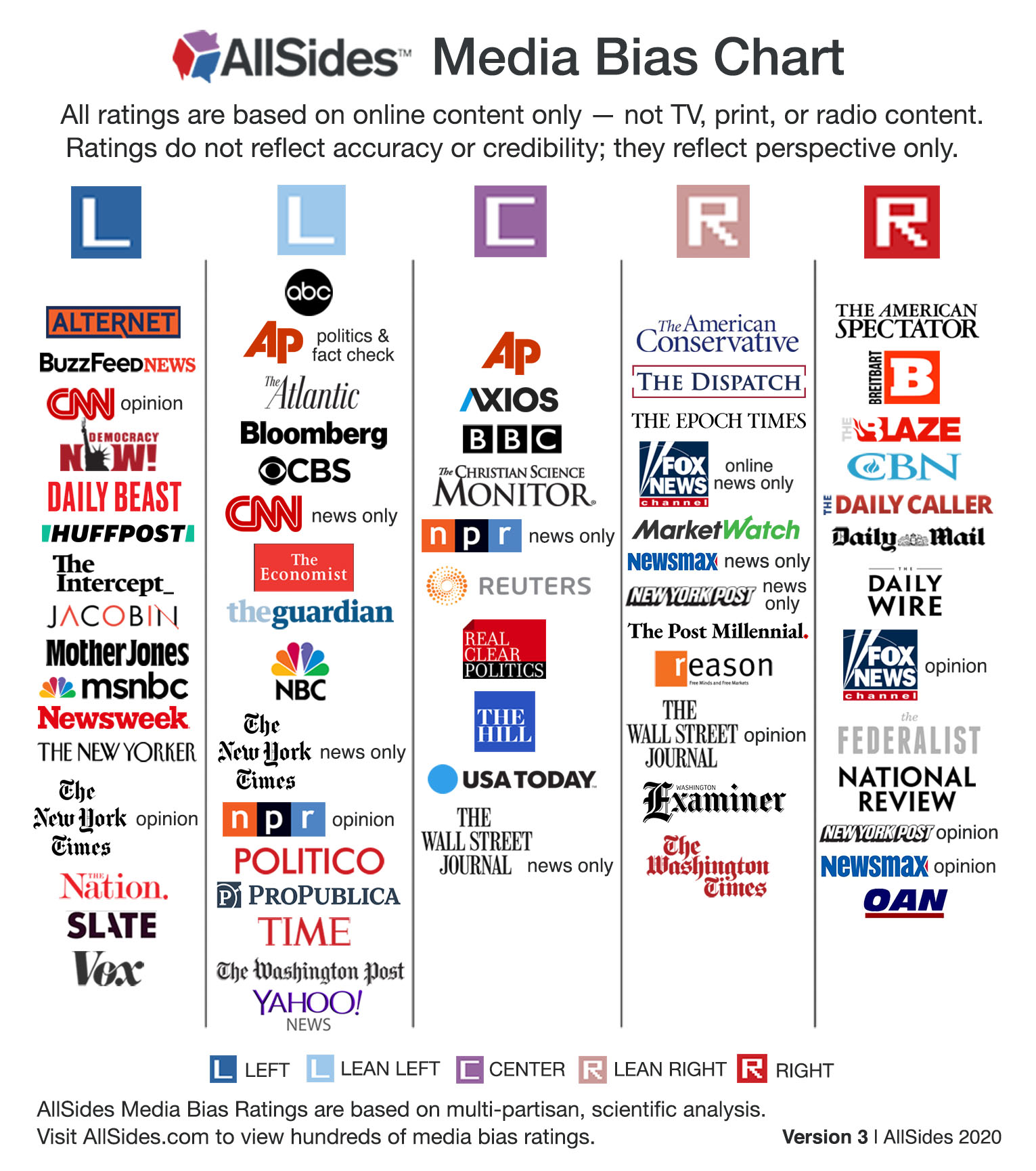
The AllSides Chart
(Courtesy: AllSides)
The AllSides chart focuses solely on political bias. It places sources in one of five boxes — “Left,” “Lean Left,” “Center,” “Lean Right” and “Right.” Mastrine said that while the boxes allow the chart to be easily understood, they also don’t allow sources to be rated on a gradient.
“Our five-point scale is inherently limited in the sense that we have to put somebody in a category when, in reality, it’s kind of a spectrum. They might fall in between two of the ratings,” Mastrine said.
That also makes the chart particularly easy to understand, she said.
AllSides has rated more than 800 sources in eight years, focusing on online content only. Ratings are derived from a mix of review methods.
In the blind bias survey, which Mastrine called “one of (AllSides’) most robust bias rating methodologies,” readers from the public rate articles for political bias. Two AllSides staffers with different political biases pull articles from the news sites that are being reviewed. AllSides locates these unpaid readers through its newsletter, website, social media account and other marketing tools. The readers, who self-report their political bias after they use a bias rating test provided by the company, only see the article’s text and are not told which outlet published the piece. The data is then normalized to more closely reflect the composure of America across political groupings.
AllSides also uses “editorial reviews,” where staff members look directly at a source to contribute to ratings.
“That allows us to actually look at the homepage with the branding, with the photos and all that and kind of get a feel for what the bias is, taking all that into account,” Mastrine said.
She added that an equal number of staffers who lean left, right and center conduct each review together. The personal biases of AllSides’ staffers appear on their bio pages. Mastrine leans right.
She clarified that among the 20-person staff, many are part time, 14% are people of color, 38% are lean left or left, 29% are center, and 18% are lean right or right. Half of the staffers are male, half are female.
When a news outlet receives a blind bias survey and an editorial review, both are taken into account. Mastrine said the two methods aren’t weighted together “in any mathematical way,” but said they typically hold roughly equal weight. Sometimes, she added, the editorial review carries more weight.
AllSides also uses “independent research,” which Mastrine described as the “lowest level of bias verification.” She said it consists of staffers reviewing and reporting on a source to make a preliminary bias assessment. Sometimes third-party analyses — including academic research and surveys — are incorporated into ratings, too.
AllSides highlights the specific methodologies used to judge each source on its website and states its confidence in the ratings based on the methods used. In a separate white paper, the company details the process used for its August 2020 blind bias survey.
AllSides sometimes gives separate ratings to different sections of the same source. For example, it rates The New York Times’ opinion section “Left” and its news section “Lean Left.” AllSides also incorporates reader feedback into its system. People can mark that they agree or disagree with AllSides’ rating of a source. When a significant number of people disagree, AllSides often revisits a source to vet it once again, Mastrine said.
The AllSides chart generally gets good reviews, she said, and most people mark that they agree with the ratings. Still, she sees one misconception among the people that encounter it: They think center means better. Mastrine disagrees.
“The center outlets might be omitting certain stories that are important to people. They might not even be accurate,” she said. “We tell people to read across the spectrum.”
To make that easier, AllSides offers a curated “balanced news feed,” featuring articles from across the political spectrum, on its website.
AllSides makes money through paid memberships, one-time donations, media literacy training and online advertisements. It plans to become a public benefit corporation by the end of the year, she added, meaning it will operate both for profit and for a stated public mission.
The Ad Fontes chart
(Courtesy: Ad Fontes)
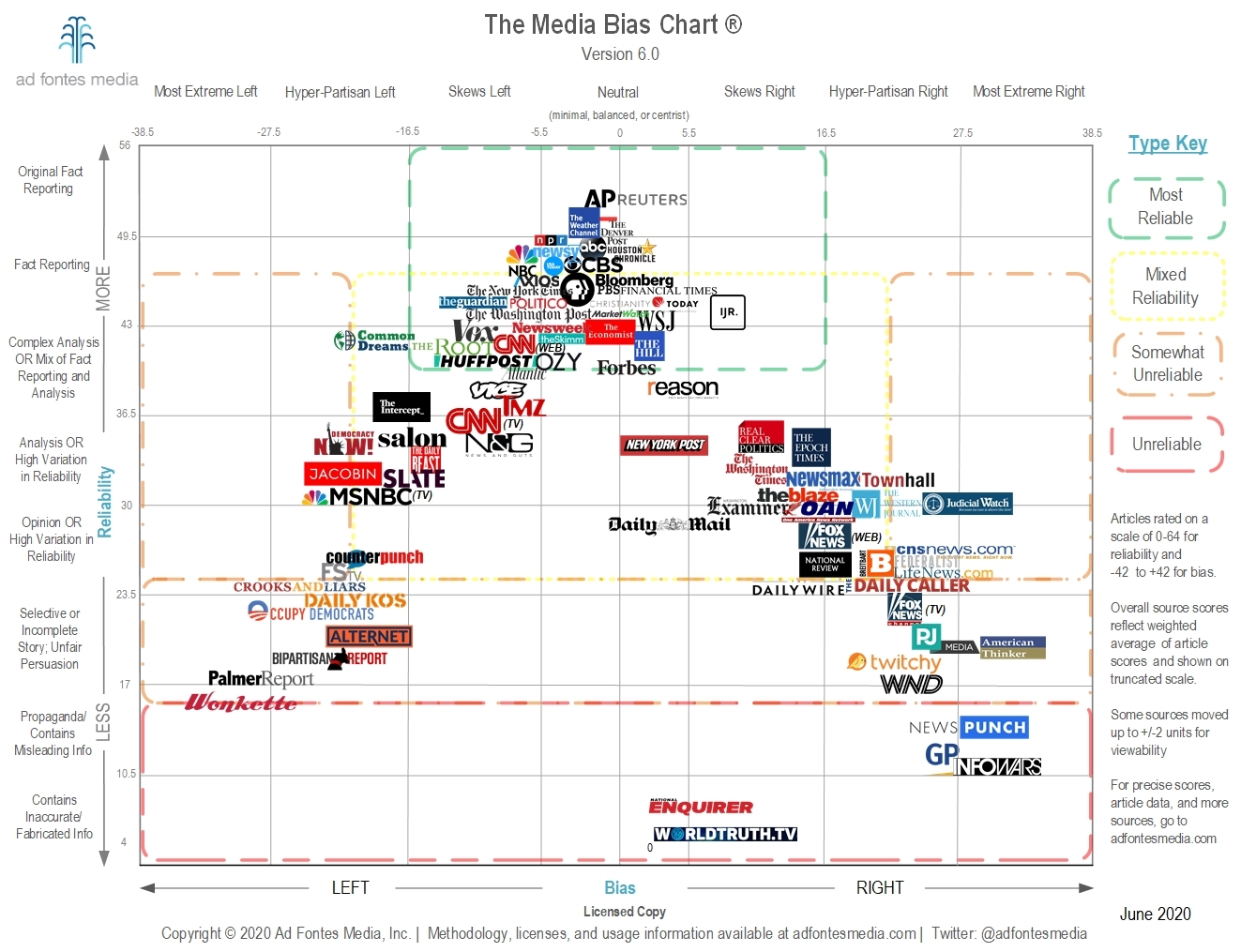
The Ad Fontes chart rates both reliability and political bias. It scores news sources — around 270 now, and an expected 300 in December — using bias and reliability as coordinates on its chart.
The outlets appear on a spectrum, with seven markers showing a range from “Most Extreme Left” to “Most Extreme Right” along the bias axis, and eight markers showing a range from “Original Fact Reporting” to “Contains Inaccurate/Fabricated Info” along the reliability axis.
The chart is a departure from its first version, back when founder Vanessa Otero, a patent attorney, said she put together a chart by herself as a hobby after seeing Facebook friends fight over the legitimacy of sources during the 2016 election. Otero said that when she saw how popular her chart was, she decided to make bias ratings her full-time job and founded Ad Fontes — Latin for “to the source” — in 2018.
“There were so many thousands of people reaching out to me on the internet about this,” she said. “Teachers were using it in their classrooms as a tool for teaching media literacy. Publishers wanted to publish it in textbooks.”
About 30 paid analysts rate articles for Ad Fontes. Listed on the company’s website, they represent a range of experience — current and former journalists, educators, librarians and similar professionals. The company recruits analysts through its email list and references and vets them through a traditional application process. Hired analysts are then trained by Otero and other Ad Fontes staff.
To start review sessions, a group of coordinators composed of senior analysts and the company’s nine staffers pulls articles from the sites being reviewed. They look for articles listed as most popular or displayed most prominently.
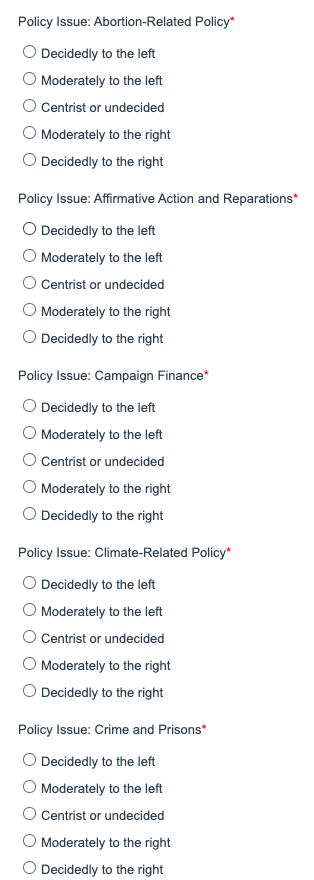
Part of the Ad Fontes analyst political bias test. The test asks analysts to rank their political bias on 18 different policy issues.
Ad Fontes administers an internal political bias test to analysts, asking them to rank their left-to-right position on about 20 policy positions. That information allows the company to attempt to create ideological balance by including one centrist, one left-leaning and one right-leaning analyst on each review panel. The panels review at least three articles for each source, but they may review as many as 30 for particularly prominent outlets, like The Washington Post, Otero said. More on their methodology, including how they choose which articles to review to create a bias rating, can be found here on the Ad Fontes website.
When they review the articles, the analysts see them as they appear online, “because that’s how people encounter all content. No one encounters content blind,” Otero said. The review process recently changed so that paired analysts discuss their ratings over video chat, where they are pushed to be more specific as they form ratings, Otero said.
Individual scores for an article’s accuracy, the use of fact or opinion, and the appropriateness of its headline and image combine to create a reliability score. The bias score is determined by the article’s degree of advocacy for a left-to-right political position, topic selection and omission, and use of language.
To create an overall bias and reliability score for an outlet, the individual scores for each reviewed article are averaged, with added importance given to more popular articles. That average determines where sources show up on the chart.
Ad Fontes details its ratings process in a white paper from August 2019.
While the company mostly reviews prominent legacy news sources and other popular news sites, Otero hopes to add more podcasts and video content to the chart in coming iterations. The chart already rates video news channel “The Young Turks” (which claims to be the most popular online news show with 250 million views per month and 5 million subscribers on YouTube), and Otero mentioned she next wants to examine videos from Prager University (which claims 4 billion lifetime views for its content, has 2.84 million subscribers on YouTube and 1.4 million followers on Instagram). Ad Fontes is working with ad agency Oxford Road and dental care company Quip to create ratings for the top 50 news and politics podcasts on Apple Podcasts, Otero said.
“It’s not strictly traditional news sources, because so much of the information that people use to make decisions in their lives is not exactly news,” Otero said.
She was shocked when academic textbook publishers first wanted to use her chart. Now she wants it to become a household tool.
“As we add more news sources on to it, as we add more data, I envision this becoming a standard framework for evaluating news on at least these two dimensions of reliability and bias,” she said.
She sees complaints about it from both ends of the political spectrum as proof that it works.
“A lot of people love it and a lot of people hate it,” Otero said. “A lot of people on the left will call us neoliberal shills, and then a bunch of people that are on the right are like, ‘Oh, you guys are a bunch of leftists yourselves.’”
The project has grown to include tools for teaching media literacy to school kids and an interactive version of the chart that displays each rated article. Otero’s company operates as a public benefit corporation with a stated public benefit mission: “to make news consumers smarter and news media better.” She didn’t want Ad Fontes to rely on donations.
“If we want to grow with a problem, we have to be a sustainable business. Otherwise, we’re just going to make a small difference in a corner of the problem,” she said.
Ad Fontes makes money by responding to specific research requests from advertisers, academics and other parties that want certain outlets to be reviewed. The company also receives non-deductible donations and operates on WeFunder, a grassroots crowdfunding investment site, to bring in investors. So far, Ad Fontes has raised $163,940 with 276 investors through the site.
Should you use the charts?
Media bias charts with transparent, rigorous methodologies can offer insight into sources’ biases. That insight can help you understand what perspectives sources bring as they share the news. That insight also might help you understand what perspectives you might be missing as a news consumer.
But use them with caution. Political bias isn’t the only thing news consumers should look out for. Reliability is critical, too, and the accuracy and editorial standards of organizations play an important role in sharing informative, useful news.
Media bias charts are a media literacy tool. They offer well-researched appraisals on the bias of certain sources. But to best inform yourself, you need a full toolbox. Check out Poynter’s MediaWise project for more media literacy tools.
This article was originally published on Dec. 14, 2020.
Posted in America, government, media, politics
Tagged Ad Fonte Media, Allsides, bias chart, Fox News, Jack Sheridan, Julie Mastrine, media bias, NPR, Pointer.org, social media
Leave a comment
POST-TRUTH AMERICA
GEORGE SANTOS AND AMERICAN POLITICS
Letters to Editor, Monterey Herald, January 31, 2023
It baffles me that there is so much fuss about Rep. George Santos and his total disregard of facts and reality. Political commentators and late-night comics are having a field day exposing his extraordinary record of fabrication and deception. Tellingly, this comes shortly after the reign of Donald Trump, the psychotic ex-president with a remarkable record of telling lies, with thousands documented before, during and after his presidency. Telling the truth is a trait Mr. Trump and his minions have absolutely no respect for. That matters little to the tens of millions of Americans who still believe him to be their political leader and savior. George Santos is not a surprise but rather is an inevitable result of the blurring of falsity and fact in post-truth America today.
–Arlen Grossman, Del Rey Oaks

Posted in America, government, politics, Republican Party
Tagged Donald Trump, George Santos, Monterey Herald, Post-Truth America
Leave a comment
Trump Has Completely Lost His Grip on Reality
The former president’s deterioration is on full display in the Truth Social asylum he built for himself.
By Charles C. W. Cooke/ National Review/ January 25, 2023
Let’s check in on the shadow primary for the 2024 Republican nomination. Nikki Haley is putting together a finance committee, and suggested last week that she’s “leaning in” to a run. Mike Pompeo has just published a book called Never Give an Inch, and told CBS yesterday that he’ll decide whether to enter the fray over the “next handful of months.” Governor Ron DeSantis has continued to pick winning fights in Florida since being reelected in a November landslide, and has stayed assiduously quiet about his future.
And then there’s Donald Trump, who, despite being the only candidate who has officially announced his bid, is . . . well, ranting like a deranged hobo in a dilapidated public park. No, don’t look at him — he might come over here with his sign.
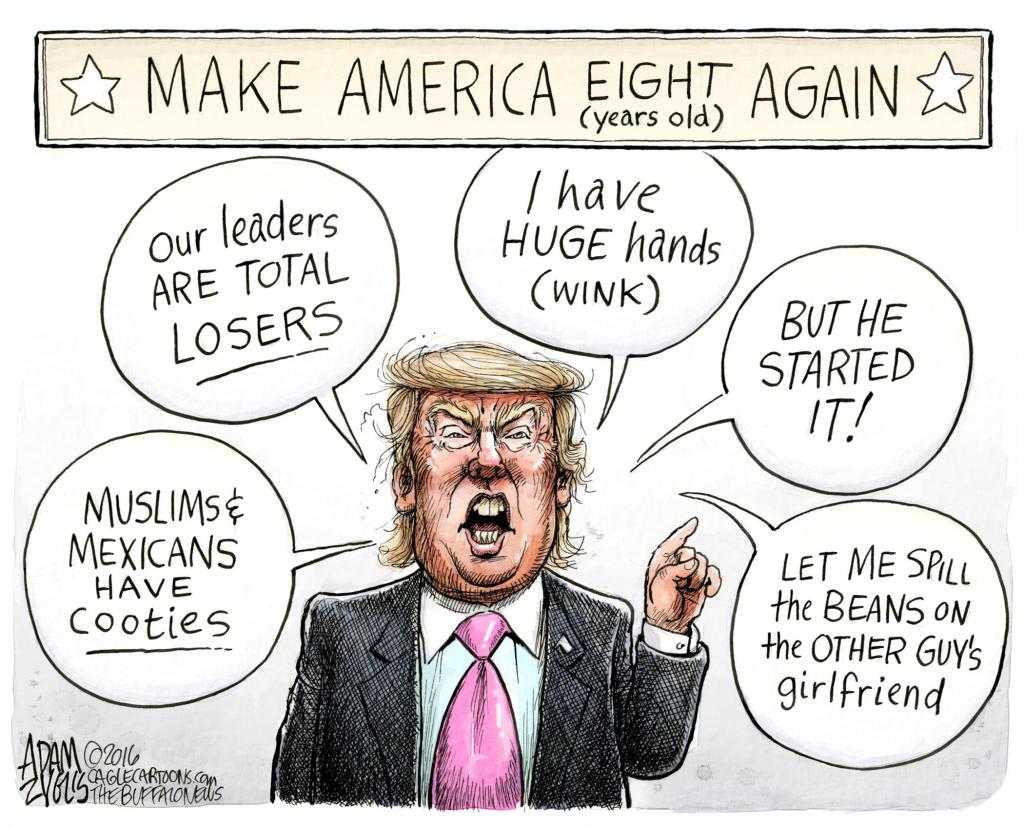
There was a point in time at which Trump’s unusual verbal affect and singular nose for underutilized wedge issues gave him a competitive edge. Now? Now, he’s morphing into one of the three witches from Macbeth. To peruse Trump’s account on Truth Social is to meet a cast of characters about whom nobody who lives beyond the Trump Extended Universe could possibly care one whit. Here in the real world, the border is a catastrophe, inflation is as bad as it’s been in four decades, interest rates have risen to their highest level in 15 years, crime is on the up, and the debt continues to mushroom. And yet, safely ensconced within his own macrocosm, Trump is busy mainlining Edward Lear. Day in, day out, he rambles about the adventures of Coco Chow and the Old Broken Crow; the dastardly Unselect Committee; the (presumably tasty) Stollen Presidential Election; the travails of that famous law-enforcement agency, the Gestopo; Joe Scarborough’s wife “Mike”; and other unusual characters from Coromandel. “Where the early pumpkins blow / In the middle of the woods / Lived the Yonghy-Bonghy-Bò / Who STOLLE THE ELECTION / Don’t you know?”
These characters come and go as the world passes indifferently by. But Trump’s heroism remains the one constant. It is the dream of any artist to play both performer and critic, and, on Truth Social, Trump is living the dream. At times, his penchant for self-elevation makes God’s declaration in Genesis “that it was good” look positively bashful. Apropos of nothing, he will declare to himself: “‘TRUMP WAS RIGHT ABOUT EVERYTHING’ One of [sic] most often used current phrases or statements. Wow, such a magnificent compliment. Thank you!” Other evaluations are equally gushing. His appraisal of the social-media company of which he is the sole potentate: “TRUTH SOCIAL IS SOOO GREAT!” His review of his golfing abilities in a competition that, astonishingly enough, he managed to win despite missing its first day: “Competed against many fine golfers, and was hitting the ball long and straight,” which “in a very real way . . . serves as a physical exam, only MUCH tougher.” His assessment of his presidency, and of the 2020 election that he lost by millions of votes: “I did a GREAT job as President, maybe the best.” And then: “I Ran twice, did much better the second time (Rigged Election!)” I tell ya, Charley, I coulda been a contender.
Throughout his public career, Trump has resembled nothing so much as a drunken talk-radio caller from Queens, and, on Truth Social, readers get the treat of watching him at the zenith of his rhetorical powers. Nobody — and I mean nobody — can shift gears as fast as Donald J. Trump. One moment he’s proposing that the solution to the Supreme Court leak is to “arrest the reporter, publisher, editor—you’ll get your answer fast,” or, if that fails, “put whoever in jail.” The next, he’s describing the prosecution of his business associate, Allen Weisselberg, as “the greatest Witch Hunt of all time.” His repertoire is unmatched — and unmatchable. He can do edgy insult comedy for the people listening in at the bar: “The reporter was a shaky & unattractive wack job, known as ‘tough’ but dumb as a rock.” He can make numbers up off the top of his head: “The change in the Election was Complete & Total, with Millions of votes switched, at least 17%.” He can use hyperbolic analogies: “Our Country is SICK inside, very much like a person dying of Cancer.” He can even do angry: “May he Rot In Hell!” He can do anything.
Anything, that is, except focus on the world outside — where the problems that Donald Trump once used to propel himself into the White House remain real and pressing, whether or not he chooses to engage with them.
A Media Ceiling is about to Fall In On Democrats
Wealthy partisans aligned with the GOP are going for that Hispanic vote in a big, big way. They intend to use the same tools that have turned state after state reliably red since the 1980s: radio & TV
By Thom Hartmann/ HartmannReport.com/ January 25, 2023

If you’re a Democratic candidate for office in New Mexico, Texas, California, Arizona, Nevada, Florida, Colorado, New Jersey, New York or Illinois, get ready: the ceiling is about to fall in on you.
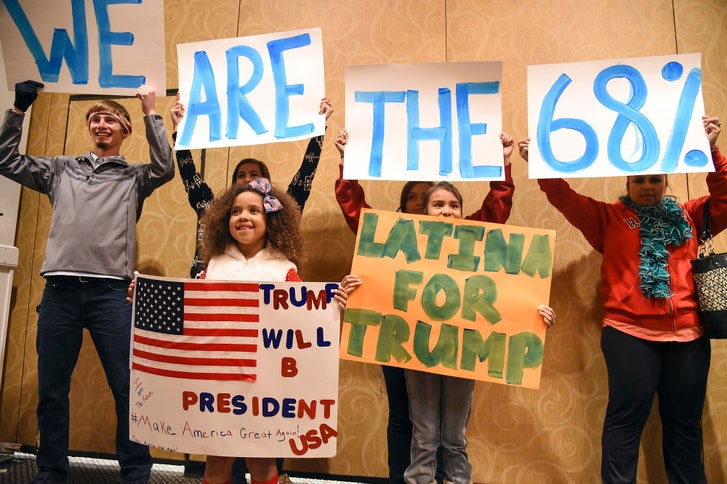
The white vote in America is split, leaning 53%-42% toward the GOP. The Black vote is reliably 83 percent Democratic. But the Hispanic vote is up for grabs: they represent the second largest and fastest growing demographic group in the country at 13.3 percent of the 2020 electorate (Blacks were 12.5 percent, whites 66.7 percent) and, as conservative Spanish-language radio proliferates, they’re shifting to the right.
If Republicans can pull just a few percent of the Hispanic vote their way, they can hold the House, retake the Senate, and seize the White House in 2024. Not to mention flipping multiple purple states red.
Now, wealthy partisans aligned with the GOP are going for that Hispanic vote in a big, big way. They intend to use the same tools that have turned state after state reliably red since the 1980s: radio and television.
Big business was consistently Republican through the 1920s, supported in large part by Father Coughlin, the nation’s first talk radio host, listened to daily by as many as a third of all Americans. But when Wall Street crashed the economy in 1929, Coughlin started supporting Democrats; FDR came into office with the election of 1932 and began hammering what he called the big business “economic royalists” with a relentless vigor.
Between that and World War II pulling America together politically, most businesses dropped out of politics and spent the period from 1941 through the mid-1970s simply making money.
Virginia tobacco lawyer Lewis Powell watched this dynamic unfold during his lifetime and thought it a big mistake. In 1971 he wrote his infamous “memo” to his friend Eugene Syndor, the head of the US Chamber of Commerce.
In it, he recommended that wealthy businessmen and big corporations create a conservative messaging infrastructure to combat what he saw as creeping “socialism,” an antiwar and anti-business bias in both American pop culture and media.
The morbidly rich answered Powell’s call, producing conservative think tanks, publications, and buying up media outlets. Today around 1500 radio stations and at least 300 television stations in America are owned by right-leaning corporations that program exclusively Republican content.
By contrast, on the progressive side there are a few dozen independently owned radio stations and not one single television station that programs Democratic content. The only progressive television network in America is Free Speech TV, which has never even launched an advertising or PR campaign to tell the nation it exists.
Red states are red in large part because their media infrastructure is exclusively Republican-friendly. There’s not a single progressive radio or TV station of consequence in any red state in America.
If the only message you hear all day long is that Democrats want gay people to seduce your kids, encourage minorities to move into your neighborhood to assault your wife and take your job, intend to raise your taxes, and are pushing teachers to indoctrinate your children about the wonders of cross-dressing, you begin to believe it.
This is the key to understanding the paradox that Thomas Frank identified with his book What’s the Matter With Kansas? In rural areas it’s not uncommon to drive an hour just to get groceries: people listen to the radio while driving. It’s the one constant across every red state, all of which are largely rural.
And there are no high-profile radio voices saying anything good about Democrats in any red state in the country. Even the music stations owned by the media giants in red states feature DJs who make disparaging quips about Democrats between songs.
Down in Florida, Hispanic districts surprised Democratic candidates as they swung heavily toward DeSantis and Rubio in the last election. This was because, according to Jen Psaki, of rightwing “disinformation” on Spanish-language media. The state features multiple conservative Spanish talk radio stations and shows, many of which just came online in the last few years: this is a glimpse into what’s coming to a swing state near you.
This didn’t have to be: Democrats surrendered the radio airwaves in 2010. The backstory is chilling.
Back on December 3, 2002, I wrote an op-ed for Common Dreams titled Talking Back to Talk Radio arguing that there’s a market in America for progressive talk radio.
I knew the business because my first “real job” in 1967 was as a weekend Country/Western DJ at WITL-AM/FM in Lansing, Michigan (I’d learned the trade at MSU’s Brody Hall campus radio station over the previous year). After bouncing around a few other stations (including a few months up in Newbury, Michigan as program director of WNBY) I ended up back at WITL doing morning-drive-time news until the mid-1970s while co-running an advertising agency and herbal tea company during the rest of the day.
Two venture capitalists from Chicago, Sheldon and Anita Drobny, read the Common Dreams article and called me up, asking me to meet them and Jon Sinton in Chicago. The article got them fired up and they raised the initial money to launch Air America Radio in March of 2004. (I’d already started my program in the spring of 2003 as a proof of concept.)
When Sheldon’s book The Road to Air America came out, he published my original article in an appendix as the “original business plan” for the network.
At its height Air America was heard across most of the country. The network was on 54 major stations across the nation — most throwing signals into multiple states — but all were leased from Clear Channel, then the largest network of radio stations in America. We had listeners in the millions, got a lot of press, and helped elect Barack Obama as the nation’s first Black president in 2008.
Mitt Romney’s company, however, acquired Clear Channel and, presumably looking toward the 2012 Romney/Obama contest, began replacing Air America programming with sports and rightwing talk. Without “big sticks” carrying their programming, both advertising and investor revenue dried up and Air America was bankrupt by January 2010.
A few years before the end of Air America, a group of the hosts and I visited Washington, DC to ask Democratic members of Congress to encourage investment in the network. Bernie Sanders, a regular on my program every Friday for 11 years, introduced us and gave a good pitch.
But a Senator who would later run for president argued that Democrats shouldn’t “interfere in the free market” and must just “let the radio industry itself sort it all out.” We walked out empty-handed.
While Rupert Murdoch lost over $100 million a year for several years to launch Fox News, Air America went down in flames after raising and spending a mere $17 million. That’s a rounding error when you consider the money Democrats raise and spend every two years during election cycles.
In 2018 the entire Clear Channel network of over 800 radio stations was for sale for just over a billion dollars. I wrote an article for Salon suggesting Tom Steyer or another liberal billionaire should buy it both as a money-making investment and an opportunity to put progressive talk on the air nationwide. The response: Crickets.
In 2020 I wrote an article for The Nation again arguing that Democrats should jump into the radio business with two feet, bringing their wealthy donors along as investors to buy radio stations. It would cost a hell of a lot less than what was being spent buying advertising every two years. The silence was deafening.
Which brings us to the ceiling that’s about to fall in on Democratic candidates.
Natalie Allison is reporting for Politico that a new Spanish-language radio network is both going nationwide and expanding into television, expecting to be the Spanish version of Fox News in time for the 2024 election.
“The network has hired more than 80 Latino journalists and producers,” Allison wrote, “are expanding their radio presence to television, and by the end of the year will have studios in Miami, Las Vegas and D.C. with reporters covering the White House, Congress and embedding in 2024 presidential campaigns. This month, Americano is launching a $20 million marketing campaign to draw in new viewers.
Consider the impact this could have based on these numbers from Neeva AI:
“New Mexico has the highest Hispanic population as a percentage of the total population at 49.26%, followed by Texas with 39.75% and California with 39.42%. Arizona has a Hispanic population of 31.5%, Nevada 28.5%, Florida 25.8%, Colorado 21.7%, New Jersey 20.4%, and New York 19.1%. Illinois has a Hispanic population of 17.2%.”
Without conservative talk radio on 1500 stations across the nation, Donald Trump would not have become President in 2016. He probably wouldn’t have even won the Republican nomination: rightwing talk radio was nearly 100% behind him in the primary. And Congress definitely wouldn’t be in Republican hands.
Messaging matters, but having the messaging platform is step one. Media is critical to communication.
The failure of wealthy people aligned with the Democratic Party to invest in radio infrastructure is coming home to roost again…
Posted in America, Democratic Party, elections, government, media, race, Republican Party
Tagged Air America, Father Coughlin, Hispanic, Hispanic Vote, Lewis Powell, radio, Thom Hartmann
1 Comment
In the New “McCarthy Era,” This Column Could Get Me Thrown In Jail
We’ve entered the new McCarthy era, and Kevin is doing everything he can to empower Jordan as the new Joe.
By Thom Hartmann/ TheHartmannReport.com/ January 11, 2023
This column could get me thrown in jail.
And the fact that I’m even thinking that way is the entire point of Jim Jordan’s newSelect Subcommittee on the Weaponization of the Federal Government, a subcommittee of the Judiciary Committee which Jordan chairs.
This is the same Congressman Jordan who voted to overthrow democracy and make Trump America’s first dictator on January 7th, 2001, who finally admitted he talked with Trump several times during the insurrection, and then defied the January 6th Committee’s request to tell them and America what Trump was doing on that fateful day.
He and his fellow fascist seditionists want Americans to be afraid of them, particularly Americans who may be in a position to identify their crimes and hold them to account.
Frankly, I’d be pretty low on their list. Just like the notorious Republican Senator Joe McCarthy back in the 1950s, Jordan and his buddies appear focused on using their power to intimidate those who have actual legal power. Like the FBI, IRS, regulators, and elected officials.
But it would be foolhardy to think they won’t go after members of the press. Or whatever they’re calling people like me these days: “fake news,” “lamestream media,” or the Lügenpresse in the original German.
The Committee will have the power to pry-bar their way into ongoing investigations, terrorizing agencies and government employees looking into Republican participation in the attempted coup of January 6th and the weeks around it.
They’ve even acquired, in yesterday’s vote, the power to access and use top-secret information normally reserved to the highly-vetted members of the House Permanent Select Committee on Intelligence.
Sources and methods. How the FBI knows which seditionist Members of Congress were involved in giving tours or conspiring with Proud Boys. Secrets Putin or the Saudi’s would pay billions for, as they apparently already have with Jared Kushner and Donald Trump.
As congressman Ruben Gallego said yesterday, it’s “as if we gave the mafia the right to investigate the Southern District of New York attorney’s office.”
Congressman Adam Schiff calls it The Coverup Committee. He’s right, but it’s worse than just that.
They’ve proclaimed their desire to intimidate the FBI, the Capitol Police, America’s spy agencies, and any politician who might show the temerity to suggest traitors should be held accountable for their treason.

We’ve seen this movie before, complete with the bombast, threats, lies, and bullying. And it tells us a lot about what we can expect over the next two years.
On February 9, 1950, an obscure first-term Senator who’d lied about his military service to get elected, Joe McCarthy, gave the first speech of a 5-city tour before a Republican women’s group in Wheeling, West Virginia. Apparently wanting to stir up some buzz, he pulled a random piece of paper from his pocket, waved it theatrically, and claimed it was a list of “205 known communists” who worked at the State Department.
Americans were worried about communists then, with some justification. The “communist miracle” was widely acknowledged under Stalin as just another form of brutal anti-democratic tyranny. Stalin had starved four million Ukrainians to death in what was known as the Holdomor, while he was imprisoning his own citizens in brutal gulags. The Soviet Union had exploded their first nuclear weapon just six months earlier, and that June North Korea, with help from the USSR, would invade South Korea.
By the end of McCarthy’s tour that month, reaching Salt Lake City, he’d reduced his claim to 57 communists in the State Department; in other cities he’d claimed the number was 81. It’s entirely possible he simply couldn’t keep track of his own lies.
In any case, no such list existed. Right up to the day he drank himself to death, May 9, 1957, McCarthy never was able to name a single communist in the State Department. But his demagogic claim got him on the front pages of newspapers across America.
McCarthy and his right-hand man Roy Cohn (later Donald Trump’s mentor) terrorized people working in the US government.
Being dragged before his Permanent Subcommittee on Investigations was a career-ender: over 2000 government employees lost their jobs because of his baseless accusations and innuendo.
In 1950, The Progressive magazine called McCarthy:
“[A]n ambitious faker living by his wits and guts, a ruthless egotist bent on personal power regardless of the consequence to his country, a shrewd and slippery operator with the gambler’s gift for knowing when and how to bluff.”
Even average Americans trembled before McCarthy, who was stepping into the anti-communist game late.
Three years earlier the “Hollywood Ten” (Alvah Bessie, Herbert Biberman, Lester Cole, Edward Dmytryk, Ring Lardner, Jr., John Howard Lawson, Albert Maltz, Samuel Ornitz, Adrian Scott, and Dalton Trumbo)— none of them particularly rich or famous — had all been sent to prison for a year for refusing to acknowledge subpoenas and submit to public interrogation by McCarthy’s peers on the House Un-American Activities Committee (HUAC).
Their crime? Most were writers and one, Ring Lardner Jr., had written an op-ed very much like this one in which he noted:
“One of the first acts of the Republicans who took control of Congress in 1946 (for the first time in 20 years) was to convert a temporary committee [HUAC], which had been investigating fascist sympathizers during the war, into a permanent [committee] concentrating on the … left…”
Off he went to prison.
And now, today, Jim Jordan and his colleagues have that same power of subpoena that was so bluntly wielded by McCarthy and his Republican collaborators when I was a kid.
We’ve been hearing about changes that the Republicans are making here and there in Congress since they’ve seized power, but now the full picture is coming into focus. I worried and warned about this two years ago in my book The Hidden History of American Oligarchy.
For example, back in April of 2009 the FBI/DHS issued a report titled: “Rightwing Extremism: Current Economic and Political Climate Fueling Resurgence in Radicalization and Recruitment.” It had been prepared during the presidency of George W. Bush, but Obama was now president when it was released and the reaction from the right was immediate.
John Boehner said the report was “offensive and unacceptable” and was particularly outraged that it used the word “terrorist” to, in Boehner’s words, “describe American citizens who disagree with the direction Washington Democrats are taking our nation.”
That mild response caused Obama to essentially pull the report.
But imagine if such a report were issued today by the FBI. Jordan’s new committee could call before it — as McCarthy did in the 1950s — the actual government employees who’d done the research and written it.
Their careers would be destroyed, their homes and families under constant death threat, their lives turned upside down.
It would be a long time before any other federal employee would dare expose terrorism on the American right.
This is how fascists behave. It’s how they’ve behaved throughout history. It’s how they get what they want.
Unless you confront them with overwhelming resistance, you can’t negotiate with them; they keep taking more and more right up to the point of using violence.
I hope I’m wrong, but everything I’m seeing tells me this is exactly the direction Republicans in the House are moving.
We’ve entered the new McCarthy era, and Kevin is doing everything he can to empower Jordan as the new Joe.
Only this time the goal isn’t just feeding the ego of an alcoholic narcissist: it’s to end democracy in the United States.
Posted in Uncategorized
1 Comment
Is Greed the Biggest Threat to America & Democracy?
By Thom Hartmann/ The Hartmann Report/ December 27, 2022
Greed, one of the seven deadly sins, is both toxic to society and intrinsic to human nature. It can’t be ended or “stopped” — but it can be regulated, which is the goal of good tax policy
In the late 1970s, the US Supreme Court, under the guidance of Justice Lewis Powell, decriminalized political bribery: specifically, in 1976 they legalized bribery of politicians by the morbidly rich and in 1978 they legalized bribery of politicians by corporations.
With this newfound power to buy politicians and to shape American policy, CEOs and the very rich could have done anything. They could have ended childhood poverty. They could have made sure every American had a quality education at no cost. They could have given every American free, quality healthcare like in other developed nations.
Instead, they went after tax breaks to undo FDR’s raising the top income tax bracket to 91% in the late 1930s and early 1940s. And we’re still suffering for it.

The fruit of those two SCOTUS decisions was Ronald Reagan floating into the White House on a tsunami of fossil fuel money; he and bought-off Republicans in Congress then obediently dropped the top 74% personal tax bracket and the top 55% corporate income tax bracket down to 25% each. While they’ve risen slightly since then, they’re still filled with loopholes when it comes to the very, very rich and giant companies.
As a result, most morbidly rich individuals and large American corporations now pay virtually nothing in income taxes and have become fabulously richer. You and I shoulder the bill to run our government, paying as much as 50% of our earnings in income taxes every year (depending on your income and the state in which you live).
Name your favorite billionaire: Donald Trump (0%), Elon Musk (2.1%), Jeff Bezos (1.1%) or those more obscure. Every rich person you can name almost certainly pays a tiny fraction of what you do in taxes on your income or increases in your wealth, a situation that’s held since Reagan introduced America to neoliberalism in the 1980s as I detail in my new book The Hidden History of Neoliberalism: How Reaganism Gutted America.
We’re at the tail end of a 40-year political, social, and economic experiment in this country. Reagan and his neoliberal buddies Hayek and Friedman told us that if we’d just let the greediest among us fully exercise their greed in ways that were previously illegal it would bring an explosion of prosperity to our country.
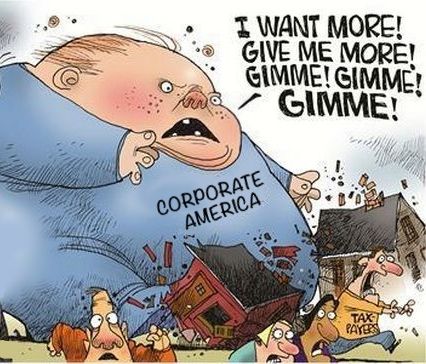
And, sure enough, there was an explosion of prosperity, but only for the top 10% of us. Meanwhile, the economic lifeblood was drained out of the rest of America. Fully $50 trillion has vanished from the wealth of the middle class and magically ended up in the money bins of the morbidly rich.
This “invisible hand” of the economy was so perfect, the neoliberals told us, that we wouldn’t even need to monitor CEOs and the morbidly rich to make sure they weren’t cheating, so we defunded the IRS, under four Republican administrations, so severely that they could no longer audit the returns of the very wealthy.
When the law required the IRS to audit President Trump’s taxes in 2018, for example, that agency was able to come up with one lonely guy to do the job, something that would have taken him two or three decades to just cover one year.
It’s estimated tax fraud by the morbidly rich costs America around $1 trillion a year, according to the IRS Commissioner.
Enough to end all student debt in 18 months. To wipe out child poverty in a year. To fully fund Medicare For All. To end homelessness in America. To cure most cancer and heart disease in less than a decade.
But the morbidly rich aren’t even bothering to hide their greed and corruption any more. Two billionaire families, for example, gave Republican Senator Ron Johnson’s campaign and its backers around $20 million.
In return, Johnson demanded a specific sentence be slipped into Trump’s tax-cut bill that, once it made it through, returned over “$215 million in deductions in 2018 alone” just to those two families, according to ProPublica.
As ProPublica noted, just that one tax “cut [inserted by Senator Johnson] could deliver more than half a billion in tax savings for Hendricks and the Uihleins over its eight-year life.”
This system, fine-tuned by 40 years of annual Republican tweaks, has become one of America’s most obviously corrupt scams: “invest” $20 million in a corrupt politician and make a $500 million return on that investment. And the entire party is proudly in on the act!
It wasn’t always this way.
Progressive Republican President Theodore Roosevelt started the campaign to stop corporations and the wealthy from bribing politicians, resulting in the 1907 Tillman Act, which made it a federal felony — complete with real prison time — for any agent of any corporation to give any money or any thing of value to anycandidate for any federal office.
Five corrupt Republicans on the Supreme Court overturned it, leading to today’s orgy of greed by the elites of our society. Citizens United and its predecessors have turned the American economy into an aristocratic candy store for the morbidly rich, while the rest of us can hardly even see into the windows.
As a result, the rich have become richer than any time in human history — richer, even, than the pharaohs or the ancient kings of Europe — wages have stagnated, deaths of despair exploded, and student and medical debt or their threat now overwhelm more than half of all American households.
Senator Ted Kennedy, frustrated by Republican opposition to raising the minimum wage, famously demanded to know of his colleagues, “When does the greed stop?”
The answer is, “Never.”
Greed, one of the seven deadly sins, is both toxic to society and intrinsic to human nature. It can’t be ended or “stopped.”
But it can be regulated, which is the goal of good tax policy.
With a fully-bribed GOP set to assume control of the House of Representatives, where all tax legislation must originate according to our Constitution, the next two years will be challenging for Americans who would rather see children educated than more billionaires shooting themselves into space on giant penis-shaped rockets.
But that doesn’t mean we should stop talking about how corrosive these twin poisons of bribery and greed are to our nation; we must never stop working to solve this crisis Reagan, the morbidly rich, and a corrupted Supreme Court inflicted on us.
Posted in Uncategorized
Leave a comment

