BPR Quote of the Day: It’s Over, Go Home, Watch TV….

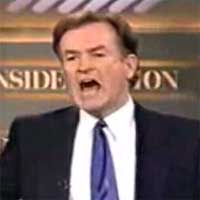
Bill O’Reilly declares the end of the Occupy  Movement:

“They have been overrun by thugs, anarchists and the crazies who intimidate….
So the “Occupy Wall Street” movement is dead, finished as a legitimate political force in this country. And that’s a good thing.”

 Bill O’Reilly

Bill O’Reilly Talking Points   Nov. 17, 2011

Posted in Occupy Wall Street, protests, Quotations | Tagged | Leave a comment

I’m Betting They’d Beat Jerry Sandusky

Posted in government | Tagged | Leave a comment

Chris Hedges: “Our Elites Have Exposed Their Hand”

This Is What Revolution Looks Like

by Chris Hedges

in Truthdig.com/ Nov. 15, 2011

Welcome to the revolution. Our elites have exposed their hand. They have nothing to offer. They can destroy but they cannot build. They can repress but they cannot lead. They can steal but they cannot share. They can talk but they cannot speak. They are as dead and useless to us as the water-soaked books, tents, sleeping bags, suitcases, food boxes and clothes that were tossed by sanitation workers Tuesday morning into garbage trucks in New York City. They have no ideas, no plans and no vision for the future. 

Our decaying corporate regime has strutted in Portland, Oakland and New York with their baton-wielding cops into a fool’s paradise. They think they can clean up “the mess”—always employing the language of personal hygiene and public security—by making us disappear. They think we will all go home and accept their corporate nation, a nation where crime and government policy have become indistinguishable, where nothing in America, including the ordinary citizen, is deemed by those in power worth protecting or preserving, where corporate oligarchs awash in hundreds of millions of dollars are permitted to loot and pillage the last shreds of collective wealth, human capital and natural resources, a nation where the poor do not eat and workers do not work, a nation where the sick die and children go hungry, a nation where the consent of the governed and the voice of the people is a cruel joke.

Get back into your cages, they are telling us. Return to watching the lies, absurdities, trivia and celebrity gossip we feed you in 24-hour cycles on television. Invest your emotional energy in the vast system of popular entertainment. Run up your credit card debt. Pay your loans. Be thankful for the scraps we toss. Chant back to us our phrases about democracy, greatness and freedom. Vote in our rigged political theater. Send your young men and women to fight and die in useless, unwinnable wars that provide corporations with huge profits. Stand by mutely as our bipartisan congressional supercommittee, either through consensus or cynical dysfunction, plunges you into a society without basic social services including unemployment benefits. Pay for the crimes of Wall Street.

The rogues’ gallery of Wall Street crooks, such as Lloyd Blankfein at Goldman Sachs, Howard Milstein at New York Private Bank & Trust, the media tycoon Rupert Murdoch, the Koch brothers and Jamie Dimon at JPMorgan Chase & Co., no doubt think it’s over. They think it is back to the business of harvesting what is left of America to swell their personal and corporate fortunes. But they no longer have any concept of what is happening around them. They are as mystified and clueless about these uprisings as the courtiers at Versailles or in the Forbidden City who never understood until the very end that their world was collapsing. The billionaire mayor of New York, enriched by a deregulated Wall Street, is unable to grasp why people would spend two months sleeping in an open park and marching on banks. He says he understands that the Occupy protests are “cathartic” and “entertaining,” as if demonstrating against the pain of being homeless and unemployed is a form of therapy or diversion, but that it is time to let the adults handle the affairs of state. Democratic and Republican mayors, along with their parties, have sold us out. But for them this is the beginning of the end.

The historian Crane Brinton in his book “Anatomy of a Revolution” laid out the common route to revolution. The preconditions for successful revolution, Brinton argued, are discontent that affects nearly all social classes, widespread feelings of entrapment and despair, unfulfilled expectations, a unified solidarity in opposition to a tiny power elite, a refusal by scholars and thinkers to continue to defend the actions of the ruling class, an inability of government to respond to the basic needs of citizens, a steady loss of will within the power elite itself and defections from the inner circle, a crippling isolation that leaves the power elite without any allies or outside support and, finally, a financial crisis. Our corporate elite, as far as Brinton was concerned, has amply fulfilled these preconditions. But it is Brinton’s next observation that is most worth remembering. Revolutions always begin, he wrote, by making impossible demands that if the government met would mean the end of the old configurations of power. The second stage, the one we have entered now, is the unsuccessful attempt by the power elite to quell the unrest and discontent through physical acts of repression. (continued)

Read the entire article here: This Is What Revolution Looks Like

Boldface added by BPR Editor
Posted in economy, government, Occupy Wall Street, protests | Tagged , , | Leave a comment

BPR Quote of the Day: Money Has Free Speech, Not People

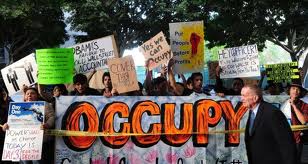
A funny thing happened to the First Amendment on its way to the public forum. According to the Supreme Court, money is now speech and corporations are now people. But when real people without money assemble to express their dissatisfaction with the political consequences of this, they’re treated as public nuisances and evicted.

Robert Reich

from  Occupiers Occupied: The Hijacking of the First Amendment, Nov. 15, 2011

image: http://msb1959.wordpress.com/

Editors Note: As usual, Reich makes some great points in his article. If protesters simply protest the usual way, i.e. picket signs and marching, they can more easily be ignored and marginalized.  The Occupy movement has proven the media will pay attention only when protesters occupy and inconvenience the powerful, and even more when police attempt to break up the protest. So don’t expect the occupy tactic to disappear anytime soon. The harder the crackdown, the larger the attention, and the farther the spreading of the message. 

Posted in media, Occupy Wall Street, protests, Quotations | Tagged , , , , | Leave a comment

1% vs 99%? Reality Check and Some Soul Searching

by Gary Brumback

Special Guest Commentary/ Exclusive to The Big Picture Report

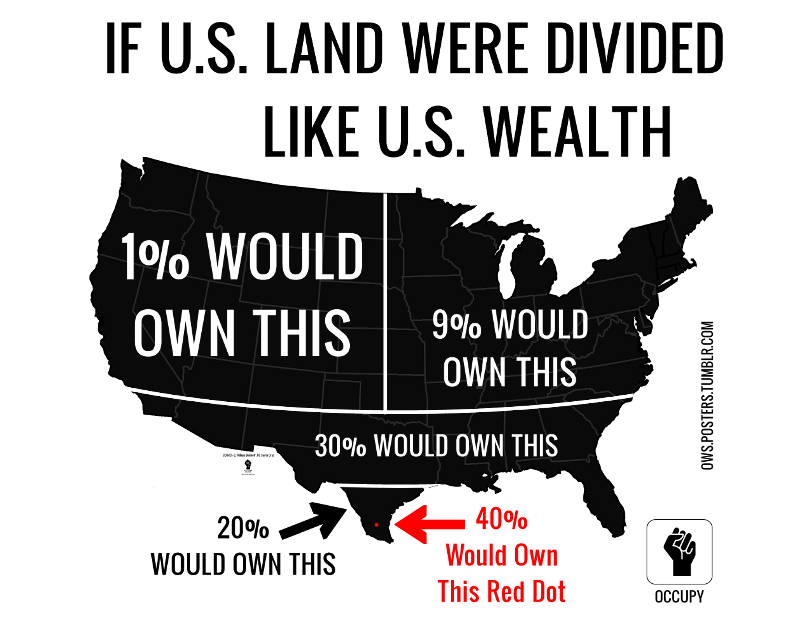
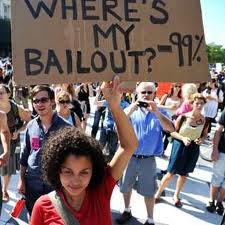
I’m not a demographer, a statistician, or a sociologist, but I don’t need to be to know that the slogan “1% vs 99” is not a factual statement. You undoubtedly know that, too. It’s a rallying call. It also symbolizes an actual fact, namely, that among industrialized nations America has the worst income gap and the worst ranking on all other important socioeconomic indices.

But I’ll play amateur demographer for a moment and estimate that 1% amounts to about two and one-third million adults if my figures are correct. That leaves roughly 228 and one-half million adults for the 99% of the rest of us adults, obviously an overwhelming majority. It’s just as obviously underwhelming in wealth and, more importantly, power. The “1% vs 99%” can’t begin to convey the real imbalance in power.

So a slogan closer to reality would be “corpocracy vs the rest of us,” and the 99 percenters unorganized and unguided as we are will never be able short of a bloody revolution (that should absolutely be avoided) to unseat the 1 percenters.

Another slogan closer to reality would be “have’s vs have nots.” You probably know that, too. If we define the “have nots” as Americans living below the poverty line, then they are the 15 percenters. That figure would rise somewhat if we used living wage as a bottom line. In any case, whether 15 percent or some figure a bit larger, the “haves” greatly outnumber the “have-nots.”

The next slogan I’ll mention closer to reality is “exploiters vs exploited.” Nearly half a century ago I did a doctoral dissertation on the matter of exploitation. But a PhD isn’t required obviously to know that exploitation means taking advantage of people and situations in anticipation of personal gain and at the expense of the people and situations exploited.

Exploitation, needless to say, is very unethical behavior. It breeches most if not all the universal ethical values such as those of honesty, keeping promises, caring for and respecting others. But also needless to say, the corpocracy’s exploitation plunges far below the bottom line of ethical behavior by causing through unregulated actions and products and endless and unnecessary wars (necessary only for expanding the self interests of the corpocracy) an inferno of human misery and death everywhere.

If we take into account that the corpocracy’s exploitation spans the globe, then the imbalance becomes almost unfathomable, and we have another slogan closer to reality, “billions vs a few millions.” When thousands of protestors hit the streets anywhere on the globe they are essentially protesting a global corpocracy led by American multinational corporations and their compliant government partner.

I would guess that all of the “have-nots” are among the most exploited. What about the “haves” (of which I’m definitely a member)? Are we sometimes exploiters as well as targets of exploitation? We can take for granted that genuine members of the corpocracy (e.g, powerful corporate interests and their government pawns) are exploiters day in and day out, but what about the rest of us “haves” outside of the corpocracy? What about you and me? These questions lead to some soul searching do they not? I give you three personal examples after having searched my own soul.

One, I detested the Vietnam War, but other than to close friends I did not speak out about say, the exploitation of draftees, because I was a government employee. Two, I waited until I retired from government service to write the Devil’s Marriage, a book about the corpocracy’s massive exploitation of people and situations. Three, because they matched the ones replaced, I recently bought some major appliances from a corporation that I knew well beforehand is a recidivist scofflaw and a master exploiter (e.g., in outsourcing jobs and not paying income taxes).

In these three examples I behaved as an ally of the corpocracy, the citadel of exploiters and their exploitation. To paraphrase Pogo, I have met the enemy and it’s sometimes me, hardly though on the scale of an ally like the US Chamber of Commerce. I am certain that most of us “halves” outside the corpocracy are far more often being exploited by it than in exploiting it. It takes some real cunning for the powerless to exploit the powerful

So, in closing, where does the foregoing leave us? One, the corpocracy is much mightier and invincible than throwing around the epithet of the 1% could ever suggest. Two, to end the corpocracy the “have-nots” must be aided by a goodly number of “haves” outside the corpocracy. And finally, three, the corpocracy pervades every sphere of life, and so we may willingly or not, let it compromise us in small to larger ways occasionally but that need not incapacitate us from launching what I call “two-fisted democracy power” (see www.uschamberofdemocracy.com) as a peaceful and legal way to achieve major political, legislative, judicial and economic reforms and in so doing to rid America of her corpocracy and fulfill what the framers of the Constitution promised in its preamble, to promote the general welfare.

Gary Brumback, PhD is a retired psychologist and Fellow of both the American Psychological Association and the Association for Psychological Science. He is an author of several books, including The Devil’s Marriage: Break Up the Corpocracy or Leave Democracy in the Lurch.
Posted in Occupy Wall Street, protests | Tagged | Leave a comment

A Very Large 1%

Posted in economy, Occupy Wall Street, protests | Tagged | Leave a comment

Ron Paul on WikiLeaks: “Killing the Messenger”

This speech by Ron Paul is almost a year old, but well worth watching. Why can’t other Republicans think more like Paul? In fact, when it comes to foreign policy, why can’t Democrats think and speak out  like Rep. Paul?  –Arlen

Posted in foreign policy, law, media | Tagged , , , , , , , , , | 3 Comments

Start of a New Era

Jeffrey Sachs makes the case that we could be at the beginning of a new progressive era. The first came after the Gilded Age of the late 19th Century,  the second followed the gilded age of the 1920s. Perhaps we are ending the third gilded age, and beginning down the long road of correcting it…..Arlen

The New Progressive Movement

By JEFFREY D. SACHS

New York Times, Nov. 12, 2011

Occupy Wall Street and its allied movements around the country are more than a walk in the park. They are most likely the start of a new era in America. Historians have noted that American politics moves in long swings. We are at the end of the 30-year Reagan era, a period that has culminated in soaring income for the top 1 percent and crushing unemployment or income stagnation for much of the rest. The overarching challenge of the coming years is to restore prosperity and power for the 99 percent.

Thirty years ago, a newly elected Ronald Reagan made a fateful judgment: “Government is not the solution to our problem. Government is the problem.” Taxes for the rich were slashed, as were outlays on public services and investments as a share of national income. Only the military and a few big transfer programs like Social Security, Medicare, Medicaid and veterans’ benefits were exempted from the squeeze.
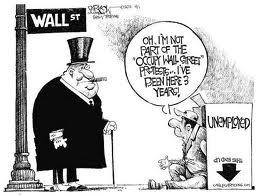
Reagan’s was a fateful misdiagnosis. He completely overlooked the real issue — the rise of global competition in the information age — and fought a bogeyman, the government. Decades on, America pays the price of that misdiagnosis, with a nation singularly unprepared to face the global economic, energy and environmental challenges of our time.

Washington still channels Reaganomics. The federal budget for nonsecurity discretionary outlays — categories like highways and rail, education, job training, research and development, the judiciary, NASA, environmental protection, energy, the I.R.S. and more — was cut from more than 5 percent of gross domestic product at the end of the 1970s to around half of that today. With the budget caps enacted in the August agreement, domestic discretionary spending would decline to less than 2 percent of G.D.P. by the end of the decade, according to the White House. Government would die by fiscal asphyxiation.

Both parties have joined in crippling the government in response to the demands of their wealthy campaign contributors, who above all else insist on keeping low tax rates on capital gains, top incomes, estates and corporate profits. Corporate taxes as a share of national income are at the lowest levels in recent history. Rich households take home the greatest share of income since the Great Depression. Twice before in American history, powerful corporate interests dominated Washington and brought America to a state of unacceptable inequality, instability and corruption. Both times a social and political movement arose to restore democracy and shared prosperity.

The first age of inequality was the Gilded Age at the end of the 19th century, an era quite like today, when both political parties served the interests of the corporate robber barons. The progressive movement arose after the financial crisis of 1893. In the following decades Theodore Roosevelt and Woodrow Wilson came to power, and the movement pushed through a remarkable era of reform: trust busting, federal income taxation, fair labor standards, the direct election of senators and women’s suffrage.

The second gilded age was the Roaring Twenties. The pro-business administrations of Harding, Coolidge and Hoover once again opened up the floodgates of corruption and financial excess, this time culminating in the Great Depression. And once again the pendulum swung. F.D.R.’s New Deal marked the start of several decades of reduced income inequality, strong trade unions, steep top tax rates and strict financial regulation. After 1981, Reagan began to dismantle each of these core features of the New Deal.

Following our recent financial calamity, a third progressive era is likely to be in the making. This one should aim for three things. The first is a revival of crucial public services, especially education, training, public investment and environmental protection. The second is the end of a climate of impunity that encouraged nearly every Wall Street firm to commit financial fraud. The third is to re-establish the supremacy of people votes over dollar votes in Washington.

Read the rest of the article here The New Progressive Movement

Jeffrey D. Sachs is the director of the Earth Institute at Columbia University and the author, most recently, of “The Price of Civilization: Reawakening American Virtue and Prosperity.”

 Boldface added by BPR Editor.
Posted in economy, Occupy Wall Street, politics, protest, protests | Tagged , , , , , | 2 Comments

How the Disastrous 2010 Election Helped Ignite OWS

Strange as it might seem, the 2010 midterm election helped trigger the Occupy Wall Street movement and weaken the clout of the Tea Party.

Remember what a funk those of us on the left side of the political spectrum were in at this time last year?  The Republican Party had just kicked butt in the 2010 midterm elections and the Tea Party was dominating the political conversation.

One year later, the Tea Party is losing steam, while the Occupy Wall Street movement has spread all over the country. Rather than solely focusing on the conservative issues of cutting taxes and slashing government programs for the middle and lower classes, Americans are paying attention to and discussing our vanishing middle class, the huge disparities of wealth, and the ways our system is rigged in favor of the top one percent.

How does the 2010 election factor into these welcome trends? Sometimes things have to get worse before they get better, which was exactly what happened after the GOP took control of the House last year.

First of all, when one party–no matter which one–takes control of every branch of government, it almost never works out well for that party. Whenever anything goes wrong, there is only one party to blame. After 2008, the scapegoat, by default, was the President and the Democratic Party. The right-wing media machine went on full attack mode, and as the economy continued to sour (in large part because of Republican obstruction), Democrats were blamed and then soundly defeated in the 2010 election.

But the good news for those of us on the left was that since Republicans controlled the House of Representatives, they had to do some actual governing, as well as take some share of responsibility for the outcome. Since the GOP has done all it can to block President Obama’s agenda, tepid though it has been, and haven’t come up with a viable plan of their own, they cannot believably claim innocence for the country’s economic problems.

It’s not hard for Americans to see that the Republican Party has no serious plan to fix the economy, just their tired, old messages of lower taxes, deregulation, and smaller government, and the first two at least were contributing factors to the growing national debt problem and the 2008 financial meltdown.

Suppose the Democrats had hung on and kept control of the House in 2010? President Obama and Congress could conceivably gotten more legislation passed and made strides to reverse the economic downturn and made things a little better for the average American. That could have released some pressure from the growing frustration and economic despair that would ultimately spark the Occupy Wall Street uprising. The structural unfairness of our political and economic system would still be in place, just slightly less onerous. The prospects of Tea Party and Republican gains in 2012 would look better than ever.

But that scenario didn’t happen. Democrats were soundly trounced in 2010 and the economy continued to flounder. Conservative policies of austerity, resisted only weakly by the White House and Democrats, caused hardship for many, most notably young people with few job prospects, many of them unemployed college students and  graduates with back-breaking student loan debts.

Without realistic hope for change, with more people losing jobs and homes, the economic pressures mounted. The example of Arab Spring uprisings encouraged a few young American activists to try something similar at ground zero of the most egregious wrongdoing, Wall Street. That spark started an occupy conflagration that continues to spread across this country and the globe.

The black cloud of major Republican gains in the 2010 election turned out to have an unexpected silver lining. The One Percent and their Republican and Tea Party allies overreached and a large segment of the American people hit their breaking point. More Americans are starting to open their eyes to the serious institutional dysfunction that characterizes  our political and economic system, and are starting to take action against it. We are all awaiting the ultimate outcome.

PUBLISHED IN OPEDNEWS.COM   11/17/2011
Posted in Democratic Party, economy, elections, media, Occupy Wall Street, politics, protests, Republican Party | Tagged , , , , , , | Leave a comment

BPR Quote of the Day: Starvation As a Lesson

Michele Bachmann is so mean she won’t even let them eat cake……

“Our nation needs to stop doing for people what they can and should do for themselves. Self reliance means, if anyone will not work, neither should he eat.”

                      Presidential Candidate Michele Bachmann (R-MN)


Posted in Quotations | Tagged | 3 Comments