Billionaires Buying the Election

BERNIE SANDERS VERSUS THE BILLIONAIRES

By John Nichols/ Common Dreams/ July 24, 2012


If two dozen billionaire families were combining their wealth to effectively buy the 2012 election, it would be time for patriots to mount a bold response on behalf of democracy itself.

Well, that time has come.

US Senator Bernie Sanders, I-Vermont, revealed for the first time in Senate testimony Tuesday that at least twenty-three billionaire families have contributed a minimum of $250,000 each so far in this year’s campaigns.

“My guess is that number is really much greater because many of these contributions are made in secret. In other words, not content to own our economy, the 1 percent want to own our government as well,” Sanders told the Senate Judiciary Committee’s Subcommittee on the Constitution, Civil Rights and Human Rights.

The subcommittee’s “Taking Back Our Democracy: Responding to Citizens United and the Rise of Super PACs” hearing provided an important point of reflection on the crisis created in the 2012 election cycle by what the progressive reformers of a century ago described broadly—and accurately—as “the money power.” In addition to Sanders, testimony was provided by other backers of amending the Constitution, including Congresswoman Donna Edwards, D-Massachusetts, and Harvard Law School professor Lawrence Lessig.

Sanders, who has emerged as an outspoken challenger of “the money power” not just in politics but in public life more generally, was characteristically blunt about the role that campaign spending is playing not just in politics but in the expansion of economic inequality in America—a country where the wealthiest 400 individuals own more wealth than the bottom 150 million Americans.

“What the Supreme Court did in Citizens United is to say to these same billionaires and the corporations they control: ‘You own and control the economy, you own Wall Street, you own the coal companies, you own the oil companies. Now, for a very small percentage of your wealth, we’re going to give you the opportunity to own the United States government.’

“That is the essence of what Citizens United is all about—and that’s why it must be overturned,” said Sanders, who has proposed to amend the Constitution to restore equal free-speech rights to all citizens.
The senator’s Saving American Democracy Amendment (along with a House measure sponsored by Congressman Ted Deutch, D-Florida), would affirm “that for-profit corporations are not people, that they are not entitled to any rights under the Constitution, that they are subject to regulation by state legislatures consistent with free press protections, and that they are prohibited from making contributions or expenditures in political campaigns.”

In addition, the amendment would restore tha authority of the elected representatives of the American people—at the national and state levels—to regulate and limit all political expenditures and contributions.

“I’m proud to say the American people are making their voices heard on this issue—they are telling us loud and clear it is time to reverse the trend,” said Sanders, who noted that Vermont and five other states have adopted resolutions asking Congress for a constitutional amendment to overturn the Citizens United decision, as have more than 200 local governments nationwide.

To learn more about grassroots efforts to generate support for amending the Constitution to restore equal free speech for Americans, visit Democracy Is For People, which has been active in organizing in Vermont (where 60 towns backed amendment resolutions) and other states. Or check out the work of Move to Amend and Free Speech for People.

Echoing Sanders’s themes, activists seeking to amend the Constitution have adopted a “United for the People” common statement of purpose tha sums things up well.

“The Supreme Court’s ruling in Citizens United v. FEC has focused America’s attention on the dangerous influence of corporate power in our democracy and the urgency of taking all necessary measures to undo that influence, including amending the Constitution,“ the statement declares. “Generations of Americans have amended the Constitution over the years to ensure that ‘We the People’ means all the people, not just the privileged few. The Citizens United case, which opened the floodgates to unlimited corporate spending to influence elections at all levels of government, has brought home the importance of amending the Constitution to ensure that ‘We the People’ does not mean we the corporations. We believe that America works best when our government is of, by and for the people. Although we have differences in scope and tactics, all of us are united in the understanding that the Court’s decision in Citizens United and related cases must be remedied by amending the Constitution in order to restore the democratic promise of America.”

* * *

According to the report, America for Sale: A Report on Billionaires Buying the 2012 Election, here are the 26 billionaires who are trying to buy your government:

1). Sheldon Adelson, owner of the Las Vegas Sands Casino, is worth nearly $25 billion, making him the 14th wealthiest person in the world and the 7th richest person in America. While median family income plummeted by nearly 40% from 2007-2010, Mr. Adelson has experienced a nearly eightfold increase in his wealth over the past three years (from $3.4 billion to $24.9 billion). Forbes recently reported that Adelson is willing to spend a “limitless” amount of money or more than $100 million to help defeat President Obama in November.

2. The Kochs (David, Charles, and William) are worth a combined $103 billion, according to Forbes. They have pledged to spend about $400 million during the 2012 election season. The Kochs own more wealth than the bottom 41.7 percent of American households or more than 49 million Americans.

3. Jim Walton is worth $23.7 billion. He has donated $300,000 to super PACs in 2012.

4. Harold Simmons is worth $9 billion. He has donated $15.2 million to super PACs this year.

5. Peter Thiel is worth $1.5 billion. He has donated $6.7 million to Super PACs this year.

6. Jerrold Perenchio is worth $2.3 billion. He has donated $2.6 million to super PACs this year.

7. Kenneth Griffin is worth $3 billion and he has given $2.08 million to super PACs in 2012.

8. James Simons is worth $10.7 billion and he has given $1.5 million to super Pacs this year.

9. Julian Robertson is worth $2.5 billion and he has given $1.25 million to super PACs this year.

10. Robert Rowling is worth $4.8 billion and he has given $1.1 million to super PACs.

11. John Paulson, the hedge fund manager who made his fortune betting that the sub-prime mortgage market would collapse, is worth $12.5 billion. He has donated $1 million to super PACs.

12. Richard and J.W. Marriott are worth a combined $3.1 billion and they have donated $2 million to super PACs this year.

13. James Davis is worth $1.9 billion and he has given $1 million to super PACs this year.

14. Harold Hamm is worth $11 billion and he has given $985,000 to super PACs this year.

15. Kenny Trout is worth more than $1.2 billion and he has given $900,000 to super PACs this year.

16. Louis Bacon is worth $1.4 billion and he has given $500,000 to super PACs this year.

17. Bruce Kovner is worth $4.5 billion and he has given $500,000 to super PACs this year.

18. Warren Stephens is worth $2.7 billion and he has given $500,000 to super PACs this year.

19. David Tepper is worth $5.1 billion and he has given $375,000 to super PACs this year.

20. Samuel Zell is worth $4.9 billion and he has given $270,000 to super PACs this year.

21. Leslie Wexner is worth $4.3 billion and he has given $250,000 to super PACs this year.

22. Charles Schwab is worth $3.5 billion and he has given $250,000 to super PACs this year.

23. Kelcy Warren is worth $2.3 billion and he has given $250,000 to super PACs this year.

John Nichols is Washington correspondent for The Nation and associate editor of The Capital Times in Madison, Wisconsin.

Posted in economy, elections, finance, inequality, politics, taxes | Tagged , , , , , , , | Leave a comment

Will Rogers Talks to the Bankers

Posted in Economics, humor, Wall Street | Tagged , | Leave a comment

INEQUALITY–EVEN WORSE THAN YOU THINK

Wealth Doesn’t Trickle Down– It Just                          Floods Offshore, New Research Reveals

By Heather Stewart/ The Guardian/ July 21, 2012

  • Capital flight

The world’s super-rich have taken advantage of lax tax rules to siphon off at least $21 trillion, and possibly as much as $32tn, from their home countries and hide it abroad – a sum larger than the entire American economy.

James Henry, a former chief economist at consultancy McKinsey and an expert on tax havens, has conducted groundbreaking new research for the Tax Justice Network campaign group – sifting through data from the Bank for International Settlements (BIS), the International Monetary Fund (IMF) and private sector analysts to construct an alarming picture that shows capital flooding out of countries across the world and disappearing into the cracks in the financial system.

Comedian Jimmy Carr became the public face of tax-dodging in the UK earlier this year when it emerged that he had made use of a Cayman Islands-based trust to slash his income tax bill.

But the kind of scheme Carr took part in is the tip of the iceberg, according to Henry’s report, entitledThe Price of Offshore Revisited. Despite the professed determination of the G20 group of leading economies to tackle tax secrecy, investors in scores of countries – including the US and the UK – are still able to hide some or all of their assets from the taxman.

“This offshore economy is large enough to have a major impact on estimates of inequality of wealth and income; on estimates of national income and debt ratios; and – most importantly – to have very significant negative impacts on the domestic tax bases of ‘source’ countries,” Henry says.

Using the BIS’s measure of “offshore deposits” – cash held outside the depositor’s home country – and scaling it up according to the proportion of their portfolio large investors usually hold in cash, he estimates that between $21tn (£13tn) and $32tn (£20tn) in financial assets has been hidden from the world’s tax authorities.

“These estimates reveal a staggering failure,” says John Christensen of the Tax Justice Network. “Inequality is much, much worse than official statistics show, but politicians are still relying on trickle-down to transfer wealth to poorer people.

“This new data shows the exact opposite has happened: for three decades extraordinary wealth has been cascading into the offshore accounts of a tiny number of super-rich.”

In total, 10 million individuals around the world hold assets offshore, according to Henry’s analysis; but almost half of the minimum estimate of $21tn – $9.8tn – is owned by just 92,000 people. And that does not include the non-financial assets – art, yachts, mansions in Kensington – that many of the world’s movers and shakers like to use as homes for their immense riches.

“If we could figure out how to tax all this offshore wealth without killing the proverbial golden goose, or at least entice its owners to reinvest it back home, this sector of the global underground is easily large enough to make a significant contribution to tax justice, investment and paying the costs of global problems like climate change,” Henry says.

He corroborates his findings by using national accounts to assemble estimates of the cumulative capital flight from more than 130 low- to middle-income countries over almost 40 years, and the returns their wealthy owners are likely to have made from them.

In many cases, , the total worth of these assets far exceeds the value of the overseas debts of the countries they came from.

The struggles of the authorities in Egypt to recover the vast sums hidden abroad by Hosni Mubarak, his family and other cronies during his many years in power have provided a striking recent example of the fact that kleptocratic rulers can use their time to amass immense fortunes while many of their citizens are trapped in poverty.

The world’s poorest countries, particularly in sub-Saharan Africa, have fought long and hard in recent years to receive debt forgiveness from the international community; but this research suggests that in many cases, if they had been able to draw their richest citizens into the tax net, they could have avoided being dragged into indebtedness in the first place. Oil-rich Nigeria has seen more than $300bn spirited away since 1970, for example, while Ivory Coast has lost $141bn.

Assuming that super-rich investors earn a relatively modest 3% a year on their $21tn, taxing that vast wall of money at 30% would generate a very useful $189bn a year – more than rich economies spend on aid to the rest of the world.

The sheer scale of the hidden assets held by the super-rich also suggests that standard measures of inequality, which tend to rely on surveys of household income or wealth in individual countries, radically underestimate the true gap between rich and poor.  (Continued Here)

Boldface added by BPR Editor
Posted in Economics, economy, government, inequality, taxes | Tagged , , , , , , , | 66 Comments

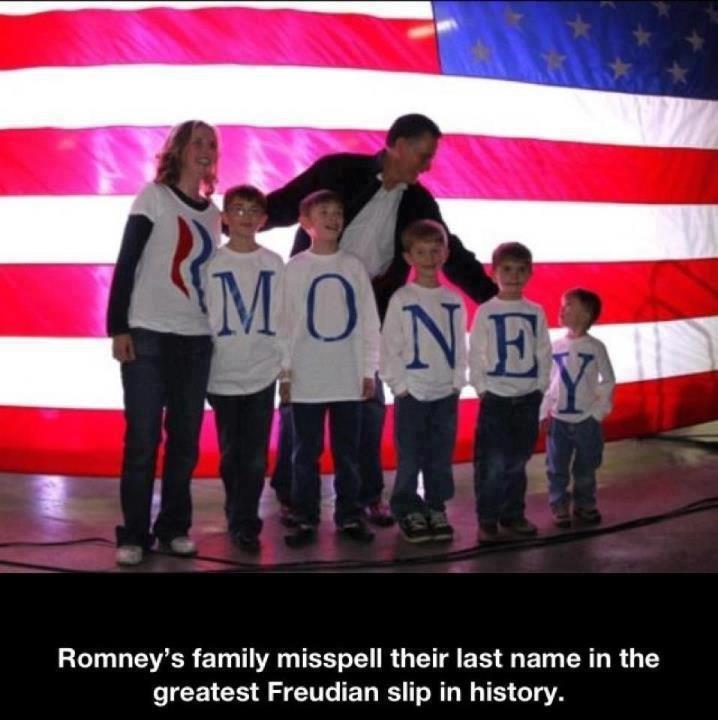
What Does Mitt Love More Than His Name?

Posted in elections, humor, inequality, Mitt Romney, politics | 1 Comment

WHAT CLIMATE CHANGE?

Media Matters for America

STUDY: Media Avoid Climate Context In Wildfire Coverage

By Jill Fitzsimmons, Jocelyn Fong, Melody Johnson and Shauna Theel/ Media Matters For America/ July 3, 2012


 While numerous factors determine the frequency, severity and cost of wildfires, scientific research indicates that human-induced climate change increases fire risks in parts of the Western U.S. by promoting warmer and drier conditions. Seven of nine fire experts contacted by Media Matters agreed journalists should explain the relationship between climate change and wildfires. But an analysis of recent coverage suggests mainstream media outlets are not up to the task — only 3 percent of news reports on wildfires in the West mentioned climate change.

News Outlets Avoid Topic Of Climate Change In Wildfire Stories

Only 3 Percent Of Wildfire Coverage Mentioned Long-Term Climate Change Or Global Warming. The major television and print outlets largely ignored climate change in their coverage of wildfires in Colorado, New Mexico and other Western states. All together, only 3 percent of the reports mentioned climate change, including 1.6 percent of television segments and 6 percent of text articles.

Media Matters

METHODOLOGY: We searched Nexis and Factiva databases for articles and segments on (wildfire or wild fire or forest fire) between April 1, 2012, and June 30, 2012. News outlets included in this study are ABC, CBS, NBC, CNN, The New York Times, The Washington Post, The Associated Press, The Los Angeles Times, CNN.com, USA Today and The Wall Street Journal. MSNBC and Fox News were not included in this analysis because transcripts of their daytime coverage are not available in the Nexis database.

Media Matters

Evidence Suggests Climate Change Worsens Fire Risk In Parts Of Western U.S.

Climate Central: “Wildfires Require Several Factors To Come Together.” A Climate Central article about the 2011 fire season noted that “major wildfires require several factors to come together,” and that wildfires are strongly influenced by regional climate conditions, which in turn are influenced by global warming driven by greenhouse gas emissions:

As with most extreme weather and climate events, and their related impacts, major wildfires require several factors to come together in order [to] occur — typically some combination of dry and windy weather, abundant and dry vegetation, and a spark, which can range from a carelessly tossed cigarette to a lightning strike.

Wildfires are a naturally occurring phenomenon closely tied to climate conditions, and as the world warms in response to rising amounts of greenhouse gases in the air, many studies show that wildfire frequency and severity will likely shift as well.

[…]

Historical variations in climate can explain much of the large year-to-year and decade-to-decade variations in Western US fire activity. Thus, climate change is already increasing wildfire activity in the Western US. This may seem surprising, given the number of other factors (including forest management practices) that are known to affect fire activity. [Climate Central, 6/21/11]

Major Climate Report: “Wildfires in the United States Are Already Increasing Due To Warming.” In a comprehensive report commissioned by the Bush administration and released in June 2009, the U.S. Global Change Research Program said earlier snowmelt and drying of soils and plants have worsened wildfires in Western states:

Wildfires in the United States are already increasing due to warming. In the West, there has been a nearly fourfold increase in large wildfires in recent decades, with greater fire frequency, longer fire durations, and longer wildfire seasons. This increase is strongly associated with increased spring and summer temperatures and earlier spring snowmelt, which have caused drying of soils and vegetation. [U.S. Global Change Research Program,6/16/09]

The report included the following chart showing that the number of acres burned per fire has increased significantly since the 1980s:

Source: U.S. Global Change Research Program

[U.S. Global Change Research Program, 6/16/09]

A 2010 National Research Council report summarizing the state of climate science also stated that “the length of the fire season has expanded by 2.5 months”:

[L]arge and long-duration forest fires have increased fourfold over the past 30 years in the American West; the length of the fire season has expanded by 2.5 months; and the size of wildfires has increased several-fold. Recent research indicates that earlier snowmelt, temperature changes, and drought associated with climate change are important contributors to this increase in forest fire. [National Research Council, 5/19/10]

Recent Study Found Western U.S. Particularly Vulnerable To Global Warming’s Impact On Fires. From the New York Times’ DotEarth blog:

Researchers using a decade of satellite data on fires and a suite of climate models have produced the first thorough global estimate of changes in the frequency of fires in the world’s forests under greenhouse-driven global warming. There’s ample uncertainty but the study, published today in the peer-reviewed online journal Ecosphere, points to a variety of outcomes, with fires likely becoming more frequent in zones you might expect — like temperate North America and particularly the western United States — but rarer in the tropics. [New York Times, 6/12/12]

National Research Council: Warming Expected To Expand Area Burned By Wildfires In Western North America. In a 2010 report, the National Research Council said that “for warming levels of 1°C to 2°C, the area burned by wildfire in parts of western North America is expected to increase by 2 to 4 times for each degree (°C) of global warming.” Particularly vulnerable areas “include the Pacific Northwest and forested regions of the Rockies and the Sierra,” according to the report, which also included the following map showing projected increases in “area burned for a 1°C increase in global average temperature” relative to the median annual area burned from 1950-2003:

Source: National Research Council

[National Research Council, 6/16/10]

Warming Has Boosted Tree-Killing Beetles, Adding Fuel For Fires. A National Academies website notes that the warming trend has boosted the population of bark beetles that kill trees in western forests:

This increase in wildfire is a legacy of both a changing climate and decades of total fire suppression that has resulted in a buildup of dead fuels. One important factor is drought. Wintertime precipitation is increasingly falling as rain instead of snow, and the snow that does accumulate is melting earlier in the spring–decreasing the amount of water available in the late summer months and contributing to longer and more intense droughts. Compounding the effects of these droughts is the increased susceptibility of drought-stressed trees to attacking insects. In the last decade, a bark beetle epidemic has exploded across 18,000 square miles of western mountain forests. Milder winter temperatures kill fewer beetles in their budworm phase than the colder winters of the past, helping to increase the bark beetle population, with devastating effects. As the beetles kill vast areas of forest, they leave standing dead wood, fueling even larger wildfires. [National Academies, accessed 6/28/12]

{Continued Here}

Posted in environment, media, science | Tagged , , , , , | Leave a comment

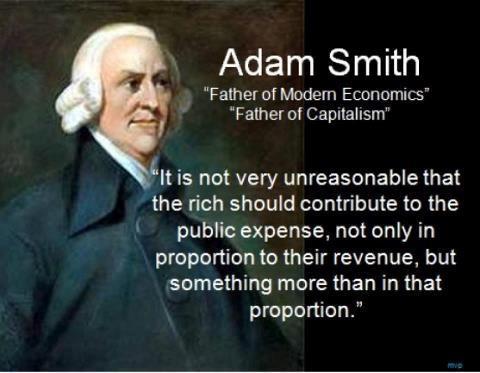
Their Fair Share

BPR Quote of the Day

Posted in Economics, Quotations, taxes | Tagged , | 1 Comment

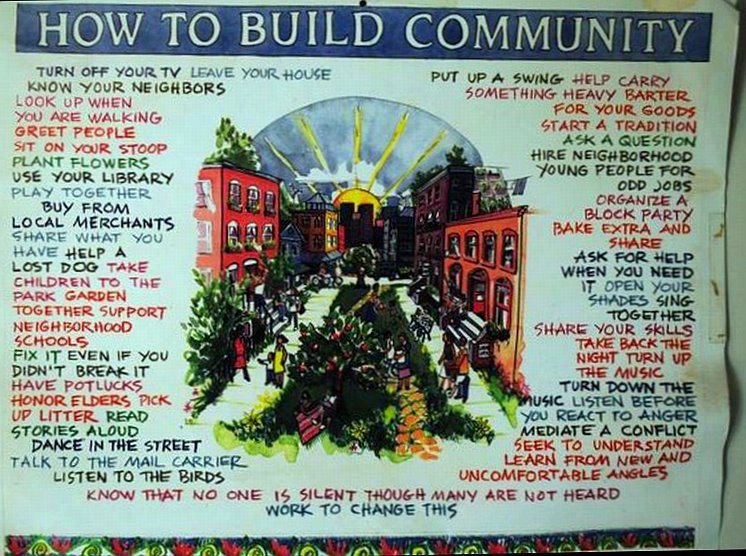
It Takes a Village

Posted in environment, Food, philosophy | Tagged , | Leave a comment

Global Corporations Aren’t American People, My Friend

BIG BUSINESS HAS BECOME DISCONNECTED FROM THE WELL-BEING OF MOST AMERICANS

By Robert Reich/robertreich.org/ July 18, 2012

President Obama is slamming Mitt Romney for heading companies that were “pioneers in outsourcing U.S. jobs,” while Romney is accusing Obama of being “the real outsourcer-in-chief.”

These are the dog days of summer and the silly season of presidential campaigns. But can we get real, please?

The American economy has moved way beyond outsourcing abroad or even “in-sourcing.” Most big companies headquartered in America don’t send jobs overseas and don’t bring jobs here from abroad.

That’s because most are no longer really “American” companies. They’ve become global networks that design, make, buy, and sell things wherever around the world it’s most profitable for them to do so.

As an Apple executive told the New York Times, “we don’t have an obligation to solve America’s problems. Our only obligation is making the best product possible.” He might have added “and showing profits big enough to continually increase our share price.”

Forget the debate over outsourcing. The real question is how to make Americans so competitive that all global companies — whether or not headquartered in the United States — will create good jobs in America.

Apple employs 43,000 people in the United States but contracts with over 700,000 workers overseas. It assembles iPhones in China both because wages are low there and because Apple’s Chinese contractors can quickly mobilize workers from company dorms at almost any hour of the day or night.

But low wages aren’t the major force driving Apple or any other American-based corporate network abroad. The components Apple’s Chinese contractors assemble come from many places around the world with wages as high if not higher than in the United States.

More than a third of what you pay for an iPhone ends up in Japan, because that’s where some of its most advanced components are made. Seventeen percent goes to Germany, whose precision manufacturers pay wages higher than those paid to American manufacturing workers, on average, because German workers are more highly skilled. Thirteen percent comes from South Korea, whose median wage isn’t far from our own.

Workers in the United States get only about 6 percent of what you pay for an iPhone. It goes to American designers, lawyers, and financiers, as well as Apple’s top executives.

American-based companies are also doing more of their research and development abroad. The share of R&D spending going to the foreign subsidiaries of American-based companies rose from 9 percent in 1989 to almost 16 percent in 2009, according to theNational Science Foundation.

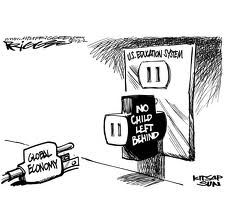
What’s going on? Put simply, America isn’t educating enough of our people well enough to get American-based companies to do more of their high-value added work here.

Our K-12 school system isn’t nearly up to what it should be. American students continue to do poorly in math and science relative to students in other advanced countries. Japan, Germany, South Korea, Canada, Australia, Ireland, Sweden, and France all top us.

American universities continue to rank high but many are being starved of government funds and are having trouble keeping up. More and more young Americans and their families can’t afford a college education. China, by contrast, is investing like mad in world-class universities and research centers.

Transportation and communication systems abroad are also becoming better and more reliable. In case you hadn’t noticed, American roads are congested, our bridges are in disrepair, and our ports are becoming outmoded.

So forget the debate over outsourcing. The way we get good jobs back is with a national strategy to make Americans more competitive — retooling our schools, getting more of our young people through college or giving them a first-class technical education, remaking our infrastructure, and thereby guaranteeing a large share of Americans add significant value to the global economy.

But big American-based companies aren’t pushing this agenda, despite their huge clout in Washington. They don’t care about making Americans more competitive. They say they have no obligation to solve America’s problems.

They want lower corporate taxes, lower taxes for their executives, fewer regulations, and less public spending. And to achieve these goals they maintain legions of lobbyists and are pouring boatloads of money into political campaigns. The Supreme Court even says they’re “people” under the First Amendment, and can contribute as much as they want to political campaigns – even in secret.

The core problem isn’t outsourcing. It’s that the prosperity of America’s big businesses – which are really global networks that happen to be headquartered here – has become disconnected from the well-being of most Americans.

Mitt Romney’s Bain Capital is no different from any other global corporation — which is exactly why Romney’s so-called “business experience” is irrelevant to the real problems facing most Americans.

Without a government that’s focused on more and better jobs, we’re left with global corporations that don’t give a damn.

Boldface added by BPR Editor
Posted in Economics, economy, Education, employment, government | Tagged , , , , | 2 Comments

Freedom To Loot

Posted in Bumper Sticker, crime, government, law, law enforcement, Republican Party, Uncategorized | Tagged | Leave a comment

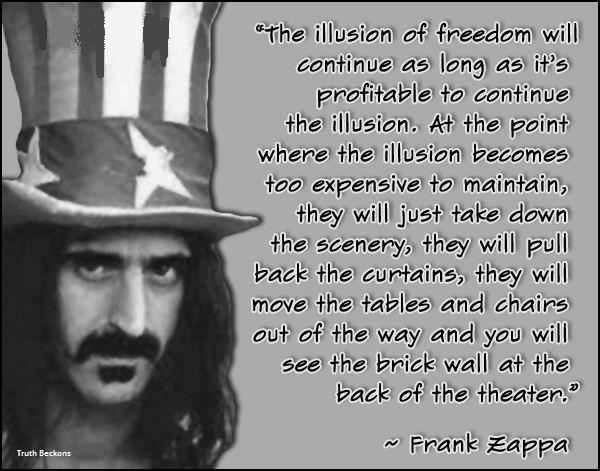
Do You See the Brick Wall Yet?

Posted in civil liberties, law, Quotations | Tagged , , | 1 Comment