WHAT CLIMATE CHANGE?

Media Matters for America

STUDY: Media Avoid Climate Context In Wildfire Coverage

By Jill Fitzsimmons, Jocelyn Fong, Melody Johnson and Shauna Theel/ Media Matters For America/ July 3, 2012


 While numerous factors determine the frequency, severity and cost of wildfires, scientific research indicates that human-induced climate change increases fire risks in parts of the Western U.S. by promoting warmer and drier conditions. Seven of nine fire experts contacted by Media Matters agreed journalists should explain the relationship between climate change and wildfires. But an analysis of recent coverage suggests mainstream media outlets are not up to the task — only 3 percent of news reports on wildfires in the West mentioned climate change.

News Outlets Avoid Topic Of Climate Change In Wildfire Stories

Only 3 Percent Of Wildfire Coverage Mentioned Long-Term Climate Change Or Global Warming. The major television and print outlets largely ignored climate change in their coverage of wildfires in Colorado, New Mexico and other Western states. All together, only 3 percent of the reports mentioned climate change, including 1.6 percent of television segments and 6 percent of text articles.

Media Matters

METHODOLOGY: We searched Nexis and Factiva databases for articles and segments on (wildfire or wild fire or forest fire) between April 1, 2012, and June 30, 2012. News outlets included in this study are ABC, CBS, NBC, CNN, The New York TimesThe Washington Post, The Associated Press, The Los Angeles Times, CNN.com, USA Today and The Wall Street Journal. MSNBC and Fox News were not included in this analysis because transcripts of their daytime coverage are not available in the Nexis database.

Media Matters

Evidence Suggests Climate Change Worsens Fire Risk In Parts Of Western U.S.

Climate Central: “Wildfires Require Several Factors To Come Together.” A Climate Central article about the 2011 fire season noted that “major wildfires require several factors to come together,” and that wildfires are strongly influenced by regional climate conditions, which in turn are influenced by global warming driven by greenhouse gas emissions:

As with most extreme weather and climate events, and their related impacts, major wildfires require several factors to come together in order [to] occur — typically some combination of dry and windy weather, abundant and dry vegetation, and a spark, which can range from a carelessly tossed cigarette to a lightning strike.

Wildfires are a naturally occurring phenomenon closely tied to climate conditions, and as the world warms in response to rising amounts of greenhouse gases in the air, many studies show that wildfire frequency and severity will likely shift as well.

[…]

Historical variations in climate can explain much of the large year-to-year and decade-to-decade variations in Western US fire activity. Thus, climate change is already increasing wildfire activity in the Western US. This may seem surprising, given the number of other factors (including forest management practices) that are known to affect fire activity. [Climate Central, 6/21/11]

Major Climate Report: “Wildfires in the United States Are Already Increasing Due To Warming.” In a comprehensive report commissioned by the Bush administration and released in June 2009, the U.S. Global Change Research Program said earlier snowmelt and drying of soils and plants have worsened wildfires in Western states:

Wildfires in the United States are already increasing due to warming. In the West, there has been a nearly fourfold increase in large wildfires in recent decades, with greater fire frequency, longer fire durations, and longer wildfire seasons. This increase is strongly associated with increased spring and summer temperatures and earlier spring snowmelt, which have caused drying of soils and vegetation. [U.S. Global Change Research Program,6/16/09]

The report included the following chart showing that the number of acres burned per fire has increased significantly since the 1980s:

Source: U.S. Global Change Research Program

[U.S. Global Change Research Program, 6/16/09]

A 2010 National Research Council report summarizing the state of climate science also stated that “the length of the fire season has expanded by 2.5 months”:

[L]arge and long-duration forest fires have increased fourfold over the past 30 years in the American West; the length of the fire season has expanded by 2.5 months; and the size of wildfires has increased several-fold. Recent research indicates that earlier snowmelt, temperature changes, and drought associated with climate change are important contributors to this increase in forest fire. [National Research Council, 5/19/10]

Recent Study Found Western U.S. Particularly Vulnerable To Global Warming’s Impact On Fires. From the New York Times’ DotEarth blog:

Researchers using a decade of satellite data on fires and a suite of climate models have produced the first thorough global estimate of changes in the frequency of fires in the world’s forests under greenhouse-driven global warming. There’s ample uncertainty but the study, published today in the peer-reviewed online journal Ecosphere, points to a variety of outcomes, with fires likely becoming more frequent in zones you might expect — like temperate North America and particularly the western United States — but rarer in the tropics. [New York Times6/12/12]

National Research Council: Warming Expected To Expand Area Burned By Wildfires In Western North America. In a 2010 report, the National Research Council said that “for warming levels of 1°C to 2°C, the area burned by wildfire in parts of western North America is expected to increase by 2 to 4 times for each degree (°C) of global warming.” Particularly vulnerable areas “include the Pacific Northwest and forested regions of the Rockies and the Sierra,” according to the report, which also included the following map showing projected increases in “area burned for a 1°C increase in global average temperature” relative to the median annual area burned from 1950-2003:

Source: National Research Council

[National Research Council, 6/16/10]

Warming Has Boosted Tree-Killing Beetles, Adding Fuel For Fires. A National Academies website notes that the warming trend has boosted the population of bark beetles that kill trees in western forests:

This increase in wildfire is a legacy of both a changing climate and decades of total fire suppression that has resulted in a buildup of dead fuels. One important factor is drought. Wintertime precipitation is increasingly falling as rain instead of snow, and the snow that does accumulate is melting earlier in the spring–decreasing the amount of water available in the late summer months and contributing to longer and more intense droughts. Compounding the effects of these droughts is the increased susceptibility of drought-stressed trees to attacking insects. In the last decade, a bark beetle epidemic has exploded across 18,000 square miles of western mountain forests. Milder winter temperatures kill fewer beetles in their budworm phase than the colder winters of the past, helping to increase the bark beetle population, with devastating effects. As the beetles kill vast areas of forest, they leave standing dead wood, fueling even larger wildfires. [National Academies, accessed 6/28/12]
{Continued Here}

Posted in environment, media, science | Tagged , , , , , | Leave a comment

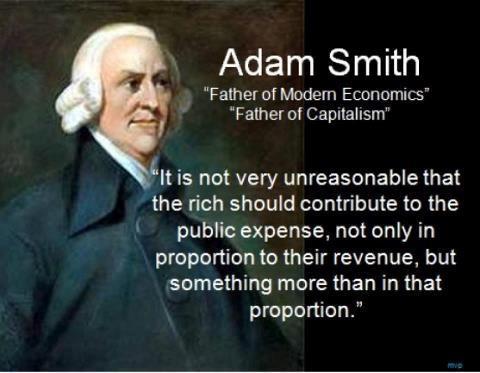
Their Fair Share

BPR Quote of the Day

Posted in Economics, Quotations, taxes | Tagged , | 1 Comment

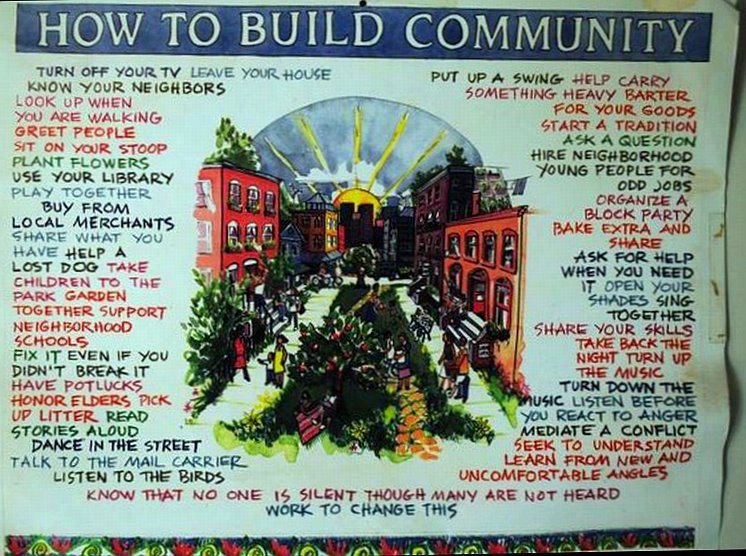
It Takes a Village

Posted in environment, Food, philosophy | Tagged , | Leave a comment

Global Corporations Aren’t American People, My Friend

BIG BUSINESS HAS BECOME DISCONNECTED FROM THE WELL-BEING OF MOST AMERICANS

By Robert Reich/robertreich.org/ July 18, 2012

President Obama is slamming Mitt Romney for heading companies that were “pioneers in outsourcing U.S. jobs,” while Romney is accusing Obama of being “the real outsourcer-in-chief.”

These are the dog days of summer and the silly season of presidential campaigns. But can we get real, please?

The American economy has moved way beyond outsourcing abroad or even “in-sourcing.” Most big companies headquartered in America don’t send jobs overseas and don’t bring jobs here from abroad.

That’s because most are no longer really “American” companies. They’ve become global networks that design, make, buy, and sell things wherever around the world it’s most profitable for them to do so.

As an Apple executive told the New York Times, “we don’t have an obligation to solve America’s problems. Our only obligation is making the best product possible.” He might have added “and showing profits big enough to continually increase our share price.”

Forget the debate over outsourcing. The real question is how to make Americans so competitive that all global companies — whether or not headquartered in the United States — will create good jobs in America.

Apple employs 43,000 people in the United States but contracts with over 700,000 workers overseas. It assembles iPhones in China both because wages are low there and because Apple’s Chinese contractors can quickly mobilize workers from company dorms at almost any hour of the day or night.

But low wages aren’t the major force driving Apple or any other American-based corporate network abroad. The components Apple’s Chinese contractors assemble come from many places around the world with wages as high if not higher than in the United States.

More than a third of what you pay for an iPhone ends up in Japan, because that’s where some of its most advanced components are made. Seventeen percent goes to Germany, whose precision manufacturers pay wages higher than those paid to American manufacturing workers, on average, because German workers are more highly skilled. Thirteen percent comes from South Korea, whose median wage isn’t far from our own.

Workers in the United States get only about 6 percent of what you pay for an iPhone. It goes to American designers, lawyers, and financiers, as well as Apple’s top executives.

American-based companies are also doing more of their research and development abroad. The share of R&D spending going to the foreign subsidiaries of American-based companies rose from 9 percent in 1989 to almost 16 percent in 2009, according to theNational Science Foundation.

What’s going on? Put simply, America isn’t educating enough of our people well enough to get American-based companies to do more of their high-value added work here.

Our K-12 school system isn’t nearly up to what it should be. American students continue to do poorly in math and science relative to students in other advanced countries. Japan, Germany, South Korea, Canada, Australia, Ireland, Sweden, and France all top us.

American universities continue to rank high but many are being starved of government funds and are having trouble keeping up. More and more young Americans and their families can’t afford a college education. China, by contrast, is investing like mad in world-class universities and research centers.

Transportation and communication systems abroad are also becoming better and more reliable. In case you hadn’t noticed, American roads are congested, our bridges are in disrepair, and our ports are becoming outmoded.

So forget the debate over outsourcing. The way we get good jobs back is with a national strategy to make Americans more competitive — retooling our schools, getting more of our young people through college or giving them a first-class technical education, remaking our infrastructure, and thereby guaranteeing a large share of Americans add significant value to the global economy.

But big American-based companies aren’t pushing this agenda, despite their huge clout in Washington. They don’t care about making Americans more competitive. They say they have no obligation to solve America’s problems.

They want lower corporate taxes, lower taxes for their executives, fewer regulations, and less public spending. And to achieve these goals they maintain legions of lobbyists and are pouring boatloads of money into political campaigns. The Supreme Court even says they’re “people” under the First Amendment, and can contribute as much as they want to political campaigns – even in secret.

The core problem isn’t outsourcing. It’s that the prosperity of America’s big businesses – which are really global networks that happen to be headquartered here – has become disconnected from the well-being of most Americans.

Mitt Romney’s Bain Capital is no different from any other global corporation — which is exactly why Romney’s so-called “business experience” is irrelevant to the real problems facing most Americans.

Without a government that’s focused on more and better jobs, we’re left with global corporations that don’t give a damn.

Boldface added by BPR Editor
Posted in Economics, economy, Education, employment, government | Tagged , , , , | 2 Comments

Freedom To Loot

Posted in Bumper Sticker, crime, government, law, law enforcement, Republican Party, Uncategorized | Tagged | Leave a comment

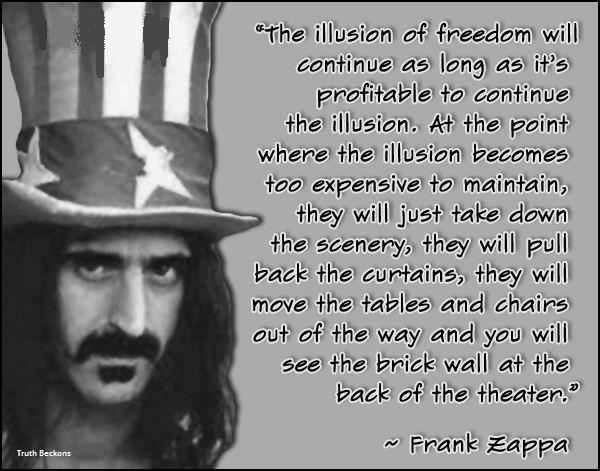
Do You See the Brick Wall Yet?

Posted in civil liberties, law, Quotations | Tagged , , | 1 Comment

“Always At War”

BPR Quote of the Day

“Since the collapse of the Soviet Union, if not before, it has become clear that the US government isn’t crazy about being at peace. We’re nearly always at war with something: nations, drugs, even the abstract concept of “terror.” A country founded on the conquest of the Native American population is restlessly paranoid in the absence of real or perceived threats. We appear to be uncomfortable if we don’t have an enemy within our sights.”

Nancy Wrenn, Massachusetts Peace Action board member

Memorial Day For Peace, 2012

Posted in government, war | Tagged , | 2 Comments

NOBODY WILL VOTE FOR ROMNEY

Some Thoughts About the Election

by Arlen Grossman

Nobody will vote for Mitt Romney in November. He will still have a chance to be elected president, if a lot of people decide to vote against Barack Obama. Romney has been exposed as a shallow, robotic, soulless, empty suit. Nobody really likes him. The election will be determined by how dissatisfied the electorate is with the incumbent president, which will have a lot to do with the shape of the economy during the last stages of the campaign.

Democrats need to look past the race for president. Obama should be able to beat Romney. But Democrats had better focus considerably more attention on the congressional races. The Republicans, with a 52-seat majority, will likely take back the House. The Senate, with a 51-47 Democratic majority and two Dem-leaning independents, is up for grabs, especially because Democrats will be defending 23 seats, compared to Republicans, who will only be defending ten. President Obama, if re-elected will accomplish little or nothing good if the GOP controls both branches of Congress. Without limits on campaign financing, Republicans will be in a strong position to get their congressional candidates elected. That spells big trouble for Democrats and for the country.

Posted in Barack Obama, Democratic Party, elections, government, Mitt Romney, politics, Republican Party | Tagged , , | Leave a comment

Deeper in Debt

The New Company Store: The Final Step in the Corporate Takeover of America

By John Atcheson/ Common Dreams/ July 11, 2012

Well, here we are, slouching toward another national garage sale in which corporations bid on and buy candidates the way futures traders bid on commodities – or as ourfounders used to call it: an election.

As we go to the polls, it might be wise to remember the song Sixteen Tons.  Here’s a few lines to refresh your memory:

Another Day Older and Deeper in Debt; and

St. Peter don’t you call me ‘cause I can’t come.  I owe my soul to the Company Store.

The original version of the song was written by an ex-coal miner named George Davis and recorded on his album, When Kentucky Had No Union Men.

It is a song about the truck system, and debt bondage.  Under this economic model, workers lived in houses owned by the company, shopped in stores owned by the company, and got paid in scrip minted by the company.  And no matter how hard they worked, they remained indebted to the company.

The truck system survived in the US until the early 20th Century.  This kind of abuse existed because government allowed it to.  Then as now, wealth was highly concentrated and government was in the pocket of the plutocrats.

It came to an end with the passage of The National Industrial Recovery Act in 1933.

Since then, the US government and labor moved together to level the playing field for workers.  The result was a steady increase in prosperity shared by all Americans.

That is, until about thirty years ago, when Reagan launched what has been a sustained assault on government.

Thanks to thirty years of Republican policies and Democratic complicity, we’re in the process of reopening the company store, only as with all things 21st Century, it’s a national chain.

Today, we shop with credit cards owned by “the company,” live in houses financed by “the company” – often owing more than the value of the home – and get our news and information from sources controlled by “the company.”  In short, the company store is back in business.

While Republicans and Tea partiers are all aflutter over government debt, Americans owe some $11.4 trillion in consumer debt.  Talk about indentured. Seventy five per cent of us are held hostage to debt.

This spring student loan debt passed $1 trillion, and the average student now owes $25,000 upon graduating, And Congress passed a law making it almost impossible for students to escape this debt through bankruptcy. Right now, it’s far easier for a corporation to default on hundreds of millions of dollars in retirement and health benefits than it is for a student to escape a few thousand in student loan debt.

Congratulations, Grad, and welcome to the company store.  Oh, but you corporations and fat cats? No worries. It’s business as usual – your McMansion is protected; you can still screw your employees with impunity.

So how did this happen?  How did we once again become enslaved to a system which does not represent our interests; a system which benefits the 1% at our expense?

Well, not surprisingly, corporations and plutocrats used the tools of marketing to conduct a silent takeover of the country, imposing a tyranny far more severe than the imaginary government tyranny Tea-Partiers rail against.

They systematically “branded” the forces that were capable of constraining them while rebranding the very things that worked to enslave so many of us in times past.

Using repetition, metaphors and other figures of speech that form the basis of advertising, corporations and their conservative cronies – the real modern day Madmen – made people believe up was down and right was left.   And because they were unopposed by the corporate owned media and the Democratic Party, they succeeded.

Government was branded as the problem, not the solution.

The private sector got branded as the solution, not the problem.

The same private sector that set up the company stores in the 18th and 19th Centuries until the government and unions put a stop to it.

“Liberal” became an epithet – something politicians ran screaming from, and something the people identified as evil, ineffective, elitist … even though, on an issue-by-issue basis,most Americans hold progressive views.

Socialism is now equivalent to Satan worship, and anything but wild, unconstrained capitalism has been branded as socialism – or gasp – even communism.  Thus, regulations preventing the Company Store, or the rape of the Earth are seen as infringements on our freedom even though they apply mostly to corporate abuse.  Plutocrats must get together at their secret meetings and howl with laughter at the rubes who screw themselves because they’re worried about their freedom, which  — thanks to the evisceration of government — is now essentially the freedom to be exploited.

Exhibit A?  “Keep your government hands off my Medicare.” Or take this gem:  “Don’t steal from Medicare to Support Socialized Medicine.”

The result of this massive con?  Income mobility in the United States has all but stalled, especially in States with Republican governors. Income disparity, on the other hand has exploded and the top 10% of Americans now control 75% of the wealth.  The United States now ranks behind such luminary examples of shared prosperity as Cameroon and Iraq, according to the CIA.

So now, as corporations impose an economic tyranny not seen since the 19th and early 20th Century, many Americans are chasing ghosts ginned up by the corporations and their conservative political madmen.

Welcome to the New Company Store, now opening at a location near you.

John Atcheson is author of the novel, A Being Darkly Wise, an eco-thriller and Book One of a Trilogy centered on global warming. His writing has appeared in The New York Times, the Washington Post, the Baltimore Sun, the San Jose Mercury News and other major newspapers. Atcheson’s book reviews are featured on Climateprogess.org.

Boldface added by BPR Editor
Posted in Democratic Party, Economics, economy, finance, inequality, labor, poverty, Republican Party, taxes, Wall Street | Tagged , , , , , | Leave a comment

Yes, Mitt, This Song Is About You

Posted in elections, humor, Mitt Romney | Tagged | Leave a comment