
BPR Quote of the Day:

Another Gen. Smedley Butler Quote of the Day
LIKE QUOTES? CHECK OUT QUOTATIONQUOTIENT.COM
BPR Quote of the Day:
LIKE QUOTES? CHECK OUT QUOTATIONQUOTIENT.COM
By Valerie Tarico/ Alternet/ October 15, 2012
We find it easy to dismiss the fantastical beliefs of people in other times and places, but those that we’ve been exposed to since childhood seem not so far out. Virgin birth? Water turning into wine? A fig tree shriveling on the spot? Dead people getting up out of their graves and walking around?
All of the following beliefs are found in respected religions today. They have been long taught by religions that either are considered part of the American mainstream or are home grown, made in the U.S.A., produced here and exported. Some of these beliefs are ensconced in sacred texts. Others are simply traditional. All, at one time or another, have had the sanction of the highest church authorities, and many still do.
How many of them can you match up with a familiar religious tradition? (The answers are at the bottom.)
1. The foreskin of [a holy one] may lie safeguarded in reliquaries made of gold and crystal and inlayed with gems–or it may have ascended into the heavens all by itself. (2 [3])
2. A race of giants once roamed the earth, the result of women and demi-gods interbreeding. (1, 6). They lived at the same time as fire breathing dragons. (1 [4])
3. Evil spirits can take control of pigs. (1 [5])
4. A talking donkey scolded a prophet. (1, 3 [6])
5. A righteous man can control his wife’s access to eternal paradise. (6 [7])
6. Brown skin is a punishment for disobeying God. (6 [7])
7. A prophet once traveled between two cities on a miniature flying horse with the face of a woman and the tail of a peacock. (4 [8])
8. [The Holy One] forbids a cat or dog receiving a blood transfusion and forbids blood meal being used as garden fertilizer. (7 [9])
9. Sacred underwear protects believers from spiritual contamination and, according to some adherents, from fire and speeding bullets (6 [10])
10. When certain rites are performed beforehand, bread turns into human flesh after it is swallowed. (2 [11])

11. Invisible supernatural beings reveal themselves in mundane objects like oozing paint or cooking food. (2 [12])
12. In the end times, [the Holy One’s] chosen people will be gathered together in Jackson County, Missouri. (6 [7])
13. Believers can drink poison or get bit by snakes without being harmed. (1 [13])
14. Sprinkling water on a newborn, if done correctly, can keep the baby from eons of suffering should he or she die prematurely. (2 [14])
15. Waving a chicken over your head can take away your sins. (3 [15])
16. [A holy one] climbed a mountain and could see the whole earth from the mountain peak. (1, 2 [16])
17. Putting a dirty milk glass and a plate from a roast beef sandwich in the same dishwasher can contaminate your soul. (3 [17])
18. There will be an afterlife in which exactly 144,000 people get to live eternally in Paradise. (8 [18])
19. Each human being contains many alien spirits that were trapped in volcanos by hydrogen bombs. (5 [19])
20. [A supernatural being] cares tremendously what you do with your penis. 1,2,3,4,6,7,8.
Key: 1-Evangelical or “Bible Believing” Christianity, 2-Catholic Christianity, 3-Judaism, 4-Islam, 5-Scientology, 6-Mormonism 7-Christian Science 8-Jehovah’s Witness
Each of these beliefs is remarkable in its own way. But the composite goes beyond remarkable to revealing. What it reveals is an underlying belief that is something like this:
The process that produced this world and human life is best unveiled not by the scientific method but by the musings of iron age herdsmen (1,2,3,4,7,8) or science fiction writers (5), or con artists (6) whose theories are best judged by examining only assertions that cannot be falsified.
Underlying that belief is a sort of rational swiss cheese that is going to keep cognitive scientists investigating and arguing [20] for decades.
We humans are astoundingly susceptible [21] to handed down nonsense. Human children are dependent on their parents for a decade or even two, which is why nature made children credulous. When parents say, eat your peas, they’re good for you, kids may argue about the eat your peas part but they don’t usually question the factual assertion about nutrition. When parents sayNoah put all of the animals into the ark, it is the rare child who asks, Why didn’t the lion eat the guinea pigs?
Even as adults, we simply can’t afford to research everything we hear and read, and so, unless something isn’t working for us, we tend to accept what we are told by trusted authority figures. We go with the flow. Religion exploits this tendency by, among other things, establishing hierarchy and by ensuring that believers are in a certain mindset when they encounter religious ideas. A friend once gave me a button that said, Don’t pray in my school and I won’t think in your church. I didn’t really want to wear a button that said “I’m an arrogant jerk,” but the reality is that even the best of churches aren’t optimized for critical thinking. Quite the opposite. The pacing, the music, the lighting—all are designed for assent and emotion, for a right brain aesthetic experience, for the dominance of what Nobel prize winning psychologist Daniel Kahneman has called [22] System 1 thinking, meaning intuition and gut feel rather than rational, slow, linear analysis.
Some of our ancestors were doing the best they could to understand the world around them but had a very limited set of tools at their disposal. It would appear that others were simply making stuff up. Mormonism and Scientology appear to fall in the latter camp. But when it comes to religious credulity, the difference matters surprisingly little. For example, Mormonism is more easily debunked than most other religions, both because of its recency and because it makes so many historically or scientifically wild claims [7], and yet it is also one of the fastest growing religions in the world proportional to its membership. Wild claims matter less than whether a religion has certain viral characteristics [23].

Are you, a US citizen, calling cousin Ivor in Budapest, or reaching out to your old pen pal Yasmeen in Sydney? The National Security Agency (NSA) can listen in on your personal cellphone or read what you might be emailing him or her from your personal computer without telling you.
In 2008, the US Senate voted to let the NSA wiretap any US citizens’ emails and phone calls internationally in the interest of national security so long as the government’s purpose was to collect “foreign intelligence information”. In 45 minutes, the American Civil Liberties Union (ACLU) brought a constitutional challenge to the Fisa Amendments Act. As the Director of the ACLU’s Center for Democracy, Jameel Jaffer, pointed out, the amendments:
“gave the NSA unprecedented power to monitor the international communications of people living in the United States — to listen to their phone calls, and to read their emails. ‘We are targeting our own country’, one NSA whistleblower observed.”
Though some in Congress argued that citizens were safe from having their communications intercepted “unless you have al-Qaida on speed-dial”, dragnet surveillance of people with nothing at all to do with terrorism began at once. As Marty Lederman, at that time a law professor, noted:
“The new statute permits the NSA to intercept phone calls and e-mails between the US and a foreign location, without making any showing to a court and without judicial oversight, whether or not the communication has anything to do with al-Qaida – indeed, even if there is no evidence that the communication has anything to do with terrorism, or any threat to national security.”
The Feds can listen in to you now, “whenever government deems it necessary for foreign intelligence reasons” Jaffer explained to me. The vagueness of a phrase such as “material support”, and the chilling effect resulting from that vagueness, was at the heart of the successful National Defense Authorization Act (NDAA) group challenge.
These Fisa amendments lose their authority in December, and the reauthorization battle will unfold in the context of a new high profile lawsuit’s activities. This lawsuit is taking shape much like the one aforementioned that was won last month by a group of reporters and activists such as Noam Chomsky and Chris Hedges. The ACLU group’s lawsuit includes several journalists and organizations including Naomi Klein, Chris Hedges, Human Rights Watch, the Global Fund for Women, the Pen American Center and the Nation Magazine.

These citizens argue that they have changed their approach to work out of fear of incarceration for “material support” for terrorism if the NDAA was used against them. The ACLU group argues fear of NSA surveillance is hampering the abilities of these people to report the news, gain testimony from witnesses and represent victims of human rights abuses.
Is it “necessary for foreign intelligence reasons” for NSA agents to spy on a Human Rights Watch lawyer talking to a woman service member about having been abused by a US contractor? Is it reasonable under those terms to spy on a lawyer for a Guantanamo detainee seeking to have a confidential discussion to build his defense against a bogus US charge (a transcript that then gives the US lawyers at Gitmo yet another advantage unavailable to opposing counsel in real due process situations)? Can the US government agents record non-fiction writer Naomi Klein’s phone calls to fellow activist journalists in the UK, or to UK government sources who would want to leak a potential story to her? Maybe one involving US wrongdoing?
Under these terms – sure thing, not a problem. (I should note, as always, that when governments eavesdrop on reporters and activists for “national security” they also secure leverage for all kinds of other harassment – even blackmail or entrapment on other issues – Eliot Spitzer-style – since private relationships and conversations are swept up as well.) These groups all depend on access to confidential communications with their clients, as well as with witnesses to human rights abuses and other sources.
BPR Quote of the Day:
“One has to realize that the powerful industrial groups concerned in the manufacture of arms are doing their best in all countries to prevent the peaceful settlement of international disputes, and that rulers can achieve this great end only if they are sure of the vigorous support of the majority of their peoples.”

Here is a disturbing example of the appalling corruption and depravity of our political system. Nicholas Kristof examines the way in which elected representatives are willing to appease wealthy campaign contributors at the expense of their constituents’ health. In this case, information about the carcinogenic dangers of formaldehyde and styrene are suppressed in order to protect the economic interests of the chemical industry, even knowing the result will surely be a rise in cancer deaths in America. With this as a template, it’s not hard to understand government inaction on global climate change. —BPR Editor
WHO knew that carcinogens had their own lobby in Washington?
Don’t believe me? Just consider formaldehyde, which is found in everything from nail polish to kitchen countertops, fabric softeners to carpets. Largely because of its use in building materials, we breathe formaldehyde fumes when we’re inside our homes.
Just one other fact you should know: According to government scientists, it causes cancer.
The chemical industry is working frantically to suppress that scientific consensus — because it fears “public confusion.” Big Chem apparently worries that you might be confused if you learned that formaldehyde caused cancer of the nose and throat, and perhaps leukemia as well.
The industry’s strategy is to lobby Congress to cut off money for the Report on Carcinogens, a 500-page consensus document published every two years by the National Institutes of Health, containing the best information about what agents cause cancer. If that sounds like shooting the messenger, well, it is.
“The way the free market is supposed to work is that you have information,” said Lynn Goldman, dean of the school of public health at George Washington University. “They’re trying to squelch that information.”
The larger issue is whether the federal government should be a watchdog for public health, or a lap dog for industry. When Mitt Romney denounces President Obama for excessive regulation, these are the kinds of issues at stake.
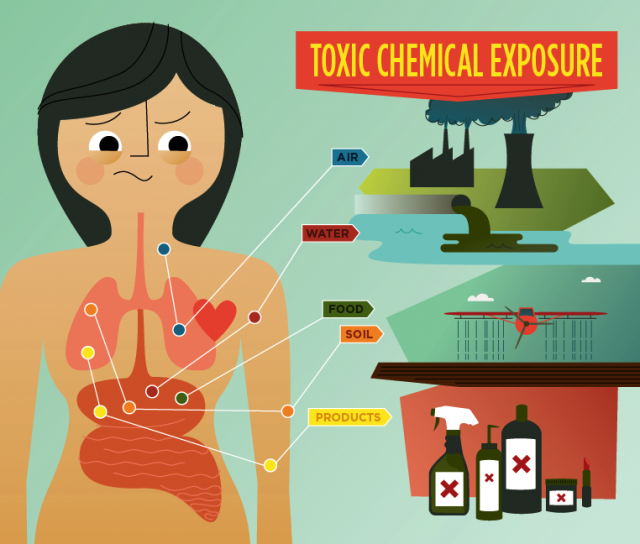
“Formaldehyde is known to be a human carcinogen,” declared the most recent Report on Carcinogens, published in 2011. Previous editions had listed it only as a suspected carcinogen, but the newer report, citing many studies of human and animal exposure to formaldehyde, made the case that it was time to stop equivocating.
The chemical industry was outraged, because it sells lots of formaldehyde that ends up in people’s homes, often without their knowledge.
“Nearly all homes had formaldehyde concentrations that exceeded guidelines for cancer and chronic irritation,” according to a 2009 survey by the California Energy Commission.
The Report on Carcinogens also offended the chemical industry by listing styrene for the first time as “reasonably anticipated to be a carcinogen.” Styrene, which goes into everything from boats to shower stalls, is mostly a risk to those who work in factories where it is used, so it’s less of an issue for the general public.
The chemical industry is represented in Washington by the American Chemistry Council, which is the lobbying front for chemical giants like Exxon Mobil, Dow, BASF and DuPont. Those companies should understand that they risk their reputations when they toy with human lives.
The American Chemistry Council first got its pals in Congress to order a $1 million follow-up study on formaldehyde and styrene. Then it demanded, through a provision drafted by Representative Denny Rehberg, a Montana Republican, that no money be spent on another Report on Carcinogens until the follow-up was completed — meaning a four-year delay until the next report. Stay tuned for an industry effort to slip some such provision into the next budget legislation.
Let’s be clear. There is uncertainty about toxic chemicals, and it is perfectly legitimate to criticize the Report on Carcinogens. But this effort to defund the report is an insult to science and democracy alike. (Continued Here)
BPR Quote of the Day:
“There is much to be said in favour of modern journalism. By giving us the opinions of the uneducated, it keeps us in touch with the ignorance of the community.”
Oscar Wilde



 thebigpicturereport ™