Biden disappoints as his disastrous debate performance points to a change at the top of the Democratic ticket in order to stop the train wreck that would be another Trump presidency. Joe proved at age 81 he’s not up for the fight. He needs to step down and let Kamala take on the MAGA cult leader. Hal Ginsberg returns from a week in Europe, and comes to a country in chaos and an out-of-control Supreme Court. We discuss the chaotic mess Americans must find a way to deal with, and hopefully, overcome. https://youtu.be/_0LkYzzalhw?feature=shared THE AUDIO HAS BEEN FIXED FROM A PREVIOUS VIDEO!
It’s pretty much a given that Donald Trump cares only about himself. Everything he does is to promote himself, and if he is elected again, to give himself dictatorial power. In other words, Trump is the most selfish candidate in the history of this country. He putting his personal future ahead of what would be best for the country.
Now we have another candidate doing something similar, putting his personal plans ahead of the country. When it comes to integrity and real patriotism President Joe Biden is far superior to Trump and his MAGA cultists. But are Joe and Jill Biden planning their future with their personal desires ahead of what’s right for the country? It appears that way.
Joe Biden is only going to get older and less competent in the next few years. And what voters saw in Thursday’s debate is the decline of a great man and a great president, no longer in his prime. But we have to ask ourselves. will Joe Biden be an excellent president four years from now, when he will be turning 86 years old? The answer is obvious. He will not be in the best condition to perform his duties as president. He will only be less capable than he is now.
For the good of the Democratic Party and the country, now teetering on the edge of a possible Trump dictatorship and a fascist-style presidency, Biden must put the future of the country ahead of his personal desires.
If Biden stays, he will be essentially doing what Donald Trump is doing, thinking of himself and his future ahead of what is best for the country.
One selfish candidate on the Republican ballot is enough. We don’t need another selfish candidate in the opposition party thinking of himself over what is best for the country. Another Democratic candidate, Vice-President Kamala Harris being the most logical, would have the abilities and strength to defeat Trump, which is priority number one.
Joe Biden needs to step down and give way to a younger, stronger and more vibrant candidate. The stakes are too high to be thinking of himself . Now is not the time for Biden to put himself ahead of what’s best for the country.
Biden would never be as selfish as Donald Trump (nobody is), but he would still be selfish. The future of our country is on the line, Joe. Let someone else finish your job.
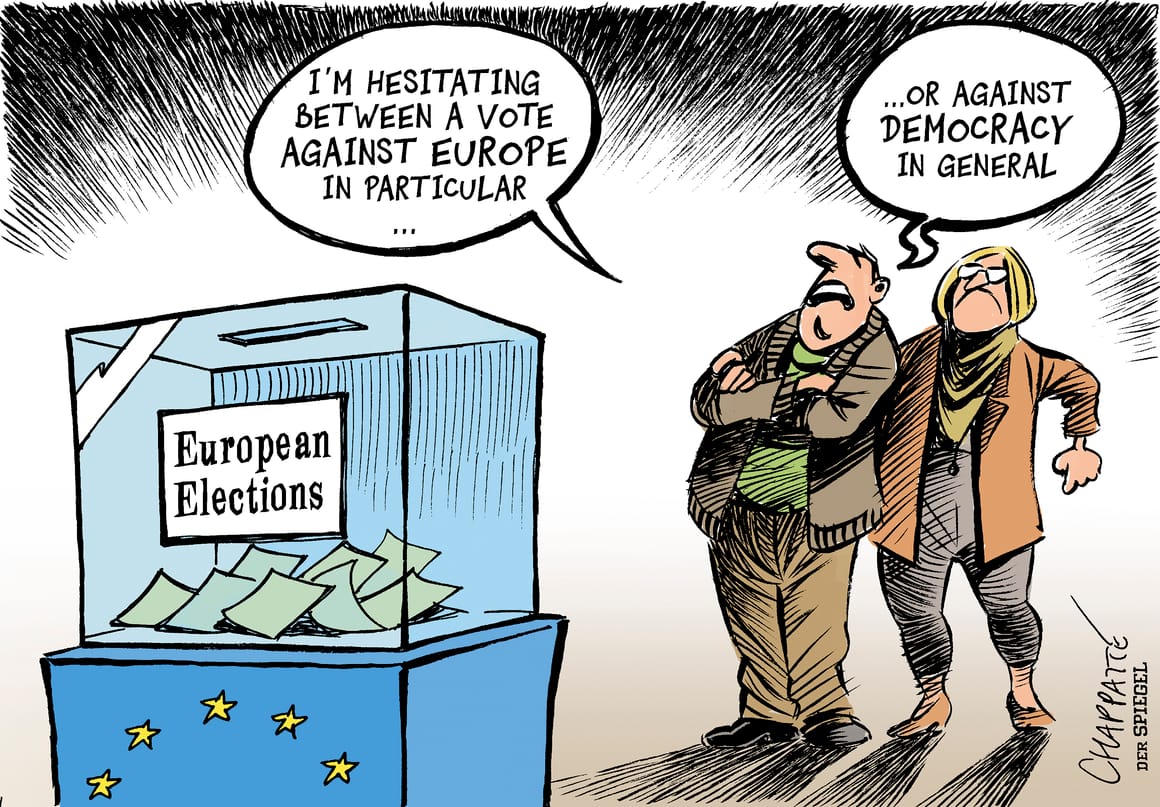
The excellent writer Anne Applebaum of The Atlantic wrote an interesting article about the recent parliamentary elections in Europe, and what they really meant.
This excerpt from that article says a lot about we are confronting:
“Donald Trump is not like these politicians. The former president is not tacking to the center, and he is not trying to appear less confrontational. Nor does he seek to embrace existing alliances. On the contrary, almost every day he sounds more extreme, more unhinged, and more dangerous. Meloni has not inspired her followers to block the results of an election. Le Pen does not rant about retribution and revenge. Wilders has agreed to be part of a coalition government, meaning that he can compromise with other political leaders, and has promised to put his notorious hostility to Muslims “on ice.” Even Orbán, who has gone the furthest in destroying his country’s institutions and who has rewritten Hungary’s constitution to benefit himself, doesn’t brag openly about wanting to be an autocrat. Trump does. People around him speak openly about wanting to destroy American democracy too. None of this seems to hurt him with voters, who appear to welcome this destructive, radical extremism, or at least not to mind it.
American media clichés about Europe are wrong. In fact, the European far right is rising in some places, but falling in others. And we aren’t “in danger” of following European voters in an extremist direction, because we are already well past them. If Trump wins in November, America could radicalize Europe, not the other way around.“
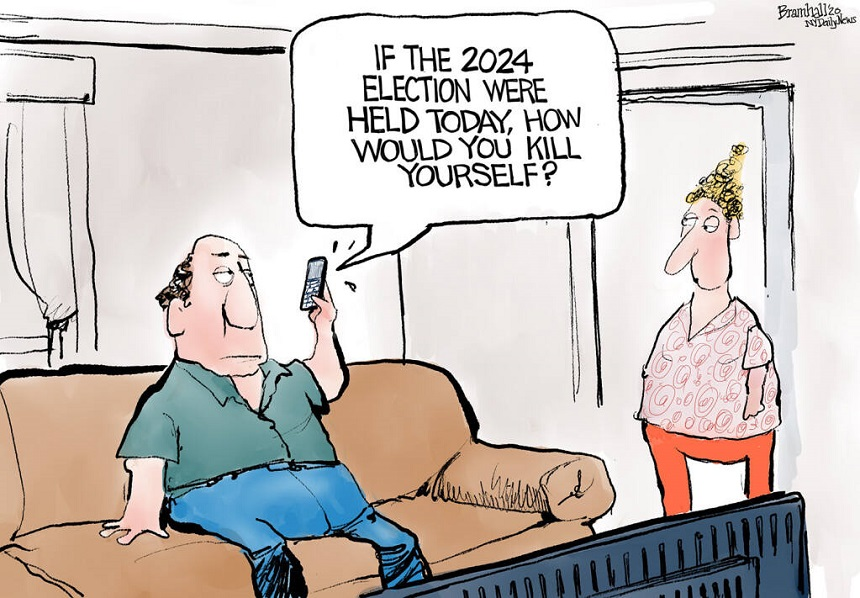
Democrats might want to consider stepping back from that steep ledge. The first “debate” between President Joe Biden and the 45th president, Donald Trump, is over, and at first glance, was a total disaster for Biden and the Democrats.
But at second glance, maybe not so much. Anybody who watched the debate could see President Biden looking every day of his 81 years, maybe more like 91. He appeared lost and confused, not at all like the guy we saw months earlier, at his State of the Union Speech. Chalk it up as a big loss.
But what about Donald Trump—did he win the “debate”? At first glance, yes. But maybe not.
Allow me to explain. Trump has his solid base of Republican cultists, millions of them. To them, he is a divine gift from their Christian God, and can do no wrong—ever.
Still, they do not make up the majority of the American electorate. Trump will still need Republican moderates (we will assume there are some) and independents to win the presidency. They are not in the bag yet.
While Biden lost the debate, it is less than clear that Donald Trump won. Those Republican moderates and independents had to have seen the blustery, negative, vindictive, lying and insulting man we know all too well. I sincerely doubt he “won” many of those undecided voters, and he likely turned off more than a few.
Perhaps the debate was not a total disaster for Democrats. They still have to decide if they stick with Biden, or let a younger, more vibrant Democrat carry the mantle. The Democratic Party is split right now on that issue, and it will not be easy to fix the problem.
Fortunately, there are ways, and there is time. November 5 is more than four months away.
I believe Biden’s physical and mental health has to be a major part of the decision to continue having him run. There are plenty of signs he has lost a lot off his fastball, and it will have to be determined if that is the normal aging process or some unspoken, undisclosed disability. If it is the latter, a change in candidates is imperative.
Donald Trump has plenty of his own issues. Despite his insistence that he is a genius, nobody really believes that. His numerous verbal gaffes and bizarre, unintelligible rants are signs his mind is slipping even faster than usual. (It should not be overlooked that his father, Fred Trump, had Alzheimer’s Disease).
As I noted in a previous commentary: several prominent mental health professionals have expressed concern about Trump’s deteriorating brain function. Dr. John Gartner, a former professor of psychiatry at Johns Hopkins Medical Center, has been vocal about his professional analysis of Trump, asserting a stark difference between the candidates: “Biden is aging. Trump is dementing.”
Dr. Elisabeth Zoffmann, a forensic psychiatrist and an Associate Clinical Professor of Forensic and General Psychiatry at the University of British Columbia, believes that Trump is displaying a range of behaviors that suggest cognitive challenges if not impairment. She concludes Trump appears to be suffering from Behavioral Variant Fronto-Temporal Dementia (BvFTD), which drastically affects personality, behavior, and social interactions.
And let’s think for a moment about expectations. For Biden, if he stays in, his bar is set very low, which could work to his advantage in a second debate.
No matter what, Trump’s clueless base and moronic Republican leaders like Lindsay Graham, Ted Cruz, Speaker Mike Johnson, and all the ones who lust for the chance to be his V.P., are going to stick with the guy, as will Fox News and the rest of the right-wing media propaganda machine.
But Trump will not be able to hide his numerous deficiencies, faults, and serious personality flaws. His obvious craziness will be on display for four more months, and that should give Democrats a fighting chance to win the presidency and importantly, Congress.
So, Democrats, right now, please walk away from that ledge. There is actually hope.
Background: My wife, Nancy, was talking to her sister about the “debate.” Anne told Nancy that she suspected Biden has been showing symptom’s of Parkinson’s Disease. This was my response:
Anne, that’s a good call (Anne is Nancy’s sister in Vermont)l. I talked to our friend, Harvey, who has been dealing with Parkinson’s for a number of years, and he told me he suspected the same for quite a while, noticing Joe Biden’s symptoms of the disease: the way he moves and talks and his tremors are good indications. I did some searching and I only found one video on this subject REVEALED: Joe Biden has RESTING TREMORS, symptom of Parkinson’s Disease:
And this is from over three years ago! Harvey said that he himself kept his disease quiet to continue his work as an attorney, until it became impossible. But he was not at all surprised at Anne’s suspicions. The signs are there. Here is a related website: #JoeBidenIsSick
If he does have Parkinson’s, he needs to step aside and allow a healthier person to take on Trump and the sick MAGAs.
P.S. I attempted to post this same information on my Facebook page. To my surprise and anger, Facebook would not allow me to post it! They said something about it being improper. I can no longer find what they told me. It seems to have disappeared.
In March of 2002, Milly Dowler, age 13, left her home in Walton-on-Thames for the last time. After she disappeared, her parents called the police. A search began. Blanket news coverage followed. In those days, probably a dozen British tabloids and half a dozen higher-brow broadsheets all chased the same stories. In an effort to beat his newspaper’s rivals, an investigator employed by News of the World, one of those tabloids, hacked into Dowler’s cellphone. He was looking for messages that offered clues; he may or may not have deleted some messages, thereby giving her family false hope that she might be alive.
A few months later, Dowler’s body was found. Several years after that, British police uncovered evidence of the phone hack, along with evidence that the phones of many other people—actors, athletes, Prince Harry—had been hacked by News of the World journalists in pursuit of other stories. The nation recoiled in horror: What kind of monster would hack the phone of a missing child? The Dowlers, along with a whole raft of celebrities, sued News of the World and its parent company, owned by Rupert Murdoch. Murdoch shut down the paper and, over many years, paid out millions of pounds in damages. Prince Harry’s suit is still in the courts.
I am telling this story because it forms part of the background to another story, this one about The Washington Post, where I once worked, first as an editorial writer and then as a columnist. But before I get to that, I want to point out that the British phone-hacking scandal was unique in only one sense: There were negative consequences for the newspaper and its owner. More often, there weren’t.
On the contrary, phone hacking, phone bugging, blackmail, police bribery, and large payments to sources had been accepted in some corners of the British media for a long time. In the very happy decade I spent as a British journalist—at The Spectator, at the Evening Standard, and as a columnist at The Sunday Telegraph, before I got to the Post—I worked with many great editors and excellent journalists, and witnessed a lot of hand-wringing about whether intrusive tabloid journalism was good for the country. But nobody could argue with the logic of profit. When The Sun acquired a tape of Princess Diana speaking to James Gilbey, presumed to be her lover, or when the Mirrordecided to publish a transcript of then-Prince Charles talking to his then-mistress, they did so because that would sell newspapers.
There were broadsheet versions of this too. In 2009, Robert Winnett, then a reporter at the Telegraph, together with the newspaper’s top editor, Will Lewis—paid some $120,000 to an investigator who had got hold of stolen data showing that British members of Parliament were cheating on their expenses. Winnett and Lewis were richly rewarded: A scandal ensued, several MPs resigned, and the Telegraph sold hundreds of thousands of copies.
The fierce competitiveness of the British-tabloid market produced a different way of writing about the news. Long before social media, the British tabloids experimented with the use of anger, emotion, partisanship, and polarization to capture and hold public attention. Sometimes they created celebrity scandals. Sometimes they attacked migrants or foreigners. Sometimes they deployed brilliant writers and reporters, which is why Britain has so many of those too. Along the way, they invented the modern language of populism, long before the word became part of our everyday lexicon. Any celebrity, any politician, any institution—the European Union, the British judiciary, the Royal Family—was fair game.
The drive to win readers by whatever means possible eventually blurred the distinction between tabloids and broadsheets, especially within the ecosystem of what is sometimes known as the Tory press: Rupert Murdoch’s newspapers, the Telegraph Media Group, the Daily Mail. The broadsheets are always looking for the best editors and the cleverest journalists, and often hire them from the tabloids. Broadsheet journalists are frequently persuaded to write for the tabloids too; I’ve done so many times myself. Along the way, the distinction between the Tory press and the Tory party became blurred, as journalists, including former Prime Minister and Telegraph columnist Boris Johnson, moved back and forth between them (a pattern that happens on the left wing of British politics too). Finally, competition created a certain brutality, and not only toward politicians and celebrities. It was, and maybe still is, normal for new editors to fire large numbers of journalists on arrival. “Drowning kittens,” one proprietor called it. He meant that as a compliment.Will Lewis, whom Jeff Bezos hired to be the publisher of The Washington Post earlier this year, emerged from that hypercompetitive, scoop-driven world, and is in fact one of its great success stories. He started his career at The Mail on Sunday before moving to the Financial Times, where he broke quite a few stories, and then to the Murdoch-owned Sunday Times. He became the editor of the Telegraph, as noted, and then the CEO of Dow Jones and the publisher of The Wall Street Journal, also owned by Murdoch. I have never met him. By all accounts, he is affable, charming, and very talented.
He also lives by the rules of the world he made his career in. His name was recently mentioned in a court case connected to that long-ago phone-hacking scandal—the story that just won’t go away—and he is alleged to have offered an NPR reporter an exclusive interview in exchange for not writing about it. That might not have bothered anyone in London, but, like the practice of paying sources, it is unusual at The Washington Post. Lewis fell out, abruptly, with The Washington Post’s now former executive editor, perhaps in part because he also asked her not to publish about it.
Lewis chose to replace her with Winnett, the man who broke his most important story. His logic was surely commercial: Winnett gets scoops, scoops get readers, and readers are what the newspaper needs. But The Washington Post also gets scoops, only it does so differently. My colleague Stephanie McCrummen, a former Washington Post reporter who helped break the story of Roy Moore—the U.S. Senate candidate from Alabama who had harassed teenage girls—wrote yesterday that her team never paid sources, and for very good reasons: “The reputation of the Post newsroom has been built upon readers’ trust that reporters do not pay sources, much less steal documents, hack computers, or engage in other deceptive news-gathering practices that have been associated with a certain kind of British journalism and the worst of American tabloid journalism.” McCrummen reckons that the Post’s stories about Moore had so much power because people believed them. Moore lost his race.
Nobody has said this very clearly, but the newsroom anxiety about both Winnett and Lewis might touch on the politics of their previous jobs as well as ethics and potential conflicts of interest. Lewis founded a public-relations agency that still bears his initials and through which, according to the Financial Times, he offered advice to Johnson and the Conservative Party, among others. Winnett has long worked at the Telegraph, a newspaper whose close alignment with the Conservative Party has never been in doubt. I don’t know whether he would have brought partisan headlines to The Washington Post, but I am guessing that some journalists feared he would. Whether or not they were correct, we will never know, because he is already gone.
Facing a newsroom revolt, Winnett on Friday resigned from the Posteditorship. Back in London, some of his British colleagues rallied to his defense in an amusingly partisan manner. The Murdoch-owned Times wrote an article about Winnett that made a glancing reference to the money-for-data and other ethics stories that had roiled the Post newsroom, focusing instead on a claim that the “staff revolt” against Winnett had begun when he “pointed out errors in the newspaper’s coverage of the war in Gaza.” In The Sunday Times, Gerard Baker, a former editor of The Wall Street Journal, dismissed the “sanctimonious” Post reporters and called the newspaper “a reliable mouthpiece for left-wing, woke, progressive ideology”—language that could just as easily have been used by Sean Hannity.
But before this story becomes a full-blown culture-war meme—clever, brutal right-wing Brits versus mushy, woke left-wing Americans—it’s worth noting that this saga is unfolding just as the Conservative Party, which has long enjoyed a symbiotic relationship with the Tory press, is imploding. This implosion is partly thanks to Brexit, a populist policy pushed by the Tory press, which if nothing else has made Britain poorer. Not all of those newspapers turned out to be good for the country, in other words—and not all of them are doing that well, either. Ownership of the Telegraph Group has been in limbo for months. Both The Sun and the Daily Mail, like just about every other form of media on the planet, are quickly losing circulation and advertising. Whatever tricks they once used to beat their competitors might not work for that much longer.
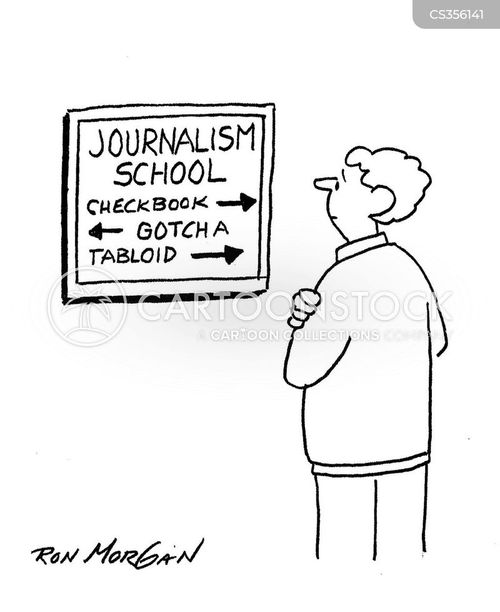
And no wonder: In Washington, in London, and everywhere else, we are drowning in unethically sourced information. The stuff that once shocked and scandalized us is now all over the internet, available for free. X, Facebook, Telegram, and YouTube have taken anger, emotion, and partisanship to levels no newspaper will ever match. AI-driven social-media campaigns will go even further. The tabloidization of everything is all around us already. That market is saturated. We don’t need The Washington Post’s contribution as well.
I don’t have a formula for the future of newspapers and won’t presume to propose one. But if Lewis wants to build on The Washington Post’s reputation, using its existing journalists, he will find a less crowded market if he builds a higher-quality, more reliable, and more trustworthy newspaper—and finds readers who will pay for it, for exactly that reason.
America’s Darkest Hour: Battling the Second Great Insurrection
The new GOP motto might as well be, “We don’t need no stinkin’ issues; we just want power and revenge for the heroes of the Old South and the New Insurrection.”
Have you noticed how rarely Republicans talk about actual issues?
— They rant about brown people pouring over the southern border but refuse to even discuss what could be done about it. In fact, when the Senate came up with a workable solution, Republicans in the House killed it at the insistence of Donald Trump. No policies, no solutions other than a Nazi-like round-up of 11 million people and a series of concentration camps.
— They complain about the state of the economy, but have no arguments about what can be done to enhance the economy other than more tax cuts for billionaires, who are already paying a pathetic average 3.4% income tax.
— They whine that our students aren’t doing well but refuse to engage in any serious discussion about how to take us back to the era when America had the newest and most successful public education system in the world.
— They’ll yell about prescription drug prices and the high cost of insurance, but their only policy suggestion is to end Obamacare and Medicaid.
— They love to slander BLM and big cities with large Black populations but refuse to even entertain a conversation about healing the racial divide in this country; instead, their efforts are directed toward outlawing or decertifying Black History classes, as just happened in South Carolina.
All of this is because the GOP is now a post-politics party.
The reason why is simple and straightforward: The people who’ve captured the Republican Party envision a day when they won’t have to even pretend that they’re engaging in good-faith political discussions or negotiations because they will have outlawed, sidelined, or intimidated their opposition into impotence and silence.
They’re using our political system this election year, in other words, so they can seize enough power to destroy our political system.
And they have a model they’re using for what they want to replace it with: the Confederacy.
In the first decade of the 19th century, the invention of the cotton gin transformed the South, as I detail in The Hidden History of American Oligarchy. The machine could do the work of 50 enslaved people, so the wealthiest plantation owners could wipe out thousands of small farmers and other competitors.
Now that one machine could clean as much cotton as fifty people, every cotton plantation faced the possibility that it could produce 50 times as much cotton (and profit), if only it had 50 times as much land to grow the cotton on and 50 times as many people to pick it.
The wealthiest among the Southern oligarchs colluded on price-fixing to bankrupt and then buy out small farms and plantations for pennies on the dollar. Within a few decades, by the early 1840s, a handful of fabulously wealthy families had seized complete control of the economic and political systems of each state in the Old South.
And they brooked no opposition: White men who dared run or vote against them in elections were often assassinated or lynched; newspapers were seized and handed over to oligarchs friendly to the plantation owners; elections became a mere charade. They even monitored the mail: if you wrote a letter to a friend complaining about the end of democracy you’d find yourself in prison or hanged from a tree.
Democracy in the South, by the 1850s, was completely dead. The Confederacy had become a police state. And then they reached out to try to end that pesky remnant of democracy in the North, as well.
It’s nearly exactly what the MAGA GOP is trying to do today.
“A new generation of rulers reshaped the South around their new ruling principle. … The development of Southern oligarchy portended the rupture of the union, regardless of the ties that bound them together, because no ties, physical, legal, or otherwise, can overcome the difference between fundamentally opposed types of political regimes.”
Illinois’ Representative John Farnsworth noted that history in his 1864 speech on the floor of the US House of Representatives:
“[With t]he invention of the cotton-gin, … the greed for power took possession of the slaveholders, and the avarice of these men overleaped itself…
“Then it was, Mr. Speaker, that the slave power got the control of the Government, of the executive, legislative, and judicial departments.
“Then it was that they got possession of the high places of society. They took possession of the churches. They took possession of the lands. Then it became criminal for a man to open his lips in denunciation of [them].
“Then followed … the throttling of the right to petition; suppressing the freedom of the press; the suppression of the freedom of the mails; all these things followed the taking possession of the Government and lands by the slave power, until we were the slaves of slaves, being chained to the car of this slave Juggernaut…”
This is the model that today’s GOP, the reinvented Confederacy, is using to replace modern American democracy.
And they’re not even bashful about it: It’s why ten Republican-controlled states officially commemorate the Confederacy with state holidays every year and six refuse to recognize Juneteenth: Florida, Mississippi, Alabama, Arkansas, South Carolina and North Carolina.
Reagan’s massive tax cuts (and Bush’s and Trump’s) had the same oligarch-producing impact as the cotton gin; before Reagan, billionaires were virtually unknown and few wealthy people were politically active. Today, they own Congress, our social- and news-media, and the Supreme Court.
The billionaire-funded Project 2025 is this generation’s version of John C. Calhoun’s nullification speech and South Carolina’s secession proclamation.
In this brave new world run by Citizen Trump and the MAGA GOP:
— Slave labor is replaced by the perpetual poverty and servitude of a $7.25 minimum wage and Red state laws hostile to unions. Children are encouraged to leave school and enter the workplace in dangerous jobs like slaughterhouses.
— Quality education becomes exclusively the province of the rich and white as public schools are gutted by voucher programs while college tuition explodes.
— Healthcare is a luxury only available to the wealthy as insurance becomes unaffordable, Republican governors refuse to expand Medicaid, and medical practices are acquired by hedge funds and converted to concierge practices with $3000/year annual fees.
— Media that speaks truth to power are bankrupted by new libel laws, taken over, and turned into Republican propaganda machines.
— Women, people of color, and religious minorities are made culturally and legally subordinate to white “Christian” men.
— In any Republican-controlled part of the country where there’s a chance a Democrat could win an election, the voter rolls are purged of Democrats and those voters who survive the purges find increasingly complex barriers to casting a ballot.
— And, of course, they want to preserve the Confederate names and monuments still extant and bring back the monuments that have been removed. As we saw on January 6th, the Confederate battle flag is one of their favorite totems.
The new GOP motto might as well be, “We don’t need no stinkin’ issues; we just want power and revenge for the heroes of the Old South and the New Insurrection.”
It’s why they lie so easily on the Sunday talk shows and in political campaigns: They don’t give a damn about issues. All they care about is power.
And their base is with them. As Oliver Markus Malloy wrote in the headline for his Bad ChoicesSubstack newsletter yesterday, “MAGA dumbfucks are so fucking dumb, they have no idea that the pro-slavery Confederates were the bad guys!”
In fact, they know what the sides were in the Civil War, and they are intentionally choosing — embracing — the Confederacy.
Democrats — and Americans more generally — must finally realize that Trump’s MAGA GOP is no longer interested in policy or politics but solely wants to seize absolute political and economic power to end our democracy and reinvent the Confederacy.
Only then we can begin a discussion about how to deal with this Second Great Insurrection that they hope will reboot the Civil War only — now outfitted with deadly bump-stocks — this time with a different outcome.
Until then, as we try to debate “issues,” we’re merely engaging in meaningless political theater. Instead, we must identify, ostracize, and politically and legally crush this growing and violent insurrection against America and her traditional ideals.






 thebigpicturereport ™