
BPR Quote of the Day
“If we are not able to ask skeptical questions, to interrogate those who tell us that something is true, to be skeptical of those in authority, then we’re up for grabs.”
Carl Sagan
BPR Quote of the Day
“If we are not able to ask skeptical questions, to interrogate those who tell us that something is true, to be skeptical of those in authority, then we’re up for grabs.”
Carl Sagan
A new book by Neil Barofsky, former Inspector General of the TARP program criticizes President Obama, Treasury Secretary Tim Geithner, and federal regulators for working in the interests of Wall Street at the expense of distressed homeowners and the public. Then this week, when a bipartisan bill to audit the Federal Reserve Bank passed the House, the Democratic leadership began to criticize Barofsky and put pressure on the Senate to kill the bill. It appears the number one priority of the president and the leadership of both parties is to ensure that Wall Street is protected at all costs. – BPR Editor
If you believe the Federal Reserve has done a fine job of managing monetary policy and trust it to continue to exert vast power with no accountability or transparency, then you are probably content with the status quo. But yesterday, “a powerful left-right coalition” in the House of Representatives — defying the Fed as well as a likely White House veto — voted overwhelmingly to enact Rep. Ron Paul’s bill to subject the Fed’s monetary policy to audits by the Government Accountability Office, a nonpartisan and independent congressional agency. As Dennis Kucinich, one of 89 Democrats to vote for the bill, put it: “It’s time that we stood up to the Federal Reserve that right now acts like some kind of high, exalted priesthood, unaccountable to democracy.”
Despite the large bipartisan House majority in favor of the bill, it is almost certain, as Reuters put it, “to die in the Democrat-controlled Senate.” That’s because “Majority Leader Harry Reid, Nevada Democrat, at one time expressed support for an audit — though he reportedly has changed his mind.” Indeed, despite substantial Democratic support for the bill (including some from the progressive wing, such as Kucinich, Jerry Nadler and Raul Grijalva), “every top Democratic leader [in the House] voted against the bill, including Minority Leader Nancy Pelosi of California and Whip Steny H. Hoyer of Maryland.” As former Alan Grayson aide Matt Stoller documented yesterday, Democratic leaders did not merely oppose the bill but actively whipped against it, meaning they sought to pressure caucus members to stay in line and oppose it; but as he observes: “The Democratic leaders, despite whipping, barely got a majority of the caucus to vote no. This is a massive failure on their part, and shows how weak they are.”
It was this same left-right coalition, led by Paul and joined by liberal Democrats such as Alan Grayson, that succeeded in enacting an Audit the Fed bill back in 2010. Even though that 2010 bill was substantially weakened by the same forces that oppose the bill now — the Fed, the White House, and party leadership — that audit, once completed, “revealed 16 trillion dollars in secret bank bailouts and has raised more questions about the quasi-private agency’s opaque operations” and independently showed that the Fed ignored rules to aid the largest banks. Sen. Bernie Sanders, whose watered-down Audit the Fed amendment is what passed in the Senate in 2010, said this about the audit revelations:
“The first top-to-bottom audit of the Federal Reserve uncovered eye-popping new details about how the U.S. provided a whopping $16 trillion in secret loans to bail out American and foreign banks and businesses during the worst economic crisis since the Great Depression. . . . ‘As a result of this audit, we now know that the Federal Reserve provided more than $16 trillion in total financial assistance to some of the largest financial institutions and corporations in the United States and throughout the world,’ said Sanders. ‘This is a clear case of socialism for the rich and rugged, you’re-on-your-own individualism for everyone else.'”
The argument has always been that the Fed must be able to act with independence and secrecy and that transparency would undermine its credibility and lead to political interference in monetary policy; especially now, the ostensible concern is that Republicans will impede necessary measures. But as Stoller points out, none of the parade of horribles about which the Fed warned resulted from the 2010 audit, and more to the point, the Fed — prime enablers of banks, crony capitalism and oligarchy — has proven that it deserves neither the trust nor the credibility which it had previously commanded. It’s remarkable to watch the Democratic Party become its most devoted defenders. As Stoller said about yesterday’s vote: “It’s so tiresome to see the Democratic leadership take the side of Wall Street, over and over and over.”
Along those lines, Neil Barofsky, the Inspector General of the TARP bailout program from 2008 until 2011, has a must-read new book entitled Bailout: An Inside Account of How Washington Abandoned Main Street While Rescuing Wall Street. When he was serving as IG, I praised Barofsky’s independence and adversarial watchdog mentality several times when he was warning of the Treasury Department and Tim Geithner’s overarching devotion to the interests of Wall Street at the expense of everyone else. But this new book lays out the case as clearly and powerfully as it can be made that the Obama administration and Geithner, as The New York Times” Gretchen Morgenson put it, “eagerly served Wall Street interests at the public’s expense, and regulators were captured by the very industry they were supposed to be regulating.” She adds:
“‘The suspicions that the system is rigged in favor of the largest banks and their elites, so they play by their own set of rules to the disfavor of the taxpayers who funded their bailout, are true,’ Mr. Barofsky said in an interview last week. ‘It really happened. These suspicions are valid’ . . . .
“Mr. Barofsky joins the ranks of those who believe that another crisis is likely because of the failed response to this one. ‘Incentives are baked into the system to take advantage of it for short-term profit,’ he said. ‘The incentives are to cheat, and cheating is profitable because there are no consequences.'”
As one very good review of the book began: “I sincerely did not think it would be possible at this point to lower my opinion of Tim Geithner. Nor did I think it possible, after the year and a half I just spent there, to make me think less of DC. . . . [F]ormer TARP watchdog Neil Barofsky has accomplished both with his just-published book Bailout.” Barofsky has been particularly critical of the Treasury Department’s failure to use the billions in funds allocated by Congress to help distressed homeowners as part of the HAMP program, on the ground that bankers — rather than ordinary Americans — were their only real concern (MSNBC’s Chris Hayes, citing this New York Times article on the administration’s HAMP failures, previously said that the “[White House’s] foreclosure mitigation failure has been so egregious and cruel, it makes me question their motives on everything”).

Predictably, Barofsky, a life-long Democrat and 2008 Obama supporter, has now become a Prime Enemy of Democratic partisans and banker-loyal, establishment-protecting, status-quo-perpetuating apparatchiks (as yesterday’s vote demonstrates, there is substantial overlap between those two categories). When Barofsky left his job as IG in 2011, a cowardly Obama official — naturally allowed by a Washington Post reporter to hide behind a shield of anonymity — maligned him as being desperate for media attention and “consistently wrong about a lot of big things” (without specifying any of those things). In an interview this week with Charlie Rose, Geithner pronounced himself “deeply offended” at Barofsky’s claims (without actually refuting them or claiming they are inaccurate).
The chief economist for an international corporate consulting firm crunched the numbers and came up with $21 Trillion stashed away in offshore tax havens and unavailable for use by financially-strapped government treasuries. If this revenue were available, social programs around the world would not have to be slashed and austerity measures would be unnecessary. In the U.S. we wouldn’t need to consider cutting Social Security, Medicare, unemployment checks and food stamps. But only, of course, if governments had the backbone to go after the tax avoiders.–BPR Editor
By John Nichols/ The Nation/ July 23, 2012
Does it matter that Mitt Romney, the presumptive nominee of the Republican Party for president of the United States, is a huge fan of offshore tax havens?
It should to Americans who take seriously the question of whether this country has the resources to pay for Social Security, Medicare, Medicaid, implementation of the Affordable Care Act and all the other programs and initiatives that Romney and House Budget Committee Paul Ryan, R-Wisconsin, say we can no longer afford.
The truth, of course, is that the United States produces more than enough taxable wealth to pay for every program that Romney and Ryan propose to “reform,” mangle, dismantle or eliminate.
Indeed, a remarkable new study produced for the global Tax Justice Network reveals that at least $21 trillion—yes, that’s “trillion” with a “t”—has been shielded from appropriate taxation in the secret tax havens favored by the super-rich of the United States and other countries around the world.
To put that figure in perspective, $21 trillion is the equivalent of the combined GDPs the United States and Japan.
James Henry, the former chief economist for McKinsey & Company (a top international business consulting firm), produced the report for the Tax Justice Network. Employing data from the Bank of International Settlements, International Monetary Fund, World Bank and governments around the world, Henry came up with what he describes as the “conservative” figure of $21 trillion as a baseline measure of the financial wealth deposited in offshore bank and investment accounts.
Henry says that private wealth socked away in offshore tax havens by billionaires and millionaires who want to avoid paying their fair share at home represents “a huge black hole in the world economy.”
It also represents an opening, should world leaders choose to address the issue, for governments to claw back tax revenues in a time of global economic distress.
“The lost tax revenues implied by our estimates is huge. It is large enough to make a significant difference to the finances of many countries,” explains Henry. “From another angle, this study is really good news. The world has just located a huge pile of financial wealth that might be called upon to contribute to the solution of our most pressing global problems.”
While reasonable people might debate the precise amount of sheltered cash, there is no question that Henry is right. The United States and other countries could go a long way toward balancing their books if they clawed back a fair share of the sheltered largesse.
Unfortunately, as he notes, it is not easy to claw money back from the offshore accounts of the tax-avoiding Mitt Romneys of the world. (Romney keeps millions, perhaps tens of millions, in secretive Swiss banks accounts and the shadowy tax havens of the Bahamas and the Cayman Islands.) As Henry notes, an “industrious bevy of professional enablers in private banking, legal, accounting and investment industries” makes it possible for millionaires and billionaires to move their money offshore.
In addition to the “professional enablers,” however, there are also “political enablers.”
Republicans and Democrats in Washinbgton have been slow to move beyond narrow debates about tax “reform” and toward serious discussions of tax “enforcement.”
But Romney takes a problem and turns it into a pathology. The Bain Capitalist does not just sock money away in foreign tax havens. He favors tax policies that would make it dramatically easier for multinational corporations—and, presumably, their wealthy CEOs—to avoid paying taxes.
The United States needs leaders who will work with leaders of other countries, especially Germany, that are looking for ways to crack down on abusive practices that shelter wealth from legitimate taxation. Barack Obama has not begun to go far enough in this regard, but his criticisms of Romney on tax issues represent a step in the right direction.
If Romney wins, does anyone think the country’s most prominent investor in tax havens would lead the charge to constrain the very tax-sheltering schemes in which he has engaged? Of course not.
This is a serious matter, not just for progressives and Democrats but for conservatives and Republicans who care about the economic stability of the United States.
“Watch out now, take care
Beware of greedy leaders
They take you where you should not go…”George Harrison
“Beware of Darkness”

If two dozen billionaire families were combining their wealth to effectively buy the 2012 election, it would be time for patriots to mount a bold response on behalf of democracy itself.
Well, that time has come.
US Senator Bernie Sanders, I-Vermont, revealed for the first time in Senate testimony Tuesday that at least twenty-three billionaire families have contributed a minimum of $250,000 each so far in this year’s campaigns.
“My guess is that number is really much greater because many of these contributions are made in secret. In other words, not content to own our economy, the 1 percent want to own our government as well,” Sanders told the Senate Judiciary Committee’s Subcommittee on the Constitution, Civil Rights and Human Rights.
The subcommittee’s “Taking Back Our Democracy: Responding to Citizens United and the Rise of Super PACs” hearing provided an important point of reflection on the crisis created in the 2012 election cycle by what the progressive reformers of a century ago described broadly—and accurately—as “the money power.” In addition to Sanders, testimony was provided by other backers of amending the Constitution, including Congresswoman Donna Edwards, D-Massachusetts, and Harvard Law School professor Lawrence Lessig.
Sanders, who has emerged as an outspoken challenger of “the money power” not just in politics but in public life more generally, was characteristically blunt about the role that campaign spending is playing not just in politics but in the expansion of economic inequality in America—a country where the wealthiest 400 individuals own more wealth than the bottom 150 million Americans.
“What the Supreme Court did in Citizens United is to say to these same billionaires and the corporations they control: ‘You own and control the economy, you own Wall Street, you own the coal companies, you own the oil companies. Now, for a very small percentage of your wealth, we’re going to give you the opportunity to own the United States government.’
“That is the essence of what Citizens United is all about—and that’s why it must be overturned,” said Sanders, who has proposed to amend the Constitution to restore equal free-speech rights to all citizens.
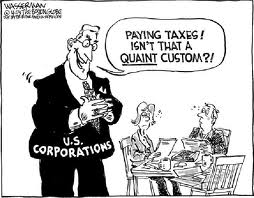
The senator’s Saving American Democracy Amendment (along with a House measure sponsored by Congressman Ted Deutch, D-Florida), would affirm “that for-profit corporations are not people, that they are not entitled to any rights under the Constitution, that they are subject to regulation by state legislatures consistent with free press protections, and that they are prohibited from making contributions or expenditures in political campaigns.”
In addition, the amendment would restore tha authority of the elected representatives of the American people—at the national and state levels—to regulate and limit all political expenditures and contributions.
“I’m proud to say the American people are making their voices heard on this issue—they are telling us loud and clear it is time to reverse the trend,” said Sanders, who noted that Vermont and five other states have adopted resolutions asking Congress for a constitutional amendment to overturn the Citizens United decision, as have more than 200 local governments nationwide.
To learn more about grassroots efforts to generate support for amending the Constitution to restore equal free speech for Americans, visit Democracy Is For People, which has been active in organizing in Vermont (where 60 towns backed amendment resolutions) and other states. Or check out the work of Move to Amend and Free Speech for People.
Echoing Sanders’s themes, activists seeking to amend the Constitution have adopted a “United for the People” common statement of purpose tha sums things up well.
“The Supreme Court’s ruling in Citizens United v. FEC has focused America’s attention on the dangerous influence of corporate power in our democracy and the urgency of taking all necessary measures to undo that influence, including amending the Constitution,“ the statement declares. “Generations of Americans have amended the Constitution over the years to ensure that ‘We the People’ means all the people, not just the privileged few. The Citizens United case, which opened the floodgates to unlimited corporate spending to influence elections at all levels of government, has brought home the importance of amending the Constitution to ensure that ‘We the People’ does not mean we the corporations. We believe that America works best when our government is of, by and for the people. Although we have differences in scope and tactics, all of us are united in the understanding that the Court’s decision in Citizens United and related cases must be remedied by amending the Constitution in order to restore the democratic promise of America.”
* * *
According to the report, America for Sale: A Report on Billionaires Buying the 2012 Election, here are the 26 billionaires who are trying to buy your government:
1). Sheldon Adelson, owner of the Las Vegas Sands Casino, is worth nearly $25 billion, making him the 14th wealthiest person in the world and the 7th richest person in America. While median family income plummeted by nearly 40% from 2007-2010, Mr. Adelson has experienced a nearly eightfold increase in his wealth over the past three years (from $3.4 billion to $24.9 billion). Forbes recently reported that Adelson is willing to spend a “limitless” amount of money or more than $100 million to help defeat President Obama in November.
2. The Kochs (David, Charles, and William) are worth a combined $103 billion, according to Forbes. They have pledged to spend about $400 million during the 2012 election season. The Kochs own more wealth than the bottom 41.7 percent of American households or more than 49 million Americans.
3. Jim Walton is worth $23.7 billion. He has donated $300,000 to super PACs in 2012.
4. Harold Simmons is worth $9 billion. He has donated $15.2 million to super PACs this year.
5. Peter Thiel is worth $1.5 billion. He has donated $6.7 million to Super PACs this year.
6. Jerrold Perenchio is worth $2.3 billion. He has donated $2.6 million to super PACs this year.
7. Kenneth Griffin is worth $3 billion and he has given $2.08 million to super PACs in 2012.
8. James Simons is worth $10.7 billion and he has given $1.5 million to super Pacs this year.
9. Julian Robertson is worth $2.5 billion and he has given $1.25 million to super PACs this year.
10. Robert Rowling is worth $4.8 billion and he has given $1.1 million to super PACs.
11. John Paulson, the hedge fund manager who made his fortune betting that the sub-prime mortgage market would collapse, is worth $12.5 billion. He has donated $1 million to super PACs.
12. Richard and J.W. Marriott are worth a combined $3.1 billion and they have donated $2 million to super PACs this year.
13. James Davis is worth $1.9 billion and he has given $1 million to super PACs this year.
14. Harold Hamm is worth $11 billion and he has given $985,000 to super PACs this year.
15. Kenny Trout is worth more than $1.2 billion and he has given $900,000 to super PACs this year.
16. Louis Bacon is worth $1.4 billion and he has given $500,000 to super PACs this year.
17. Bruce Kovner is worth $4.5 billion and he has given $500,000 to super PACs this year.
18. Warren Stephens is worth $2.7 billion and he has given $500,000 to super PACs this year.
19. David Tepper is worth $5.1 billion and he has given $375,000 to super PACs this year.
20. Samuel Zell is worth $4.9 billion and he has given $270,000 to super PACs this year.
21. Leslie Wexner is worth $4.3 billion and he has given $250,000 to super PACs this year.
22. Charles Schwab is worth $3.5 billion and he has given $250,000 to super PACs this year.
23. Kelcy Warren is worth $2.3 billion and he has given $250,000 to super PACs this year.
John Nichols is Washington correspondent for The Nation and associate editor of The Capital Times in Madison, Wisconsin.

The world’s super-rich have taken advantage of lax tax rules to siphon off at least $21 trillion, and possibly as much as $32tn, from their home countries and hide it abroad – a sum larger than the entire American economy.
James Henry, a former chief economist at consultancy McKinsey and an expert on tax havens, has conducted groundbreaking new research for the Tax Justice Network campaign group – sifting through data from the Bank for International Settlements (BIS), the International Monetary Fund (IMF) and private sector analysts to construct an alarming picture that shows capital flooding out of countries across the world and disappearing into the cracks in the financial system.
Comedian Jimmy Carr became the public face of tax-dodging in the UK earlier this year when it emerged that he had made use of a Cayman Islands-based trust to slash his income tax bill.
But the kind of scheme Carr took part in is the tip of the iceberg, according to Henry’s report, entitledThe Price of Offshore Revisited. Despite the professed determination of the G20 group of leading economies to tackle tax secrecy, investors in scores of countries – including the US and the UK – are still able to hide some or all of their assets from the taxman.
“This offshore economy is large enough to have a major impact on estimates of inequality of wealth and income; on estimates of national income and debt ratios; and – most importantly – to have very significant negative impacts on the domestic tax bases of ‘source’ countries,” Henry says.
Using the BIS’s measure of “offshore deposits” – cash held outside the depositor’s home country – and scaling it up according to the proportion of their portfolio large investors usually hold in cash, he estimates that between $21tn (£13tn) and $32tn (£20tn) in financial assets has been hidden from the world’s tax authorities.
“These estimates reveal a staggering failure,” says John Christensen of the Tax Justice Network. “Inequality is much, much worse than official statistics show, but politicians are still relying on trickle-down to transfer wealth to poorer people.
“This new data shows the exact opposite has happened: for three decades extraordinary wealth has been cascading into the offshore accounts of a tiny number of super-rich.”
In total, 10 million individuals around the world hold assets offshore, according to Henry’s analysis; but almost half of the minimum estimate of $21tn – $9.8tn – is owned by just 92,000 people. And that does not include the non-financial assets – art, yachts, mansions in Kensington – that many of the world’s movers and shakers like to use as homes for their immense riches.
“If we could figure out how to tax all this offshore wealth without killing the proverbial golden goose, or at least entice its owners to reinvest it back home, this sector of the global underground is easily large enough to make a significant contribution to tax justice, investment and paying the costs of global problems like climate change,” Henry says.
He corroborates his findings by using national accounts to assemble estimates of the cumulative capital flight from more than 130 low- to middle-income countries over almost 40 years, and the returns their wealthy owners are likely to have made from them.
In many cases, , the total worth of these assets far exceeds the value of the overseas debts of the countries they came from.
The struggles of the authorities in Egypt to recover the vast sums hidden abroad by Hosni Mubarak, his family and other cronies during his many years in power have provided a striking recent example of the fact that kleptocratic rulers can use their time to amass immense fortunes while many of their citizens are trapped in poverty.
The world’s poorest countries, particularly in sub-Saharan Africa, have fought long and hard in recent years to receive debt forgiveness from the international community; but this research suggests that in many cases, if they had been able to draw their richest citizens into the tax net, they could have avoided being dragged into indebtedness in the first place. Oil-rich Nigeria has seen more than $300bn spirited away since 1970, for example, while Ivory Coast has lost $141bn.
Assuming that super-rich investors earn a relatively modest 3% a year on their $21tn, taxing that vast wall of money at 30% would generate a very useful $189bn a year – more than rich economies spend on aid to the rest of the world.
The sheer scale of the hidden assets held by the super-rich also suggests that standard measures of inequality, which tend to rely on surveys of household income or wealth in individual countries, radically underestimate the true gap between rich and poor. (Continued Here)

 thebigpicturereport ™
