-
Recent Posts
-
Join 458 other subscribers
Categories
Archives
- April 2026
- March 2026
- February 2026
- January 2026
- December 2025
- November 2025
- October 2025
- September 2025
- August 2025
- July 2025
- June 2025
- May 2025
- April 2025
- March 2025
- February 2025
- January 2025
- December 2024
- November 2024
- October 2024
- September 2024
- August 2024
- July 2024
- June 2024
- May 2024
- April 2024
- March 2024
- February 2024
- January 2024
- December 2023
- November 2023
- October 2023
- September 2023
- August 2023
- July 2023
- June 2023
- May 2023
- April 2023
- March 2023
- February 2023
- January 2023
- December 2022
- November 2022
- October 2022
- September 2022
- August 2022
- July 2022
- June 2022
- May 2022
- April 2022
- March 2022
- February 2022
- January 2022
- December 2021
- November 2021
- October 2021
- September 2021
- August 2021
- August 2020
- July 2020
- June 2020
- May 2020
- April 2020
- March 2020
- February 2020
- January 2020
- December 2019
- November 2019
- October 2019
- September 2019
- August 2019
- July 2019
- June 2019
- May 2019
- April 2019
- March 2019
- February 2019
- January 2019
- December 2018
- November 2018
- October 2018
- September 2018
- August 2018
- July 2018
- June 2018
- May 2018
- April 2018
- March 2018
- February 2018
- January 2018
- December 2017
- November 2017
- October 2017
- September 2017
- August 2017
- July 2017
- June 2017
- May 2017
- April 2017
- March 2017
- February 2017
- January 2017
- December 2016
- November 2016
- October 2016
- September 2016
- August 2016
- July 2016
- June 2016
- May 2016
- April 2016
- March 2016
- February 2016
- January 2016
- December 2015
- November 2015
- October 2015
- September 2015
- August 2015
- July 2015
- May 2015
- April 2015
- March 2015
- February 2015
- January 2015
- November 2014
- October 2014
- September 2014
- August 2014
- July 2014
- June 2014
- February 2014
- January 2014
- December 2013
- November 2013
- October 2013
- September 2013
- August 2013
- March 2013
- February 2013
- January 2013
- December 2012
- November 2012
- October 2012
- September 2012
- August 2012
- July 2012
- June 2012
- May 2012
- April 2012
- March 2012
- February 2012
- January 2012
- December 2011
- November 2011
- October 2011
- September 2011
- August 2011
- July 2011
- June 2011
- May 2011
- April 2011
- March 2011
- January 2011
- December 2010
Blogroll
Meta
How the Elite Rule
Posted in Economics, elections, finance, government, inequality, media, military, political poster, politics
Tagged deceive, distract, divide, divide distract deceive
Leave a comment
THE EXISTENTIAL CLIFF
The Myth of Human Progress
By Chris Hedges/ Truthdig/ January 13, 2013
Clive Hamilton in his “Requiem for a Species: Why We Resist the Truth About Climate Change”describes a dark relief that comes from accepting that “catastrophic climate change is virtually certain.” This obliteration of “false hopes,” he says, requires an intellectual knowledge and an emotional knowledge. The first is attainable. The second, because it means that those we love, including our children, are almost certainly doomed to insecurity, misery and suffering within a few decades, if not a few years, is much harder to acquire. To emotionally accept impending disaster, to attain the gut-level understanding that the power elite will not respond rationally to the devastation of the ecosystem, is as difficult to accept as our own mortality. The most daunting existential struggle of our time is to ingest this awful truth—intellectually and emotionally—and continue to resist the forces that are destroying us.
The human species, led by white Europeans and Euro-Americans, has been on a 500-year-long planetwide rampage of conquering, plundering, looting, exploiting and polluting the Earth—as well as killing the indigenous communities that stood in the way. But the game is up. The technical and scientific forces that created a life of unparalleled luxury—as well as unrivaled military and economic power—for the industrial elites are the forces that now doom us. The mania for ceaseless economic expansion and exploitation has become a curse, a death sentence. But even as our economic and environmental systems unravel, after the hottest year in the contiguous 48 states since record keeping began 107 years ago, we lack the emotional and intellectual creativity to shut down the engine of global capitalism. We have bound ourselves to a doomsday machine that grinds forward, as the draft report of the National Climate Assessment and Development Advisory Committeeillustrates.
Complex civilizations have a bad habit of destroying themselves. Anthropologists including Joseph Tainter in “The Collapse of Complex Societies,”Charles L. Redman in “Human Impact on Ancient Environments”and Ronald Wright in “A Short History of Progress”have laid out the familiar patterns that lead to systems breakdown. The difference this time is that when we go down the whole planet will go with us. There will, with this final collapse, be no new lands left to exploit, no new civilizations to conquer, no new peoples to subjugate. The long struggle between the human species and the Earth will conclude with the remnants of the human species learning a painful lesson about unrestrained greed and self-worship.
“There is a pattern in the past of civilization after civilization wearing out its welcome from nature, overexploiting its environment, overexpanding, overpopulating,” Wrightsaid when I reached him by phone at his home in British Columbia, Canada. “They tend to collapse quite soon after they reach their period of greatest magnificence and prosperity. That pattern holds good for a lot of societies, among them the Romans, the ancient Maya and the Sumerians of what is now southern Iraq. There are many other examples, including smaller-scale societies such as Easter Island. The very things that cause societies to prosper in the short run, especially new ways to exploit the environment such as the invention of irrigation, lead to disaster in the long run because of unforeseen complications. This is what I called in ‘A Short History of Progress’ the ‘progress trap.’ We have set in motion an industrial machine of such complexity and such dependence on expansion that we do not know how to make do with less or move to a steady state in terms of our demands on nature. We have failed to control human numbers. They have tripled in my lifetime. And the problem is made much worse by the widening gap between rich and poor, the upward concentration of wealth, which ensures there can never be enough to go around. The number of people in dire poverty today—about 2 billion—is greater than the world’s entire population in the early 1900s. That’s not progress.”
“If we continue to refuse to deal with things in an orderly and rational way, we will head into some sort of major catastrophe, sooner or later,” he said. “If we are lucky it will be big enough to wake us up worldwide but not big enough to wipe us out. That is the best we can hope for. We must transcend our evolutionary history. We’re Ice Age hunters with a shave and a suit. We are not good long-term thinkers. We would much rather gorge ourselves on dead mammoths by driving a herd over a cliff than figure out how to conserve the herd so it can feed us and our children forever. That is the transition our civilization has to make. And we’re not doing that.”
Wright, who in his dystopian novel “A Scientific Romance”paints a picture of a future world devastated by human stupidity, cites “entrenched political and economic interests” and a failure of the human imagination as the two biggest impediments to radical change. And all of us who use fossil fuels, who sustain ourselves through the formal economy, he says, are at fault.
(CONTINUED-READ ENTIRE ARTICLE HERE)
Boldface added by BPR Editor
We Don’t Have to Show You No Stinkin’ License
Posted in cartoon, gun control
Tagged Charles Schulz, Charlie Brown, gun license, Peanuts, Peanuts cartoon on guns, Snoopy
5 Comments
WHAT CRISIS? JUST PRINT MORE MONEY
No, The United States Will Not Go Into A Debt Crisis, Not Now, Not Ever
By Pascal-Emmanuel Gobry/ Forbes/ October 19, 2012
(If you read the headline and thought “Well, yeah”–feel free to skip this post.)
If there’s one article of faith in Washington (and elsewhere), it’s the idea that the United States might get into a debt crisis if it doesn’t get its fiscal house in order.
This is not true.
The reason why it’s not true is because we live in a fiat currency system, where the United States government can create an infinite number of dollars at no cost to meet its obligations. A Treasury bill is a promise that the government will give you US dollars–something that the United States government can produce infinitely and at no cost.
That’s the reason why interest rates on United States debt have only gone down even as the debt has ballooned. That’s the reason why Great Britain has very low rates on its debt despite having very high debt-to-GDP. That’s the reason why Japan has an astounding debt-to-GDP ratio and still enjoys some of the lowest rates ever. Investors have bet for so long that there would be a run on Japanese debt and have ended up so ruined that in financial circles that trade is called “the Widowmaker”. (Here’s a more detailed analysis by my former colleague Joe Weisenthal at Business Insider.)
Well, what about Argentina? Argentina had to default on its debt because it had pegged its currency to the US dollar. It wasn’t sovereign with regard to its currency since it had to maintain its currency’s peg. It wasn’t Argentina’s debt that caused it to default, it was its currency peg.
What about Greece? Same thing. Greece hasn’t used its own currency for ten years. Of course it’s going bankrupt.
You don’t have to take my word for it. How about Alan Greenspan? He said (PDF): ”[A] government cannot become insolvent with respect to obligations in its own currency. A fiat money system, like the ones we have today, can produce such claims without limit.”
Well, in theory, yes. But probably not. Why is that? Because the US has an even bigger advantage than just being sovereign in its own currency (hi Greece), it also holds the reserve currency. The US dollar is the main currency that is used in most international transactions, it is held by all of the world’s central banks, and so forth.
Why is this important? Well, another way to define inflation is to say that the supply of a currency gets out of whack with its demand: too much currency chasing too few people who want to hold it, and so its value drops. Well, when you have the reserve currency, the demand for your currency is always going to be extremely strong. There’s always going to be tons of people, all around the world, who want to use US dollars, because their transactions are conducted in US dollars. (And it’s highly unlikely that this will change soon–being the reserve currency has a network effect, meaning everyone uses the dollar as the reserve currency because everyone else uses it, creating a self-reinforcing cycle that’s extremely hard to break.)
In other words, while in theory printing tons of money could create inflation, in practice demand for the dollar is so high–and for structural reasons that have very little to do with how the US economy is doing at a particular point in time–that it’s hard to imagine a circumstance under which the US government would have to print so much that it would cause significant inflation.And even if it did–well, for all the bad memories we have about it, the Stagflation of the 1970s was many things, but it was not Greece. Life in the 1970s was still relatively okay, despite the stagflation. That is to say, even in the extremely unlikely event that the government had to print so much money to get out of its debt that it caused moderate inflation, it still would not be a debt crisis of the kind that Greece and Spain are under right now. (Hyperinflation, meanwhile, is even less of a danger, since in recorded history it only happens in cases of not just reckless money printing, but also extremely serious exogenous shocks such as war, regime change, etc.)
Why am I writing this?
After all it’s already common knowledge among economists, Fed officials, and an increasing number of sophisticated investors.
Maybe so, but it’s still not common knowledge among politicians and among the general public. A lot of people still think that the US is under some risk of one day becoming like Greece, and it’s distorting our public debate.
It’s especially distorting it on the Right, where hysteria about deficits, and debt, and becoming like Greece has reached a fever pitch. Paul Ryan, especially, has framed his entire message on entitlement-cutting on the flawed premise that the US needs to cut its entitlement or it will suffer a debt crisis. This message, in turn, has infected broad swathes of the conservative movement (including very smart people in it), a movement that I consider myself a member of and want to see in strong intellectual health. But very few liberals–certainly no Democratic elected officials that I’m aware of, certainly not the President and the Vice President–are disputing the premise that the US is in any danger of a debt crisis.
In future posts, I will try to look at what the conservative movement can do to move past the idea of the debt crisis, and what it means.
Boldface by BPR Editor
Posted in Economics, economy, finance, government
Tagged Alan Greenspan, Argentina, debt crisis, fiat currency, Greece, hyperinflation, inflation, printing money, reserve currency
Leave a comment
Has Leon Gone Over to the Dark Side?
My Letter to the Editor in the Monterey County Herald today (Jan. 15):
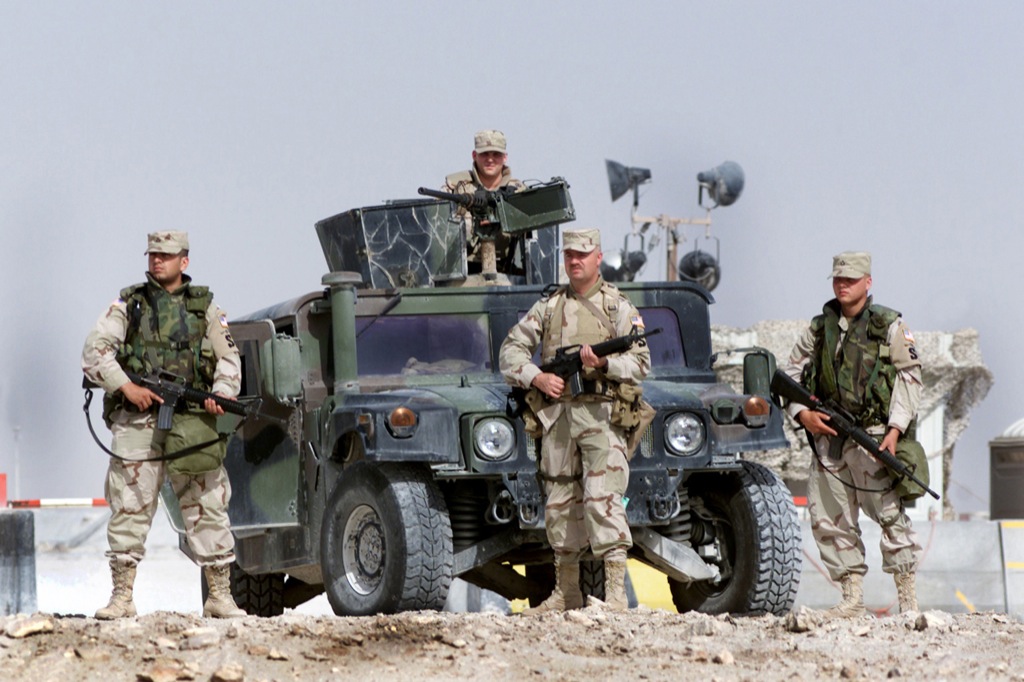
Residents of this area take great pride in our “homeboy,” Leon Panetta, currently President Obama’s Secretary of Defense. But I can’t help but cringe when the good secretary defends our bloated military budget.
Just the other day Secretary Panetta worried about “drastic cuts” ($50 billion annually) in defense if Congress failed to implement a spending plan. “The simple fact is that this fiscal uncertainty has become a serious threat to our national security,” Panetta said during a Pentagon press conference. “We really have no choice but to prepare for the worst.” This uncertainty, he claims, “will seriously harm our military readiness.”
He can’t be serious, can he? The U.S. already spends more than $700 billion annually on defense and international security assistance. That’s more than the next 13 biggest-spending nations combined, including China, Russia and the United Kingdom. There is no other country that is even close to seriously challenging us militarily. Polling shows the vast majority of Americans support reduced defense spending, knowing we have so many pressing needs domestically.
It could it be that Mr. Panetta has been hanging around the Beltway for far too long and needs to come home as quickly as possible.
Arlen Grossman
Posted in Economics, economy, foreign policy, government, military, war
Tagged Beltway, Leon Panetta, Monterey County Herald, Monterey Herald, Pentagon budget
Leave a comment