
BPR Quote of the Day:
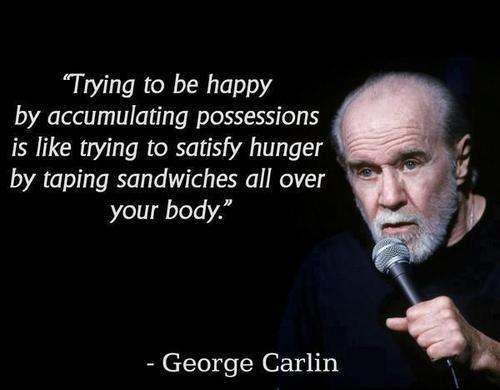
BPR Quote of the Day:

Whatever one thinks of WikiLeaks, it is an indisputable fact that the group has never been charged by any government with any crime, let alone convicted of one. Despite that crucial fact, WikiLeaks has been crippled by a staggering array of extra-judicial punishment imposed either directly by the US and allied governments or with their clear acquiescence.
In December 2010, after WikiLeaks began publishing US diplomatic cables, it was hit with cyber-attacks so massive that the group was “forced to change its web address after the company providing its domain name cut off service”. After public demands and private pressure from US Senate Homeland Security Chairman Joe Lieberman, Amazon then cut off all hosting services to WikiLeaks. Sophisticated cyber-attacks shortly thereafter forced the group entirely off all US website services when its California-based internet hosting provider, Everydns, terminated service, “saying it did so to prevent its other 500,000 customers of being affected by the intense cyber-attacks targeted at WikiLeaks”.
Meanwhile, Chairman Lieberman’s public pressure, by design, also led to the destruction of WikiLeaks’ ability to collect funds from supporters. Master Card and Visa both announced they would refuse to process payments to the group, as did America’s largest financial institution, Bank of America. Paypal not only did the same but froze all funds already in WikiLeaks’ accounts (almost two years later, a court in Iceland ruled that a Visa payment processor violated contract law by cutting of those services). On several occasions in both 2011 and 2012, WikiLeaks was prevented from remaining online by cyber-attacks.
Over the past two years, then, this group – convicted of no crime but engaged in pathbreaking journalism that produced more scoops than all other media outlets combined and received numerous journalism awards – has been effectively prevented from functioning, receiving funds, or even maintaining a presence on US internet servers. While it’s unproven what direct role the US government played in these actions, it is unquestionably clear that a top US Senator successfully pressured private corporations to cut off its finances, and more important, neither the US nor its allies have taken any steps to discover and apprehend the perpetrators of the cyber-attacks that repeatedly targeted WikiLeaks, nor did it even investigate those attacks.
The ominous implications of all this have never been fully appreciated. Recall that all the way back in 2008, the Pentagon prepared a secret report (ultimately leaked to WikiLeaks) that decreed WikiLeaks to be a “threat to the US Army” and an enemy of the US. That report plotted tactics that “would damage and potentially destroy” its ability to function. That is exactly what came to pass.
So this was a case where the US government – through affirmative steps and/or approving acquiescence to criminal, sophisticated cyber-attacks – all but destroyed the ability of an adversarial group, convicted of no crime, to function on the internet. Who would possibly consider that power anything other than extremely disturbing? What possible political value can the internet serve, or journalism generally, if the US government, outside the confines of law, is empowered – as it did here – to cripple the operating abilities of any group which meaningfully challenges its policies and exposes its wrongdoing?
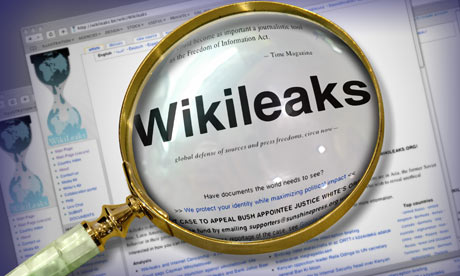
But what makes all of this even more significant is the vastly disparate treatment of those who launched far less sophisticated and damaging attacks at those corporations which complied with US demands and cut off all funding and other services to WikiLeaks. Acting in the name of Anonymous, a handful of activists targeted those companies with simple “denial of service” attacks, ones that impeded the operations of those corporate websites for a few hours.
In stark contrast to the far more significant attacks aimed at WikiLeaks, these attacks, designed to protest the treatment of WikiLeaks, spawned a global manhunt by western nations and, ultimately, the arrest of dozens of mostly young alleged hackers, four of whom are now on trial in London:
(Continued/ Read Entire Article Here)
BPR Quote of the Day:
from
Like Quotes? Check Out the BPR Editor’s QUOTATIONQUOTIENT.COM

BPR Quote of the Day– Jon Stewart
 brainlesstales.com
 Source: Jared Bernstein, Center for Budget and Policy Priorities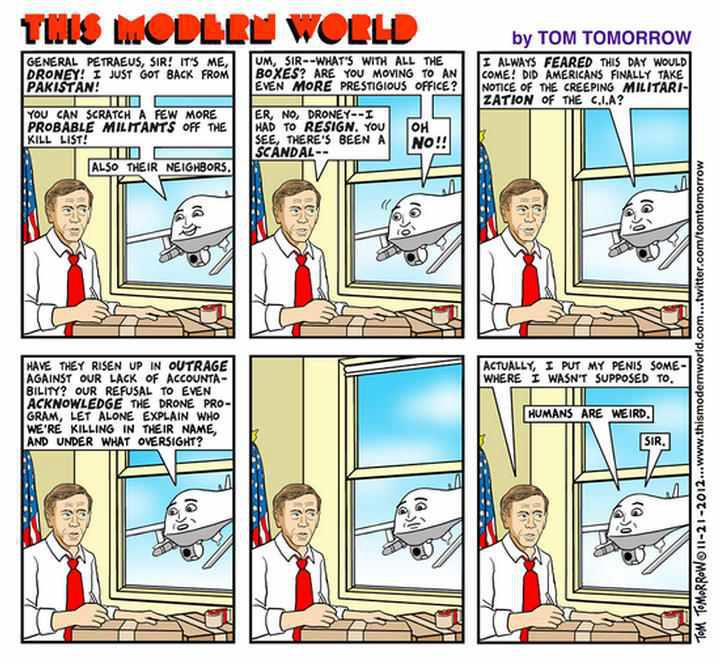
It starts with destroying our manufacturing base.
New reports that Taiwanese transnational manufacturing corporation Foxconn may be opening up some plants in the United States indicate that our nation has now entered the terminal fourth stage of “third-worldization” or what may be better referred to simply as “recolonization.”
In case you don’t know, Foxconn is China’s largest private employer and is responsible for making many of those parts that go into your Apple iPhones, iPads, and iPods.
While Steve Jobs may have been a visionary when it came to technological design, he wasn’t a fan of labor unions – or American workers in general – so he outsourced most of his corporation’s manufacturing to Foxconn, which was notorious for its low-wage labor.
Foxconn workers live in over-crowded dorms that are located on the factory grounds. They work 12-hour shifts, and are routinely exposed to dangerous working conditions. Recently, 137 Foxconn workers fell ill after they were forced to use toxic chemicals to clean iPads. And in the last five years, 17 Foxconn workers have committed suicide on the job. Nets have since been installed around the factory to catch workers jumping out of windows.
So why the heck would Foxconn look beyond their Libertarian paradise of no labor laws to come to the United States and employ a bunch of Americans?
To know the answer to that question, we have to understand the four steps the United States is currently racing through to become a third-world nation.
From 1791, when our nation’s first Treasury Secretary Alexander Hamilton created an 11-point plan for American manufacturers, all the way until just the last few decades, the United States protected its manufacturing base with high tariffs on imports and government support for domestic industries.
This “protectionist” approach to trade transformed the United States into the world’s largest exporter of manufactured goods, which built and sustained an enormous middle class of Americans working in factories collecting high wages.
Then the forces of globalization crept in, extolling the virtues of a world economy free from national boundaries and protections for domestic manufacturing.
With Reagan’s Revolution in the 1980’s, Alexander Hamilton’s 11-point plant was scrapped. Tariffs were ditched and then Bill Clinton moved into the White House in the 1990’s and continued Reagan’s trade policies and committed the United States to so-called Free Trade agreements like GATT, NAFTA, and the WTO, removing all the protections that had kept our domestic manufacturing industries safe from foreign corporate predators for two centuries.
In the 1992 Presidential debate, third-party candidate Ross Perot famously warned about a “giant sucking sound” of American jobs going south of the border to low-wage nations.
Perot was right, but no one in our government listened to him.
In the 1960’s, one-in-three Americans worked in manufacturing, producing things of lasting wealth. Today, after jumping head first into one free trade agreement after another, only one-in-ten Americans works in manufacturing.
Over the last decade, 50,000 manufacturing plants in the United States have closed down and five million manufacturing jobs have been lost. They didn’t disappear, they just moved away to low-wage factories like Foxconn, in foreign nations.
Before Reagan won the White House, the United States was the world’s largest importer of raw goods and exporter of manufactured goods as well as the world’s largest creditor. But today, we’re the world’s largest exporter of raw materials and importer of manufactured good. No surprise, we’re also the world’s largest debtor.
When manufacturing dies, the economy goes with it.
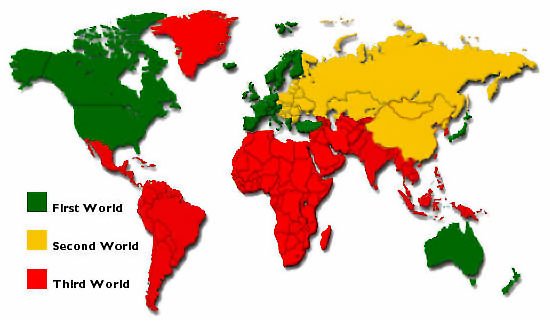
How Long Before Our Color Changes?
America’s working class no longer builds TVs or computers or furniture on assembly lines; they now flip burgers at McDonalds and turn down the sheets at Holiday Inns. And those high-skilled workers who used to design the marvels of manufacturing now manufacture credit default swaps and mortgage-backed securities on Wall Street.
In the 1950’s when our economy still embraced Hamilton’s 11-point plan, manufacturing used to account for a quarter of GDP, but today it accounts for around a tenth, replaced by the low-wage service sector and Wall Street. And this new economy can’t support a middle class. A service sector can’t create lasting wealth, nor can Wall Street.
Before NAFTA, the average American taxpayer earned an inflation-adjusted income of $33,400 a year. By 2008, that number dropped to just $33,000. Working Americans maxed out their credit cards and took out a second mortgage on their homes just to make ends meet. Eventually, even that wasn’t enough to make ends meet.
On top of that, new financialized industries have risen up that specialize in harvesting even more wealth from the middle class. So-called private equity firms like Bain Capital execute a business model that depends on taking over American businesses, loading them with debt, laying off workers, and outsourcing labor to low-wage nations. Mitt Romney himself described Bain’s strategy as “harvesting companies for a profit.”
Even American factories that were more profitable than ever, like the Sensata plant in Freeport, Illinois, aren’t safe from this outsourcing. Thanks to globalization, it’s just a cheaper to employ labor in low-wage nations even if that means laying off 170 American workers and devastating an entire local economy.
Today upwards of fifty million Americans are living in poverty and depend on food stamps. The middle class devolved into the working class, which further devolved into the working poor class.
Local economies are collapsing, states are going bankrupt, and workers are being tenderized for colonization in the near future.
There’s a hefty price tag associated with transitioning from the world’s largest exporter of manufactured goods to the world’s largest importer of manufactured goods. That price comes in the form of trade deficits.
In 2011, the United States had a trade deficit of over a half-trillion dollars with the rest of the world. Essentially, $558 billion U.S. dollars is being pocketed every single year by developing nations that are now manufacturing the goods that used to be manufactured right here in the United States.
With their pockets overflowing with U.S. dollars, foreign investors begin buying up American industries. Every single second, more than $4,000 of American industry is being sold off to foreign investors.
In a virtuous economy like the United States used to run, wealth is recycled within the community. Revenue earned by the local grocery store is invested in the local bank, which then hands out loans to local businesses to hire local workers who collect paychecks to shop at the local grocery store and so on and so forth.
But when foreign investors are injected into the equation, increasingly larger chunks of wealth are not re-invested in the local economy, but are instead invested overseas in the developing world.
This is one reason why President Obama’s stimulus package may not have had quite the bang for the buck as anticipated. When Americans use their extra dollars to buy a new LED television, or new clothes, or home improvements, there’s a good chance that a lot of the profits are actually going to overseas investors, stimulating their economy instead of ours.
With American workers desperate for any kind of opportunity to work, Foxconn and other foreign corporations now have access to a brand new pool of cheap labor.
We’ve seen other companies before Foxconn take advantage of these new low-wage American workers. (Continued/ Read Entire Article Here)
 We certainly hope so!



 thebigpicturereport ™
