
Karoline Leavitt: “President Donald Trump’s tax and spending bill “does not add to the deficit.”
By Louis Jacobson/ PolitiFact/ May 21, 2025

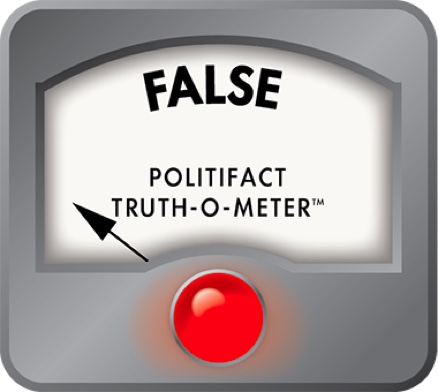
As House Republicans continued their efforts to advance what President Donald Trump calls his “big, beautiful bill” of tax and spending cuts, White House Press Secretary Karoline Leavitt played down the bill’s expected federal deficit impact.
At a May 19 press briefing, a reporter asked Leavitt, “Is the president OK with this bill adding to the deficit?”
Leavitt disagreed with the question’s premise.
“This bill does not add to the deficit,” she said. “In fact, according to the Council of Economic Advisors, this bill will save $1.6 trillion. … There’s $1.6 trillion worth of savings in this bill. That’s the largest savings for any legislation that has ever passed Capitol Hill in our nation’s history.”
A deficit is the annual amount by which spending exceeds revenues; the accumulation of all past annual deficits, minus any annual surpluses, is called the federal debt.
The bill is still being negotiated, so its potential deficit impact is a moving target. However, numerous independent analyses agree that the bill is on track to add significantly to the federal deficit. That’s because the bill’s tax cuts would reduce incoming federal revenue by more than it restricts spending.
Leavitt’s “$1.6 trillion worth of savings” appears to refer only to the bill’s proposed spending cuts without factoring in the lost tax revenue that will increase the annual deficit and the federal government’s cumulative debt, experts said.
“Bottom line — because that is what matters — is that simple math of all the additions and subtractions equals nearly $3 trillion in additional debt” during the standard budget time frame of 10 years, said Steve Ellis, president of Taxpayers for Common Sense, a nonpartisan group that tracks the federal budget.
The White House did not respond to inquiries for this article.
Analyses of the bill show it increasing the deficit and adding to the debt
The reconciliation bill, as it is called, must pass the House and the Senate in identical form by simple majorities, then be signed by the president. So the measure’s provisions are subject to change, making any point-in-time analysis somewhat uncertain.
That said, no expert assessment has shown that the bill will add nothing to the deficit.
Congress’ official scorekeepers — the nonpartisan Congressional Budget Office and the bipartisan Joint Committee on Taxation — have analyzed parts of the bills but have not produced a unified figure for its deficit effect. But, building on CBO and JCT’s work, multiple organizations have compiled assessments of the bill’s potential deficit impact.
These assessments show increased deficits from $3 trillion to $4 trillion over the next 10 years.
 thebigpicturereport ™